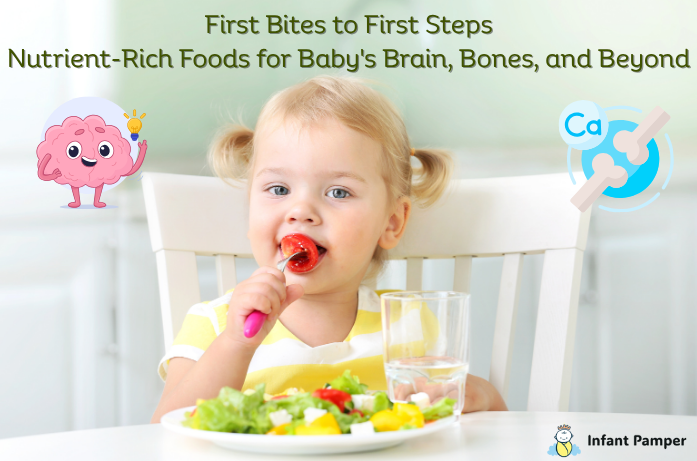
Authored by: Infant Pamper Team
Watching your baby grow, from their first spoonful of mashed banana to those wobbly first steps across the living room, is a journey filled with excitement and tiny victories. One of the most common concerns parents have is choosing the right high fiber foods for babies that support healthy digestion, while also nourishing their brain development, bone strength, and overall growth.
As parents, we often hear about iron, calcium, and vitamins, but fiber for babies is just as important. It supports gut health, helps prevent constipation, and builds a strong nutritional foundation. In this guide, we’ll explore the Best Foods, smart feeding strategies, and practical tips for introducing foods for babies in a balanced way.
Why Nutrition in the Early Years Matters So Much
Your baby’s first two years are a time of rapid brain growth, bone development, and digestive system maturation. The foods for babies you introduce now shape lifelong eating habits.
Including high fiber foods for babies after six months helps regulate bowel movements and improves nutrient absorption. A healthy gut also supports immune function, which is essential during infancy.
Balanced baby nutrition supports:
- Cognitive development
- Strong bones and muscles
- Healthy digestion
- Long-term immune health
Your baby’s first two years are a time of explosive growth. Their brain triples in size, bones strengthen, and every organ system matures. According to the American Academy of Pediatrics, early nutrition impacts:
1. Brain-Boosting Foods: Backed by Experts
YourDuring the first year, your baby’s brain forms millions of neural connections. While fiber itself doesn’t directly build brain cells, it supports the absorption of key nutrients like iron, omega-3 fatty acids (DHA), and choline.
Some of the Best Foods that combine fiber and brain-supporting nutrients include:
- Mashed lentils – Rich in iron and fiber
- Oats – A gentle whole grain high in dietary fiber
- Chia seeds (ground) – Provide omega-3s and fiber
- Sweet potatoes – Packed with vitamin A and fiber
Iron-rich foods for babies are especially important around six months, when natural iron stores begin to decrease. Pairing iron-rich foods with vitamin C sources like mashed strawberries improves absorption.
Including high fiber foods for babies in balanced meals ensures both brain health and digestive comfort.
2. Bone-Building Nutrition for First Steps
Strong bones are essential for crawling, standing, and walking. Nutrients like calcium and vitamin D play a key role.
Bone-supporting foods include:
- Full-fat yogurt – Source of calcium and probiotics
- Broccoli – Contains fiber and bone-supporting minerals
- Leafy greens – Provide calcium and gentle fiber
- Oatmeal – Supports digestion and steady energy
Combining dairy or fortified options with fiber-rich fruits and vegetables creates balanced, nutrient-dense meals.
3. High Fiber Foods for Babies and Digestive Health
Constipation is common when babies start solids. Adding high fiber foods for babies gradually can help ease digestive discomfort.
Gentle fiber-rich options include:
- Pears
- Prunes
- Peas
- Avocado
- Beans and lentils
- Oats
Fiber works by adding bulk to stool and supporting smooth digestion. However, balance is important. Always ensure your baby receives enough fluids alongside fiber.
Probiotics, found in yogurt with live cultures, also promote a healthy gut environment. When paired with fiber, they support optimal digestion.
4. Immune-Supporting Best Food
Many fiber-rich fruits and vegetables also strengthen immunity. For example:
- Sweet potatoes and carrots – Rich in vitamin A
- Berries – Contain fiber and vitamin C
- Beans and lentils – Provide zinc and plant protein
- Whole grains – Support sustained energy
Offering a variety of colorful foods for babies ensures exposure to diverse nutrients that promote overall wellness.
Baby Food Introduction Timeline
A simple feeding progression looks like this:
0–6 Months:
Breast milk or formula only
6–8 Months:
Single-ingredient purees like sweet potato, pear, avocado, lentils, and iron-fortified oatmeal
8–10 Months:
Soft finger foods such as scrambled eggs, soft beans, bananas, and well-cooked vegetables
10–12 Months:
Chopped fruits, pasta, yogurt, shredded meats, and mixed-texture meals
Continue incorporating high fiber foods for babies to maintain healthy digestion throughout these stages.
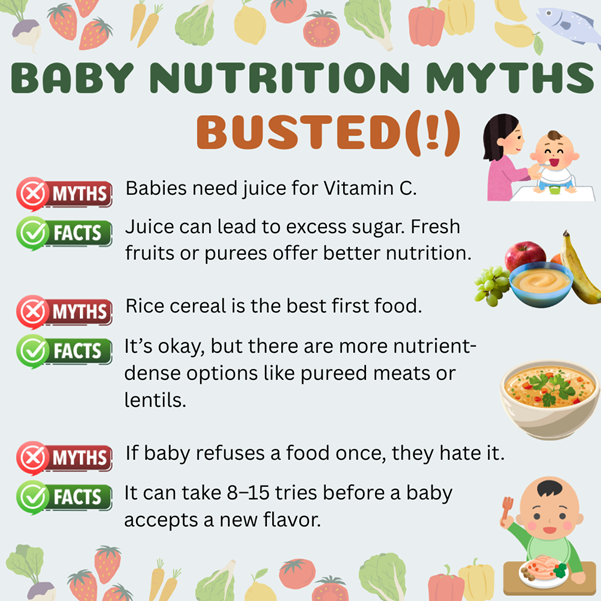
Baby Nutrition Myths (Busted!)
Myth: Babies need juice for Vitamin C.
Truth: The AAP advises avoiding juice for infants; whole fruits are better.
Myth: Rice cereal is the best first food.
Truth: Nutrient-rich options like pureed meats or lentils are superior (USDA guidelines).
Myth: If a baby refuses a food once, they hate it.
Truth: According to Zero to Three, it may take 8–15 tries before acceptance.
Final Thoughts: Feeding is Bond, Not Pressure
Feeding your baby is about more than just nutrition—it’s a time to build connection, trust, and healthy habits. Every smile, messy spoonful, and shared glance helps shape your baby’s relationship with food and encourages independence. Messy moments aren’t failures; they’re signs of learning and growth.
Health experts like the American Academy of Pediatrics (AAP) and the World Health Organization (WHO) recommend keeping mealtimes positive and pressure-free. Offer balanced, nutrient-rich foods and let your baby explore at their own pace. A calm, supportive approach helps create lifelong healthy eating habits.
Quick Parent FAQs
Q1: What are the best first foods for babies?
Pureed meats, iron-fortified cereals, and mashed lentils, as recommended by AAP and USDA.
Q2: When should I introduce water?
Around 6 months, after solids start (HealthyChildren.org).
Q3: Can I add spices to baby food?
Mild spices after 8 months are okay; avoid salt and sugar (Academy of Nutrition and Dietetics).
Q4: How often should I feed solids?
Start with 1–2 small meals and increase gradually (CDC).
Q5: Are store-bought baby foods safe?
Yes, if they are from reputable brands and follow FDA food safety standards.
Looking for more expert-backed feeding tips? Visit infantpamper for recipes, baby-led weaning ideas, and WHO/AAP-aligned nutrition advice.
Disclaimer: This content is for informational purposes only and does not replace professional medical advice. Always consult your pediatrician before dietary changes.