Baby Ear Pulling Autism: Signs, Causes & When to Worry

Baby Ear Pulling Autism

Written by a Caring Mom at Infant Pamper

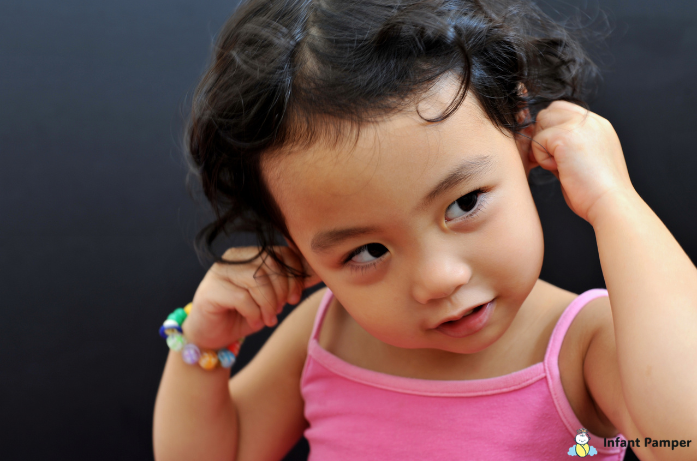
If you searched baby ear pulling autism, you may have noticed your baby repeatedly tugging, rubbing, or touching one or both ears and started wondering whether it could be a developmental sign. Ear pulling can look worrying, especially when it happens often, but on its own it is not considered a sign of autism.

Babies commonly touch their ears because they are exploring their body, feeling tired, self-soothing, teething, dealing with earwax or skin irritation, or sometimes experiencing an ear infection. The more useful clues are what happens alongside the behavior, such as fever, pain, poor feeding, sleep changes, or signs of discomfort.

If autism is a concern, look at your baby’s overall development rather than one habit. Social interaction, response to their name, eye contact, gestures, communication, play, sensory reactions, and whether they continue gaining new skills give a much clearer picture.

Baby Ear Pulling Autism: Is Ear Pulling Really a Sign?

Ear pulling alone cannot tell you whether a baby has autism.

Autism involves broader differences in social communication, interaction, behavior, and sensory responses. One repeated movement is not enough to make that conclusion.

A baby who rubs an ear before sleep but otherwise smiles, babbles, plays, and interacts normally is very different from a child showing several ongoing developmental differences.

So try not to give one small habit more meaning than it deserves.
Baby Ear Pulling Autism: Signs, Causes & When to Worry   Written by a Caring Mom at Infant Pamper If you searched baby ear pulling autism, you may have noticed your baby repeatedly tugging, rubbing, or touching one or both ears and started wondering whether it could be a developmental sign. Ear pulling can look worrying, especially when it happens often, but on its own it is not considered a sign of autism. Babies commonly touch their ears because they are exploring their body, feeling tired, self-soothing, teething, dealing with earwax or skin irritation, or sometimes experiencing an ear infection. The more useful clues are what happens alongside the behavior, such as fever, pain, poor feeding, sleep changes, or signs of discomfort. If autism is a concern, look at your baby’s overall development rather than one habit. Social interaction, response to their name, eye contact, gestures, communication, play, sensory reactions, and whether they continue gaining new skills give a much clearer picture. Baby Ear Pulling Autism: Is Ear Pulling Really a Sign? Ear pulling alone cannot tell you whether a baby has autism. Autism involves broader differences in social communication, interaction, behavior, and sensory responses. One repeated movement is not enough to make that conclusion. A baby who rubs an ear before sleep but otherwise smiles, babbles, plays, and interacts normally is very different from a child showing several ongoing developmental differences. So try not to give one small habit more meaning than it deserves.   Why Do Babies Pull Their Ears? There are several possible reasons, and most are much more common than autism. Research published in Auris Nasus Larynx and indexed by PubMed looked at 102 infants brought in for ear pulling, rubbing, or similar behaviors.  Nearly half had a normal ear examination, while earwax and middle-ear fluid were also common findings, showing why ear pulling alone cannot tell parents exactly what is causing the behavior. 1. They Have Discovered Their Ears Babies love exploring their own bodies. Once they realize their hands can reach their ears, those little ears may become something interesting to grab, rub, or twist. If your baby is happy while doing it and shows no signs of pain or illness, simple exploration may be the reason. 2. They May Be Tired or Self-Soothing Some babies develop comfort habits when they are sleepy or relaxed. One baby sucks a thumb. Another rubs a blanket. Some rub or pull an ear while feeding, cuddling, or falling asleep. If the behavior mostly happens around naps or bedtime and your baby seems comfortable, it may simply be soothing. 3. Teething Can Cause Discomfort Around the Ear Teething discomfort can sometimes spread around the gums, jaw, cheek, and nearby ear area. A baby cannot always tell where the feeling is coming from, so they may rub their cheek or tug an ear. Look for other teething signs such as drooling, chewing, or sore-looking gums. Do not automatically blame high fever or obvious illness on teething, though. Those symptoms may have another cause. 4. Earwax or Skin Irritation May Be Bothering Them Sometimes the ear simply feels itchy. Earwax, soap, shampoo, or dry skin can make a baby rub around the outer ear. Avoid putting cotton swabs inside the ear canal because they can push wax farther in. If you notice redness, swelling, discharge, or ongoing irritation, ask your pediatrician to check it. 5. Your Baby Could Have an Ear Infection Ear pulling can happen with an ear infection, but it does not prove one is present. Look for other symptoms such as: •	Increased crying •	Trouble sleeping •	Fever •	Poor feeding •	Reduced appetite •	Ear pain •	Fluid or discharge •	Changes in hearing or responsiveness A doctor usually needs to look inside the ear to confirm an infection. When Ear Pulling Is Usually Harmless Ear pulling is generally less concerning when your baby: •	Seems happy and comfortable •	Eats normally •	Has no fever •	Has no ear discharge •	Is not crying in pain •	Sleeps normally for them •	Plays and interacts normally •	Mostly touches the ear when tired or relaxed Sometimes you may notice a pattern. Maybe your baby rubs an ear just before every nap. Once you see that pattern, it may feel more like a sleepy cue than a warning sign. When Ear Pulling Needs More Attention Ear pulling becomes more important when it appears with pain or illness. Contact your pediatrician if your baby develops fever, unusual crying, poor feeding, disturbed sleep, ear drainage, or seems uncomfortable.  According to Seattle Children’s, most ear pulling between about 4 and 12 months is normal, especially when there is no pain or crying. They recommend medical advice when ear rubbing comes with symptoms such as fever, pain, sleep disturbance, cold symptoms, or ear drainage. Also ask for medical advice if your baby keeps digging at one ear for several days or if something simply does not feel right to you. You do not need to know the exact cause before calling. Could Ear Pulling Be a Sensory Behavior? Yes, sometimes. Children with autism can have unusual responses to sound, touch, or other sensory input. Some may cover, rub, or touch their ears because certain sounds feel overwhelming or because the pressure feels calming. But this is important: Sensory behavior does not automatically mean autism. Children who are not autistic can also dislike loud sounds, repeat comforting movements, or rub their ears when tired. So instead of asking only, “Does my baby pull their ears?” it is more useful to ask, “Are there other developmental differences too?” Ear Pulling vs Covering the Ears These behaviors can mean different things. A baby gently pulling or rubbing the outer ear may be exploring, soothing themselves, teething, itchy, or uncomfortable. Covering both ears in response to a loud vacuum, blender, siren, or crowded room may be more connected to sound sensitivity. Even then, occasional dislike of loud noise is common. It becomes more meaningful when the reaction is very strong, happens often, or appears with other sensory or developmental concerns. What Other Autism Signs Should Parents Watch For? If autism is a concern, ear pulling should not be the main thing you watch. Pay more attention to how your baby communicates, responds, plays, and interacts. The American Academy of Pediatrics  explains that early autism differences are often seen in areas such as joint attention, gestures, social interaction, and language development. These broader patterns are much more meaningful than one isolated behavior such as touching an ear. Possible developmental signs can include: •	Limited or inconsistent eye contact •	Not responding to their name as expected •	Using few gestures •	Limited social interaction •	Delayed communication •	Repetitive movements or play •	Strong distress around changes •	Unusual reactions to sounds, textures, or touch Not every autistic child shows the same signs, and children without autism may show some of these behaviors occasionally. That is why one isolated habit tells you very little. What If My Baby Pulls Their Ear While Feeding? This can happen for several reasons. Your baby's ear may simply be easy to reach while nursing or taking a bottle. The rubbing may also be soothing. But ear pain can sometimes feel worse during feeding because sucking and swallowing change pressure in the middle ear. If your baby suddenly cries during feeds, refuses feeds, or seems painful while pulling one ear, ask your pediatrician to take a look. When Repetitive Ear Touching Needs More Attention Even if ear touching is a soothing or sensory behavior, it does not always need to be stopped. The bigger question is whether it causes harm or gets in the way of daily life. Consider professional guidance if the behavior: •	Causes broken skin •	Becomes suddenly much stronger •	Interrupts sleep or feeding •	Regularly interferes with play •	Causes obvious distress •	Appears with wider developmental concerns The goal is not simply to stop the behavior. It is to understand why it is happening. Don't Label Every Repetitive Behavior as Stimming The word stimming is often used when talking about autism, but not every repeated movement a baby makes should be given that label. Babies naturally repeat actions as they learn about their bodies and surroundings. Kicking, rocking, clapping, rubbing their face, grabbing their feet, or pulling their ears can all be part of normal exploration and development. If you notice repetitive behavior along with other concerns about communication, social interaction, or development, it is better to discuss the overall pattern with your pediatrician rather than trying to interpret one movement on its own.   What Parents Can Do at Home If your baby seems comfortable, keep things simple. Watch the Pattern Notice whether ear pulling is connected to sleep, feeding, teething, noise, or illness. Keep the Ear Area Gentle Avoid putting cotton swabs or other objects inside the ear. Keep Nails Short This helps prevent scratches if your baby rubs their ears often. Reduce Loud Noise if Needed If your child clearly covers their ears around strong sounds, move to a quieter place when possible. Write Down Developmental Concerns If something beyond ear pulling worries you, note a few examples and discuss them with your pediatrician. Specific examples are often more useful than saying, “Something seems different.” When Should You Ask About Autism? You do not need to wait until your concerns become severe. Talk to your pediatrician if you notice ongoing differences in communication, gestures, eye contact, social interaction, language, play, sensory responses, or repetitive behavior. Also speak up if your child loses a skill they previously had. An evaluation does not automatically mean your child has autism. It simply helps you understand whether development is progressing as expected or whether extra support may be useful. FAQs About Baby Ear Pulling and Autism 1. Is pulling ears a sign of autism in babies? Not by itself. Ear pulling is common in babies and can happen because of exploration, tiredness, teething, irritation, or ear discomfort. 2. Why does my baby keep rubbing their ears? Common reasons include discovering their ears, self-soothing, tiredness, earwax, irritation, teething, or an ear infection. 3. Does an ear infection always cause ear pulling? No. Some babies with ear infections pull their ears, but many babies without infections do it too. Pain, fever, poor sleep, or drainage make infection more likely. 4. Can sensory issues make a child touch their ears? Yes. Some children touch or cover their ears because certain sounds or sensations feel uncomfortable or because the pressure feels calming. Sensory behavior alone does not diagnose autism. 5. When should I worry about ear pulling? Contact your pediatrician if ear pulling comes with pain, fever, discharge, poor feeding, major sleep changes, unusual distress, or broader developmental concerns. Final Thoughts Searching baby ear pulling autism can make a normal baby habit feel much more frightening than it really is. In many babies, ear pulling has a simple explanation. Your little one may be exploring, tired, teething, soothing themselves, or dealing with temporary ear discomfort. The best approach is to look at the whole child, not one movement. Notice whether your baby seems comfortable, how they feed and sleep, how they interact with you, and whether they continue learning new skills. If ear pulling comes with pain, fever, discharge, poor feeding, or other signs of illness, talk with your pediatrician. And if your concern is about development rather than the ear itself, bring that up too. One small habit does not define your baby. Watching their overall development will always tell you much more. Still have questions about your baby’s behavior or development? Explore more practical, mom-friendly baby care guides on Infant Pamper.  Disclaimer This article is for general informational purposes only and is not a substitute for medical advice, diagnosis, or treatment. Always contact your pediatrician if you are concerned about your baby’s ears, health, behavior, or development.

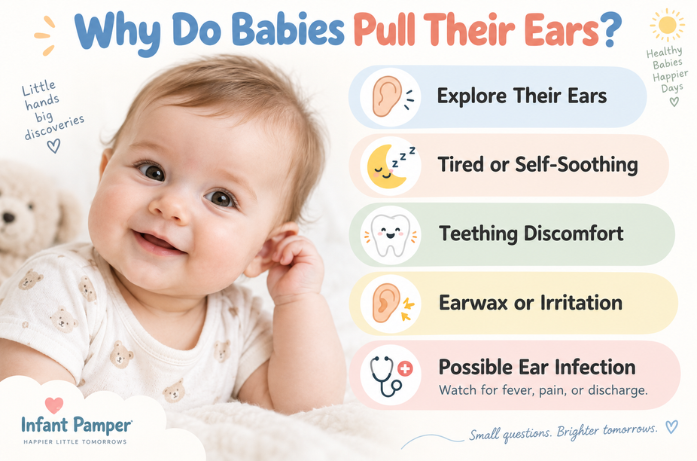
Why Do Babies Pull Their Ears?

There are several possible reasons, and most are much more common than autism. Research published in Auris Nasus Larynx and indexed by PubMed looked at 102 infants brought in for ear pulling, rubbing, or similar behaviors.

Nearly half had a normal ear examination, while earwax and middle-ear fluid were also common findings, showing why ear pulling alone cannot tell parents exactly what is causing the behavior.

1. They Have Discovered Their Ears

Babies love exploring their own bodies.

Once they realize their hands can reach their ears, those little ears may become something interesting to grab, rub, or twist.

If your baby is happy while doing it and shows no signs of pain or illness, simple exploration may be the reason.

2. They May Be Tired or Self-Soothing

Some babies develop comfort habits when they are sleepy or relaxed.

One baby sucks a thumb. Another rubs a blanket. Some rub or pull an ear while feeding, cuddling, or falling asleep.

If the behavior mostly happens around naps or bedtime and your baby seems comfortable, it may simply be soothing.

3. Teething Can Cause Discomfort Around the Ear

Teething discomfort can sometimes spread around the gums, jaw, cheek, and nearby ear area.

A baby cannot always tell where the feeling is coming from, so they may rub their cheek or tug an ear.

Look for other teething signs such as drooling, chewing, or sore-looking gums.

Do not automatically blame high fever or obvious illness on teething, though. Those symptoms may have another cause.

4. Earwax or Skin Irritation May Be Bothering Them

Sometimes the ear simply feels itchy.

Earwax, soap, shampoo, or dry skin can make a baby rub around the outer ear.

Avoid putting cotton swabs inside the ear canal because they can push wax farther in.

If you notice redness, swelling, discharge, or ongoing irritation, ask your pediatrician to check it.

5. Your Baby Could Have an Ear Infection

Ear pulling can happen with an ear infection, but it does not prove one is present.

Look for other symptoms such as:

  • Increased crying
  • Trouble sleeping
  • Fever
  • Poor feeding
  • Reduced appetite
  • Ear pain
  • Fluid or discharge
  • Changes in hearing or responsiveness

A doctor usually needs to look inside the ear to confirm an infection.

When Ear Pulling Is Usually Harmless

Ear pulling is generally less concerning when your baby:

  • Seems happy and comfortable
  • Eats normally
  • Has no fever
  • Has no ear discharge
  • Is not crying in pain
  • Sleeps normally for them
  • Plays and interacts normally
  • Mostly touches the ear when tired or relaxed

Sometimes you may notice a pattern.

Maybe your baby rubs an ear just before every nap. Once you see that pattern, it may feel more like a sleepy cue than a warning sign.

When Ear Pulling Needs More Attention

Ear pulling becomes more important when it appears with pain or illness.

Contact your pediatrician if your baby develops fever, unusual crying, poor feeding, disturbed sleep, ear drainage, or seems uncomfortable.

According to Seattle Children’s, most ear pulling between about 4 and 12 months is normal, especially when there is no pain or crying. They recommend medical advice when ear rubbing comes with symptoms such as fever, pain, sleep disturbance, cold symptoms, or ear drainage.

Also ask for medical advice if your baby keeps digging at one ear for several days or if something simply does not feel right to you.

You do not need to know the exact cause before calling.

Could Ear Pulling Be a Sensory Behavior?

Yes, sometimes. Children with autism can have unusual responses to sound, touch, or other sensory input. Some may cover, rub, or touch their ears because certain sounds feel overwhelming or because the pressure feels calming.

But this is important: Sensory behavior does not automatically mean autism.

Children who are not autistic can also dislike loud sounds, repeat comforting movements, or rub their ears when tired.

So instead of asking only, “Does my baby pull their ears?” it is more useful to ask, “Are there other developmental differences too?”

Ear Pulling vs Covering the Ears

These behaviors can mean different things.

A baby gently pulling or rubbing the outer ear may be exploring, soothing themselves, teething, itchy, or uncomfortable.

Covering both ears in response to a loud vacuum, blender, siren, or crowded room may be more connected to sound sensitivity.

Even then, occasional dislike of loud noise is common.

It becomes more meaningful when the reaction is very strong, happens often, or appears with other sensory or developmental concerns.

What Other Autism Signs Should Parents Watch For?

If autism is a concern, ear pulling should not be the main thing you watch.

Pay more attention to how your baby communicates, responds, plays, and interacts. The American Academy of Pediatrics  explains that early autism differences are often seen in areas such as joint attention, gestures, social interaction, and language development. These broader patterns are much more meaningful than one isolated behavior such as touching an ear.

Possible developmental signs can include:

  • Limited or inconsistent eye contact
  • Not responding to their name as expected
  • Using few gestures
  • Limited social interaction
  • Delayed communication
  • Repetitive movements or play
  • Strong distress around changes
  • Unusual reactions to sounds, textures, or touch

Not every autistic child shows the same signs, and children without autism may show some of these behaviors occasionally.

That is why one isolated habit tells you very little.

What If My Baby Pulls Their Ear While Feeding?

This can happen for several reasons.

Your baby’s ear may simply be easy to reach while nursing or taking a bottle. The rubbing may also be soothing.

But ear pain can sometimes feel worse during feeding because sucking and swallowing change pressure in the middle ear.

If your baby suddenly cries during feeds, refuses feeds, or seems painful while pulling one ear, ask your pediatrician to take a look.

When Repetitive Ear Touching Needs More Attention

Even if ear touching is a soothing or sensory behavior, it does not always need to be stopped.

The bigger question is whether it causes harm or gets in the way of daily life.

Consider professional guidance if the behavior:

  • Causes broken skin
  • Becomes suddenly much stronger
  • Interrupts sleep or feeding
  • Regularly interferes with play
  • Causes obvious distress
  • Appears with wider developmental concerns

The goal is not simply to stop the behavior.

It is to understand why it is happening.

Don’t Label Every Repetitive Behavior as Stimming

The word stimming is often used when talking about autism, but not every repeated movement a baby makes should be given that label.

Babies naturally repeat actions as they learn about their bodies and surroundings. Kicking, rocking, clapping, rubbing their face, grabbing their feet, or pulling their ears can all be part of normal exploration and development.

If you notice repetitive behavior along with other concerns about communication, social interaction, or development, it is better to discuss the overall pattern with your pediatrician rather than trying to interpret one movement on its own.
What Parents Can Do at Home

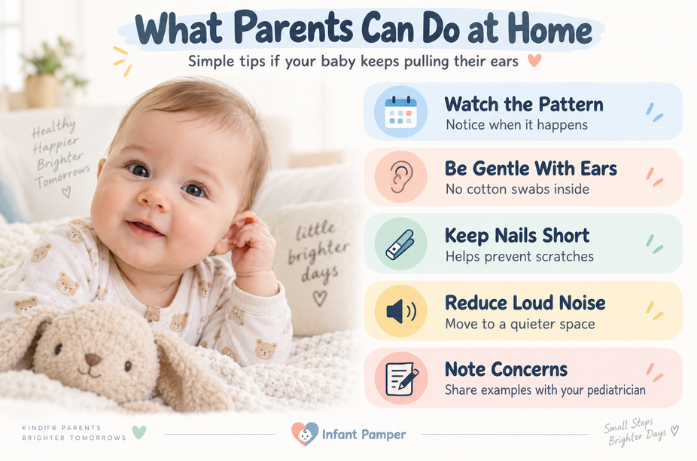
What Parents Can Do at Home

If your baby seems comfortable, keep things simple.

Watch the Pattern

Notice whether ear pulling is connected to sleep, feeding, teething, noise, or illness.

Keep the Ear Area Gentle

Avoid putting cotton swabs or other objects inside the ear.

Keep Nails Short

This helps prevent scratches if your baby rubs their ears often.

Reduce Loud Noise if Needed

If your child clearly covers their ears around strong sounds, move to a quieter place when possible.

Write Down Developmental Concerns

If something beyond ear pulling worries you, note a few examples and discuss them with your pediatrician.

Specific examples are often more useful than saying, “Something seems different.”

When Should You Ask About Autism?

You do not need to wait until your concerns become severe.

Talk to your pediatrician if you notice ongoing differences in communication, gestures, eye contact, social interaction, language, play, sensory responses, or repetitive behavior.

Also speak up if your child loses a skill they previously had.

An evaluation does not automatically mean your child has autism.

It simply helps you understand whether development is progressing as expected or whether extra support may be useful.

FAQs About Baby Ear Pulling and Autism

1. Is pulling ears a sign of autism in babies? +
Not by itself. Ear pulling is common in babies and can happen because of exploration, tiredness, teething, irritation, or ear discomfort.
2. Why does my baby keep rubbing their ears? +
Common reasons include discovering their ears, self-soothing, tiredness, earwax, irritation, teething, or an ear infection.
3. Does an ear infection always cause ear pulling? +
No. Some babies with ear infections pull their ears, but many babies without infections do it too. Pain, fever, poor sleep, or drainage make infection more likely.
4. Can sensory issues make a child touch their ears? +
Yes. Some children touch or cover their ears because certain sounds or sensations feel uncomfortable or because the pressure feels calming. Sensory behavior alone does not diagnose autism.
5. When should I worry about ear pulling? +
Contact your pediatrician if ear pulling comes with pain, fever, discharge, poor feeding, major sleep changes, unusual distress, or broader developmental concerns.

Final Thoughts

Searching baby ear pulling autism can make a normal baby habit feel much more frightening than it really is.

In many babies, ear pulling has a simple explanation. Your little one may be exploring, tired, teething, soothing themselves, or dealing with temporary ear discomfort.

The best approach is to look at the whole child, not one movement. Notice whether your baby seems comfortable, how they feed and sleep, how they interact with you, and whether they continue learning new skills.

If ear pulling comes with pain, fever, discharge, poor feeding, or other signs of illness, talk with your pediatrician. And if your concern is about development rather than the ear itself, bring that up too.

One small habit does not define your baby. Watching their overall development will always tell you much more.

Still have questions about your baby’s behavior or development? Explore more practical, mom-friendly baby care guides on Infant Pamper.

Disclaimer

This article is for general informational purposes only and is not a substitute for medical advice, diagnosis, or treatment. Always contact your pediatrician if you are concerned about your baby’s ears, health, behavior, or development.

Share the Post: