Written with love and care by a mom at Infant Pamper
Feeding your newborn should be a peaceful moment of bonding. But what happens when your little one suddenly starts coughing, gulping, or struggling to swallow milk? It can be frightening, especially when you are a new parent still learning your baby’s feeding habits and little signals.
Newborn choking on milk is a concern many parents experience, whether they’re breastfeeding or bottle feeding. Sometimes, milk flows faster than your baby can comfortably swallow. Other times, their sucking, swallowing, and breathing coordination is still developing, making feeding a little challenging.
The reassuring part is that brief coughing or gagging doesn’t always mean your baby is truly choking. However, knowing the difference is important because a blocked airway requires immediate action.
In this guide, we’ll explain why newborns sometimes struggle during feeding, what you should do when it happens, which warning signs need medical attention, and simple ways to make feeding safer and more comfortable.
Is It Normal for Newborns to Cough or Gag on Milk?
Occasional coughing or gagging during feeding can happen, especially in the first few weeks.
Your newborn has to coordinate three important actions: sucking, swallowing, and breathing. When milk arrives faster than they can comfortably swallow, they may cough, gulp, or pull away.
However, coughing and true choking are different.
| Coughing or gagging | True choking |
| Baby can cough or cry | Baby cannot cry or cough effectively |
| Air is still moving | Baby cannot breathe normally |
| Baby may pull away from milk | Baby may become silent |
| Often settles after a pause | Requires immediate action |
If your baby is coughing strongly, stop feeding and let them recover while watching closely.
If they cannot breathe, become blue or gray, or turn limp, seek emergency help immediately.
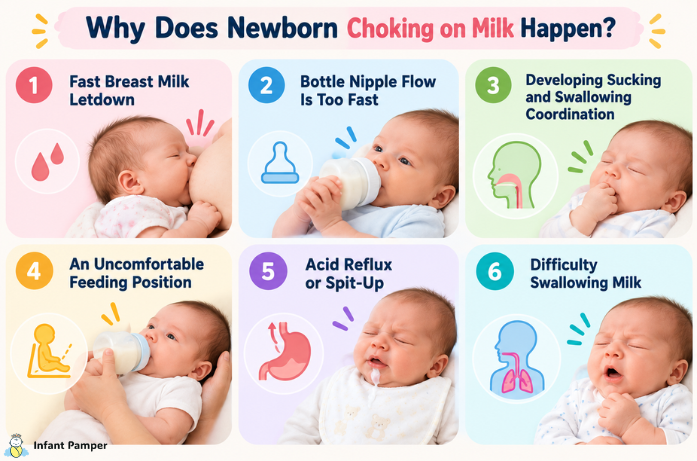
Why Does Newborn Choking on Milk Happen?
Newborns are still learning how to feed comfortably. Sometimes, milk flows too quickly, their feeding position makes swallowing harder, or they need more time to coordinate sucking, swallowing, and breathing. Understanding these common causes can help you make feeding safer and easier for your little one.
1. Fast Breast Milk Letdown
Some moms have a strong milk letdown, especially when their breasts are full. This means milk may flow faster than a newborn can comfortably swallow.
You might notice your baby coughing, gulping, pulling away from the breast, or having milk spill from their mouth. This often happens at the beginning of a feed.
Try breastfeeding in a laid-back position to help your baby manage the flow. If milk sprays forcefully, briefly unlatch your baby, let the strongest flow pass into a clean cloth, and then offer the breast again.
2. Bottle Nipple Flow Is Too Fast
Some bottle nipples release milk faster than a newborn can comfortably handle, even when they’re labeled for newborns.
If the flow is too fast, your baby may gulp repeatedly, cough, leak milk from the corners of their mouth, or pull away from the bottle.
Try a slower-flow nipple and paced bottle feeding. Keep the bottle nearly horizontal rather than tipping it straight up, and allow your baby to take breaks whenever needed.
3. Developing Sucking and Swallowing Coordination
Feeding may look simple, but your newborn needs to coordinate sucking, swallowing, and breathing at the same time.
During the early weeks, this coordination is still developing. Premature babies may need extra time and support because their feeding skills can be less mature.
Allow your baby to feed at a comfortable pace with regular breaks. If they frequently cough, become exhausted, or struggle to breathe during feeds, speak with your pediatrician.
4. An Uncomfortable Feeding Position
Your baby’s feeding position can affect how comfortably they swallow milk. Lying completely flat during bottle feeding may make it harder to manage the flow.
Similarly, if your baby’s chin is pressed toward their chest, they may find it difficult to feed comfortably.
Hold your baby semi-upright during bottle feeding, keeping their head and neck supported. For breastfeeding, choose a comfortable position that allows your baby to latch and pull away easily. Never leave your baby feeding unattended. For general choking prevention as babies begin eating solid foods, see the CDC’s choking prevention guidance.
5. Acid Reflux or Spit-Up
Reflux is common in newborns because the muscle that helps keep milk in the stomach is still developing.
Sometimes, milk flows back toward the throat, causing your baby to cough, gulp, swallow repeatedly, or seem uncomfortable during or after feeding.
Gentle burping breaks and holding your baby upright for a short time after feeding may help. However, always place your baby flat on their back for sleep, even if they have reflux.
6. Difficulty Swallowing Milk
Sometimes, frequent coughing or choking during feeds may indicate a swallowing difficulty called dysphagia.
In some babies, milk may accidentally enter the airway instead of moving safely toward the stomach. This is known as aspiration and may cause coughing, wet-sounding breathing, or feeding difficulties.
If your baby repeatedly struggles during feeds, has difficulty gaining weight, or develops unusual breathing sounds, contact your pediatrician. They may recommend a feeding and swallowing assessment to identify the cause.
What to Do When Your Newborn Coughs During Feeding
Seeing your baby struggle can make you panic, but your first priority is to check whether they are breathing and coughing effectively.
If your baby is coughing strongly and breathing:
- Stop feeding. Gently remove the bottle nipple or unlatch your baby.
- Hold them upright. Support their head and neck comfortably.
- Let them cough. Give them time to clear the milk naturally.
- Check their breathing. Watch for normal breathing, skin color, and alertness.
- Restart slowly. Offer milk again only when your baby has fully recovered.
Avoid putting your fingers into your baby’s mouth to search for an obstruction.
If coughing continues, breathing seems unusual, or your baby doesn’t return to normal, seek medical attention.
What to Do If Your Newborn Is Truly Choking
True choking is an emergency.
If your baby cannot breathe, cry, or cough effectively, immediately get emergency help and begin appropriate infant choking first aid. For detailed emergency instructions, refer to MedlinePlus.
For a conscious baby under one year with severe airway obstruction, current first-aid guidance recommends:
Step 1: Give Five Back Blows
Support your baby face-down along your forearm or thigh, keeping their head lower than their chest.
Give up to five firm back blows between the shoulder blades using the heel of your hand.
Step 2: Give Five Chest Thrusts
If the obstruction remains, turn your baby face-up while supporting their head.
Give up to five chest thrusts in the center of the chest, just below the nipple line, using appropriate infant first-aid technique.
Step 3: Continue Until Help Arrives
Repeat five back blows and five chest thrusts if the blockage remains.
If your baby becomes unresponsive and is not breathing normally, begin infant CPR according to your training and emergency-dispatch instructions.
Never perform abdominal thrusts on an infant, shake your baby, or blindly sweep their mouth with your fingers.
The British Red Cross infant choking guide provides important first-aid information.
Important: A baby who needed choking first aid should receive urgent medical evaluation, even if they appear better afterward.
How to Prevent Choking and Coughing During Milk Feeds
A few simple changes to your feeding routine can help your newborn swallow milk more comfortably and reduce coughing during feeds.
1. Practice Paced Bottle Feeding
Hold your baby semi-upright and keep the bottle nearly horizontal to control milk flow. Let your baby drink at their own pace and take breaks when needed. Never force them to finish a bottle.
2. Adjust Your Breastfeeding Position
If your milk flows too quickly, try a laid-back breastfeeding position. This can help your baby manage the flow more comfortably. If coughing continues, ask a lactation consultant for guidance.
3. Feed Before Your Baby Gets Too Hungry
Watch for early hunger signs, such as rooting, opening the mouth, or sucking on hands. Feeding before your baby becomes very upset may help them settle into a calmer feeding rhythm.
4. Allow Short Feeding Breaks
If your baby starts gulping, coughing, or pulling away, pause the feed and let them recover. Continue only when they’re breathing normally and ready to drink again. Frequent coughing should be discussed with your pediatrician.
Why Does Milk Sometimes Come Out of a Newborn’s Nose?
It can be worrying to see milk coming out of your baby’s nose, but this sometimes happens during feeding or spit-up.
Your baby’s mouth and nose are connected at the back of the throat. When milk comes back up due to reflux or a fast milk flow, some of it may escape through the nose.
If your baby is breathing normally, gently hold them upright, pause the feed, and wipe away any visible milk. However, if this happens frequently or your baby has trouble breathing, coughing, or swallowing, consult your pediatrician.
What to Watch for After a Coughing Episode
Even after your baby settles, pay attention to how they behave.
A baby who quickly returns to normal breathing and comfortable feeding is different from one who continues to show symptoms.
Watch for:
- Persistent coughing or wheezing
- Fast or difficult breathing
- Wet or rattling breathing sounds
- Unusual sleepiness or poor responsiveness
- Refusing feeds
- Fever or signs of illness
These symptoms may indicate a problem that needs medical attention.
If your baby develops severe breathing difficulty, turns blue or gray, or becomes unresponsive, seek emergency help immediately.
When Should You Call the Pediatrician?
An occasional cough during feeding may not be serious, but if your newborn frequently coughs, struggles to swallow, or seems unusually tired while drinking milk, it’s best to consult your pediatrician.
Other warning signs include poor weight gain, frequent vomiting, fewer wet diapers, or unusual breathing sounds after feeding. Your doctor may check your baby’s feeding pattern or recommend a swallowing assessment if needed.
A helpful mom tip: Keep a simple feeding diary noting when coughing happens, how your baby is fed, and what seems to trigger it. These details can help your pediatrician understand the problem better.
If your baby has difficulty breathing, turns blue or gray, or becomes unresponsive, seek emergency help immediately.
FAQs
1. Is newborn choking during feeding always dangerous?
Not always. Brief coughing or gagging can happen when milk flows too quickly. However, if your baby cannot breathe, cry, or cough effectively, seek emergency help immediately.
2. Why is my newborn choking while breastfeeding?
A strong milk letdown or developing swallowing coordination may be the cause. Try a laid-back feeding position and allow short breaks.
3. Is newborn choking on saliva normal?
Occasional coughing while clearing saliva can happen. However, frequent choking, swallowing difficulties, or breathing changes need medical attention.
4. How can I prevent newborn choking on milk while bottle feeding?
Use a slow-flow nipple, hold your baby semi-upright, and allow feeding breaks. Never prop the bottle or force your baby to finish it.
5. Can a newborn choke on milk while sleeping?
Babies can cough or gag during spit-up, but healthy babies have protective airway reflexes. Always place your baby flat on their back on a firm, level sleep surface.
Final Thoughts
Watching your newborn struggle during feeding can be frightening, especially when you’re still learning their little sounds and signals.
But remember, many feeding difficulties improve as babies develop better sucking and swallowing coordination.
Simple changes such as slowing milk flow, adjusting feeding positions, and allowing breaks can make feeding more comfortable.
Still, never ignore repeated coughing, swallowing difficulties, or unusual breathing. Your pediatrician can help identify the cause and guide you toward safer feeding.
At Infant Pamper, we believe motherhood is a journey of learning together. You don’t need to have every answer right away. Paying attention to your baby’s needs and asking for help when something feels wrong is already an important part of caring for them.
Medical Disclaimer
This article is for educational purposes only and does not replace professional medical advice or certified infant first-aid training. Seek emergency help immediately if your baby cannot breathe, becomes unresponsive, or develops severe breathing difficulty.