Written by a caring mom at Infant Pamper
Have you ever noticed your baby reaching toward a favorite toy, pointing at a passing bird, or trying to show you something exciting? These little gestures may seem simple, but they are some of the earliest ways babies communicate before they can speak.
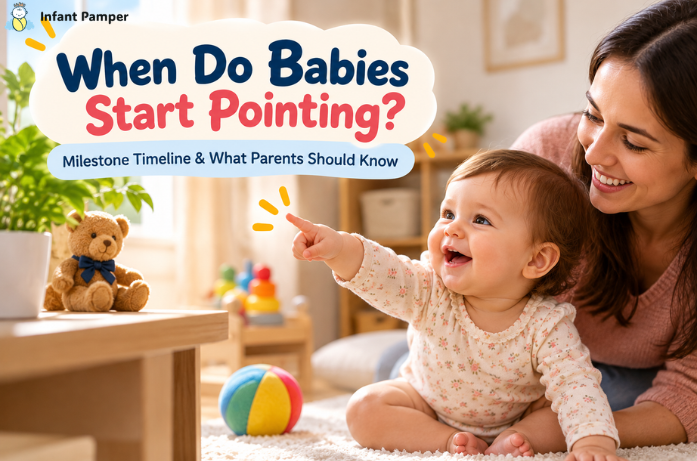
If you’re wondering when do babies start pointing, most babies begin developing this skill around 10 to 12 months. By 15 months, most children can point to ask for something or get help, according to the CDC.
Pointing is more than just a cute milestone. It helps your baby express their needs, share what catches their attention, and learn new words through everyday interactions. Some babies start with whole-hand gestures before learning to point with one finger.
But what if your baby isn’t pointing yet? Don’t worry too quickly. Every baby develops at their own pace, and there are simple ways to encourage this skill. Let’s explore the pointing timeline, early signs, and when it may be worth talking to your pediatrician.
When Do Babies Start Pointing?
Many babies begin pointing around 10 to 12 months, although a clear index-finger point may develop later.
According to the American Speech-Language-Hearing Association (ASHA), pointing, waving, showing, and giving objects are common communication skills during the 10-to-12-month period.
The CDC’s developmental milestones also explain that most children can point to ask for something or get help by 15 months.
Before pointing with one finger, your baby may reach toward objects using their whole hand, look between you and a toy, or stretch their arms toward something they want.
These early gestures are part of learning how to communicate.
Remember, babies don’t suddenly wake up knowing how to point. The skill develops gradually as their hand coordination and communication abilities improve.
Baby Pointing Milestone Timeline by Age
Every baby follows their own developmental journey, but this simple timeline can help you understand what to expect.
| Baby’s Age | Pointing and Communication Development |
| 6–8 months | Reaching for toys and exploring objects with their hands |
| 9–10 months | More intentional reaching and early communication gestures |
| 10–12 months | Pointing may begin, along with waving and showing objects |
| 12–15 months | Clearer pointing to request things or get help |
| 15–18 months | More frequent gestures, shared attention, and early words |
These ages are approximate. A baby who develops a gesture slightly earlier or later isn’t automatically experiencing a developmental problem.
Around 6–9 Months: Reaching Comes First
At this age, babies become curious about almost everything.
Your little one might stretch their arms toward a toy, grab your glasses, or reach for a spoon during feeding.
Although these actions aren’t true pointing, they help develop the hand control needed for more precise gestures.
Around 10–12 Months: First Pointing Gestures
This is when many parents notice their baby’s first attempts at pointing.
Your baby might extend one finger toward a colorful picture, a pet, or something interesting outside.
Sometimes the gesture is quick or unclear. Your baby may still use their whole hand instead of one finger.
Both reaching and pointing can be meaningful parts of early communication.
Around 12–15 Months: Pointing Becomes Purposeful
As your baby grows, pointing often becomes more intentional.
They might point toward their bottle when thirsty or toward a toy sitting on a shelf.
You may also notice them looking at you after pointing, almost as if they’re waiting for your response.
This is an exciting sign of developing communication and social awareness.
Why Is Pointing Important for Babies?
Pointing may seem like a small gesture, but it plays an important role in your baby’s early development. It helps them communicate their needs, learn new words, share experiences, and develop better control over their hands and fingers.
1. It Helps Babies Express Their Needs
Before babies can speak, pointing gives them a simple way to show what they want. For example, your baby might point toward their water cup, favorite toy, or a snack they cannot reach.
When you respond by saying, “Oh, you want your teddy!” your baby begins to understand that their gestures can communicate a message. This may also help reduce frustration when they cannot explain their needs with words.
2. It Supports Early Language Development
When your baby points toward something, it creates a natural opportunity to introduce new words. If they point toward a dog, you might say, “Look, that’s a dog! The dog is running.”
Hearing words connected to familiar objects helps babies gradually understand their meaning. Early pointing is also linked with later vocabulary development, although it doesn’t predict exactly when a baby will begin talking.
3. It Builds Joint Attention and Social Connection
Have you noticed your baby looking at something interesting and then turning toward you? This is part of joint attention, when two people share their focus on the same object or experience.
For example, your baby might point toward a bird outside and look back at you. When you respond, “Yes, that’s a bird!” you’re helping them develop social communication skills and learn how to share experiences with others.
4. It Strengthens Hand and Finger Coordination
Pointing also supports your baby’s developing fine motor skills. At first, they may reach toward objects using their whole hand before gradually learning to extend one finger.
As their hand coordination improves, babies become better at controlling individual finger movements. These skills develop alongside other everyday abilities, such as picking up small pieces of food, exploring toys, and turning book pages.
Two Types of Pointing Parents Should Know
Babies don’t always point for the same reason.
Understanding these two types can help you recognize what your little one is trying to communicate.
Imperative Pointing: Asking for Something
This happens when your baby points because they want an object or need help.
For example, they may point toward a toy that’s out of reach or a snack sitting on the table.
You can respond by saying, “You want your teddy? Here it is.”
Declarative Pointing: Sharing Something Interesting
Sometimes babies point simply because they want you to notice something.
Maybe a butterfly flies past, or a truck makes a loud noise outside.
Your baby points and looks toward you, hoping you’ll notice it too.
This type of pointing is especially meaningful because it involves sharing attention and experiences with another person.
6 Simple Ways to Encourage Your Baby to Point
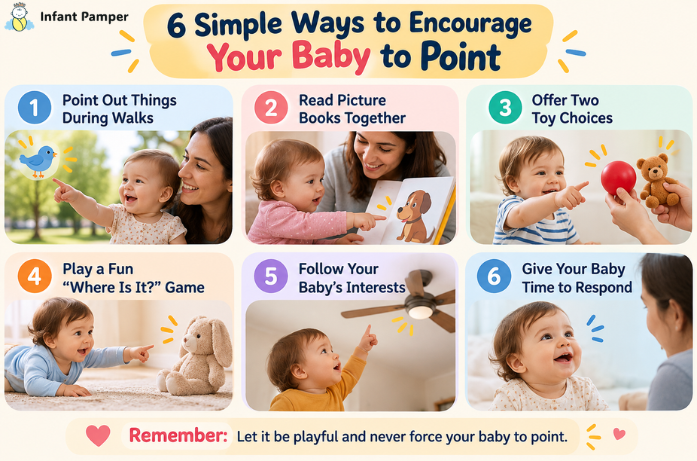
You don’t need expensive toys or special activities to teach your baby to point. Everyday moments like playing, reading, and exploring together can help develop this important communication skill.
1. Point Out Things During Walks
When you’re outside, point toward birds, trees, cars, or animals and say, “Look, there’s a bird!” These simple moments help your baby connect gestures with real objects.
Give your little one a few seconds to follow your finger. Even if they don’t point back, they’re learning by watching you.
2. Read Picture Books Together
Choose colorful picture books with familiar animals, toys, or everyday objects. Point toward a picture and say, “Look, a puppy!”
Pause to see whether your baby looks, touches the picture, or tries to point. Reading together also introduces new words naturally.
3. Offer Two Toy Choices
Hold up two favorite toys and ask, “Do you want the ball or the teddy?” Let your baby choose by looking, reaching, or pointing.
When they show interest, name the toy before giving it to them. This encourages communication while helping them connect gestures with words.
4. Play a Fun “Where Is It?” Game
Place a favorite toy somewhere your baby can easily see and ask, “Where’s your bunny?” Point toward it and say, “There it is!”
After a few turns, give your baby a chance to find it. They may look, reach, or eventually point toward the toy themselves.
5. Follow Your Baby’s Interests
Babies learn best when something naturally catches their attention. If your little one notices a spinning ceiling fan, point toward it and say, “Look, the fan is spinning!”
Responding to what interests your baby encourages shared attention and helps them understand how gestures and words work together.
6. Give Your Baby Time to Respond
After pointing toward something or asking a simple question, pause for a few seconds. Your baby may need time to understand and respond.
They might smile, make a sound, reach, or point. Respond warmly to their efforts, even if they aren’t using their finger yet.
Remember: Never force your baby’s hand into a pointing position. Gentle encouragement, patience, and playful everyday interactions are the best ways to support this milestone.
What If Your Baby Isn’t Pointing Yet?
If your baby isn’t pointing while other babies of the same age are already doing it, it’s natural to feel a little worried. But every baby develops at their own pace, and pointing is just one part of early communication.
If your little one is around 10 or 11 months old, notice how they communicate in other ways. Do they reach for toys, babble, respond to familiar voices, smile during play, or use gestures to get your attention? These are encouraging signs of communication development.
According to the CDC, most children can point to ask for something or get help by 15 months. If your baby hasn’t reached this milestone, talk with your pediatrician.
You should also seek guidance earlier if you notice:
- Limited response to sounds: Your baby rarely responds to their name or familiar voices.
- Few communication gestures: They rarely wave, reach to communicate, or show objects to others.
- Limited social interaction: They seldom share smiles, sounds, or attention during play.
- Loss of learned skills: They stop babbling or using gestures they previously used.
These signs don’t always mean there’s a developmental problem, but they shouldn’t be ignored. Your pediatrician may suggest developmental screening or a hearing evaluation if needed.
Remember: You don’t have to wait until 15 months to discuss concerns. Getting guidance early can help you understand your baby’s development and provide the right support.
What If Your Baby Points but Doesn’t Talk?
Some babies begin using gestures before saying their first words. Your little one might point toward a toy, wave goodbye, or show you objects while still mostly babbling.
Pointing is an encouraging sign of early communication, but it doesn’t mean your baby will start talking immediately. You can support language development by talking, reading, singing, and naming objects your baby points toward.
However, if your baby isn’t meeting expected speech milestones, struggles to understand simple words, or rarely responds to sounds, speak with your pediatrician for guidance.
FAQs About Babies and Pointing
1. When do babies start to point?
Many babies begin pointing around 10 to 12 months. Some develop a clear index-finger point later, and most children can point to request something or get help by 15 months.
2. Why is the baby pointing milestone important?
Pointing helps babies communicate their needs, share attention, and connect gestures with language before they can express themselves clearly through words.
3. What does “pointing milestone baby” mean?
It refers to the developmental stage when babies begin intentionally using pointing gestures to communicate. Some babies first use their whole hand before developing a clear finger point.
4. When should babies point?
Most children can point to ask for something or get help by 15 months, according to the CDC. If your child isn’t doing this, discuss it with their pediatrician.
5. Can babies point before they say their first word?
Yes. Many babies begin using pointing and other gestures before they develop recognizable spoken words.
Final Thoughts
Your baby’s first point is a special milestone that shows how they’re learning to communicate and connect with the world.
Every baby develops at their own pace, so keep encouraging your little one through talking, reading, and playful interactions.
Celebrate their small achievements, and speak with your pediatrician if you have concerns. Every little gesture is a meaningful step toward communication and learning.
At Infant Pamper, we believe every little milestone deserves love, patience, and understanding. Enjoy these sweet moments, because before long, that tiny pointing finger may be accompanied by a whole lot of words!
Disclaimer: This article is for educational purposes only and does not replace professional medical advice or developmental assessment. Consult your pediatrician if you have concerns about your baby’s development.