Written by a Caring Mom at Infant Pamper
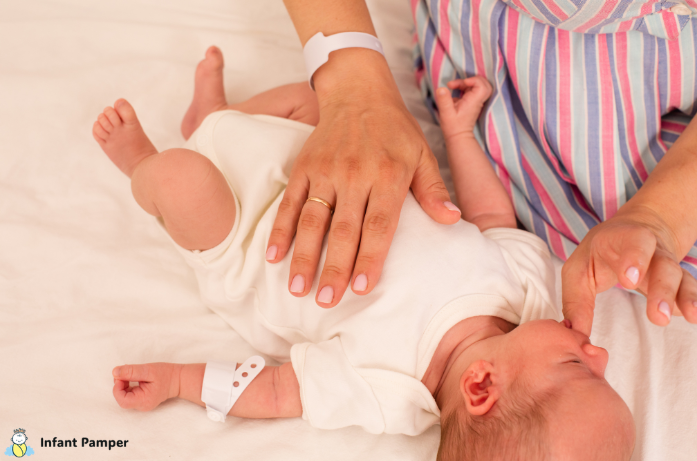
You finally get your baby settled, place them gently in the bassinet, and suddenly their tiny arms shoot outward, their fingers spread, and they look completely surprised. This is usually the newborn startle reflex, also called the Moro reflex.
It is a normal, automatic response that can be triggered by a loud sound, sudden movement, or the feeling of losing support. The reflex is linked to your baby’s developing nervous system and often becomes less noticeable as they grow.
The Moro reflex usually becomes less noticeable as your baby grows and often fades within the first few months. Until then, handling your baby gently, supporting their head and body, and keeping sleep routines safe and calm can help them feel more settled.
Table of Contents
- What Is the Newborn Startle Reflex?
- Why Do Newborn Babies Startle So Easily?
- What Can Trigger the Moro Reflex?
- Why Does My Baby Startle While Sleeping?
- When Does the Newborn Startle Reflex Start to Fade?
- Can You Help a Baby Who Startles Easily?
- When Should You Call Your Pediatrician?
- FAQs About the Moro Reflex
- Final Thoughts
- Disclaimer
What Is the Newborn Startle Reflex?
The newborn startle reflex is an involuntary movement that happens automatically.
When something suddenly surprises your baby, you may notice their arms move outward, their hands open, and then their arms come back toward their body. Some babies also straighten their legs, make a startled face, or cry for a few seconds.
Doctors call this the Moro reflex.
Healthcare providers look for this reflex after birth because newborn reflexes can give useful information about how a baby’s nervous system is developing.
According to Cleveland Clinic, healthcare providers check the Moro reflex as part of a newborn assessment because it can give useful information about how a baby’s nervous system is working.
A typical Moro response may look like this:
- Baby suddenly stretches or throws both arms outward.
- Their hands may open.
- Their body may briefly stiffen.
- Their arms move back toward their chest.
- Baby may cry or quickly settle again.
The whole reaction can happen in just a few seconds.
Some babies have a dramatic response, while others show only a small movement.
Why Do Newborn Babies Startle So Easily?
Newborn babies are still getting used to life outside the womb. Their nervous system is developing quickly, so sudden sounds, movements, or changes in position can feel much bigger to them than they do to us.
Inside the womb, your baby was surrounded by warmth, gentle pressure, and familiar sounds. After birth, everything is new bright lights, voices, diaper changes, being picked up, and even the feeling of being moved from your arms to the crib.
The Moro reflex is one of the ways your baby’s body responds to these sudden changes. As their brain and nervous system mature, their movements become smoother and more controlled, and this reflex gradually fades.
As Cleveland Clinic explains, newborn reflexes are automatic responses that healthcare providers use as part of assessing a baby’s development and nervous system.
What Can Trigger the Moro Reflex?
It does not always take a loud bang to make a newborn startle.
Sometimes the trigger is so small that parents do not even notice what caused it.
Common triggers can include:
- A door closing suddenly
- Someone sneezing
- A dog barking
- A loud voice
- A sudden touch
- Quickly changing baby’s position
- Lowering baby into a crib
- Sudden movement of their head
- Their own crying
- The feeling of losing support
Your baby may even startle while sleeping.
That does not necessarily mean something scared them.
Why Does My Baby Startle While Sleeping?
Many parents notice the Moro reflex most during sleep, especially when they are trying to move their baby from their arms to the crib. Your baby may seem completely relaxed, but the moment you lower them down, their arms suddenly stretch out and they wake up.
This usually happens because the change in position can briefly make your baby feel as though they are falling. Since their nervous system is still developing, that small movement can be enough to trigger the startle reflex.
Try lowering your baby slowly while keeping them close to your chest, then rest your hands gently on their body for a few seconds after they touch the mattress. It may not prevent every startle, but a calm, gradual transfer can help some babies settle more easily.
Moro Reflex or Normal Sleep Twitch?
Not every little movement your baby makes during sleep is the Moro reflex. Newborns can be surprisingly active sleepers, so you may notice tiny smiles, hand movements, wiggles, soft sounds, or a quick jerk of an arm or leg.
The Moro reflex usually looks more like a sudden full-body startle. Your baby may throw both arms outward and then bring them back in, often after a noise, movement, or change in position.
If the movements are repeated and rhythmic, happen along with unusual eye movements, breathing changes, a change in skin color, or your baby seems unresponsive, contact a healthcare provider. You do not need to figure out exactly what the movement is on your own.
When Does the Newborn Startle Reflex Start to Fade?
The Moro reflex usually fades little by little rather than disappearing all at once. During the first few weeks, it may seem quite strong, but as your baby’s nervous system develops, the response often becomes softer and less frequent.
Birth to 1 month: The reflex is usually easy to notice and may look quite dramatic.
Around 2 months: Many babies begin startling less often as their movements become more controlled. The American Academy of Pediatrics through HealthyChildren.org explains that the Moro reflex usually peaks during the first month and begins to disappear after about 2 months.
Around 3 to 4 months: The reflex often becomes much less noticeable and may disappear during this stage.
By about 6 months: If the Moro reflex is still very strong or clearly present, it is a good idea to mention it to your baby’s pediatrician.
Every baby develops at their own pace, so a small difference in timing is usually not something to panic about. What matters most is your baby’s overall development and whether their movements seem normal for them.

Can You Help a Baby Who Startles Easily?
You cannot completely stop a normal reflex, and you do not need to.
Still, a few gentle changes may help your baby feel more secure.
Move Slowly
Sudden position changes can trigger startling.
When picking your baby up or putting them down, move gently while supporting their head and neck.
Keep Baby Close During Transfers
When lowering your baby into the crib or bassinet, keep them close to your chest until they are near the mattress.
A slow transition can feel less sudden than quickly moving them away from your body.
Offer Gentle Reassurance
Sometimes your baby simply needs your touch or voice.
A soft shush, gentle hand on the chest, cuddle, or feeding if they are hungry may help them settle after startling.
Let Baby Move While Awake
During supervised awake time, give your baby opportunities to freely move their arms and legs.
Age-appropriate tummy time and floor time support normal motor development.
You do not need special exercises to make the Moro reflex disappear. Development naturally takes care of that.
Can Swaddling Help With Startling?
Swaddling can help some newborns feel more secure and may reduce sudden arm movements that wake them during sleep.
Always place a swaddled baby on their back on a firm, flat sleep surface, and make sure the swaddle is not too tight around the chest or hips. Stop swaddling as soon as your baby shows signs of trying to roll.
Avoid loose blankets and weighted swaddles. And remember, not every baby enjoys being swaddled some sleep just as well with their arms free.
Should You Test the Moro Reflex at Home?
You may come across videos showing people deliberately triggering the Moro reflex.
There is usually no need to test it yourself.
Healthcare professionals use specific techniques to check reflexes while also looking at muscle tone, symmetry, movement, age, and birth history.
At home, simply observe your baby’s normal movements.
If you see something that seems unusual, tell your pediatrician.
If the movement happens repeatedly and it is safe to do so, recording a short video may also help your doctor understand exactly what you are seeing.
Why Doctors Look at Both Sides of the Body
The Moro reflex usually happens on both sides of the body in a similar way. If one arm consistently moves less than the other, or your baby seems to use one side much less overall, it is worth mentioning to your pediatrician.
An occasional uneven movement is not always a concern. Babies often sleep in unusual positions and move differently from one moment to the next. What matters more is a pattern you keep noticing.
When Should You Call Your Pediatrician?
Most newborn startling is normal, but speak with your baby’s doctor if:
- One side reacts differently again and again
- Your baby rarely moves one arm or leg
- Your baby seems unusually stiff or floppy
- The movements are repeated and rhythmic
- Your baby seems unresponsive during an episode
- You notice breathing or skin color changes
- The reflex is still very strong around or after 6 months
You do not need to know exactly what the movement means before asking for help. If something feels unusual or different for your baby, it is always okay to check with your pediatrician.
FAQs About the Moro Reflex
Final Thoughts
The newborn startle reflex can look dramatic, but in most babies, it is simply a normal part of early development.
Your baby’s body is adjusting to life outside the womb while their nervous system learns to handle movement, sound, and all the new sensations around them.
Over the next few months, those sudden arm movements usually become less noticeable and eventually disappear.
Until then, move your baby gently, comfort them when they need you, follow safe sleep practices, and try not to worry about every little twitch.
And if something about your baby’s movements looks unusual, happens only on one side, continues longer than expected, or simply worries you, talk with your pediatrician.
You are learning your baby day by day, and your baby is learning this big new world right alongside you.
Explore more practical newborn care, sleep, feeding, and development guides on Infant Pamper to feel more confident through every little stage.
Disclaimer
This article is for general informational purposes only and is not a substitute for professional medical advice. Always speak with your pediatrician if you have concerns about your baby’s movements, development, or health.
About the Author
Geeta Yogi is a parenting writer who shares practical guidance about newborn development, infant sleep, baby reflexes, feeding, and everyday newborn care. Her writing focuses on helping new parents understand common baby behaviors and feel more confident while caring for their little one.