Written by a caring mom at Infant Pamper
The first time you notice a dark spot or slight damage on your child’s tooth, it can feel truly alarming. Your mind fills with questions, Is this child rotten teeth? How did this happen so early? Did I miss something important? These thoughts are more common than you might think. The truth is, tooth decay in children often begins quietly and can progress faster than we expect.
As parents, we do our best every single day, feeding, caring, protecting. But dental health is one area where small habits can make a big difference over time. The reassuring part? Childhood tooth decay is not only common, it’s also highly preventable and manageable when caught early.
In this guide, we’ll walk through everything you need to know in a simple, practical way, what causes tooth decay, how to spot the early signs, and most importantly, how you can protect your child’s smile with confidence.
What Are Child Rotten Teeth?
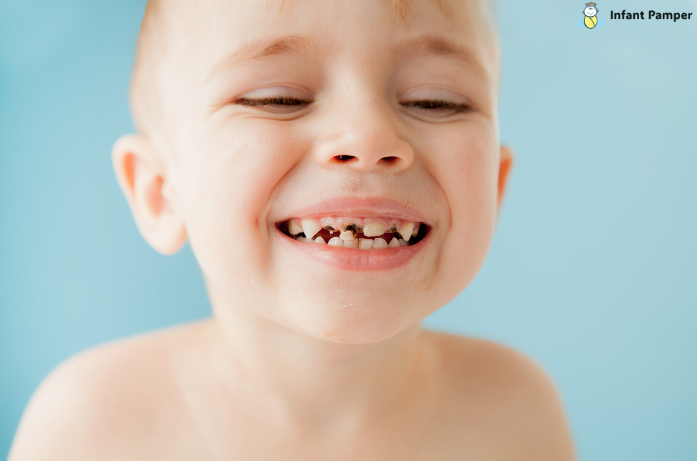
Child rotten teeth refers to tooth decay that affects babies, toddlers, and young children. It happens when bacteria in the mouth break down sugars from food and drinks, producing acids that slowly damage the tooth enamel.
Unlike adult teeth, children’s teeth are softer and more delicate. This makes them more vulnerable to decay, and unfortunately, it also means cavities can form much faster.
In the early stages, decay may appear as faint white spots on the teeth. As it progresses, these can turn into yellow, brown, or even black areas. If left untreated, it can lead to pain, infection, and damage to surrounding teeth.
According to research shared by National Institute of Dental and Craniofacial Research, tooth decay (dental caries) remains one of the most common chronic conditions in children worldwide.
The key takeaway here is simple: early awareness can stop early damage.
Why Are Children More Prone to Tooth Decay?
Many parents wonder why decay happens even when they are trying their best. The reason lies in a combination of factors unique to young children:
- Developing enamel: Baby teeth are not as strong as adult teeth
- Frequent feeding habits: Babies and toddlers eat more often throughout the day
- Limited brushing skills: Young children need help to clean teeth properly
- Comfort habits: Night feeding or bottle use can increase risk
Trusted parenting resources like Kids Health also emphasize that early habits play a major role in shaping long-term oral health.
Understanding these factors helps us approach prevention with more clarity and less guilt.
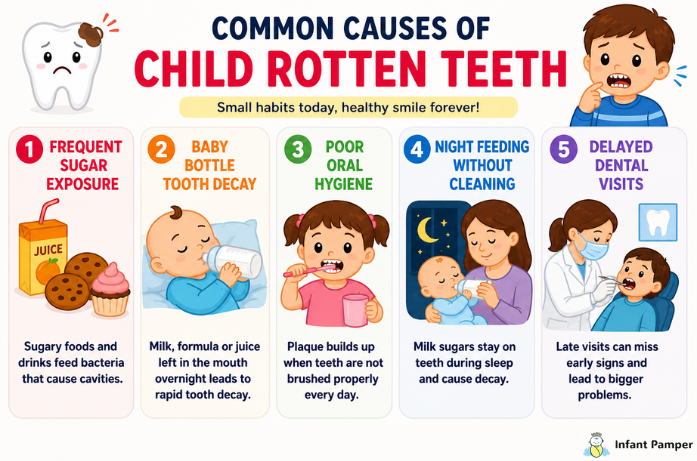
Common Causes of Child Rotten Teeth
Let’s take a closer look at what really contributes to early tooth decay.
1. Frequent Sugar Exposure
Sugar is one of the main triggers for tooth decay. When children consume sugary foods or drinks, bacteria in the mouth feed on that sugar and produce acid. This acid attacks the enamel and weakens it over time.
Common hidden sources of sugar include:
- Packaged juices
- Biscuits and cookies
- Flavored milk
- Processed baby foods
It’s not just how much sugar is consumed, but how often. Frequent snacking keeps the mouth in an acidic state, increasing the risk of toddler tooth decay.
2. Baby Bottle Tooth Decay
Baby bottle tooth decay is a leading cause of early dental problems in infants.
It occurs when babies are put to sleep with bottles containing milk, formula, or juice. The liquid stays around the teeth for long periods, especially overnight, feeding harmful bacteria.
Over time, this can lead to rapid decay, particularly in the front teeth.
3. Poor Oral Hygiene
Young children often lack the coordination to brush their teeth effectively. Without proper cleaning, plaque builds up on the teeth.
Plaque is a sticky layer of bacteria that produces acid and leads to enamel breakdown.
This is why parental involvement in brushing is so important, even if your child insists on doing it themselves.
4. Night Feeding Without Cleaning
Night feeding is comforting and natural, especially for babies. However, when teeth are not cleaned afterward, milk sugars remain in the mouth.
During sleep, saliva production decreases, which means the mouth cannot naturally wash away these sugars. This creates an ideal environment for decay to develop.
5. Delayed Dental Visits
Many parents wait until there’s a visible problem before visiting a dentist. Unfortunately, by then, the decay may already be advanced.
Early dental visits help identify issues before they become serious and provide guidance tailored to your child’s needs.
Signs and Symptoms of Toddler Tooth Decay
Recognizing early signs can help you take action quickly and prevent further damage.
Early Stage
At this stage, decay is just beginning and can often be reversed with proper care.
You may notice small white or chalky spots on the teeth. Sometimes, the teeth may look slightly dull or lose their natural shine.
There might also be faint discoloration near the gum line, which is an early warning sign.
Moderate Stage
As decay progresses, it starts affecting deeper layers of the tooth.
You may see yellow or light brown stains appearing on the teeth. Your child might also become sensitive to hot, cold, or sweet foods.
Some children may show mild discomfort while eating, even if they cannot clearly express it.
Advanced Stage
At this stage, the damage becomes more serious and needs dental treatment.
You may notice dark brown or black spots on the teeth or even visible holes (cavities).
Your child might feel pain while chewing, and in severe cases, swelling or infection can develop around the affected tooth.
Why Treating Child Rotten Teeth Early Matters
It’s easy to think baby teeth aren’t as important because they eventually fall out, but they play a crucial role in your child’s development.
Healthy baby teeth help with:
- Proper chewing and nutrition
- Clear speech development
- Maintaining space for adult teeth
- Building confidence in their smile
Untreated child rotten teeth can lead to pain, infections, and even affect your child’s eating habits and growth.
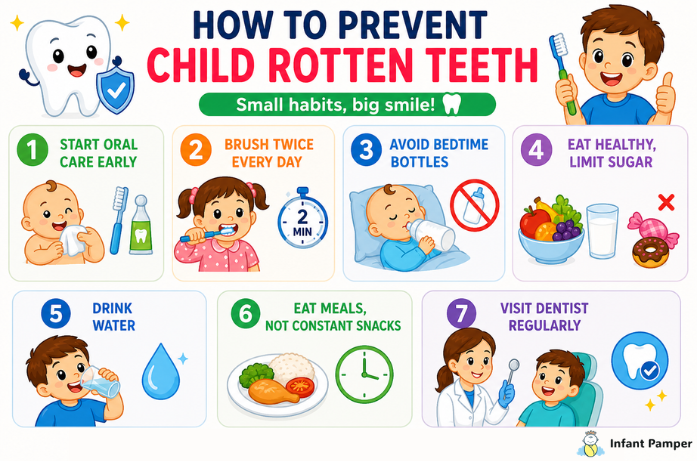
How to Prevent Child Rotten Teeth
Prevention doesn’t require perfection, it requires consistency. Small daily habits can make a big difference.
Health guidelines from Centers for Disease Control and Prevention also highlight that simple daily routines can significantly reduce the risk of cavities in children.
1. Start Oral Care Early
Oral hygiene begins even before the first tooth appears.
- Clean your baby’s gums with a soft, damp cloth
- Start brushing as soon as the first tooth emerges
- Use a soft-bristled toothbrush and a tiny amount of toothpaste
2. Maintain a Brushing Routine
Brushing twice a day is essential, especially before bedtime.
Make sure:
- You supervise brushing
- You help clean all surfaces of the teeth
- Brushing lasts at least 2 minutes
3. Avoid Bedtime Bottles with Milk
To prevent baby bottle tooth decay, avoid letting your child fall asleep with milk or juice.
If needed, offer water instead. This simple change can significantly reduce the risk of decay.
4. Monitor Diet and Sugar Intake
Focus on balanced nutrition rather than restriction.
Encourage:
- Fresh fruits instead of sugary snacks
- Plain milk instead of flavored drinks
- Home-cooked meals over processed foods
Also, try to limit sticky foods that cling to teeth.
5. Encourage Drinking Water
Water is one of the easiest and most effective ways to protect teeth.
It helps:
- Wash away food particles
- Neutralize acids
- Keep the mouth hydrated
6. Create Healthy Eating Patterns
Instead of constant snacking, try to establish meal and snack times.
This allows teeth time to recover between meals and reduces prolonged acid exposure.
7. Schedule Regular Dental Visits
Your child’s first dental visit should ideally happen by their first birthday.
Regular checkups help:
- Detect early signs of decay
- Provide preventive treatments
- Build familiarity and comfort with dental care
Simple Everyday Tips for Parents
Sometimes, it’s the little things that matter most.
- Avoid sharing spoons or utensils
- Replace toothbrushes regularly
- Make brushing a fun routine
- Be patient and consistent
- Lead by example, let your child see you care for your teeth
When to See a Dentist
Don’t wait for pain to appear. Early intervention is always easier.
Visit a dentist if you notice:
- Persistent discoloration
- Complaints of pain or sensitivity
- Swelling or bleeding gums
- Difficulty eating or chewing
Trust your instincts, if something doesn’t feel right, it’s worth checking.
Conclusion
Childhood tooth decay can feel overwhelming at first, but with the right understanding, it becomes much more manageable. Knowing the causes of child rotten teeth and recognizing the early signs allows you to take action before things progress further.
You don’t need to make big changes overnight. Start small, focus on consistent brushing, mindful eating, and regular dental care. Over time, these habits will build a strong foundation for your child’s oral health.
And most importantly, remember this, being aware and taking steps to learn already makes you a caring and responsible parent. Your effort today will help protect your child’s smile for years to come.
If you found this helpful, share it with another parent who might need it and don’t forget to explore more gentle, mom-approved tips on Infant Pamper for your little one’s happy and healthy growth.
Frequently Asked Questions
1. What causes child rotten teeth?
Child rotten teeth are mainly caused by frequent sugar intake, poor brushing habits, and prolonged exposure to milk or juice on teeth.
2. How can I prevent toddler tooth decay?
You can prevent it by brushing your child’s teeth twice daily, limiting sugary foods, avoiding bedtime bottles, and encouraging water after meals.
3. What is baby bottle tooth decay?
It happens when babies sleep with milk or juice in their mouths, allowing sugars to stay on teeth and cause decay over time.
4. What are the early signs of child rotten teeth?
Early signs include white spots, yellow or brown stains, bad breath, and sensitivity while eating.
5. When should I see a dentist for toddler tooth decay?
You should visit a dentist if you notice discoloration, pain, or cavities, or follow regular checkups every 6 months starting from age one.
Disclaimer: This article is for informational purposes only and is not a substitute for professional medical or dental advice. Always consult a qualified dentist or pediatrician for proper diagnosis and treatment related to your child’s dental health.