Written with love and care by a caring mom at Infant Pamper
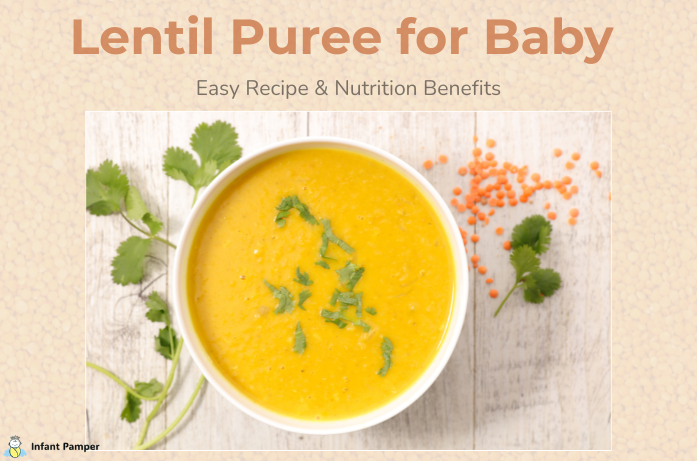
The moment your baby reaches the stage to start eating solid food, it creates a joyful yet challenging experience. I remember sitting with that tiny spoon in my hand, wondering what would be the gentlest and most nourishing first bite. I discovered lentil puree at that moment, and it quickly became one of our most comforting foods during our initial feeding period. Lentils provide essential nutrients which growing babies require because they exist as basic natural foods.
Parents can easily prepare this dish because it requires low expenses and produces soft texture which suits small children. The guide will provide you with complete assistance to select your first food, which will meet your requirements for safety and nutritional value and preparation simplicity.
Why Lentil Puree Is a Great First Food for Babies
Introducing solids can feel overwhelming, but choosing the right food makes everything easier. Lentils are one of those foods that naturally fit into a baby’s early diet.
They cook into a soft, mashable texture that blends smoothly, making them ideal for babies who are just learning to swallow. For many parents, including me, lentil puree baby meals become a staple because they’re reliable, nutritious, and easy to digest.
Another reason lentils are so loved is their mild taste. Babies are still developing their sense of taste, and simple flavors help them adjust without feeling overwhelmed. Lentils offer just that gentle nourishment without strong flavors.
Nutritional Benefits of Lentil Puree
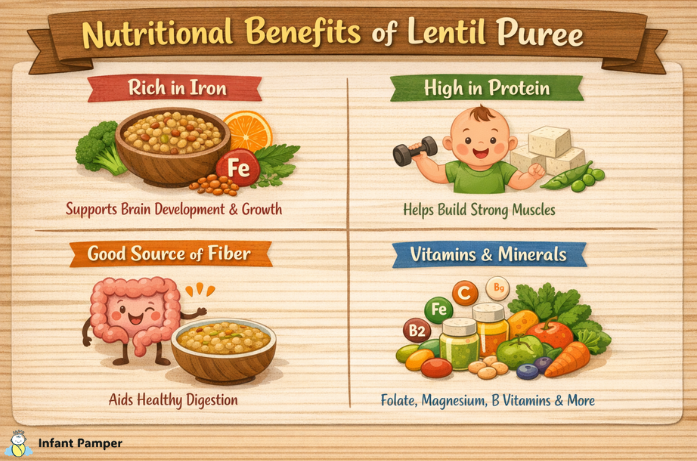
As a mom, one of my biggest concerns was making sure my baby was getting enough nutrients. Lentils made that worry a little easier because they’re naturally rich in essential nutrients.
1. Rich in Iron
Iron is one of the most important nutrients for babies, especially after six months when their natural iron stores begin to decrease. Lentils provide a plant-based source of iron that supports brain development and overall growth.
Pairing lentils with vitamin C-rich foods later on can help improve iron absorption even more.
2. High in Protein
Protein plays a key role in building muscles and supporting overall growth. Lentils are a wonderful plant-based protein option that’s gentle and easy for babies to digest.
For vegetarian families, lentils become an especially important part of a baby’s diet.
3. Good Source of Fiber
Lentils contain fiber that supports digestion. While babies don’t need large amounts, small portions can help keep their digestive system healthy and regular.
If your baby experiences mild constipation during early solids, lentils can sometimes help balance things out.
4. Packed with Essential Vitamins and Minerals
Lentils are rich in folate, magnesium, potassium, and B vitamins. These nutrients support brain development, energy levels, and overall health.
It’s amazing how something so simple can offer so much nourishment in one small bowl.
When Can Babies Start Eating Lentil Puree?
Most babies are ready to begin solids around 6 months of age. At this stage, their digestive system is more developed, and they’re ready to explore new textures.
Lentils can be introduced at this time, as long as they are:
- Fully cooked
- Soft and mushy
- Blended into a smooth puree
Start with small spoonfuls and observe your baby for any reactions. Every baby is different, and it’s perfectly okay to take things slowly.
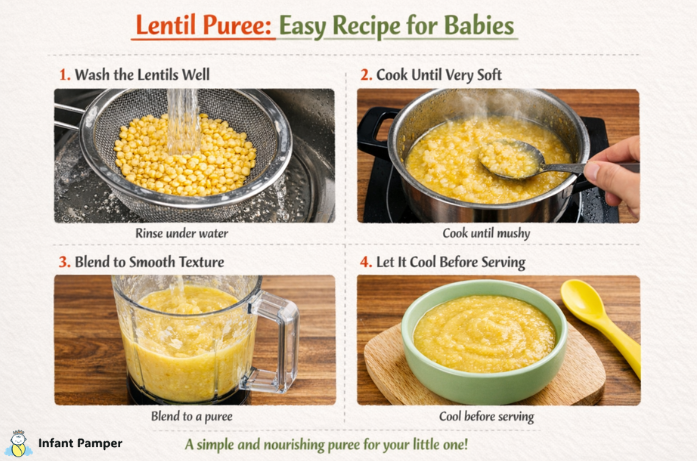
Lentil Puree: Easy Recipe for Babies
One of the most comforting things about lentils is how simple they are to prepare. You don’t need fancy ingredients just a few basics and a little love.
Ingredients:
- 2 tablespoons yellow lentils (moong dal is best for beginners)
- 1 cup water
- A pinch of turmeric (optional)
Step-by-Step Method:
1. Wash the Lentils Well
Rinse the lentils under running water until the water runs clear. This removes dust and impurities.
2. Cook Until Very Soft
Cook the lentils in water until they are soft and mushy. A pressure cooker makes this quicker, but stovetop cooking works just as well.
3. Blend to Smooth Texture
Blend the cooked lentils into a smooth puree. Add water if needed to achieve a soft, slightly runny consistency.
4. Let It Cool Before Serving
Always check the temperature before feeding your baby.
This simple method creates a gentle and nourishing lentil puree that’s perfect for early feeding.
Tips to Make Lentil Puree Baby-Friendly
Over time, I learned that small adjustments can make feeding easier and more enjoyable for both you and your baby.
Keep It Smooth and Light
In the beginning, your baby is still learning how to swallow. A smooth and slightly runny consistency works best and reduces the risk of choking.
Start Plain First
Introduce lentils on their own before mixing with other foods. This helps you identify any sensitivities and allows your baby to get used to the taste.
Watch Your Baby’s Response
After introducing any new food, observe your baby for signs like rash, discomfort, or unusual fussiness. Lentils are generally safe, but every baby is unique.
Serve Fresh Whenever Possible
Fresh food is always best for babies. If you need to store leftovers, refrigerate them and use within 24 hours.
Easy Variations of Lentil Puree
Once your baby becomes comfortable with plain lentils, you can slowly introduce new combinations.
Lentil and Rice Puree
Mix cooked lentils with soft rice and blend together. This creates a balanced and filling meal that’s easy to digest.
Lentil and Vegetable Puree
Add vegetables like carrot, pumpkin, sweet potato, or spinach while cooking lentils. This increases nutrient variety and introduces new flavors. You can also try combinations like broccoli puree as your baby grows and explores new foods.
Lentil Soup for Babies
As your baby grows, you can thin the puree into a soup-like consistency. This helps them transition to different textures.
Common Concerns Parents May Have
It’s completely natural to have questions when introducing new foods.
1. Will Lentils Cause Gas?
Some babies may experience mild gas at first. Starting with small portions and ensuring lentils are well-cooked can help reduce this. In such cases, foods like prune puree can sometimes help support healthy digestion during early solids.
2. Which Lentils Are Best for Babies?
Yellow lentils (moong dal) are usually the easiest to digest. As your baby grows, you can introduce other types gradually.
3. Can I Add Salt or Spices?
For babies under one year, it’s best to avoid salt. Mild spices like turmeric can be added in very small amounts if needed.
Creating a Positive Feeding Experience
Feeding your baby is about more than just nutrition, it’s about connection, comfort, and trust.
Sit with your baby during meals, talk gently, and maintain eye contact. These small moments help your baby feel safe and loved.
There will be messy meals, rejected spoons, and unexpected reactions but that’s all part of learning. Every attempt is progress.
Signs Your Baby Enjoys Lentil Puree
It’s such a joy to see your baby enjoy food.
Some signs your baby may like lentils include:
- Opening their mouth eagerly
- Smiling during feeding
- Reaching for the spoon
- Staying calm and content
If your baby doesn’t like it right away, don’t worry. Sometimes it takes several tries before they accept a new food.
FAQs
1. Is lentil puree good for babies?
Yes, lentil puree is a highly nutritious first food for babies. It provides essential nutrients like iron, protein, and fiber that support healthy growth and development.
2. When can I introduce lentil puree to my baby?
You can introduce lentil puree to your baby around 6 months of age, once they start solid foods. Make sure it is well-cooked and blended into a smooth texture.
3. Which lentils are best for babies?
Yellow lentils (moong dal) are usually the best choice for beginners because they are easy to digest and have a mild flavor suitable for babies.
4. Can lentil puree cause gas in babies?
Some babies may experience mild gas initially. Starting with small amounts and ensuring the lentils are well-cooked can help reduce discomfort.
5. Can I mix lentil puree with other foods?
Yes, once your baby is comfortable with plain lentils, you can mix lentil puree with rice, vegetables, or other baby-friendly foods to add variety and nutrition.
Final Thoughts for Parents
Introducing solids is a beautiful step in your parenting journey. It comes with questions, learning, and so many little moments that stay with you forever.
Lentil puree is one of those simple, nourishing foods that can make this stage feel a little easier. It’s gentle, nutritious, and made with ingredients you can trust.
Take things slowly, trust your instincts, and remember there is no perfect way to do this. You are learning, your baby is learning, and together you are creating something truly special.
And one day, you will look back at these tiny bowls and messy spoons with a full heart, realizing just how meaningful these small moments really were.
For more gentle feeding tips, easy homemade recipes, and real mom guidance, explore more helpful articles on Infant Pamper we are here to support you every step of the way.
Disclaimer: This article is for informational purposes only and is based on general feeding guidance and personal experience. It should not replace professional medical advice. Always consult your pediatrician or a qualified healthcare provider before introducing new foods to your baby or making changes to their diet.