Written with love and care by a caring mom at Infant Pamper
When babies begin exploring new foods, parents often look for snacks that are both nutritious and gentle on tiny tummies. One option that many moms quickly fall in love with is baby yogurt snacks. Yogurt is creamy, mild in flavor, and packed with nutrients that support a baby’s early growth.
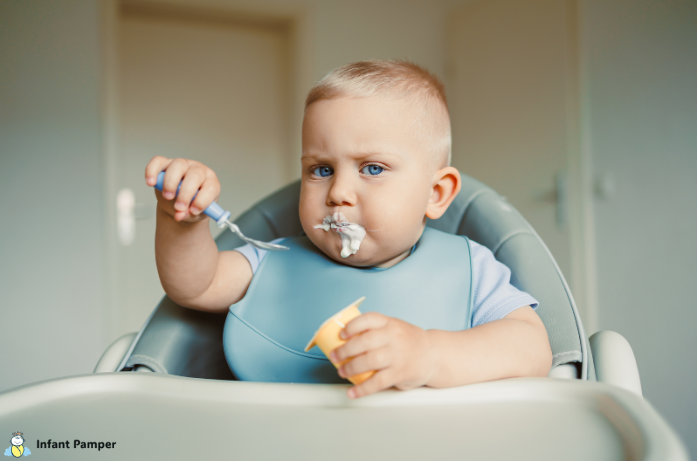
I still remember the first time I offered yogurt to my little one. There was curiosity, a tiny messy spoon, and that adorable face trying something new. Moments like these remind us that introducing foods is not just about nutrition, but also about discovery. Yogurt can be a wonderful addition to your baby’s diet when served in simple and safe ways.
In this guide, we’ll explore healthy yogurt snack ideas, the best types of yogurt for babies, and helpful tips to make snack time both nutritious and enjoyable.
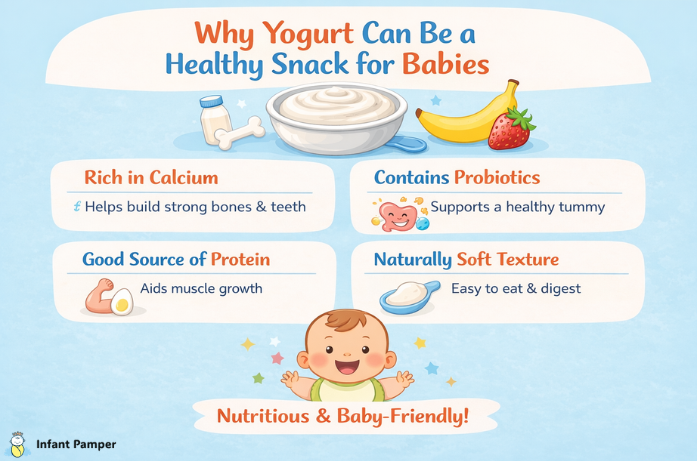
Why Yogurt Can Be a Healthy Snack for Babies
Yogurt is often recommended by pediatricians as one of the early dairy foods babies can try once solids are introduced. Its soft texture makes it easy for babies to eat, even before they have teeth. Research has also explored how yogurt and other fermented dairy foods may support gut health and nutrition during early childhood, as discussed in studies available through the PubMed medical research database:
What makes yogurt especially beneficial is the combination of nutrients it offers.
1. Rich in Calcium
Calcium plays an important role in developing strong bones and teeth. Since babies grow so quickly during their first year, foods rich in calcium can support healthy development.
2. Contains Probiotics
Many yogurts contain beneficial bacteria known as probiotics. These support digestion and help maintain a healthy gut, which is especially helpful as babies adjust to new foods.
3. Good Source of Protein
Protein supports muscle development and overall growth. Yogurt provides an easy way for babies to get this nutrient in a form that is gentle and easy to digest.
4. Naturally Soft Texture
Because yogurt is smooth and creamy, it’s ideal for babies who are still learning how to swallow different textures.
For many families, yogurt becomes one of the first snack options that babies genuinely enjoy.
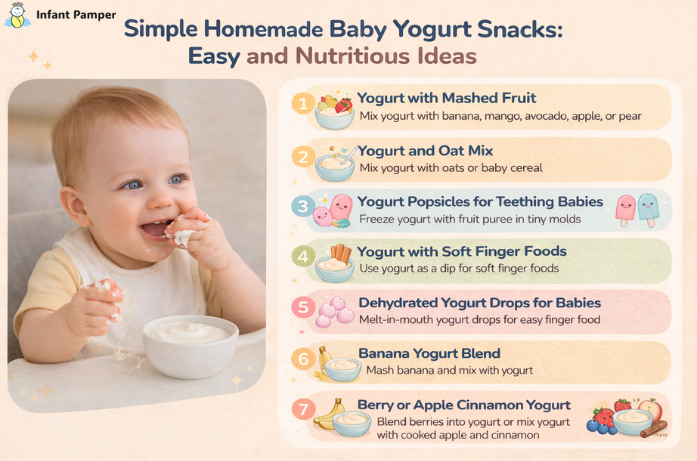
Simple Homemade Baby Yogurt Snacks: Easy and Nutritious Ideas
Parents often love preparing quick snacks at home, especially when they’re simple, healthy, and baby-friendly. Baby yogurt snacks are wonderful because they require very little preparation while still offering plenty of nutrition. Yogurt pairs beautifully with fruits, grains, and soft finger foods, making it easy to create different flavors and textures your baby can enjoy. As your baby explores more vegetables, broccoli puree is another healthy food to introduce. Here are some gentle snack ideas many parents find helpful.
1. Yogurt with Mashed Fruit
This is one of the easiest ways to make yogurt more exciting for babies. Simply mix plain yogurt with soft mashed fruits such as banana, mango, avocado, cooked apple, or steamed pear. You can also pair yogurt with prune puree for another gentle and nutritious snack option. The natural sweetness of fruit blends beautifully with yogurt and creates a balanced, gentle snack for tiny tummies.
2. Yogurt and Oat Mix
If your baby already enjoys oats or baby cereal, try mixing a spoonful of yogurt into it. This creates a thicker, creamy texture that many babies enjoy while adding extra nutrients. It’s also a lovely way to introduce new textures slowly and comfortably.
3. Yogurt Popsicles for Teething Babies
When babies are teething, cool foods can help soothe sore gums. You can freeze small portions of yogurt mixed with fruit puree in tiny molds. These soft yogurt popsicles can be a refreshing snack, especially on warm days.
4. Yogurt with Soft Finger Foods
For babies learning to self-feed, yogurt works wonderfully as a dip. Offer small soft foods like steamed carrot sticks, banana pieces, or tiny pancake bites. Babies often enjoy dipping their food and exploring new textures during snack time.
5. Dehydrated Yogurt Drops for Babies
Many parents also offer dehydrated yogurt drops for babies as an occasional snack. These small melt-in-the-mouth drops are easy for little fingers to pick up and help babies practice self-feeding. When choosing packaged ones, it’s best to check for added sugars and keep ingredients simple.
6. Banana Yogurt Blend
Mash half a ripe banana and mix it with a couple of tablespoons of yogurt. This simple combination is naturally sweet, creamy, and very gentle on babies’ stomachs, making it a favorite for many little ones.
7. Berry Yogurt or Apple Cinnamon Yogurt
You can blend soft berries like strawberries or blueberries into yogurt for a colorful snack, or mix yogurt with cooked apple puree and a tiny pinch of cinnamon. Both options introduce babies to new flavors while keeping the snack healthy and comforting.
Choosing the Best Baby Yogurts
Not all yogurts are the same, and choosing the right type can make a difference for your baby.
When looking for baby yogurts, here are a few things to keep in mind.
Choose Plain Yogurt
Plain yogurt without added sugar is usually the best choice for babies.
Babies don’t need extra sweetness, and simple yogurt allows them to experience natural flavors.
If you want to add flavor, fresh fruit is always a better option.
Look for Full-Fat Yogurt
Babies need healthy fats for brain development and growth.
Full-fat yogurt provides these essential fats and also keeps babies feeling satisfied longer.
Low-fat versions are usually not recommended during infancy unless advised by a pediatrician.
Check the Ingredient List
The best yogurt options usually have very simple ingredients:
- Milk
- Live cultures
If the label lists many added ingredients or sweeteners, it may not be the best choice for babies.
Is Greek Yogurt for Babies a Good Option?
Many parents wonder whether greek yogurt for babies is suitable.
The good news is that Greek yogurt can actually be a great option.
Greek yogurt is strained, which makes it thicker and slightly higher in protein compared to regular yogurt. This thicker texture can be easier for babies learning to eat with a spoon.
However, because it is thicker and slightly tangier, some babies may need time to adjust to the taste.
If your baby finds the flavor too strong, try mixing Greek yogurt with mashed banana or apple puree to soften the taste.
When Can Babies Start Eating Yogurt Snacks?
Most pediatricians suggest introducing yogurt around 6 months of age, once babies have started solid foods.
At this stage, babies are typically ready to explore soft textures like purees and mashed foods.
Before offering yogurt snacks, it’s helpful to:
- Introduce single foods slowly
- Watch for any signs of food sensitivity
- Offer small amounts first
Every baby develops at their own pace, so patience and observation are always important. ealth nutrition resources, including guidance from the Government of Newfoundland and Labrador Healthy Eating program, also explain that yogurt can be one of the early dairy foods offered to babies when introducing solids.
Helpful Tips for Serving Yogurt to Babies
Snack time can sometimes get messy, but it’s also a wonderful opportunity for babies to learn.
Here are a few gentle tips that may make yogurt snacks easier for both you and your baby.
Start with Small Portions
A few spoonfuls are usually enough in the beginning.
Babies have small stomachs, and snacks are meant to complement meals rather than replace them.
Use a Baby Spoon or Let Them Explore
Some babies prefer being fed, while others love grabbing the spoon themselves.
Both approaches are perfectly normal.
Allowing babies to explore food helps build confidence and encourages independence.
Expect Some Mess
Yogurt and babies usually mean a little mess and that’s okay.
Food exploration is an important part of development. A bib, a washable mat, and a little patience can go a long way.
Avoid Added Sugar
Sweetened yogurts marketed for kids may contain more sugar than babies need.
Choosing plain yogurt and adding fruit keeps snacks healthier and more natural.
Signs Your Baby Enjoys Yogurt
Every baby reacts differently when trying new foods. Some babies love yogurt immediately, while others may need several tries before warming up to it.
Here are a few signs your baby may enjoy yogurt snacks:
- Leaning forward for another spoon
- Smiling or opening their mouth eagerly
- Reaching for the spoon or bowl
- Calm and content during snack time
If your baby doesn’t seem interested right away, that’s completely normal. Sometimes babies need multiple exposures to accept new foods.
When to Be Careful with Yogurt Snacks
While yogurt is generally safe and healthy, there are a few situations where parents should be mindful.
If your baby has a known dairy allergy or strong sensitivity, yogurt may not be suitable.
Also watch for symptoms such as:
- Rash around the mouth
- Digestive discomfort
- Vomiting
- Unusual fussiness after eating dairy
If any of these occur, it’s best to speak with your pediatrician.
Fortunately, most babies tolerate yogurt well because the fermentation process makes it easier to digest than milk.
Creating Positive Snack Moments
Introducing foods like yogurt is not just about nutrition it’s also about building joyful experiences with food.
Sitting together, talking gently, and smiling during meals helps babies feel safe and curious.
Even when snacks get messy or babies refuse food, those moments are part of learning. Over time, babies become more confident eaters.
And often, yogurt becomes one of those familiar foods babies grow to love.
Final Thoughts for Parents
Watching your baby explore new foods is one of the most heartwarming parts of early parenting. Those first curious bites, messy little hands, and yogurt-covered smiles quickly become memories you’ll cherish. Baby yogurt snacks can be a gentle, nutritious option that helps support your baby’s growth while introducing new tastes and textures.
Whether you serve plain yogurt with fruit, simple homemade yogurt treats, or carefully chosen baby yogurts, the most important thing is making snack time a positive experience. With patience, love, and a little creativity, these small moments around food can turn into some of the sweetest parts of your baby’s day.
Looking for more gentle feeding tips and baby snack ideas? Explore more helpful guides on Infant Pamper to make your parenting journey a little easier and a lot more joyful.
FAQs
1. When can babies start eating yogurt snacks?
Most babies can start eating yogurt snacks around 6 months of age, once they begin solid foods. Always start with small amounts and choose plain, full-fat yogurt without added sugar.
2. What type of yogurt is best for babies?
Plain, full-fat yogurt with live cultures is usually the best option for babies. Many parents also choose Greek yogurt for babies because it is thicker and contains more protein.
3. Are dehydrated yogurt drops safe for babies?
Yes, dehydrated yogurt drops for babies can be a convenient snack, especially for babies learning to self-feed. However, it’s important to choose brands with no added sugar or artificial flavors.
4. Can babies eat yogurt every day?
In most cases, babies can enjoy yogurt regularly as part of a balanced diet. A few spoonfuls during snack time can provide calcium, protein, and probiotics that support healthy growth.
5. What can I mix with yogurt for baby snacks?
You can mix yogurt with mashed fruits like banana, mango, berries, or cooked apple. Oats, soft pancakes, or fruit purees also make delicious and nutritious baby yogurt snacks.
Disclaimer: This article is for informational purposes only and is based on personal parenting experience and general nutrition guidance. It should not replace professional medical advice. Always consult your pediatrician or a qualified healthcare professional before introducing new foods or making changes to your baby’s diet.
Discover more baby food recipes, feeding tips, and helpful guides
Baby Oatmeal: When to Start, How to Prepare & Best Recipes for Beginners
5 Easy Sweet Potato Baby Food Recipes for Growing Babies
10 Healthy Finger Foods for Toddlers You Can Make in Minutes
Baby Food Recipes Every Parent Should Try
The Right Way to Bottle Feed a Breastfed Baby