Written with care by a caring mom at Infant Pamper
The first time you bring your newborn home from the hospital is an incredibly special moment in your parenting journey. You spend time admiring their tiny hands, listening to their soft breathing, and holding them close. But along with these beautiful moments, there are times when your baby cries and it becomes difficult to calm them. Many parents start looking for gentle newborn soothing techniques that can comfort their baby quickly and bring peace back to those overwhelming moments.
Newborns need time to adjust to life outside the womb. Everything feels new to them, the lights, sounds, and even the feelings of hunger or tiredness. Because of this big change, babies may become fussy and cry even when nothing seems wrong. Learning simple newborn soothing techniques can help parents respond calmly and comfort their baby with love and reassurance.
This article presents effective and gentle techniques which parents can use to quickly calm their newborns. These methods help babies achieve a state of safety and security while they maintain a relaxed condition.
Table of Contents
Understanding Why Newborns Cry
Newborns use crying as their only available method. Your baby expresses a requirement or discomfort through crying which can create stressful moments for parents.
Newborns typically cry because of these common reasons:
- Hunger or needing to feed
- A wet or dirty diaper
- Gas or tummy discomfort
- Feeling tired or overstimulated
- Wanting closeness and comfort
When babies cry their basic needs appear to be satisfied. Their nervous system develops throughout this period which helps them learn how to adapt to their surrounding environment.
Understanding these needs makes it easier to choose the right soothing method for your baby. Parents looking for trusted guidance can also explore helpful resources like this guide from UNICEF on soothing babies
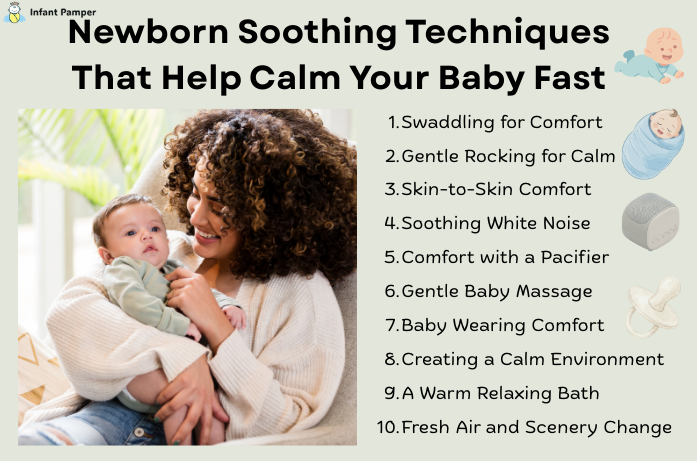
Newborn Soothing Techniques That Help Calm Your Baby Fast
Techniques that aid in soothing newborns prove effective because they create conditions that mirror the security and comfort experienced within the womb.
This study will present several such techniques that demonstrate their effectiveness in achieving the desired results.
1. Swaddling for a Sense of Security
‘Swaddling’ (wrapping in cloth) is considered the most effective method for soothing newborns.
Before birth, infants resided in the comfortable and secure environment of their mother’s womb.
After birth, the open surroundings create an experience that feels strange and unsettling to them. Swaddling provides infants with a sense of security, as it replicates the same safe and comfortable experience they enjoyed while in the womb.
When performed correctly, swaddling brings immediate relief to many infants.
Swaddling can help:
- Reduce the startle reflex
- Make babies feel safe and secure
- Promote longer and more peaceful sleep
You should use a soft blanket to swaddle your infant; wrap their arms snugly within the blanket, but allow their hips and legs sufficient room to move.
2. Gentle Rocking and Movement
Movement is incredibly soothing for newborns because they experienced it constantly during pregnancy.
Every time you walked or shifted positions, your baby felt gentle rocking motions in the womb. Recreating that movement can help them relax.
You can soothe your baby by:
- Walking slowly while holding them close
- Rocking gently in a rocking chair
- Swaying side to side in a calm rhythm
These soft motions can quickly help regulate your baby’s breathing and calm their nervous system.
3. Skin-to-Skin Contact
A newborn finds comfort through close parent contact which nobody else can provide.
Skin-to-skin contact gives the two people involved three essential elements which establish strong emotional bonds. When your baby rests against your chest, they can hear your heartbeat, smell your scent, and feel your warmth.
This simple act can help regulate:
- Your baby’s breathing
- Heart rate
- Body temperature
- Stress levels
Place your baby gently against your chest and cover them with a light blanket. Sitting quietly together for a few minutes often helps calm even a very fussy newborn.
4. Using White Noise
Many parents are surprised to learn that the womb is actually a noisy place. Babies grow accustomed to hearing constant background sounds like blood flow and heartbeat.
White noise recreates this familiar environment and helps babies feel secure.
Some soothing sound options include:
- Soft fan noise
- Gentle rain sounds
- White noise machines
- Soft “shushing” sounds
These consistent sounds can block sudden noises and help babies relax or fall asleep faster.
5. Offering a Pacifier
Sucking is a natural reflex for babies and can help them feel calm and secure.
Even when they are not hungry, sucking can help regulate a baby’s emotions. A pacifier can be a helpful tool when your baby is tired, overstimulated, or simply looking for comfort.
Some babies accept pacifiers immediately, while others may take a little time to get used to them. If your baby enjoys using one, it can be a useful addition to your newborn soothing techniques routine.
6. Gentle Baby Massage
Touch is incredibly calming for newborns. A gentle massage can help your baby relax while also strengthening the bond between parent and child. Learn more about the benefits of infant massage for your baby’s comfort and development.
Massage is particularly helpful when babies experience mild gas discomfort.
A simple baby massage routine might include:
- Rubbing the tummy in slow clockwise circles
- Gently massaging the arms and legs
- Softly stroking the baby’s back
Using warm hands and calm movements can make this experience soothing and comforting for your baby.
7. Baby Wearing for Comfort and Closeness
“Baby wearing” is a simple and effective way to soothe newborns. Using soft carriers or wraps keeps babies close while parents move around during the day. The warmth, gentle rocking, and familiar heartbeat make babies feel safe and secure.
At the same time, parents can continue their daily tasks while keeping their baby comforted. Many babies also calm down quickly when they are picked up and held close in their parents’ arms.
8. Creating a Calm and Quiet Environment
Newborns are very sensitive to their surroundings. Bright lights, loud sounds, and busy environments can easily overwhelm them.
When your baby seems fussy, try creating a calmer space.
This may include:
- Dimming the lights in the room
- Reducing background noise
- Moving to a quieter area of the home
A peaceful environment helps babies relax and can make soothing much easier.
9. A Warm Bath for Relaxation
Warm water provides extreme comfort to certain babies.
Warm water therapy helps to relax the muscles while also soothing the body. This bathing ritual establishes a calm and comforting nighttime routine that serves as a signal for sleep.
Parents should ensure that the bathing experience remains peaceful and pleasant for their children. To provide the child with extra comfort, parents should speak to them affectionately and in a gentle voice as they wrap them in a soft towel and hold them in their arms.
10. Fresh Air and a Change of Scenery
People can experience significant benefits from making minor changes to their surroundings. The process of stepping outside for several minutes enables your baby to discover both fresh air and natural light.
The unfamiliar visual and auditory elements will create various distractions which will help them to reach a state of relaxation.
The combination of a backyard walk and an open window area will help your baby achieve a positive mood change. Parents can also read guidance from the National Health Service about calming a crying baby here:
Combining Techniques for Faster Soothing
Many parents find that combining a few soothing methods works best.
For example, you might:
- Swaddle your baby
- Hold them against your chest
- Gently sway side to side
- Use soft white noise
This combination recreates the comforting sensations of the womb and often helps babies calm down faster.
Over time, you will naturally discover which newborn soothing methods work best for your baby.
Final Thoughts
The early newborn days are filled with learning, for both you and your baby. As your little one grows, you may also enjoy our guide to your baby’s first haircut. Some days may feel smooth and peaceful, while others may feel a little more challenging. That’s completely normal. Every baby is different, and it takes time to understand what comforts them the most.
Using gentle newborn soothing techniques isn’t about stopping every cry instantly. Instead, it’s about helping your baby feel safe, secure, and loved while they adjust to the world around them. Small actions like holding your baby close, rocking them gently, or creating a calm environment can make a big difference.
With patience and practice, you will begin to notice your baby’s signals and discover which newborn soothing methods work best for your little one. Trust your instincts as a parent, you know your baby better than anyone else.
Most importantly, remember that these early moments pass quickly. One day, you’ll look back at the quiet cuddles, sleepy smiles, and gentle rocking as some of the sweetest memories of your parenting journey.
FAQs
If you found these tips helpful, explore more gentle baby care guides and parenting advice here at Infant Pamper. Our goal is to support parents with simple, loving, and practical tips to make the newborn journey easier and more joyful.
About the Author
Geeta Yogi writes with a caring, parent-focused approach to newborn care and early motherhood. She shares gentle, practical guidance designed to help parents better understand their baby’s needs, build confidence, and make everyday parenting moments feel a little easier.