By Infant Pamper Team
Blueberries are one of the healthiest first fruits you can offer your little one. But many parents wonder exactly how to cook blueberries for baby in a way that’s safe, nutritious, and easy to digest. While these tiny berries are packed with antioxidants, fiber, and vitamin C, their round shape and slightly tough skin can pose a choking risk if not prepared correctly.
In this complete guide, you’ll learn when babies can eat blueberries, whether cooking is necessary, the safest preparation methods, how to make blueberry puree for baby, and how to serve them confidently at every stage, from smooth spoon-fed puree to baby-led weaning finger foods.
When babies can eat blueberries?
Most babies are ready to start solids around 6 months of age, as recommended by American Academy of Pediatrics (AAP) feeding guidelines. Blueberries make an excellent early fruit because they are naturally sweet, nutrient-dense, and easy to combine with other baby foods.
However, whole blueberries are a choking hazard for infants and young toddlers. For safe feeding:
- 6–8 months: Serve as smooth blueberry puree for baby or well-mashed.
- 9–12 months: Mash or cut into small pieces (quartered).
- 12+ months: Whole blueberries may be offered if your child chews well, always supervise.
Texture matters more than age. Always adjust consistency based on your baby’s chewing and swallowing skills.
Is It Necessary to Cook Blueberries for Babies?
Not always but often recommended.
Ripe blueberries can be mashed and served raw if your baby handles textured foods well. However, cooking softens the skin, improves digestibility, and reduces choking risk for younger babies.
Cooking is especially helpful if:
- Your baby is under 8 months
- The blueberry skins feel thick or firm
- You want to prepare smooth blueberry puree
- You’re batch-prepping homemade blueberry baby food recipes
Light cooking preserves nutrients while making the fruit gentler on your baby’s developing digestive system.
Blueberry Benefits for Babies
Blueberries are a powerhouse of essential nutrients:
- Antioxidants – Boost immunity and protect cells (Harvard T.H. Chan School of Public Health)
- Vitamin C – Supports immune health
- Vitamin K – Helps with blood clotting and bone strength
- Manganese – Supports bone growth and metabolism
- Fiber – Aids digestion and prevents constipation
According to the U.S. Department of Agriculture (USDA), blueberries rank among the top antioxidant-rich fruits, making them a fantastic addition to your baby’s
Adding blueberries to your baby’s diet supports brain development, gut health, and overall growth. If you’re exploring other wholesome options alongside blueberries, you may also enjoy this complete guide to nutrient-rich first foods for babies:
How to Cook Blueberries for Baby: 3 Safe Methods
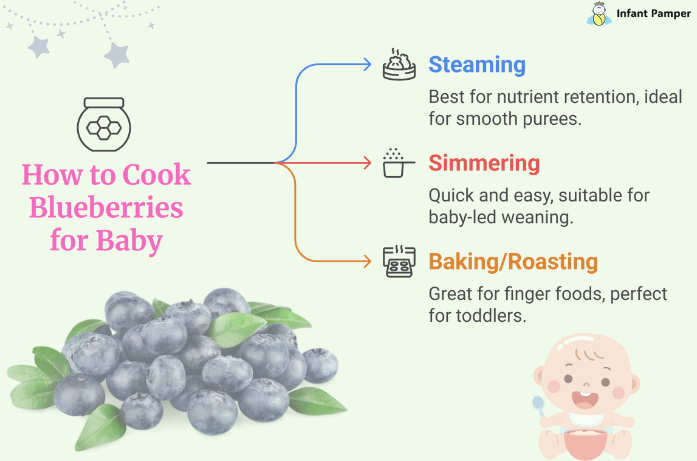
1. Steamed Blueberries for Baby (Best for Nutrient Retention)
- Wash blueberries thoroughly.
- Place in a steamer basket over boiling water.
- Steam for 3–5 minutes until skins split.
- Cool and mash or blend into a smooth puree using a baby food maker or blender.
2. Simmering on the Stove
- Add blueberries to a small saucepan with a few tablespoons of water.
- Simmer on low heat for 5–7 minutes until berries burst.
- Mash or blend as desired for baby-led weaning or spoon-feeding.
3. Baking or Roasting (Great for Baby Finger Foods)
- Preheat oven to 350°F (175°C).
- Spread blueberries on a parchment-lined tray.
- Roast for 8–10 minutes until soft and juicy.
- Cool and serve mashed for younger babies or as finger foods for toddlers.
How to Make Blueberry Puree for Baby (Step-by-Step)
Ingredients:
• 1 cup fresh or frozen blueberries
• Water or breast milk/formula (for thinning)
Instructions:
- Steam or simmer blueberries until soft.
- Blend until smooth using a food processor, adding liquid for desired consistency.
- Serve fresh or freeze in ice cube trays for easy portions.
Serving Blueberries Safely by Age
For babies practicing baby-led weaning, lightly coat mashed blueberries in baby cereal to reduce slipperiness.Here’s a quick guide for safe serving:
6–8 Months
- Smooth blueberry puree
- Mixed into cereal or yogurt
9–12 Months
- Mashed blueberries
- Quartered pieces for finger foods
12+ Months
- Whole blueberries (if chewing skills are strong)
- Always supervise during meals
For babies practicing baby-led weaning, lightly coat mashed blueberries in baby cereal to reduce slipperiness. If your baby needs extra digestive support while starting solids, prune puree for baby is another gentle homemade option worth trying.
Blueberry Allergy & Safety Tips
Blueberry allergies are rare but still possible. When introducing any new food: (CDC safe feeding guidelines).
- Start with a small amount (1–2 teaspoons).
- Wait 24 hours before introducing another new food.
- Watch for rash, swelling, vomiting, or breathing issues.
- Avoid adding sugar, honey, or salt.
- Always supervise meals.
Blueberry Puree Storage Tips
Batch-prepping homemade baby food can save time.
Refrigerator:
Store in an airtight container for up to 48 hours.
Freezer:
Freeze in ice cube trays, then transfer cubes to freezer bags for up to 3 months.
Reheating:
Warm gently and stir thoroughly to remove hot spots before serving.
FAQs About Blueberries for Babies
Q1: Can I use frozen blueberries for baby food?
Yes! Frozen blueberries are just as nutritious as fresh. Thaw and cook before serving.
Q2: Are blueberry skins safe for babies?
Yes, but they can be tough. Cook or mash for infants under 12 months.
Q3: Can babies eat raw blueberries?
Not for beginners. For younger babies, cook and mash to reduce choking risk.
Q4: How much blueberry puree should I start with?
Start with 1–2 teaspoons and increase gradually.
Q5: Can I mix blueberries with other foods?
Absolutely! Try apple-blueberry puree, pear-blueberry mix, or stir into oatmeal.
Final Thoughts
Blueberries are one of the easiest and most nutritious fruits to introduce during your baby’s first year. Once you understand how to cook blueberries for baby safely, they can become a versatile staple in your homemade baby food routine.
Whether you prepare a smooth blueberry puree for baby, mix it into oatmeal, or serve soft pieces for baby-led weaning, the key is proper texture and supervision.
Simple preparation, safe serving, and balanced variety will help your little one enjoy blueberries while supporting healthy growth and development.
For more homemade baby food recipes and feeding tips backed by experts, visit Infant Pamper for practical guides and easy step-by-step instructions!