
By a Caring Mom at Infant Pamper
Parenthood today is a juggling act, balancing work, family, and self-care. One of the biggest questions new parents face is whether to stay home or choose daycare. Understanding why parents choose daycare helps remove guilt and adds confidence to this decision.
For many modern families, daycare is not just a necessity. It’s a safe, loving, and structured environment where children can learn, play, and grow while parents gain peace of mind knowing their child is cared for and thriving.
Modern Parenting and the Rise of Daycare
Parenting today looks quite different than it did a generation ago. With both parents often working, and extended family members living farther away, childcare options like daycare have become essential for family balance.
According to studies from Child Trends and Pew Research, more than half of children under five spend some time in daycare or non-parental care. This shift reflects not just necessity but also a growing trust in daycare centers as safe, enriching spaces that support children’s development.
Modern daycare programs offer structured routines, loving caregivers, and opportunities for learning and socialization. For working parents, this structure provides stability, and for children, it offers comfort and consistency.
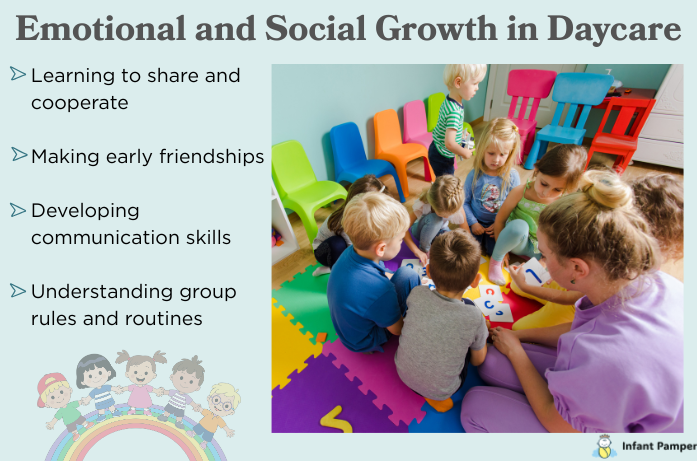
2. Emotional and Social Growth in Daycare
One of the biggest reasons why parents choose daycare is the strong boost it gives to a child’s emotional and social development. In daycare, children learn through daily interaction, playing with peers, sharing toys, and expressing feelings in a safe, caring space. According to the National Conference of State Legislatures (NCSL), social and emotional learning in early childcare settings plays a vital role in shaping lifelong emotional health and interpersonal skills.
Key social benefits of daycare:
- Learning to share and cooperate
- Making early friendships
- Developing communication skills
- Understanding group rules and routines
These small, everyday experiences help children build empathy, patience, and teamwork. Experts say that social skills in daycare help little ones become more confident, adaptable, and emotionally secure, laying the foundation for positive relationships and success later in life.
3. Early Learning and Cognitive Development
Daycare isn’t just about supervision, it’s an early learning environment. High-quality centers follow play-based learning models.
Children in daycare experience:
- Storytelling and music to boost language skills
- Arts and crafts for creativity and fine motor development
- Sensory play for curiosity and exploration
- Educational games that build memory and focus
This type of early cognitive stimulation encourages curiosity and problem-solving. By the time they reach preschool, many daycare children already demonstrate strong communication and learning readiness.
4. Routine, Structure, and Independence
Children feel happiest and safest when their days follow a steady rhythm. That sense of predictability is one of the main reasons parents choose daycare. A structured routine with regular times for meals, naps, play, and learning helps little ones know what to expect next. This consistency builds comfort, reduces anxiety, and makes transitions much smoother, both at daycare and at home.
Structured childcare also helps children build healthy habits from an early age. They gradually learn patience, self-discipline, and responsibility through everyday routines. A stable and nurturing childcare environment gives children the structure they need to thrive emotionally and socially. The predictable rhythm of their day also supports emotional balance and even better sleep, as children feel secure knowing what each day will bring.
At daycare, children also begin exploring independence in small but meaningful ways, tidying up toys, feeding themselves, or putting on their shoes. These simple achievements nurture confidence and self-esteem, preparing them for preschool life and helping them take pride in doing things on their own.
5. Benefits for Parents: Balance and Peace of Mind
For many working parents, daycare truly feels like a blessing. It provides more than just child supervision, it offers emotional relief, structure, and trust. Knowing their little one is in a safe, nurturing environment with trained caregivers allows parents to focus on work, manage daily responsibilities, or simply take a moment for self-care without the constant weight of worry.
Why daycare helps parents:
- Reduces stress and guilt: Parents can concentrate on their careers or personal goals knowing their child is in capable, loving hands.
- Promotes productivity and mental well-being: A dependable childcare routine allows parents to plan their days effectively, leading to better focus and less burnout.
- Builds trust through communication: Many modern daycare centers share daily updates, photos, and notes about meals, naps, and activities, helping parents stay emotionally connected even while apart.
According to the American Psychological Association parents who have reliable childcare experience greater emotional balance, relationship satisfaction, and overall happiness. The assurance that their child is learning, laughing, and thriving throughout the day brings comfort and calm, allowing families to reconnect joyfully at home.
Daycare does not just support children’s development; it also strengthens the emotional foundation of the entire family.
6. Trained Caregivers and Safe Environments
Choosing a licensed Daycare Center means choosing professional care. Most centers are regulated by state laws that ensure proper staff training, safety, and hygiene.
Common daycare safety features include:
- CPR and first-aid–trained caregivers
- Age-appropriate toys and furniture
- Strict cleanliness and hygiene routines
- Secure entrances and pickup systems
- Healthy meals and snack routines
Daycare staff are educated in child development and know how to handle everything, from toddler tantrums to emotional reassurance. Parents gain peace of mind knowing their children are protected, nurtured, and guided by trained professionals.
7. Practical and Economic Factors
Let’s be real, daycare is also a practical choice. For many families, it’s more affordable than hiring a full-time nanny, especially when both parents work.
Practical benefits include:
- Flexible part-time or full-time options
- Multi-child discounts for siblings
- Employer or government childcare assistance programs
For many families, daycare strikes the right balance between cost, structure, and educational value, a combination that fits modern family lifestyles perfectly.
8. Overcoming Common Daycare Concerns
It’s normal for parents to worry when starting daycare. Concerns like separation anxiety, illness exposure, or emotional adjustment are very common.
How to make the transition smoother:
- Visit the daycare together before the first day
- Start with shorter hours and gradually increase time
- Bring a comfort item from home (like a soft toy or blanket)
- Keep drop-offs positive and consistent
Yes, minor colds may happen, but they help build stronger immunity. Within a few weeks, most children adjust beautifully and start enjoying their daycare days, greeting friends and teachers with big smiles.

9. Choosing the Right Daycare
Picking the right daycare center can feel overwhelming, but a few key factors make the process easier: According to the American Academy of Pediatrics, parents should look for programs that prioritize safety, nurturing care, and early learning opportunities to support healthy development.
- Licensing and accreditation: Always ensure the center meets local and state standards.
- Cleanliness and safety: Observe hygiene, childproofing, and security measures.
- Staff qualifications: Look for caregivers who are trained, calm, and consistent.
- Low child-to-staff ratio: Smaller groups mean more individual care.
- Parent communication: Regular feedback and transparency build trust.
- Curriculum: Look for a healthy balance of play, rest, and learning.
Most importantly, trust your instincts. You’ll sense when a place feels right for your child.
10. Long-Term Impact of Daycare
The benefits of daycare extend well beyond the early years. Research shows that children who attend quality daycare experience lasting developmental advantages. Early childcare environments support stronger cognitive growth, social adaptability, and long-term academic success.
- Enter school with stronger academic readiness
- Develop advanced language and problem-solving skills
- Show higher levels of confidence and independence
- Have better emotional control and teamwork skills
These early experiences build a foundation for lifelong learning, resilience, and curiosity.
Final Thought
Parenting is a journey filled with love, decisions, and constant learning. Choosing daycare is one of those choices that reflects deep care, not distance. It’s about giving your child a chance to explore the world safely, to grow socially and emotionally, and to learn independence in a nurturing space.
When we look closely at why parents choose daycare, we see that its not about stepping away, it’s about stepping up to create balance, opportunity, and joy for both parent and child.
Daycare is not just a place where children spend time; it’s where they discover friendship, creativity, and confidence, all while knowing they are loved beyond measure.
FAQs
1. Is daycare good for infants?
Yes! Quality daycare offers nurturing care, early learning, and safe social exposure that support healthy development.
2. How do I know my child is ready for daycare?
Look for curiosity, comfort with short separations, and interest in other children.
3. Does daycare affect bonding?
Not negatively. Consistent love and quality time at home maintain a strong parent-child bond.
4. What’s the best age to start daycare?
Most experts recommend between 12–18 months, depending on your family’s situation and your child’s personality.
Disclaimer: This article is meant for informational purposes only. For personalized guidance, please consult your pediatrician or an early childhood care expert.
At Infant Pamper, we know that every parenting decision comes from love. Whether you’re exploring daycare or navigating baby milestones, our goal is to guide, support, and reassure you at every step.