Becoming a parent often means questioning everyday things you never thought twice about before. One of the most common concerns today is screen use. Phones, televisions, tablets, and laptops are everywhere, and it can feel almost impossible to keep a baby completely away from them. Still, many parents ask an important question: why is screen time bad for babies, especially in the earliest months of life?
The concern is not about judging helping parents or creating fear. It is about understanding how a baby’s brain and body grow, and how early habits quietly shape development. Babies experience the world differently from adults, and what seems harmless or entertaining to us can have deeper effects on them. This article is written to gently guide new parents and caregivers with clear, research-backed information so they can make confident choices for their little ones.
Why Is Screen Time Bad for Babies? Understanding the Core Reason
To truly understand why screens are discouraged for babies, we need to look at how early development works. During the first two years of life, a baby’s brain grows faster than at any other time. Millions of neural connections are formed every second, shaped by real-life experiences such as touch, movement, sound, and emotional interaction.
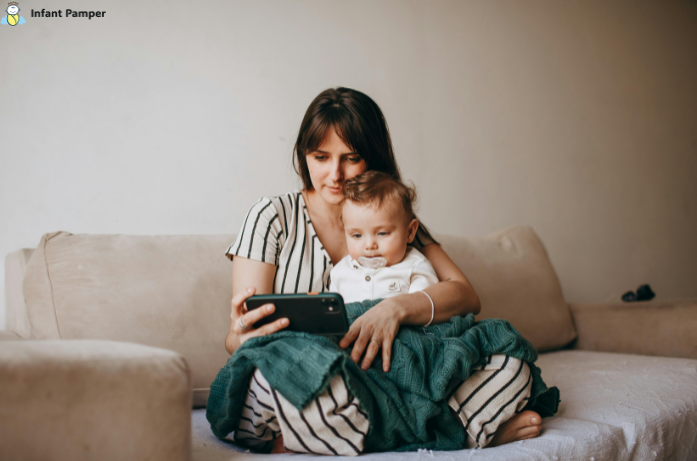
Screens offer passive stimulation. They move, flash, and make sounds, but they do not respond to a baby’s cues in a meaningful way. Babies learn best through two-way interaction, when they smile and someone smiles back, when they babble and a caregiver responds, or when they point and an adult names what they see. Screens cannot replicate this essential back-and-forth communication.
This is the core reason screen time can be harmful: it replaces experiences that babies need most during critical stages of growth.
Screen Time for Babies Under 1: Why Experts Say Avoid It
The first year of life lays the foundation for everything that follows, speech, emotional regulation, movement, and social skills. Screen time for babies under 1 is strongly discouraged by pediatric and child development experts because infants do not yet have the ability to learn effectively from screens.
At this age, babies:
- Learn through sensory exploration
- Depend on facial expressions and voice tone
- Need physical interaction to understand the world
Even so-called educational videos do not support learning in infants the way human interaction does. A baby cannot ask questions, get clarification, or receive emotional feedback from a screen. Instead, the screen often distracts from valuable bonding time with parents and caregivers.
Live video chatting with relatives is usually considered an exception, because it involves real faces and voices responding directly to the baby. Outside of that, minimizing exposure is best during the first year.
Is Screen Time Bad for Babies Even in Small Amounts?
Many parents wonder, is screen time bad for babies if it is only for a few minutes here and there. The answer depends on frequency, consistency, and what the screen time replaces.
Occasional, brief exposure, such as a baby glancing at a TV while a parent is in the room, does not automatically cause harm. Problems arise when screens become a regular part of a baby’s routine or are used to calm, distract, or occupy them frequently.
When screen use replaces:
- Talking
- Singing
- Reading
- Floor play
- Eye contact
then development can be affected over time. Babies need repetition and interaction to build skills. Even small daily habits, when repeated consistently, shape long-term outcomes.
Screens and Baby Brain Development
Screens and baby brain development are closely linked because the brain is still wiring itself based on experiences. Real-world interactions activate multiple areas of the brain at once, language, emotion, movement, and sensory processing.
Screens, on the other hand, often overstimulate certain areas while under-stimulating others. Fast-moving images and bright colors can overwhelm a developing brain, making it harder for babies to learn how to focus and process information calmly.
Research from child development institutions shows that early exposure to screens may affect how the brain organizes attention and learning pathways. Babies are not equipped to filter or interpret the rapid changes seen on screens, which can interfere with natural learning rhythms.
Baby Screen Time Effects on Language and Speech
One of the most noticeable baby screen time effects is delayed language development. Babies learn language by listening to real conversations, watching mouth movements, and responding to sounds and expressions.
When screens are on:
- Adults may talk less to the baby
- Background noise can reduce word clarity
- Babies hear fewer meaningful words
Even educational programs do not adapt to a baby’s individual responses. A parent saying, “Yes, that’s a ball!” after a baby points is far more powerful than a cartoon character naming objects on a screen.
Over time, reduced verbal interaction can slow vocabulary growth and expressive language skills.
How Screen Time Affects Babies’ Sleep Patterns
Sleep is essential for physical growth and brain development. Understanding how screen time affects babies includes looking at sleep quality and routines.
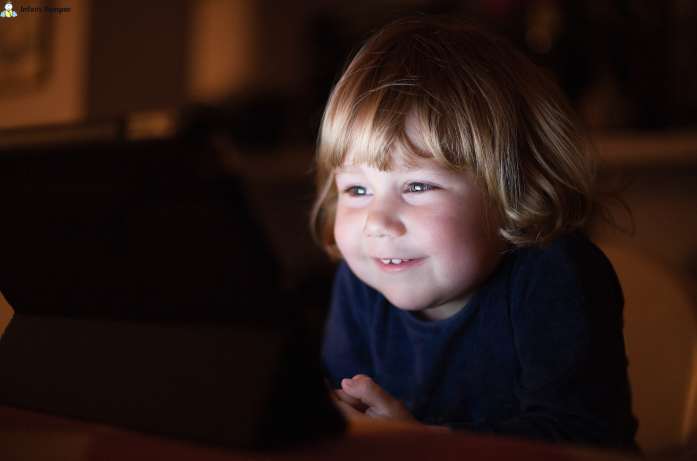
Screens emit blue light, which interferes with the production of melatonin, the hormone that helps regulate sleep. In addition, screen content can overstimulate babies, making it harder for them to settle down.
Babies exposed to screens, especially before naps or bedtime, may:
- Take longer to fall asleep
- Wake more often at night
- Have shorter sleep durations
Even background television noise can disrupt sleep cycles, even if the baby appears to be resting peacefully.
Screen Exposure Infants and Attention Development
Screen exposure infants experience early can influence attention development later on. Babies are naturally curious and learn to focus through slow, repetitive exploration, watching a caregiver’s face, reaching for objects, or listening to familiar voices.
Screens often change scenes rapidly, which can condition the brain to expect constant stimulation. This may make it harder for babies to develop patience and sustained attention during quiet activities like reading or independent play as they grow older.
While attention challenges do not appear immediately, early patterns can influence behavior over time.
Physical Development and Reduced Movement
Babies learn with their bodies. Rolling, crawling, grabbing, and kicking all support muscle strength and coordination. Screen time encourages stillness, which can reduce opportunities for movement.
When babies spend more time watching screens, they may spend less time:
- On their tummy
- Exploring their surroundings
- Practicing motor skills
Physical play is not just about muscles, it supports brain development and confidence too.
Emotional Development and Bonding
Babies rely on caregivers to help them understand and manage emotions. When a baby cries and is comforted, their brain learns safety and trust. When screens are used frequently to distract or soothe, babies may miss these learning moments.
Human connection teaches babies:
- Emotional regulation
- Social cues
- Comfort through interaction
Bonding moments cannot be replaced by digital content, no matter how engaging it appears.
Infant Screen Time Guidelines from Health Experts
Most pediatric organizations share similar infant screen time guidelines based on extensive research:
- Under 18 months: Avoid screen time, except for video chatting
- 18 to 24 months: Limited, high-quality content with active parental involvement
- Over 2 years: Small amounts with clear limits and shared viewing
These guidelines are designed to protect early development, not to make parenting harder.
Trusted resources include:
- American Academy of Pediatrics
- Centers for Disease Control and Prevention
- Harvard University Center on the Developing Child
What Parents Can Do Instead of Screens
You do not need expensive toys or perfect routines. Simple activities are powerful:
- Talking during feeding or diaper changes
- Singing lullabies
- Reading picture books
- Letting babies explore safe household items
- Taking short outdoor walks
Even a few minutes of focused interaction supports healthy development more than passive screen viewing.
Frequently Asked Questions
1. Can screens ever be helpful for babies?
Screens are not necessary for babies. Human interaction is always more beneficial at this stage.
2. What if my baby accidentally watches TV?
Brief, unintentional exposure is common and not a reason to panic. Focus on overall habits.
3. Are background screens harmful?
Yes, background screens can reduce parent-child interaction and disrupt sleep and attention.
4. Is screen time harmful for newborns?
Yes, newborns benefit most from human interaction, not screens.
5. Can background TV affect babies?
Yes, background screens can reduce interaction and disturb sleep.
6. Do babies learn from educational videos?
Babies learn better from real people than from screens.
7. Is video calling okay for babies?
Yes, live video calls are generally acceptable with interaction.
Final Thoughts
Understanding why screen time is bad for babies helps parents make informed, balanced decisions. Early childhood is short, but its impact lasts a lifetime. Babies do not need screens to learn or grow. They need connection, conversation, movement, and love.
At Infant Pamper, our goal is to support parents with calm, evidence-based guidance. Parenting is not about perfection, it is about awareness, intention, and care.
Medical Disclaimer: This article is for informational purposes only and does not replace professional medical advice. Always consult a pediatrician or qualified healthcare provider for concerns related to your baby’s development, sleep, or behavior.
Helpful Guides for Every Toddler Parenting Challenge:
Why is My Toddler So Angry? Understanding the Causes
Toddler Sleep Regression: What It Is & How to Handle It