
By a Caring Mom at Infant Pamper
Pregnancy brings many visible changes, but some of the most important adjustments happen quietly in daily routines, especially sleep. As your body changes week by week, the way you rest at night may also need gentle shifts. One of the most common concerns among expecting mothers is when should I stop sleeping on my back during pregnancy, particularly if back sleeping has always felt natural and comfortable.
It’s completely normal to feel unsure or even worried when advice about sleep positions starts circulating. Many moms fear they may have already made mistakes or feel pressure to monitor every movement during sleep. The reassuring truth is that this topic is not about strict rules or instant danger. Instead, it’s about understanding how pregnancy affects circulation and comfort, and how small, gradual changes can support both you and your baby as your pregnancy progresses.
How Pregnancy Affects Sleep Position Over Time
In the early weeks of pregnancy, the uterus remains small and is protected within the pelvic bone. At this stage, most sleeping positions, including sleeping on your back, do not restrict blood flow or cause any problems. However, as the pregnancy progresses, the uterus grows upward and becomes heavier, putting more pressure on the surrounding organs and blood vessels.
One important blood vessel affected by this growth is the inferior vena cava, which helps return blood from the lower body to the heart. Lying on your back for extended periods can compress this vein, reducing blood circulation.
Research highlighted by the National Institute of Child Health and Human Development (NICHD) explains that reduced blood flow can lead to symptoms such as dizziness, nausea, or shortness of breath, and may slightly affect the oxygen supply to the placenta. It is because of this gradual change that sleeping positions become more important in the second half of pregnancy.
When Should I Stop Sleeping on My Back During Pregnancy
Most healthcare providers advise caution about sleeping on your back after approximately 20 weeks of pregnancy. Before this point, sleeping on your back is generally considered safe for most women, especially if there are no complications. After the midpoint of pregnancy, sleeping on your side becomes the preferred position because it promotes better blood circulation and reduces pressure on major blood vessels. This guidance aligns with recommendations from American Pregnancy Association.
It’s important to understand that this isn’t a rule that changes overnight. There isn’t a single moment when sleeping on your back suddenly becomes unsafe. Instead, it’s a gradual shift where adopting a side-sleeping position becomes more beneficial as the body changes. Many women naturally adjust their sleeping position as sleeping on their back becomes less comfortable. Experts at University of Utah Health also emphasize that occasional back sleeping is common and not a cause for panic.
Listening to Your Body’s Signals
Every pregnancy is unique, and your body often gives clear signs when something needs to change. Some women notice discomfort lying on their back earlier than others, while some feel fine for longer periods. Paying attention to how your body responds is just as important as following general guidelines.
Common signs that back sleeping in preganancy may no longer be ideal include feeling lightheaded, experiencing pressure in the lower back, or noticing shortness of breath when lying flat. These symptoms often ease quickly when rolling onto the side. Trusting these signals can help guide your sleep habits in a natural and stress-free way as clinical sleep guidance shared by Cleveland Clinic.
Safe and Comfortable Sleeping Positions During Pregnancy
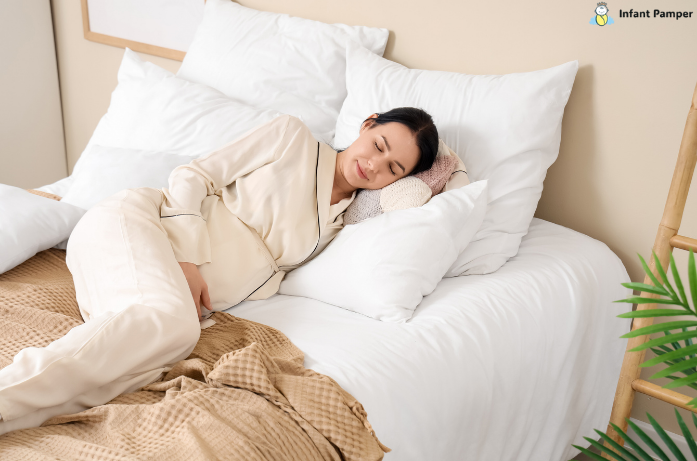
As your pregnancy advances, your sleeping posture plays a key role in supporting circulation and reducing physical strain. Doctors commonly recommend side sleeping because it helps the body maintain steady blood flow and prevents pressure on major blood vessels. Among all positions, sleeping on the left side during pregnancy is considered the best option due to its ability to improve blood supply to the placenta and support efficient oxygen and nutrient delivery to the baby, as explained by Sleep Doctor.
Left-side sleeping also helps the kidneys work more effectively, which can reduce fluid retention and swelling in the legs, ankles, and hands. This position may also ease pressure on the liver, allowing your body to function more comfortably as your uterus grows. While the left side is preferred, sleeping on the right side is still safe, and changing sides during the night is completely normal.
Comfort should always come first. Using supportive pillows can help maintain proper alignment, reduce strain on the hips and lower back, and make side sleeping feel more relaxed and sustainable throughout pregnancy.
Daytime Sleep and Pregnancy Fatigue
Fatigue is a normal and common part of pregnancy, especially during the first and third trimesters. Taking breaks during the day can be beneficial, allowing the body to recover and manage hormonal changes. Short naps can improve energy levels, mood, and overall well-being.
However, balance is key. Long or late afternoon naps can disrupt nighttime sleep, making it difficult to fall asleep or stay asleep. Short naps during the day and resting earlier in the day generally lead to better sleep at night, while also fulfilling your body’s need for extra rest.
Managing Rib Pain While Sleeping
As the baby grows and stretches upwards, the pressure on the ribs can cause discomfort, especially in the later months of pregnancy. This rib pain can make it difficult to find a comfortable sleeping position. Sleeping on the opposite side of the pain often relieves pressure, while placing pillows under the belly or behind the back helps maintain proper alignment.
Some women find relief by lying in a slightly reclined position, especially if the rib pain is accompanied by heartburn or shortness of breath. Gentle stretching and relaxation exercises before bed can also help reduce tension and promote restful sleep.
Transitioning Away From Stomach Sleeping
Sleeping on your stomach is another habit that many women naturally give up as their pregnancy progresses. This usually happens for most women towards the end of the first trimester or the beginning of the second trimester, as the growing belly makes this position uncomfortable. You typically don’t need to force yourself to make this change; your body will naturally guide you towards a more comfortable position.
Using pillows for support can make this transition easier, especially for those who have been sleeping on their stomachs for many years.
Simple Ways to Adjust Your Sleeping Position Comfortably During Pregnancy
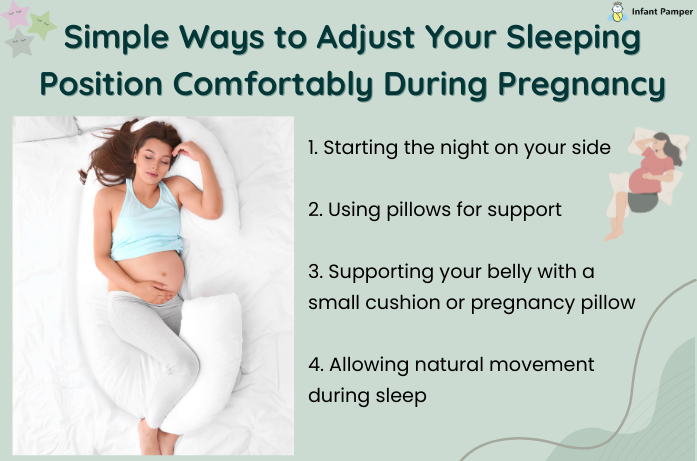
Adjusting sleep positions during pregnancy can feel challenging at first, especially if you’ve slept the same way for years. The key is to make changes gradually and gently, allowing your body to adapt without creating frustration or sleep loss. You don’t need to control every movement during the night. Simply creating supportive habits can significantly reduce the amount of time spent sleeping on your back while keeping you comfortable and well-rested.
Helpful ways to make sleep adjustments easier include:
1. Starting the night on your side, which increases the likelihood that you’ll remain in a safer position for most of your sleep time
2. Using pillows for support, such as placing one behind your back to prevent rolling and another between your knees to reduce hip and lower back strain
3. Supporting your belly with a small cushion or pregnancy pillow to ease pressure and improve alignment
4. Allowing natural movement during sleep, understanding that waking up in a different position is normal and not harmful
Quality sleep plays a vital role in both physical health and emotional balance during pregnancy. Rest supports immune function, hormone regulation, and mental well-being. Just as important, reducing anxiety around sleep positions helps prevent unnecessary stress, which can interfere with sleep more than posture itself. When comfort and calm are prioritized, your body is better able to rest, recover, and support your growing baby.
Final Thoughts
During pregnancy, sleep is about finding a healthy balance between rest and alertness. Understanding why sleeping positions matter helps you make simple adjustments that support blood circulation and overall health without unnecessary worry. As your body changes, small modifications to your sleep habits can naturally improve comfort and rest.
Being kind to yourself is equally important. Your body is designed to protect and adapt for both you and your baby. Instead of striving for the perfect sleeping position, focus on being comfortable, supported, and relaxed. Peaceful, restful sleep plays a vital role in physical health, emotional balance, and a positive pregnancy experience.
At Infant Pamper, we believe that informed parents feel more confident and at ease. With calm guidance and trustworthy information, you can focus on resting well, caring for yourself, and preparing for the beautiful journey ahead.
FAQs
1. When should I stop sleeping on my back during pregnancy?
Most doctors recommend avoiding back sleeping after about 20 weeks and switching to side sleeping.
2. Is it safe to sleep on your back during early pregnancy?
Yes, back sleeping is generally safe in the first trimester and early second trimester.
3. What happens if I wake up sleeping on my back while pregnant?
Simply roll onto your side and continue sleeping. Occasional back sleeping is not harmful.
4. Which sleeping position is best during pregnancy?
Side sleeping is best, especially on the left side, though the right side is also safe.
5. Can sleeping on my back affect my baby?
Long periods of back sleeping later in pregnancy may affect circulation, which is why side sleeping is recommended.
Disclaimer: This content is for informational purposes only and is not a substitute for medical advice. Always consult your healthcare provider or obstetrician for guidance specific to your pregnancy and health needs.