Authored by: A Caring Mom at Infant Pamper
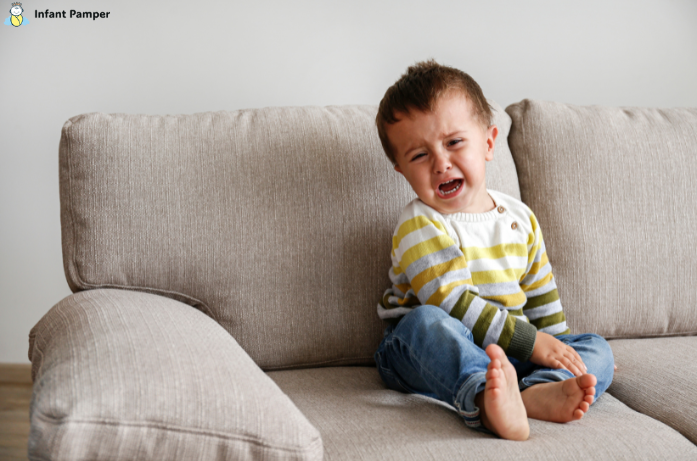
As a parent, it can be heart-wrenching to see your toddler unwell, especially when they’re not eating or drinking as usual. Whether your little one is dealing with a fever, vomiting, or an upset stomach, knowing what to feed a sick toddler is essential to help them recover quickly and regain their strength. The right foods can provide comfort, nourishment, and the hydration needed to get them back to their energetic, happy selves.
In this article, we will explore what to feed a sick toddler, with a focus on specific situations such as when they are vomiting, dealing with a fever, or even when they are constipated. By understanding which foods are best for your toddler’s condition and providing the right nutrients, you can support their recovery and make their sickness a little less difficult to manage.
Why Nutrition is Important When a Toddler is Sick
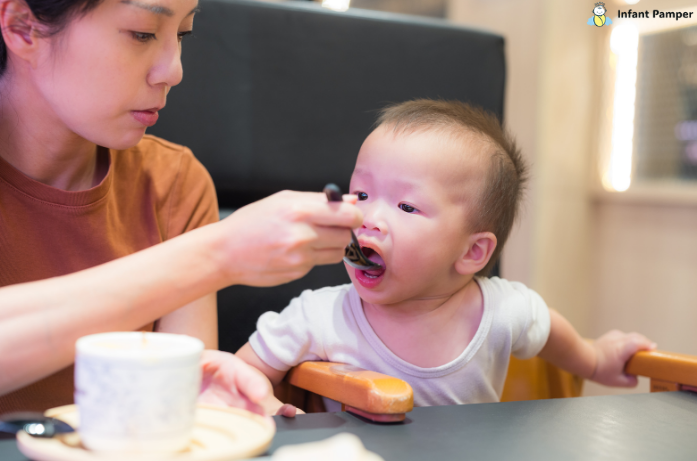
When your toddler is unwell, their appetite can often decrease due to a variety of reasons such as nausea, discomfort, or just general fatigue. However, it is still essential to ensure they are getting the proper nutrition and hydration during this time. Not only does proper nutrition help alleviate symptoms, but it also supports the immune system, providing the body with what it needs to fight off illness. For more tips on foods and drinks for toddlers, visit this guide from the Queensland Health.
For example, when a toddler is vomiting, it’s crucial to avoid heavy or greasy foods, and instead opt for easy-to-digest options that will replenish lost fluids and nutrients. Similarly, when a toddler has a fever, providing the right foods can help soothe their body and prevent dehydration.
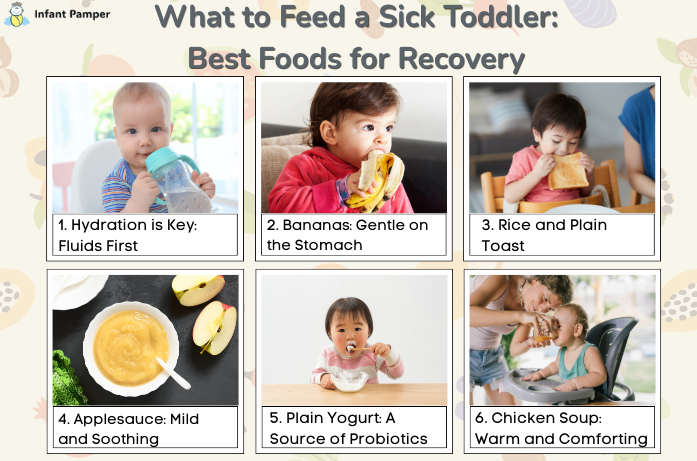
What to Feed a Sick Toddler: Best Foods for Recovery
1. Hydration is Key: Fluids First
When your toddler is sick, whether with a cold, vomiting, or fever, staying hydrated is critical. Dehydration can quickly set in, especially if your toddler is losing fluids through vomiting or diarrhea. This can lead to more severe complications, so it’s important to prioritize fluid intake.
What to feed a sick toddler vomiting or with diarrhea:
Oral rehydration solutions (ORS): These are specifically formulated to replace lost fluids and electrolytes, which can be especially helpful after vomiting or diarrhea. Products like Pedialyte are often recommended by pediatricians.
Clear broths: Chicken or vegetable broth is easy on the stomach and provides some hydration, while also offering a mild source of nutrition.
Water: The most basic and essential fluid. Offer your toddler small sips of water regularly throughout the day to prevent dehydration.
Diluted fruit juices: If your toddler is willing, diluted fruit juices can provide hydration with a little natural sweetness. Always opt for 100% juice and dilute it with water to avoid excess sugar.
2. Bananas: Gentle on the Stomach
When your toddler is experiencing vomiting or diarrhea, it’s important to choose foods that are easy on their digestive system. Bananas are a great option because they are bland, easy to digest, and rich in potassium, which helps replace electrolytes lost during illness. Bananas also contain pectin, a soluble fiber that aids in binding stools and can help with diarrhea.
Simply peel and slice a banana for your toddler, or mash it up if they prefer it that way. This soft fruit is not only easy to eat but also offers comfort during a time when your toddler may feel reluctant to eat anything.
3. Rice and Plain Toast: Simple, Digestible Foods
Another excellent option for a sick toddler is plain white rice and toast. These are bland, low-fiber foods that are easy to digest and provide simple carbohydrates, which can help fuel your child’s body without causing further stomach upset. When your toddler is sick with a fever or dealing with an upset stomach, rice and toast can provide nourishment without being too heavy.
These foods are part of the BRAT diet (Bananas, Rice, Applesauce, and Toast), which is often recommended for toddlers recovering from gastrointestinal issues. While it’s important to avoid overloading your toddler’s system with heavy meals, the BRAT diet offers gentle foods that can provide comfort and nutrition.
4. Applesauce: Mild and Soothing
Applesauce is another food that’s easy on a sick toddler’s stomach. Its mild sweetness and smooth texture make it an appealing choice when your toddler is feeling unwell. In addition to being easy to digest, applesauce contains pectin, which helps bind stools, making it a good choice if your toddler has diarrhea.
Opt for unsweetened applesauce to avoid unnecessary sugar. You can serve it as a snack or mix it with other gentle foods, such as rice or yogurt.
5. Plain Yogurt: A Source of Probiotics
If your toddler is suffering from a stomach bug, yogurt can be a great way to restore healthy bacteria in their gut. Yogurt contains probiotics, which are beneficial bacteria that can help balance the gut flora and promote digestive health. Probiotics can also be beneficial when your toddler is recovering from an illness that causes diarrhea or vomiting.
Choose plain yogurt without added sugar. If your toddler prefers sweetness, you can mix in a small amount of honey (for children over one year old) or fruit puree. This will help soothe their digestive system and encourage better recovery.
6. Chicken Soup: Warm and Comforting
Chicken soup is a time-tested remedy for sick toddlers, especially if they are suffering from a cold or fever. The warm broth is soothing and hydrating, while the vegetables and chicken provide a mild source of protein and nutrition. Chicken soup is not only comforting but also offers much-needed fluids during an illness.
You can add small pieces of chicken, noodles, or rice to the broth, making the meal both comforting and nourishing. It’s an ideal option for a toddler with a fever or cold.
Foods to Avoid When a Toddler is Sick
While it’s important to know what to feed a sick toddler, it’s equally important to know what foods to avoid during this time. Some foods can irritate the stomach, make symptoms worse, or slow down the recovery process.
Dairy Products: If your toddler is suffering from diarrhea or vomiting, dairy products can sometimes worsen the symptoms. This includes milk, cheese, and ice cream. It’s best to avoid dairy until your toddler is feeling better.
Spicy or Greasy Foods: Spicy foods can irritate the stomach lining, and greasy foods can be difficult to digest when your toddler is unwell. These foods should be avoided until your toddler’s condition improves.
Sugary Foods and Drinks: Excess sugar can lead to further stomach upset, especially if your toddler is dealing with diarrhea. Avoid sugary snacks, fruit juices, and sodas.
Caffeinated Beverages: Coffee, tea, or sodas containing caffeine should be avoided as caffeine is a diuretic and can lead to further dehydration. For a more comprehensive list of foods to avoid or limit, you can check out CDC’s guide.

What to Feed a Sick Toddler with a Fever
When a toddler has a fever, it can often be challenging to get them to eat, but it’s important to provide them with light, easy-to-digest foods that help their body stay nourished and hydrated. Here are some foods to try: For more insights into caring for a sick child, visit Health Direct.
- Broth-based soups: These are hydrating and provide the necessary nutrients without overwhelming your toddler’s stomach.
- Smoothies: A fruit smoothie made with bananas, yogurt, and water or juice can be a great way to offer hydration and some nutrients without causing further discomfort.
What to Feed a Constipated Toddler
If your toddler is constipated, you should offer foods that are high in fiber to help them pass stool more easily. These foods include:
- Whole grain cereals: Opt for oats or bran-based cereals that are rich in fiber.
- Fruits and vegetables: Offer fruits like apples, pears, and berries, and vegetables like peas, carrots, and spinach, all of which are high in fiber.
You should also make sure your toddler is drinking plenty of fluids to help soften stool and ease the constipation.
Conclusion
When your toddler is sick, it’s essential to provide them with the right foods to help them recover quickly. Focus on offering bland, easy-to-digest foods like bananas, rice, and yogurt, and prioritize hydration with clear liquids and broths.
Be patient with your toddler’s appetite, and avoid foods that could irritate their stomach or worsen their symptoms. With the right care and nutrition, your toddler will be back to their energetic self in no time. For more information on toddler nutrition, see the Queensland Health guide.
FAQs
1. What to feed a sick toddler vomiting?
When your toddler is vomiting, it’s important to offer clear liquids like water, broth, or oral rehydration solutions. Once vomiting subsides, you can try bland foods like bananas, rice, and toast.
2. What to feed a toddler when sick?
When your toddler is sick, offer simple, bland foods like rice, toast, bananas, and applesauce. Focus on hydration and avoid heavy or greasy foods.
3. What to feed a sick toddler with fever?
For a toddler with a fever, try offering light, easy-to-digest foods like broth-based soups, smoothies, and rice. Avoid heavy or spicy foods.
4. What to feed a constipated toddler?
For constipation, offer high-fiber foods like whole grain cereals, fruits like apples and pears, and vegetables like peas and spinach. Make sure they stay hydrated.
For more parenting tips and expert advice, visit Infant Pamper.
Disclaimer: Always consult with a pediatrician or healthcare provider if your toddler’s symptoms persist or worsen. This article is for informational purposes only and is not a substitute for medical advice.