By a Caring Mom at Infant Pamper
Pregnancy marks the beginning of an incredible journey, a time filled with dreams, excitement, and anticipation. Yet, for some, this journey can take an unexpected turn right at the beginning. A chemical pregnancy is one of those early losses that can be confusing and extremely emotional. You might see a positive test, feel a spark of excitement, and then, just a few days later, your period arrives. It can leave you wondering what went wrong and if it was ever real, and yes, it absolutely was.
A chemical pregnancy is a very early pregnancy loss that happens before the fifth week, often before a heartbeat can be detected on an ultrasound. It’s more common than most people think, according to the American College of Obstetricians and Gynecologists (ACOG), up to 75% of miscarriages may be chemical pregnancies. The comforting news is that having one doesn’t mean you can’t have a healthy pregnancy later; it’s a difficult moment, but not the end of your story.
What Exactly Is a Chemical Pregnancy?
A chemical pregnancy happens when a fertilized egg attaches to the uterus and begins releasing HCG (human chorionic gonadotropin) the same hormone that turns a pregnancy test positive. However, shortly after implantation, the embryo stops developing, and the pregnancy ends on its own.
You might see a faint positive test one day, only for it to turn negative a few days later. Because this loss happens very early, many women think it’s just a slightly late or heavier period. Doctors call it a “chemical” pregnancy because it can only be confirmed through HCG hormone levels, not through an ultrasound.
These very early losses are common and usually not caused by anything you did or didn’t do. Even if it ends early, it’s still a real pregnancy, and it’s perfectly natural to feel sad or confused. Every loss, no matter how early, requires care, compassion, and time to recover.
Why Do Chemical Pregnancies Happen?
It’s natural to wonder why this happened and blame yourself. But please don’t. In most cases, it’s not caused by anything you did. Here are some common causes, as suggested by experts at the Mayo Clinic and the National Institutes of Health (NIH):
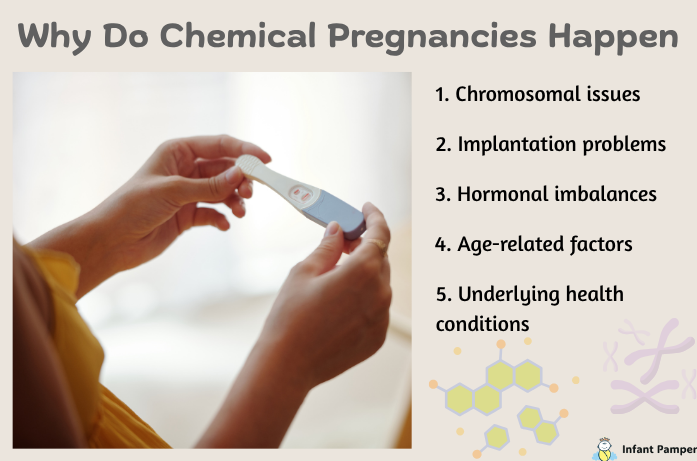
1. Chromosomal issues
Most chemical pregnancies occur due to chromosomal abnormalities in the embryo, meaning the genetic material wasn’t balanced correctly, preventing healthy development and natural continuation of the pregnancy.
2. Implantation problems
Sometimes, the fertilized egg fails to properly implant in the uterine lining because of hormonal imbalances, thin endometrial tissue, or conditions affecting the uterus’s ability to support implantation.
3. Hormonal imbalances
Low levels of progesterone, the hormone that prepares and maintains the uterine lining, can make it difficult for the embryo to remain implanted, leading to an early pregnancy loss.
4. Age-related factors
As women age, especially after 35, the quality and number of eggs decrease, increasing the chances of chromosomal errors that often result in very early miscarriages or chemical pregnancies.
5. Underlying health conditions
Health issues like thyroid disorders, PCOS, or autoimmune diseases can interfere with hormone balance or implantation, raising the risk of early miscarriage and affecting overall fertility.
According to the Cleveland Clinic, chemical pregnancies are typically due to random chromosomal errors and not lifestyle factors, meaning they’re often unavoidable and no one’s fault.
Common Signs and Symptoms of a Chemical Pregnancy
Because it happens so early, the symptoms of a chemical pregnancy are often easy to miss or confuse with a period.
Here’s what you might notice:
- A positive pregnancy test that becomes negative a few days later
- Light spotting or bleeding that feels like a period
- Mild cramps or backache
- A drop in HCG levels if tested by a doctor
- Slight pregnancy symptoms (like fatigue or tender breasts) that quickly fade
Sometimes, you might only realize you had a chemical pregnancy if you took an early test. Many women never even know.
How Doctors Confirm a Chemical Pregnancy
If you suspect a chemical pregnancy, your doctor can confirm it through blood tests and sometimes an ultrasound.
- Blood tests check your HCG levels they should double every 48–72 hours in a healthy pregnancy.
- If your levels start dropping, it means the pregnancy isn’t continuing.
- An ultrasound may not show anything if it’s too early, which is normal.
Most of the time, the body naturally passes everything, and no medical treatment is needed. Physically, your body recovers quickly, emotionally, it might take longer.
The Emotional Side of a Chemical Pregnancy
Even though it happens early, the sadness can feel enormous. You saw that positive line, even for a moment, and that’s enough to imagine a future. When it ends suddenly, it hurts.
It’s normal to grieve, to cry, to feel lost or angry. A chemical pregnancy is still a loss, and your emotions are valid.
Here are a few gentle ways to heal:
- Talk openly with your partner, a trusted friend, or a therapist.
- Write your feelings down, sometimes words help release pain.
- Join a support group; hearing other stories reminds you that you’re not alone.
- Focus on self-care: rest, nourish your body, and take time to breathe.
As one mom beautifully said, “Every pregnancy, no matter how brief, leaves a mark on your heart.”
Physical Recovery and Trying Again
After a chemical pregnancy, your body usually recovers quickly, even if your heart needs more time. Most women get their next period within four to six weeks, and many can try to conceive again once they feel emotionally ready. Doctors often suggest waiting for one normal cycle, mainly to make it easier to track your next pregnancy.
Take care of yourself during recovery: continue prenatal vitamins with folic acid, eat a balanced diet, stay hydrated, and get enough rest. Avoid alcohol and smoking, and check in with your doctor if you’ve had repeated early miscarriages or irregular periods.
The comforting truth is that most women who experience a chemical pregnancy go on to have healthy, full-term pregnancies. Give yourself time both physically and emotionally and remember that healing is part of your journey toward hope and new beginnings.
When to Call Your Doctor
While most chemical pregnancies don’t require medical treatment, it’s important to know when to reach out for help. Contact your doctor if you experience:
- Heavy bleeding (soaking a pad in less than an hour)
- Severe cramping or abdominal pain
- Fever or chills
- More than two early miscarriages in a row
Your doctor may recommend simple tests to check for hormonal imbalances, thyroid issues, or genetic causes if the pattern repeats.
Can You Prevent a Chemical Pregnancy?
In most cases, chemical pregnancies can’t be prevented, they happen because of factors beyond anyone’s control. Still, you can support your reproductive health with a few gentle lifestyle habits:
- Maintain a healthy weight and balanced diet
- Manage stress through meditation, yoga, or walks
- Control underlying conditions like thyroid or PCOS
- Avoid alcohol, drugs, and smoking
- Take prenatal vitamins daily if you’re trying to conceive
Healthy habits can’t guarantee a pregnancy, but they do create the best possible environment for one to grow.
Final Thoughts
A chemical pregnancy can be very devastating emotionally because it is not only the loss of an early pregnancy, but also the loss of the dreams, excitement, and hopes that began the moment you saw the positive test. This is a deeply personal grief that deserves understanding and empathy.
Please remember, this is not your fault. Nothing you did or did not do caused this situation. Most chemical pregnancies are caused by natural factors beyond your control. You are not broken, and you are certainly not alone. Many women experience this early loss and later, when their bodies and hearts have time to heal, go on to have healthy, full-term pregnancies.
Frequently Asked Questions
1. How early does a chemical pregnancy happen?
A chemical pregnancy usually occurs before the fifth week of pregnancy, often just a week or two after conception. Most women experience light bleeding or think their period came a little late.
2. What are the signs of a chemical pregnancy?
Common signs include a faint positive pregnancy test that becomes negative, light bleeding, mild cramps, and a drop in HCG levels. Some women may not notice any symptoms at all.
3. Can stress cause a chemical pregnancy?
No. Everyday stress does not cause a chemical pregnancy. Most cases happen due to chromosomal abnormalities or implantation issues, not because of emotional or physical stress.
4. Do I need medical treatment after a chemical pregnancy?
Usually, no medical treatment is needed. The body naturally passes the tissue and returns to a normal cycle within a few weeks. However, if you experience heavy bleeding, severe pain, or fever, see your doctor right away.
5. Can I get pregnant again after a chemical pregnancy?
Yes, absolutely. Most women go on to have healthy pregnancies after a chemical pregnancy. Once your next period arrives, your body is ready to conceive again if you feel emotionally prepared.
6. Should I see a doctor if I’ve had more than one chemical pregnancy?
Yes. If repeated early miscarriages occur, your doctor might suggest tests to check for hormonal imbalances, thyroid issues, or genetic causes to help support your next pregnancy.
At Infant Pamper, we’re here to guide and comfort you through every step of your parenting journey, from early pregnancy to baby’s first milestones. Explore more real stories, helpful tips, and gentle advice made just for parents like you.
Visit Infant Pamper to read more comforting articles and find strength in shared experiences.
Disclaimer: This article is for informational purposes only and is not a substitute for professional medical advice. Always consult your healthcare provider for any concerns regarding your pregnancy or reproductive health.