By a caring mom at Infant Pamper
If you’re expecting a baby, one of the most exciting milestones is feeling those first baby kicks. But what do baby kicks feel like? It’s a magical moment that marks the beginning of a deeper connection with your little one. As the days go by, these movements will become a way for your baby to communicate with you, even before birth.
Baby kicks are more than just a sign of life; they are your baby’s way of reaching out to you. They’re a wonderful opportunity to bond with your baby before birth. In this article, we’ll explore when baby kicks start, how they feel, and how they change as your pregnancy progresses. Whether you’re a first-time mom or a seasoned pro, this guide will help you understand what’s going on inside your belly!
When Do You Feel Baby’s Kicks?
For most first-time mothers, feeling baby kicks happens between 18 and 25 weeks of pregnancy. This early sensation is usually gentle and can feel like fluttering, bubbles, or even a soft tapping. If you’ve had children before, you might feel kicks as early as 16 weeks because you’re more familiar with the sensation. According to UT Southwestern, fetal movements, including kicking, are part of the baby’s development and typically start around this time.
During these early stages, you may wonder, when do you feel baby’s kick? As you progress through your pregnancy, these subtle movements transform into more noticeable and stronger kicks. In the beginning, it’s common for the movements to feel like gentle flutters, but over time, they become sharper and more defined.
At first, baby kicks might be confused with other sensations, like gas or digestion. But as your baby grows, these movements become more distinct and frequent, allowing you to recognize them with certainty.
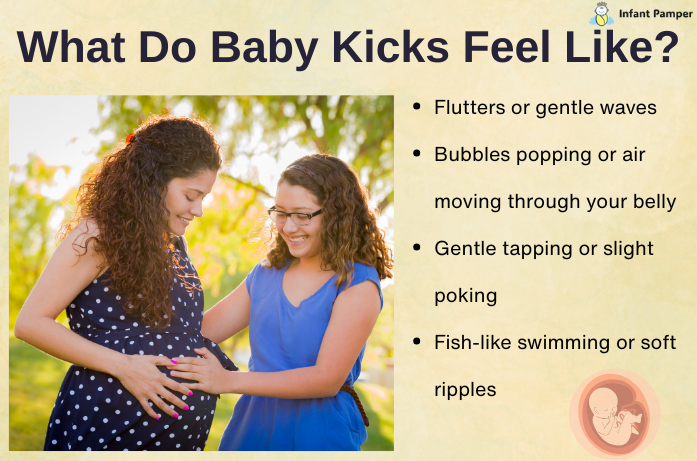
What Do Baby Kicks Feel Like?
So, what do baby kicks feel like once you begin to feel them? The experience can be a bit different for every woman, and the intensity of the kicks varies from pregnancy to pregnancy.
In the early stages (before 20 weeks), most women describe the feeling of baby kicks as:
- Flutters or gentle waves
- Bubbles popping or air moving through your belly
- Gentle tapping or slight poking
- Fish-like swimming or soft ripples
By the second trimester, baby kicks become more frequent and stronger, especially as your baby grows. These movements may start to feel like small jabs or even full-fledged kicks, which can sometimes feel like a tap or knock at your belly from the inside. As the third trimester approaches, baby kicks are more distinct and visible from the outside.
Baby Kicking Movements: How They Change Over Time
As your pregnancy progresses, baby kicking movements become more pronounced. From around 24 weeks onwards, baby’s movements will start feeling like more purposeful kicks, rolls, and stretches.
Here’s a breakdown of how baby kicks change throughout pregnancy:
- Weeks 16-20: At first, the movements feel light, like flutters or bubbles.
- Weeks 20-28: Baby kicks become more distinct, and you’ll start feeling actual jabs or nudges.
- Weeks 28-36: By this time, baby movements may be more intense and frequent. You might feel baby’s kicks in your ribs, bladder, or lower abdomen.
- Weeks 36-40: Kicks and stretches will feel stronger, with some babies becoming more active at night. You may feel baby shifting or even rolling across your belly.
Baby First Kicks Timing: What to Expect
The timing of baby’s first kicks can vary depending on your pregnancy. For most women, the first kicks are felt around 18-20 weeks for first-time pregnancies, while experienced mothers might notice movements a bit earlier, at 16-18 weeks.
These early kicks are often subtle, and at first, you might mistake them for gas bubbles or hunger pangs. But as the weeks go on, these movements will become much easier to recognize as your baby starts to grow. Keep in mind that the timing of first kicks can also be influenced by factors such as the position of the placenta, the baby’s activity level, and your body type.
How to Tell Baby’s Position by Kicks
You might be surprised to learn that you can often tell baby’s position by kicks. Here’s how:
- Head-Down Position: If your baby is head-down, you’ll likely feel kicks higher up in your belly, around your ribs.
- Breach Position: If your baby is breech (bottom-down), you’ll often feel more movements lower in your abdomen.
- Transverse Position: In this position, baby’s kicks might feel like they’re coming from one side or the other.
If you’re unsure of your baby’s position, an ultrasound or a doctor’s appointment can help confirm how your little one is positioned.
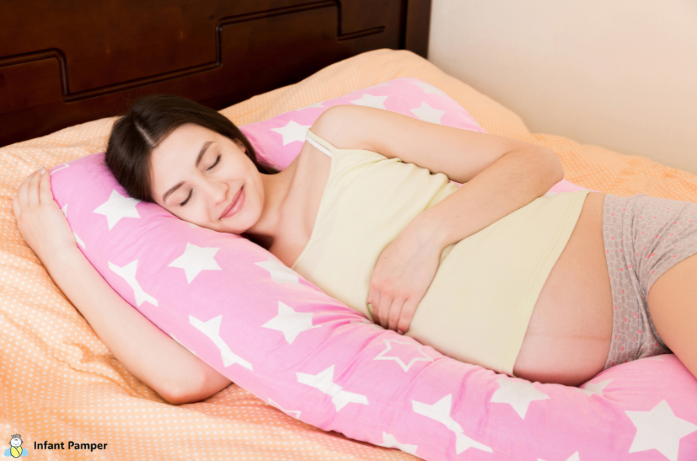
Why Does Baby Kick at Night?
You might notice that your baby is especially active during the evening hours, leaving you wondering, why does baby kick at night? There are a few reasons why this happens:
- Relaxation Time: When you lie down to rest at night, your baby is less distracted by the movement and activity of your day, so they may start to stretch and roll more.
- Increased Blood Flow: Lying down allows more blood to flow to your baby, which might make them more active.
- Circadian Rhythms: Just like adults, babies in the womb may have their own sleep-wake cycles. Your little one might be more active during the night, even though you can’t see them!
In any case, these nighttime kicks are completely normal and are part of your baby’s natural growth and development. As discussed by Cleveland Clinic, these nighttime kicks are completely normal and part of your baby’s natural growth and development.
Baby Kicking at 20 Weeks: What You Should Know
If you’re around the 20-week mark, you might be wondering whether your baby’s movements are normal. Baby kicking at 20 weeks is quite common and can often be the time when the first noticeable kicks happen. You might feel gentle fluttering, which may quickly develop into more rhythmic movements as baby gets stronger.
By this stage, it’s important to note that fetal movement varies greatly, so don’t be concerned if you’re not feeling consistent kicks every day just yet. It’s completely normal for baby movements to come and go at this point in the pregnancy.
Is It Normal for Baby to Kick a Lot?
If you’re wondering is it normal for baby to kick a lot, the answer is yes! Babies in the womb have a lot of space to move, and some babies are just more active than others. It’s common for babies to kick, stretch, or roll around multiple times a day, especially as they grow.
However, if you feel an increase in baby’s kicking, especially if it becomes painful or uncomfortable, you should monitor the frequency and intensity. Sometimes, excessive kicking could mean your baby is reacting to something like a sugar rush (after you’ve eaten), or it could just be their personality! Always talk to your healthcare provider if you have concerns about abnormal kicking patterns.
How Many Kicks Should a Baby Have a Day?
A common question many expectant mothers ask is: how many kicks should a baby have a day?
Generally, after 28 weeks, your doctor may advise you to perform kick counts. Most babies move at least 10 times in a 2-hour period. If you don’t feel 10 movements, it could mean your baby is simply sleeping or resting, but if you consistently notice a lack of movement or your baby’s usual routine changes, it’s always best to call your doctor.
For most pregnancies, regular movement is a good sign of a healthy baby, but fluctuations in patterns can occur. Pay attention to your baby’s usual activity, and if you notice anything different, always trust your instincts.
Conclusion: Enjoy the Little Kicks!
The experience of baby kicks is unique to every pregnancy, but they all share one thing in common: they are a beautiful sign of life and connection between you and your baby. Whether your baby is kicking, stretching, or rolling, every movement brings you closer to the day you’ll meet them face-to-face.
As you go through your pregnancy, pay attention to your baby’s movements, but also remember that not all patterns are the same. If you ever have concerns or questions about baby kicks, it’s always a good idea to consult your healthcare provider for reassurance.
Enjoy every little kick, flutter, and roll, because soon enough, your baby will be here in your arms, and these little moments will become cherished memories.
For more tips on pregnancy, baby care, and newborn tips, keep following Infant Pamper!
FAQs About Baby Kicks
1. When do you feel baby’s kick for the first time?
Most first-time moms feel baby’s first kick between 18–25 weeks. Experienced mothers may feel it earlier, at 16–18 weeks.
2. What do baby kicks feel like?
Early kicks often feel like flutters or light tapping. As your baby grows, the kicks become more pronounced and may feel like strong jabs.
3. How can I tell baby’s position by kicks?
You can often tell the position of your baby by where you feel the kicks. For example, if baby is head-down, you’ll feel kicks near your ribs.
4. Why does baby kick at night?
Babies may kick more at night due to increased blood flow or because they’re more active when you’re resting.
5. Is it normal for baby to kick a lot?
Yes! It’s normal for some babies to kick a lot. Every baby has their own activity pattern.
6. How many kicks should a baby have a day?
After 28 weeks, it’s recommended to feel at least 10 movements within 2 hours.