If your little one has been struggling with red, itchy skin patches and you’re trying to understand what causes eczema in babies, you’re not alone. Many parents experience the same confusion, wondering whether flare-ups come from food, weather, products, or genetics. Baby eczema is extremely common, yet surprisingly misunderstood. The truth is that eczema almost never comes from one single thing. Instead, it usually happens because of a mix of sensitive skin, environmental irritants, and overactive immune responses.
As a mom who has spent months researching and observing my own baby’s eczema patterns, I know how overwhelming this journey can feel. One day, the skin looks calm, and the next, redness returns without warning. What helps is learning the true causes, the triggers to avoid, and the simple habits that can dramatically improve your baby’s comfort. With the right approach, eczema becomes much more manageable, and in many cases, symptoms lessen as your child grows.
What Causes Eczema in Babies? (Science, Triggers & Real-Life Factors)
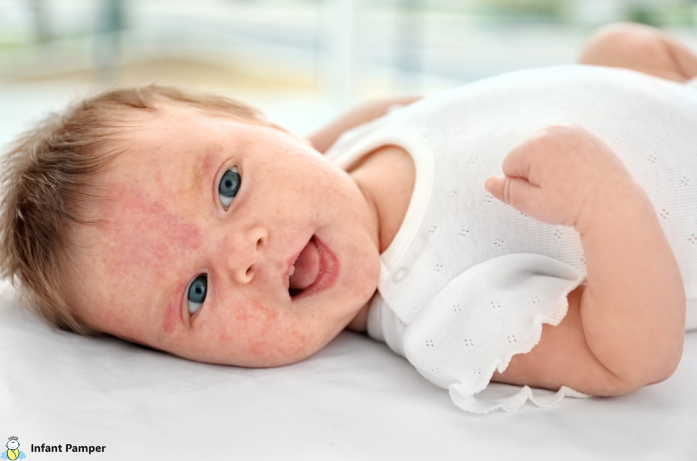
Baby eczema, also known as atopic dermatitis, is a chronic inflammatory skin condition that often begins in early infancy. The condition appears as red patches, dry skin, rough areas, or sometimes tiny bumps that may ooze if severely irritated. Babies most often get eczema on the cheeks, scalp, arms, legs, chest, and behind the knees.
But why does it happen?
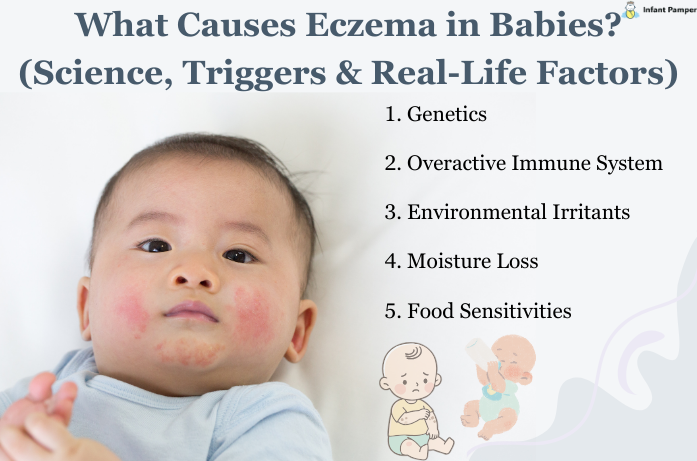
The exact cause is not fully understood, but experts agree it results from a combination of the following. The Cleveland Clinic explains that eczema rarely comes from one single cause, but a mix of sensitive skin, environmental triggers, and immune responses:
1. Genetics
Babies who have a parent with eczema, asthma, or allergies are far more likely to develop eczema. This is because some inherited traits affect the skin’s ability to hold moisture. When the skin barrier is weaker, irritants get in easily and cause inflammation.
2. Overactive Immune System
A baby’s immune system is still developing. In babies with eczema, the immune system reacts strongly to small irritants, things that wouldn’t bother other babies at all. This reaction leads to redness, itching, and flare-ups.
3. Environmental Irritants
Everyday substances can irritate sensitive baby skin. These include fragranced lotions, laundry detergents, rough fabrics, dust mites, pollens, dry air, heat, and even some soaps labeled “gentle.” Babies exposed to multiple irritants often have more frequent flare-ups.
4. Moisture Loss
Infant skin loses moisture much faster than adult skin. When the skin becomes too dry (from cold weather, low humidity, or long baths), the natural barrier weakens. This makes eczema worse and more frequent.
5. Food Sensitivities (Not Causes)
Parents often wonder about food because flare-ups sometimes appear after meals. But food doesn’t actually cause eczema. Instead, some foods may worsen symptoms in babies who are already sensitive. This is why conversations about eczema in babies’ foods to avoid often include dairy, eggs, soy, and wheat, but only under medical guidance.
Understanding these main causes helps you respond instead of panicking. Eczema is manageable, but it requires patience and consistent care.
Do Babies Grow Out of Eczema?
Many parents ask this, and thankfully, ly many babies do improve significantly with time. A large number of children see their symptoms reduce before school age. Others may experience occasional flare-ups during dry seasons or after skin irritation.
Whether eczema fades depends on genetics, severity, environmental factors, and skincare habits. Keeping the skin moisturized and avoiding triggers increases the chance of milder symptoms later. Even if a child doesn’t fully outgrow eczema, early treatment reduces long-term skin damage and irritation.
Common Baby Eczema Triggers
While eczema begins from internal factors like genetics, most flare-ups are caused by external triggers. Here are the most common:
- Sudden temperature changes, dry winter air, or overheating
- Fragranced soaps, bubble baths, lotions, or detergents
- Rough fabrics such as wool, fleece, or synthetics
- Sweat, drool, or prolonged wetness on the skin
- Dust mites, pollen, mold, or pet dander
- Long, hot baths that strip the skin’s natural oils
When you track your baby’s flare-ups, you’ll often notice patterns. Hopkins Medicine notes that winter dryness and overheating are especially common triggers:
Foods That May Affect Baby’s Eczema
Even though food doesn’t directly cause eczema, certain foods may worsen flare-ups in babies who are sensitive. Dairy is the most commonly discussed food trigger. Some babies react to proteins in cow’s milk, and this is why parents often ask: Can baby formula cause eczema? The formula itself doesn’t cause eczema, but a milk-protein allergy or intolerance can make existing symptoms appear worse.
Eggs, soy, wheat, nuts, and fish can also contribute to flare-ups in babies with sensitivities. But removing foods without professional advice can be harmful, especially for infants under one. Always talk to your pediatrician before eliminating foods.
On the other hand, some foods may support skin health. Parents who focus on foods that help eczema go away for babies often include gentle, anti-inflammatory options like sweet potatoes, avocados, pears, oats, and salmon for older babies. These foods don’t cure eczema, but they help nourish the skin from within.
Symptoms of Baby Eczema to Watch For
Eczema appears differently for each child, but most babies show common signs:
- Red, irritated patches
- Dry, flaky, or rough skin
- Itching that causes rubbing or scratching
- Tiny bumps that may ooze if irritated
- Thickened skin from frequent scratching
If you ever notice yellow crusts, swelling, fever, or expanding redness, call your doctor. These may be signs of a skin infection needing treatment.
What Causes Eczema in Babies?
The most important thing to understand is that eczema is not caused by one thing; it’s a combination. Genetics creates the foundation for sensitive skin. Environmental factors then irritate that skin. Moisture loss weakens the barrier further. Food sensitivities may add another layer of inflammation. This is why no two babies have identical eczema journeys, and why treatment requires a personalized approach.
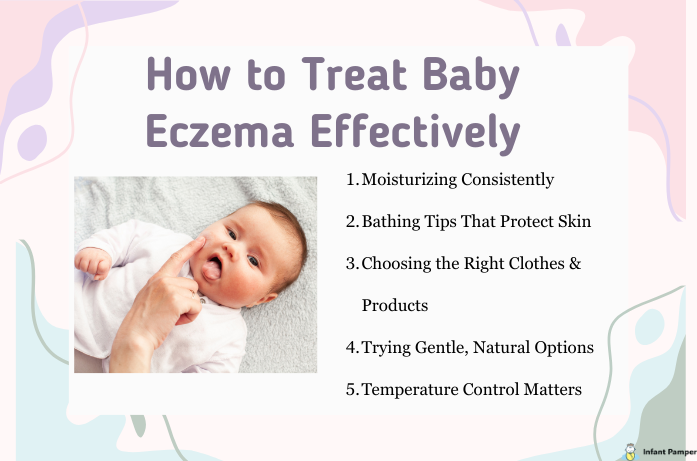
How to Treat Baby Eczema Effectively
The most important part of treating eczema is protecting and repairing the skin barrier. Once that barrier is strong, flare-ups become less frequent and less severe.
1. Moisturizing Consistently
Moisturizing is the #1 treatment recommended by dermatologists. Thick, fragrance-free creams or ointments work best. Some parents find Aquaphor for baby eczema helpful because it forms a protective layer that keeps moisture in. Apply moisturizer multiple times a day, especially after every bath. The American Academy of Dermatology recommends applying moisturizers multiple times daily:
2. Bathing Tips That Protect Skin
Keep baths short and lukewarm. Avoid soaps unless absolutely needed and choose a mild, fragrance-free cleanser. After bathing, gently pat dry and moisturize immediately. This “soak and seal” method helps lock hydration into the skin.
3. Choosing the Right Clothes & Products
Dress your baby in soft cotton clothing. Avoid wool, fleece, or rough textures. Always wash new clothes before wearing them. Choose hypoallergenic, fragrance-free detergents.
4. Trying Gentle, Natural Options
Many parents prefer starting with natural baby eczema treatment methods such as oatmeal baths, pure aloe vera, or coconut oil. These can soothe irritation, but always patch-test first.
5. Temperature Control Matters
Overheating is a major trigger. Keep the room cool and dress your baby lightly. Heat causes sweating, and sweat irritates eczema-prone skin.
How to Clean a Baby’s Face With Eczema
Facial eczema is extremely common in infants. Keep cleaning as gently as possible. Use lukewarm water with a soft cotton cloth. If needed, use a very mild, fragrance-free cleanser. Pat the skin dry instead of rubbing, and apply a moisturizer immediately after. Avoid wipes unless necessary; they often contain preservatives that irritate delicate skin.
When to Consult a Doctor
Reach out to a pediatrician or dermatologist if:
- Eczema is getting worse
- Your baby is losing sleep or scratching constantly
- Moisturizers aren’t helping
- Food reactions seem likely
- You see signs of infection
Early medical care prevents complications and helps you create a more effective care plan.
Final Thoughts
Eczema can be emotionally exhausting in the beginning, especially when you don’t yet understand what triggers your baby’s flare-ups. But once you learn how your child’s skin reacts, the process becomes much easier. Consistency is everything: moisturize daily, avoid irritants, watch for patterns, and be gentle with your baby’s delicate skin.
Remember this: You’re not causing your baby’s eczema. You’re learning to manage it, and that makes you a wonderful parent. With time, many babies’ skin improves significantly, and flare-ups become far less overwhelming.
FAQ
1. Do babies grow out of eczema?
Many improve by ages 3–5, though some continue having mild sensitivities.
2. Eczema in babies: foods to avoid?
Dairy, eggs, wheat, soy, or nuts might worsen symptoms for some, only under medical advice.
3. How to clean a baby’s face with eczema?
Lukewarm water, gentle cleanser, pat dry, and moisturize right away.
4. Can baby formula cause eczema?
Not directly, but milk-protein sensitivity can worsen symptoms.
5. Is Aquaphor safe?
Many parents use it successfully, but patch-test it if your baby has very sensitive skin.
Stay informed, stay confident, read more helpful baby-care articles on Infant Pamper, and give your little one the comfort they deserve.