By a Caring Mom at Infant Pamper
Every parent reaches that moment when they start wondering, “What age do kids start preschool?” This is a significant moment not only for your child but also for you. Preschool is the beginning of a new journey that will be fun, friendly, and rewarding.
However, determining the exact starting time can be a bit challenging. Some parents consider the ideal age of two and a half to be the ideal starting age, while others prefer to wait until their child is around four years old. However, it’s still a fact that there’s no single “right” age for preschool; the period will depend entirely on your child’s unique temperament, physical and mental development, and overall readiness.
This guide from Infant Pamper walks you through everything you need to know, from understanding what preschool really is, to recognizing the perfect moment to start.
What Age Do Kids Start Preschool and Why It Matters
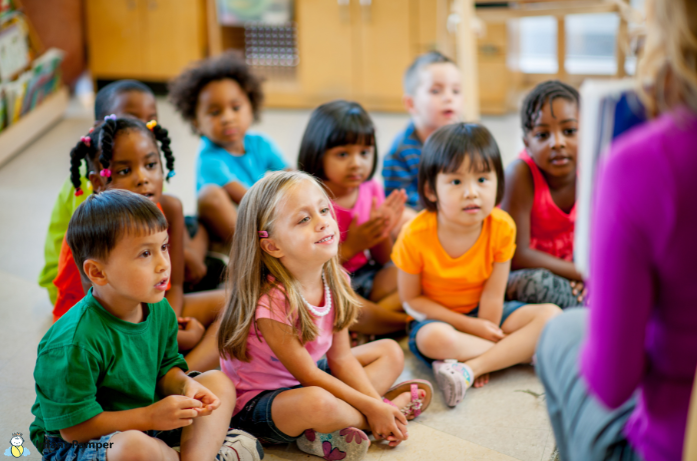
Preschool is not simply a place where children are taught various subjects through the use of different methods. It is an eclectic atmosphere where children aged 2½ to 5 years start acquiring the most basic social, emotional, and academic skills.
It bridges the gap between home and formal schooling. Children learn through play, music, stories, and creative activities that foster curiosity and independence.
The primary goal of kids preschool is preparation, not learning. Children learn to share, follow directions, express their feelings, and explore safely under caring supervision.
According to the CDC’s developmental milestones guide and American Academy of Pediatrics, most children between ages three and four begin showing social and communication skills that prepare them for a group learning environment.
Typical Preschool Starting Age, and Why It’s Different for Every Child
Many parents often wonder what age are preschoolers and when children usually start preschool. In most cases, preschool begins between two and a half and four years old. However, every child develops at their own pace, so the right time can vary depending on your child’s readiness, personality, and the rules of the preschool you choose.
Some kids can’t wait to discover and talk to other kids and even do it at two and a half, while others might be better off waiting until they are a bit older. In most parts of the U.S., children need to be perfectly potty trained and be able to follow some simple routines to get into preschool that starts at the age of three.
Different cultures and areas come up with different approach to these timelines. For example, in some European countries, children enter structured early learning programs at age 2, while in others, preschool starts at 4. as explained by the School of Scholars, many preschools begin accepting children around 2½ to 3 years of age, depending on readiness and school structure.
The main point? Assess your child’s readiness, not just their birthday.
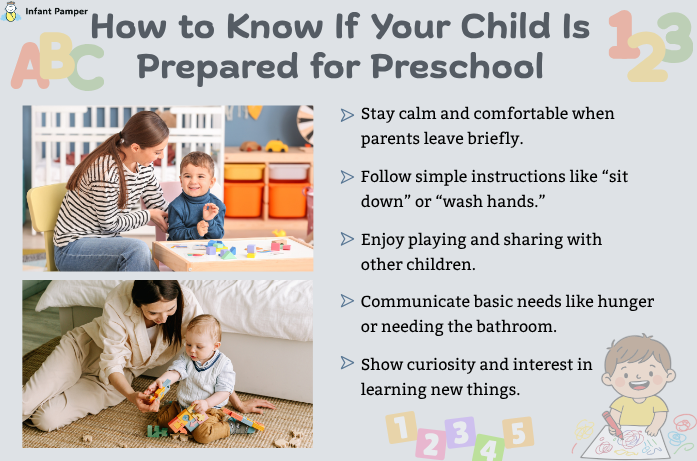
How to Know If Your Child Is Prepared for Preschool
Every child grows at their own pace. Some children are independent explorers from the start, while others need more time to feel comfortable away from home. Here are some signs that your child may be ready:
- They do not get upset when you leave the room for a short period of time and they stay calm.
- They respond to simple commands like “sit down” or “wash your hands” by doing it.
- They prefer to play with other kids or even sharing things with them.
- They can express their basic needs, e.g. hunger, thirst, or bathroom.
- They are showing interest in acquiring knowledge or in other words, learning new things.
If your child shows some of these signs, they’re ready for preschool. And even if they’re not, don’t rush; sometimes it just takes a few months for your child to develop their abilities.
Parent Tip: Visit the school together before registration. Introducing your child to the teacher and having them explore the area will help reduce first-day anxiety and increase excitement.
When It’s Better to Wait Before Starting Preschool
Sometimes, postponing a decision is the best option. If your child is having trouble separating from you, struggling to speak or care for themselves, or is happier in familiar surroundings, postponing the decision for a few months can really make a difference.
Postponing doesn’t mean your child will fall behind. In fact, the extra time spent at home can strengthen emotional security and self-confidence, which are essential for future learning.
How emotional stability in early years is just as important as early academics. Focus on playful learning, storytelling, and conversation; these are just as valuable as any preschool activity.
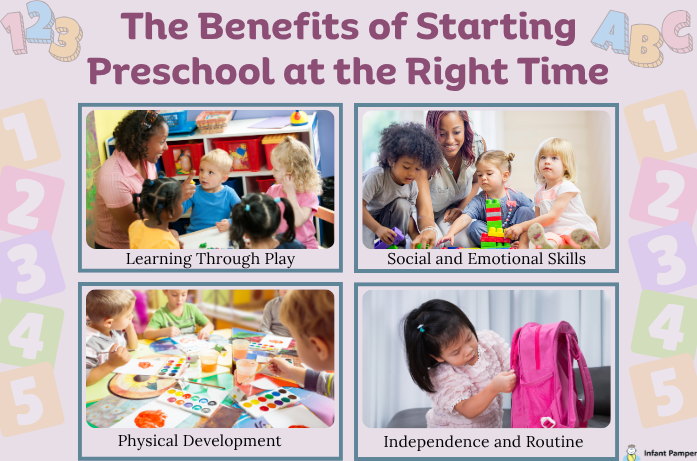
The Benefits of Starting Preschool at the Right Time
When timed correctly, preschool can be a fascinating chapter, full of growth and fun, even though it can be the slowest and most interesting time for children.
1. Learning Through Play:
Preschool teaches numbers, shapes, and letters through fun games and songs, helping children develop early literacy and problem-solving skills.
2. Social and Emotional Skills:
Sharing, cooperation, and managing emotions are key skills children gradually learn. These trips contribute to the development of personality traits like self-confidence and emotional qualities like empathy.
3. Physical Development:
Drawing, climbing, and playing outside are some of the important activities that heighten the kids’ hand-eye coordination and motor development. Try these fun preschool learning activities for fine motor skills to continue skill-building at home.
4. Independence and Routine:
A well-organized daily routine instills responsibility in young children, from packing their bags to participating in scheduled activities.
High-quality preschool experiences prepare children not only for school but for lifelong learning success.
Finding the Perfect Preschool Age for Your Child
Determining the perfect preschool age means managing the factors of readiness and comfort. The following process will help you to make the right choice:
- Watch for independence: Does your child like doing things on their own?
- Check curiosity levels: Are they questioning or participating in exploring things?
- Mark emotional development: Are they ready to spend time apart from you?
- Ask about flexibility: Some preschools offer half-day or part-time programs, which are often best suited to the needs of first-time children.
Remember, you don’t have to follow everyone else’s lead. Every child has their own rhythm, and that’s what makes parenting so special.
How to Prepare Your Child for Preschool
A bit of prep work can help the transition to be smoother once you have selected the appropriate time to start.
- Develop a routine: Start living a daily life that is similar to school.
- Encourage playtime: Engaging in social playdates will enhance the sharing and cooperation skills of children.
- Read preschool-themed books: Stories like Llama Llama Misses Mama or Maisy Goes to Preschool help them to visualize what is going to happen.
- Practice self-care: Allow your child to practice undressing, washing hands, eating, and so on with little supervision.
- Visit the school together: Acquaintance makes the first-day nerves go away.
Small steps at home can make your child’s first day of preschool a joyful experience rather than a fearful one.
Frequently Asked Questions
1. What age group is preschool?
Typically, preschoolers fall within the age range of 3 to 5 years, while some even start from 2½.
2. What age do kids go to preschool?
Children are usually enrolled in preschool by the age of 3, and they stay there for a year or two before moving on to kindergarten.
3. Should I consider preschool for my 2-year-old?
2½-year-olds can be very active in play-based settings, while some may be better off if they wait until they are 3 or 4. It is all about the child’s developmental readiness.
4. Can I skip preschool?
Sure, there are families who opt for not sending their kids to preschool and rely on home learning instead. Providing your child with learning activities and social interactions is more than enough.
5. What’s the difference between preschool and pre-K?
Preschool is for kids aged 3-4 and it mainly concentrates on play and exploration, while pre-kindergarten (pre-K) is for 4-5 year old kids and it prepares them for formal schooling.
Final Thoughts: There’s No “One Right Age”
The truth is, there’s no perfect formula for what age do kids start preschool. What matters most is your child’s readiness, comfort, and excitement to learn. Some are eager explorers at 2½, while others blossom beautifully closer to 4.
As parents, our job isn’t to rush them it’s to guide them. Follow your instincts, observe your child, and choose the moment that feels right for your family.
At Infant Pamper, we believe every milestone from the first smile to the first school day deserves love, patience, and celebration. Whether your child starts early or a bit later, what truly matters is that they start with confidence and joy.
Disclaimer: This article is for informational purposes only and should not replace professional medical or developmental advice. Always consult your pediatrician or early childhood educator if you have concerns about your child’s preschool readiness or developmental milestones.