Authored by: A Caring Mom at Infant Pamper
As a new parent, every moment of your baby’s development feels monumental, and one of the most exciting milestones is when they can sit up on their own! It’s a significant achievement that signals your baby is gaining strength, balance, and coordination. The sight of your little one sitting upright marks a new level of independence, and it’s something many parents eagerly anticipate. But at what age do babies sit up on their own? Understanding the typical timeline and the factors that influence this milestone can help you better prepare for the journey ahead.
While every baby develops at their own pace, knowing what to expect can make the process less stressful and more enjoyable. In this article, we’ll explore the general age range when babies typically start sitting up, the developmental stages that lead to this skill, and how you can encourage your baby’s progress. With a little patience and support, you’ll be celebrating this exciting milestone in no time!
When Do Babies Start Sitting Up?
The milestone of sitting without support typically occurs between 6 and 8 months of age. However, there can be a wide range of what’s considered normal when it comes to a baby’s development, so don’t worry if your child reaches this milestone a little earlier or later than expected. Some babies may start sitting as early as 5 months old, while others may take up to 9 months.
Sitting involves the development of strength, coordination, and balance, and it’s usually a gradual process. Babies typically start by sitting with support and gradually learn to sit independently without any assistance.
Understanding this gradual progression can help alleviate any concerns you may have when observing your child’s development. For more detailed developmental milestones, the CDC offers helpful information that breaks down baby growth by age, including the typical timeline for sitting up.
At What Age Do Babies Gain Head Control?
Before your baby can sit up, they first need to develop head control, which usually begins between 2 to 4 months. During this stage, your baby will start holding their head steady, which is the first building block for sitting up. At first, babies have limited control over their neck muscles, but as they grow, their head control improves.
During tummy time, your baby will practice lifting their head and chest, building strength in their neck and upper body. This is a vital step in preparing for sitting up, as strong neck muscles help your baby keep their head steady when they sit. By the time your baby is around 4 months old, they may start holding their head steady while supported, such as when sitting on your lap.
At what age do babies sit up on Their Own
Most babies will be able to sit up independently between 6 and 8 months. At this point, they’ll have developed enough strength in their back, shoulders, and core to hold themselves upright for short periods. Initially, they may still lean forward or use their hands for support, but with time and practice, their balance and coordination will improve.
By 6 months, many babies can sit with minimal assistance, using their hands to support themselves. As they continue to develop, they’ll become better at balancing on their own, eventually sitting upright without falling over. By 8 months, most babies can sit up independently, although they may still require assistance when transitioning in and out of sitting.
At what age should babies sit up?
It’s natural to wonder, at what age should babies sit up? While every baby develops differently, the majority of babies are able to sit up by 9 months. However, some babies may take longer, and that’s perfectly fine. As long as your baby is hitting other developmental milestones, such as rolling over, reaching for objects, and making eye contact, there’s no need to worry if they haven’t quite mastered sitting up yet.
If your baby hasn’t started sitting up by 9 months, it’s a good idea to mention it to your pediatrician during their checkup. Your pediatrician will be able to assess your baby’s overall growth and development and provide you with any necessary advice or reassurance. You can also refer to Pathways for detailed milestones and tips to support your baby’s development, including sitting up.
Baby Sitting Without Support: The Next Big Step
One of the most exciting developments is when your baby can sit without support. This is a big milestone that usually happens between 7 and 9 months. By this age, your baby’s muscles have grown strong enough to maintain balance on their own for a longer period. Sitting independently also allows your baby to have a better view of their environment, and it’s a sign that they’re becoming more coordinated.
If your baby is not yet able to sit independently by 9 months, that doesn’t necessarily indicate a problem, but it’s important to keep an eye on their overall development. If they’re still not sitting up at 10 months, it might be a good idea to consult your pediatrician for advice. In some cases, early intervention can help your baby reach this milestone if there are any underlying concerns.
What Factors Affect When Babies Sit Up?
There are several factors that can influence when a baby is able to sit up, and each baby will reach this milestone at their own pace. Some of the factors that play a role in this development include:
- Muscle Strength: Babies need to develop strong core muscles to be able to sit up on their own. Tummy time is a crucial activity to help build this strength.
- Motor Skills: The development of other motor skills, such as rolling over, pushing up, and crawling, can affect when a baby sits up. Babies typically gain the strength and coordination needed for sitting after achieving other gross motor milestones.
- Individual Growth Rates: Every baby has their own timeline for reaching developmental milestones. Some may hit the sitting milestone earlier, while others may take more time. As long as they’re progressing in other areas, they’re likely right on track.
For more information on these developmental aspects, you can explore resources from Help Me Grow Minnesota, which offer comprehensive articles on baby milestones.
Tips to Help Your Baby Sit Up
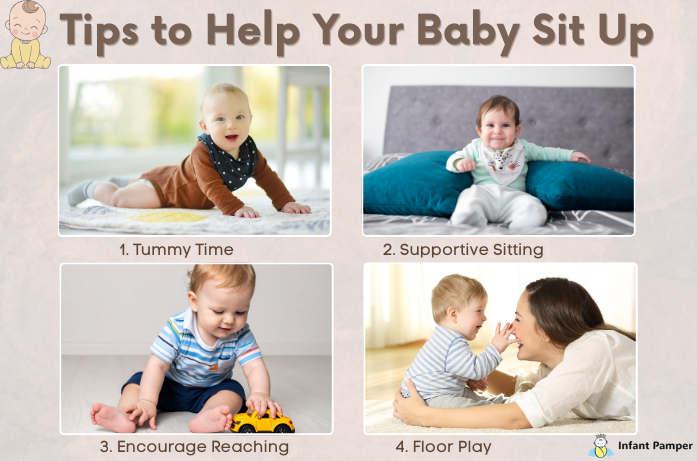
While your baby will eventually reach the sitting milestone on their own, there are a few things you can do to encourage their progress and help them build the strength they need:
- Tummy Time: Tummy time is essential for developing the muscles needed for sitting up. Start tummy time early, even from the first few weeks, to help your baby strengthen their neck, back, and shoulder muscles.
- Supportive Sitting: Once your baby is ready, provide support by sitting them on your lap or propping them up with pillows. Gradually reduce the amount of support as they grow stronger.
- Encourage Reaching: Place toys just out of your baby’s reach to encourage them to lean forward and develop balance. Reaching and playing with toys also helps your baby improve their coordination.
- Floor Play: Let your baby explore their surroundings on the floor. This helps them develop muscle strength and coordination in their trunk muscles, which are necessary for sitting.
FAQs About Baby Sitting Up
Q1 At what age can babies sit up without support?
Babies typically sit up without support around 6 to 8 months. Some may take a bit longer, and that’s normal as every baby develops at their own pace.
Q2 When should my baby sit up on their own?
By 9 months, most babies can sit up independently. However, some babies may need more time, and that’s okay as long as they’re hitting other developmental milestones.
Q3 My baby can sit with support but keeps falling over. Is this normal?
Yes, this is completely normal! Babies develop balance and muscle strength gradually, so occasional falls are a part of the process.
Q4 At what age do babies start sitting up on their own?
Most babies start sitting up on their own between 6 to 8 months, but this can vary from baby to baby. Some may achieve it earlier, and others may take a little longer.
Q5 What age can a baby sit up by themselves without falling over?
By around 9 months, most babies will have the muscle strength and balance to sit without falling over. However, it may still take some time before they can sit without any support for extended periods.
Conclusion
Sitting up is an exciting milestone for both you and your baby. While most babies reach this milestone between 6 and 8 months, there’s a range of normal, and every baby is unique in their development. Be patient and supportive as your baby grows stronger and more coordinated. Celebrate each step along the way, and remember that your baby will get there when they’re ready.
If you have any concerns about your baby’s development, it’s always a good idea to reach out to your pediatrician for guidance. And most importantly, enjoy these precious moments with your little one as they continue to grow and develop into the amazing little person they are becoming!
Disclaimer: This article is for informational purposes only and should not replace professional medical advice. Always consult your pediatrician if you have concerns about your baby’s development.
For more expert parenting tips, guides, and support, visit Infant Pamper.