Written by a caring mom at Infant Pamper
If you are here wondering whether your child is a “Velcro baby” (a child who clings to you constantly), I want to lovingly reassure you that you are not alone and you aren’t doing anything wrong. I remember those early days, when even taking a single sip of tea felt nearly impossible. The moment I stepped away from the baby, his eyes would start searching for me, and within just a few seconds, he would begin to cry. It all felt so overwhelming, confusing, and to be honest exhausting.
Over time, I realized something important this phase isn’t something to fix, but something to understand. Your baby isn’t being too clingy; they are simply asking for comfort in the only way they know. In this article, let’s gently explore why this happens and how you can handle it with calm, confidence, and love.
What Is a Velcro Baby? (Meaning & Simple Explanation)
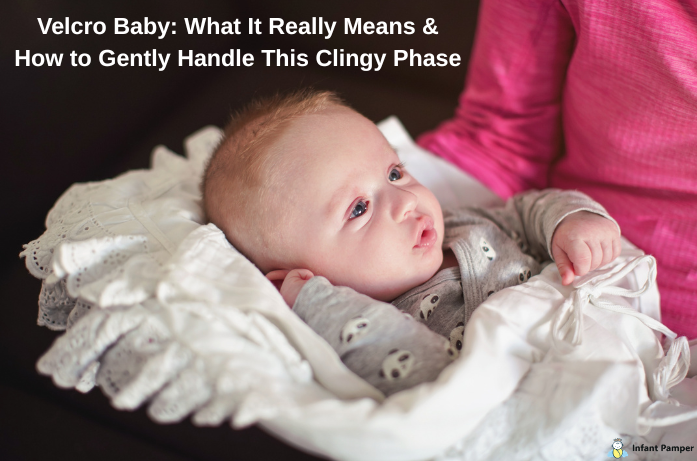
A velcro baby is a baby who prefers to stay very close to their parent or caregiver most of the time. They feel safest when they can see, touch, or be held by you, and may become upset when you move away, even for a short while. While this can feel intense in daily life, it is a completely normal part of early development.
If you are trying to understand the velcro baby meaning, here is a simple and clear way to see it:
- A velcro baby stays closely attached to their parent both emotionally and physically
- They seek closeness because it helps them feel safe and secure through comfort and reassurance.
- They depend on you to regulate their emotions and feel calm
This behavior is not negative. In fact, it reflects healthy development:
- Strong emotional bonding between parent and baby
- A deep need for safety, comfort, and reassurance
- Early brain development through secure attachment
Instead of seeing it as clinginess, it is more helpful to see it as a sign of connection. Your baby is not trying to make things difficult, they are simply reaching for the person who feels like home.
Is a Velcro Baby in Everyday Life?
Understanding what is a velcro baby becomes easier when you notice real-life patterns:
- Your baby cries the moment you put them down
- They prefer sleeping only in your arms
- They follow you with their eyes constantly
- They become upset when you leave the room
- Independent play is very short or difficult
- They calm down quickly when held
If this feels familiar, you’re likely experiencing a very common parenting stage.
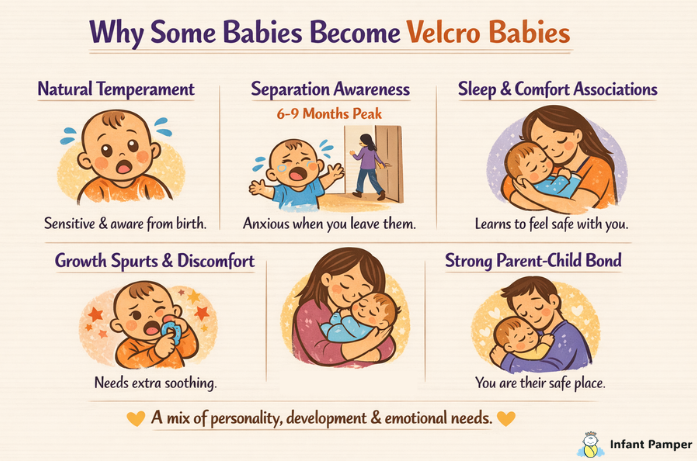
Why Some Babies Become Velcro Babies
Not all babies are the same, and clingy behavior doesn’t come from just one reason. In most cases, a velcro baby is shaped by a mix of personality, developmental stages, and emotional needs. Understanding these reasons can help you respond with more patience and confidence.
1. Natural Temperament
Some babies are naturally more sensitive and aware from birth. They process their surroundings deeply and may feel overwhelmed more easily than others.
- Notice even small changes in environment
- React strongly to new people or situations
- Seek comfort and reassurance more often
This is not something you created, it’s simply your baby’s inborn personality, and it often stays with them as they grow.
2. Separation Awareness (6–9 Months Peak)
Between 6 to 9 months, babies go through an important developmental shift. They begin to understand that they are separate from their parents.
- They may feel anxious when you leave
- They prefer to stay close for reassurance
This stage is known as separation anxiety, and while it can feel challenging, it’s actually a sign of healthy brain and emotional development.
3. Sleep & Comfort Associations
Babies learn comfort through repetition. If your baby is used to being held, rocked, or fed to sleep, they naturally associate your presence with feeling safe.
So when they wake up and you’re not there, they look for that same comfort again. This isn’t a bad habit, it’s a learned sense of security that helps them feel calm.
4. Growth Spurts, Teething & Discomfort
During growth spurts or teething, babies often feel uncomfortable and more sensitive than usual. You may notice increased fussiness or crying, even when their basic needs are met, this is their way of expressing discomfort.
During this time, they may want to be held more often. Your closeness helps soothe them, providing comfort, security, and calm when they need it most.
5. Strong Parent-Child Bond
Sometimes, the most important reason is also the simplest. Your baby feels deeply safe and secure with you.
You are their source of comfort, warmth, and protection. Naturally, they want to stay close to the place where they feel most safe. This strong attachment is not a problem, it’s actually the foundation of healthy emotional development.
Can You Spoil a Velcro Baby by Holding Them Too Much?
This is one of the most common worries parents have. You might hear advice like not to pick your baby up too much or they will get used to it.
But the truth is, you cannot spoil a baby with love, comfort, or responsiveness. Babies need closeness to feel safe, and responding to them is part of healthy parenting.
In fact, when you hold and comfort your baby, you are helping them build secure attachment. This strong emotional bond supports their confidence as they grow.
Their emotional needs are just as important as their physical needs. When you respond to your baby, you are not creating dependency, you are building trust, security, and a strong foundation for their future.
The Emotional Side: What Moms Often Feel (But Don’t Say)
While this phase is full of love, it can also feel overwhelming.
You might experience:
- Physical exhaustion
- Mental fatigue
- Feeling “touched out”
- Frustration over unfinished tasks
- Guilt for wanting space
And that’s completely okay.
Motherhood is not just about giving, it’s also about learning to care for yourself within the journey.
You can deeply love your baby and still feel overwhelmed.
Both feelings can exist together, and neither makes you a bad mom.
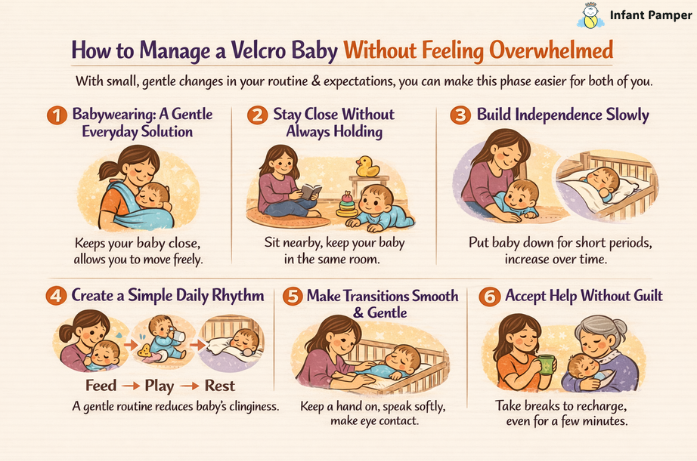
How to Manage a Velcro Baby Without Feeling Overwhelmed
You don’t need to change your baby’s nature. With small, gentle changes in your routine and expectations, you can make this phase easier and more manageable for both of you.
1. Babywearing: A Gentle Everyday Solution
Using a baby carrier or sling can truly make your day smoother. It allows your baby to stay close to you, which helps them feel safe and calm, while also reducing frequent crying or fussiness.
At the same time, it gives you the freedom to move around and get small tasks done. Whether you are cooking, walking, or doing simple chores, babywearing helps you stay connected without feeling stuck.
2. Stay Close Without Always Holding
Your baby doesn’t always need to be in your arms, they just need to feel your presence. Sitting near them while they play or keeping them in the same room can help them feel secure.
Talking, smiling, or singing while you do your work also reassures them. Your voice and closeness act as comfort, helping them slowly feel safe even when not being held.
3. Build Independence Slowly
Instead of trying to create independence quickly, take small steps. Start by putting your baby down for just a minute or two while staying nearby so they can still see you.
Over time, you can slowly increase this duration. This gentle approach helps your baby build confidence without feeling scared or abandoned.
4. Create a Simple Daily Rhythm
Babies feel more relaxed when their day follows a predictable pattern. A simple routine like feeding, playing, and resting helps them understand what comes next.
You don’t need a strict schedule, just a gentle flow. Over time, this consistency creates a sense of security and reduces clinginess.
5. Make Transitions Smooth & Gentle
Transitions, like moving from your arms to the crib, can feel overwhelming for a velcro baby. Small soothing actions can make this easier for them.
Keeping a hand on them, speaking softly, or maintaining eye contact helps them feel connected even when you’re not holding them. These little gestures reduce stress and make changes feel safer.
6. Accept Help Without Guilt
You don’t have to do everything alone, and it’s okay to accept help. Even short breaks can make a big difference in how you feel.
Taking time to rest or relax helps you recharge emotionally and physically. When you feel better, you can respond to your baby with more patience, calmness, and love.
What NOT to Do with a Velcro Baby
Sometimes, pressure from others can lead to choices that don’t feel right.
Here are a few things to avoid:
- Don’t ignore your baby’s cries for long periods
- Don’t compare your baby with others
- Don’t rush independence
- Don’t feel guilty for being responsive
Your baby is not “too needy.” They are communicating in the only way they know.
Will This Phase Ever End?
Yes, it will.
Even though it feels endless right now, this phase changes naturally with time and development.
Gradually, your baby will:
- Explore independently
- Play on their own
- Feel more secure without constant contact
And one day, you may look back and miss those tiny hands reaching for you.
Simple Daily Habits That Make This Phase Easier
These small habits can bring calm into your day:
- Lower expectations for productivity
- Keep essentials within easy reach
- Sit more instead of constantly moving
- Rest when your baby rests
- Focus on connection, not perfection
This phase isn’t about doing more, it’s about being present.
Conclusion
Having a velcro baby can feel overwhelming, especially on long and tiring days. But behind that constant need for closeness is something truly beautiful your baby’s deep trust in you and their feeling of safety in your presence.
This phase is temporary, but the bond you are building will stay for a lifetime. So when things feel heavy, pause for a moment, hold your baby close, take a deep breath, and remind yourself you are doing enough, and you are exactly the mom your baby needs.
If this helped you feel more calm and confident, share it with another mom who might need it and follow Infant Pamper for more gentle, helpful baby care tips
FAQs
1. Is it normal for my baby to always want to be held?
Yes, it is completely normal. Many babies go through a phase where they need constant closeness to feel safe and secure.
2. Will my velcro baby become independent later?
Yes, with time and development, your baby will gradually become more independent as they feel more confident and secure.
3. Should I let my baby cry to reduce clinginess?
It’s not necessary. Responding to your baby’s needs helps build trust and emotional security, which supports healthy development.
Disclaimer: This article is for general informational purposes only and is based on personal experience and research. Every baby is different, so always trust your instincts and consult a pediatrician if you have concerns about your baby’s development or behavior.