
Authored by: Infant Pamper Team
Pregnancy is one of the most beautiful and transformative experiences for a woman, but it can also come with its fair share of concerns and uncertainties. One of the biggest worries expectant parents face is the growth and development of their baby. It’s a universal desire to ensure that your little one is growing at a healthy rate. But sometimes, things don’t go as planned, and the fetus may not be growing properly.
When this happens, it’s referred to as intrauterine growth restriction (IUGR), a condition that can cause concern and raise questions about the baby’s health. Recognizing the symptoms of fetus not growing is crucial for early intervention, and in this article, we will explore these symptoms, what they mean, and how to manage them.
Knowing the signs and symptoms can help guide you to take the right steps for the health of your baby. Keep in mind that while some small babies are perfectly healthy, it’s essential to stay vigilant during your pregnancy. In this comprehensive guide, we’ll cover everything you need to know, from how fetal growth is monitored to what to do if you suspect any issues.
What is Intrauterine Growth Restriction (IUGR)?
Intrauterine growth restriction (IUGR) is when a fetus does not grow as expected for its gestational age. This means that the baby is smaller than typical for its developmental stage. The condition can happen for many reasons and may vary in severity. While some cases of IUGR do not pose significant risks, others can lead to complications such as preterm birth, low birth weight, or even stillbirth if not properly managed. PMC explains the causes and treatments for IUGR, emphasizing the importance of monitoring fetal development during pregnancy.
IUGR can either develop early in pregnancy (before 28 weeks) or later (after 28 weeks). Early onset IUGR is usually linked to more serious causes like placental issues, while late-onset IUGR might be associated with complications in the placenta or maternal health. Healthcare providers typically use ultrasound imaging to monitor the fetus’s growth and check for signs of IUGR.
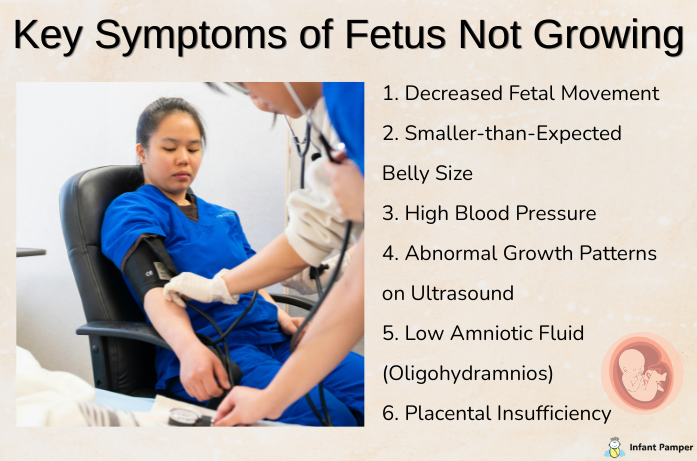
Key Symptoms of Fetus Not Growing
1. Decreased Fetal Movement
One of the first and most noticeable symptoms of a fetus not growing is a decrease in fetal movement. Expectant mothers typically feel their baby moving as early as 20 weeks into the pregnancy, and this movement becomes more frequent and pronounced as the baby grows. A sudden drop or a noticeable decrease in these movements could indicate that the baby is not thriving, MedlinePlus offers guidance on typical movement patterns during pregnancy.
If you experience fewer movements or notice a drastic change in the movement patterns, it’s important to contact your healthcare provider right away for further evaluation.
However, it’s important to remember that every pregnancy is different, and some babies may naturally be more or less active. But when the decrease in movement is drastic or prolonged, it could signal that the fetus is not growing as it should.
2. Smaller-than-Expected Belly Size
Throughout pregnancy, your belly grows to accommodate the growing baby inside. If your belly size appears smaller than expected for the stage of pregnancy, this could be a sign that the baby is not growing at the normal rate. While belly size can vary from woman to woman and depends on factors such as body type and number of pregnancies, a lack of growth may be an indication of potential issues. Stanford Children’s Health provides valuable insight into the relationship between belly size and fetal growth, helping parents understand what’s normal and when to seek help.
During routine check-ups, your doctor will measure the size of your uterus to track its growth. If there is concern that the baby is not growing as it should, they may schedule an ultrasound to check the fetal size and the volume of amniotic fluid surrounding the baby.
3. High Blood Pressure
High blood pressure during pregnancy, also known as gestational hypertension, is another factor that could lead to a baby not growing as expected. When the mother experiences high blood pressure, it can affect blood flow to the placenta, which means that the fetus may not receive enough oxygen and nutrients. This can result in intrauterine growth restriction (IUGR). For more on how high blood pressure impacts pregnancy, Kids Health provides a comprehensive guide to gestational hypertension and its effects.
High blood pressure can also be a warning sign of preeclampsia, a condition that can further complicate pregnancy and harm the baby. Regular prenatal check-ups, where blood pressure is monitored, are critical in preventing and managing such complications. If high blood pressure is detected, doctors will monitor the pregnancy closely to ensure both the mother’s and the baby’s health.
4. Abnormal Growth Patterns on Ultrasound
One of the most effective ways to monitor fetal growth is through ultrasound. An ultrasound can provide detailed images of the baby’s size, position, and growth patterns. If an ultrasound shows that the baby is smaller than expected for the gestational age, this may indicate that the fetus is not growing properly. Doctors typically measure key markers such as head size, abdominal circumference, and femur length.
If the growth pattern is abnormal, the healthcare provider may order additional tests or more frequent ultrasounds to monitor the baby’s development. In some cases, the baby may appear to be smaller due to natural variation, but in other instances, it may be a sign of an underlying issue.
5. Low Amniotic Fluid (Oligohydramnios)
The amount of amniotic fluid around the baby is another important factor in assessing fetal health. Amniotic fluid surrounds and protects the baby, providing space for movement and promoting lungs development. When the amniotic fluid level is too low, it can affect the baby growth. Low amniotic fluid, also called oligohydramnios, can be a sign of placental insufficiency or fetal distress.
Your healthcare provider can monitor amniotic fluid levels through ultrasound. If the fluid level is lower than expected, they may take additional steps to investigate the cause and ensure the baby is receiving proper care.
6. Placental Insufficiency
The placenta is responsible for providing nutrients and oxygen to the fetus. If the placenta is not functioning properly due to placental insufficiency, it can result in a fetus not growing properly. This condition is often diagnosed through ultrasound and Doppler studies that measure blood flow through the placenta and umbilical cord. Placental issues may cause the baby to have difficulty growing or lead to complications during labor and delivery.
Risk factors for placental insufficiency include maternal hypertension, diabetes, or smoking. If placental insufficiency is detected, your healthcare provider may recommend closer monitoring or early delivery, depending on the severity of the condition.
When to Seek Medical Help
If you notice any of the symptoms of a fetus not growing, it’s essential to reach out to your healthcare provider immediately. Early intervention is crucial in managing any complications and ensuring the best outcome for both you and your baby. Keep track of your baby’s movements, belly size, and any changes you notice, and discuss these concerns with your doctor.
Final Thoughts
Understanding the symptoms of a fetus not growing is crucial for a healthy pregnancy. While it’s natural for babies to vary in size, being aware of potential signs of growth issues, like reduced movement or smaller belly size, can help you take proactive steps. Regular monitoring and open communication with your healthcare provider are essential to catch any problems early and ensure the well-being of both you and your baby.
If you notice any changes or have concerns about your pregnancy, trust your instincts and seek medical advice. Early intervention can make a significant difference, so don’t hesitate to reach out to your doctor for reassurance and guidance.
FAQs
1. What Are Signs Your Baby Stopped Growing?
Signs that your baby may have stopped growing include a decrease in fetal movement and a smaller-than-expected belly size. Ultrasound scans can confirm if your baby is not growing properly.
2. How Do I Know If My Baby Isn’t Growing?
If you notice reduced fetal movement, a smaller belly size, or if ultrasound scans show slower growth, it may indicate your baby isn’t growing as expected.
3. What Are the Signs of an Unhealthy Fetus?
Signs of an unhealthy fetus include decreased movement, abnormal heart rate, low amniotic fluid, and abnormal ultrasound findings such as placental problems.
4. How Do You Know If Your Baby Is Not Developing in the Womb?
Signs of poor development include decreased fetal movement, smaller-than-normal belly size, and abnormal ultrasound results that show slow growth or issues with the placenta.
5. What Are the Early Symptoms of a Baby Not Growing?
Early symptoms of growth issues may include a decrease in fetal movement, a small belly size, and irregular growth patterns seen on ultrasound. Always contact your healthcare provider for advice.
For more helpful tips and guidance throughout your pregnancy, follow Infant Pamper. Stay informed and empowered with expert advice to support you and your baby’s health!
Disclaimer: This article is intended for informational purposes only. Always consult your healthcare provider for advice and guidance specific to your pregnancy.