Pregnancy has a funny way of making you second-guess even the smallest things. Snacks you’ve eaten for years suddenly feel like big decisions. If you’ve found yourself wondering about summer sausage while pregnant, you’re absolutely not alone.
I remember standing in my kitchen, staring at a package in the fridge, thinking, Is this safe? Am I overthinking it? When you are growing a baby, every bite feels important. And the truth is, it’s never silly to ask questions about what you’re eating.
In this guide, I’ll share what doctors typically recommend, what the real risks are (without the fear), and exactly how to enjoy sausage safely if you decide to. My goal is for you to finish reading feeling calm, confident, and cared for.
Is Summer Sausage While Pregnant Safe?
Here’s the straightforward answer: it can be safe, but only if handled and heated properly.
Doctors often advise pregnant women to avoid cold, ready-to-eat cured meats, including deli meats, salami, pepperoni, and summer sausage. The concern isn’t that sausage is “bad.” The concern is the small chance that certain bacteria may be present.
The bacteria doctors worry about most is Listeria monocytogenes, which can cause listeriosis. Listeria is uncommon, but it can be more serious in pregnancy because your immune system shifts to support your baby.
So when someone asks whether summer sausage while pregnant is safe, the answer usually comes down to one thing: temperature. Heating cured meats until they’re steaming hot greatly lowers the risk. For official food safety guidance for expectant moms, the CDC provides helpful recommendations here:
Why Doctors Caution Against Cold Cured Meats
Listeria is different from many other foodborne bacteria. It can grow even in refrigerated foods, and it doesn’t always change the smell, taste, or appearance of what you are eating. That’s what makes it unsettling, you can’t “tell” by looking at it.
Pregnant women are more vulnerable to listeriosis than the general population. Most adults might feel flu-like symptoms. But in pregnancy, listeriosis can increase the risk of complications like preterm labor or infection reaching the baby.
Now take a deep breath. The overall risk is still low. And the good news is that simple food safety steps reduce that risk even further.
The FDA also explains how listeria affects pregnant women and why heating deli meats is recommended in this guide for moms-to-be:
This is why many providers encourage avoiding cold cured meats unless you heat them first. It’s not about panic, it’s about prevention.
Sausage During Pregnancy: What’s Safe and What Isn’t?
When it comes to sausage during pregnancy, safety depends on whether it’s raw, cured, or fully cooked, and whether you heat it correctly.
1) Raw sausage pregnancy risk
The raw sausage pregnancy risk is the highest because raw or undercooked sausage can contain bacteria like Salmonella and Listeria, or parasites like Toxoplasma. These can cause food poisoning, fever, dehydration, and in rare cases, complications during pregnancy.
If sausage is pink in the center, looks glossy, or feels soft and undercooked, it’s best to avoid it. Even if you used to eat it slightly underdone before pregnancy, your immune system works differently now.
2) Cooked sausage pregnancy
Here’s the reassuring part: cooked sausage pregnancy guidelines are much more relaxed. Fully cooked sausage that’s heated to steaming hot is generally considered safe.
Doctors often recommend heating sausage (and other cured meats) until it reaches about 165°F (74°C). That temperature helps kill bacteria and makes the food safer for pregnancy.
3) Smoked or cured sausage
Many moms ask: is sausage safe in pregnancy if it’s smoked? Smoking does not always mean fully cooked. Some smoked sausages are cooked during processing. Others are smoked mostly for flavor and are still treated like “ready-to-eat” cured meats.
So the safest approach is simple: if it’s cured and you’re eating it cold, heat it first. That extra step removes so much uncertainty.
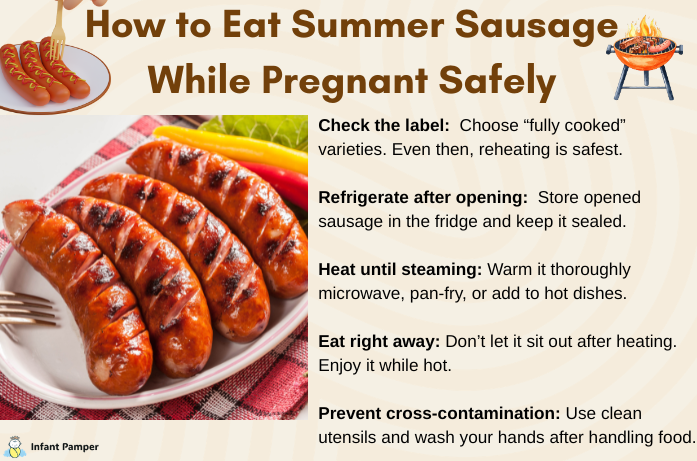
How to Eat Summer Sausage While Pregnant Safely
If you’re craving that savory, salty bite, you don’t have to feel like summer sausage is completely off-limits. You just need to prepare it in the safest way.
Here are practical steps you can actually follow in real life:
1) Read the label carefully
Look for “fully cooked” or “ready to eat.” Even if it says ready to eat, reheating is still the safest choice during pregnancy.
2) Refrigerate after opening
Some summer sausages are shelf-stable unopened, but once you open the package, store it in the refrigerator and keep it tightly sealed.
3) Heat until steaming
This is the big one. Don’t just “warm it a little.” Heat it until it’s steaming hot throughout. You can:
- Microwave slices until hot and steamy
- Pan-fry slices for a minute or two
- Add it to soups, casseroles, pasta, or omelets
4) Eat it soon after heating
Try not to heat it and then let it sit out. Eat it while it’s hot.
5) Avoid cross-contamination
Use clean knives and cutting boards, and wash your hands after touching raw foods. These little habits protect you more than you realize.
If you follow these steps, eating summer sausage while pregnant becomes a much safer choice for most moms.
What About Charcuterie Boards, Parties, and Restaurants?
This is where pregnancy feels tricky, because you’re not always in control of how food is stored or how long it has been sitting out.
Summer sausage often appears on charcuterie boards alongside salami, pepperoni, prosciutto, and soft cheeses. It may sit at room temperature for hours, and that’s not ideal for pregnancy food safety.
If you’re at a gathering, here are gentle, realistic options:
- Choose crackers, fruit, nuts, olives, or veggies
- Skip cold cured meats if they will be sitting out
- If you really want sausage, ask if there’s a way to heat a portion
- Don’t feel pressured to “just have one bite” to be polite
You are not being difficult. You are being careful. And that’s a loving choice.
Pregnant and Sausage Cravings: How to Feel Satisfied Without Worry
Cravings can be intense. If you’re pregnant and sausage is what your body wants, it can feel frustrating to hear “avoid this” or “be careful with that.”
Instead of focusing on what you can’t have, try swapping with options that feel just as comforting:
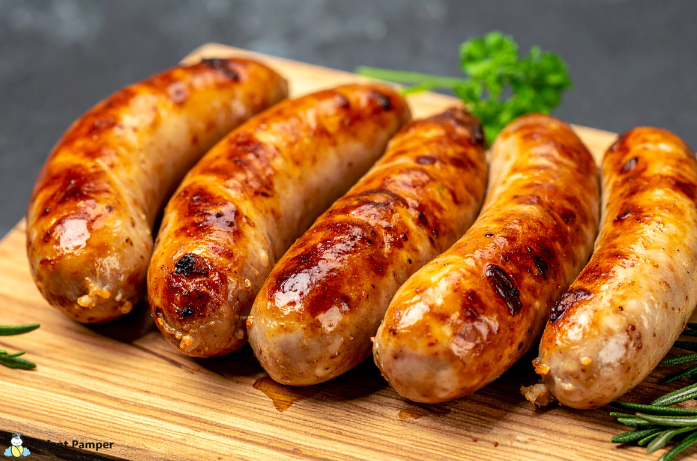
- Fully cooked breakfast sausage patties
- Grilled Italian sausage (fully cooked)
- Baked bratwurst heated until steaming
- Pan-seared kielbasa
Pair sausage with fiber and nutrients to help you feel good afterward:
- Eggs and whole-grain toast
- Roasted vegetables
- A hearty salad
- Brown rice or quinoa bowls
This way you satisfy the craving while supporting your body, and your baby.
Signs of Listeriosis to Watch For
This part isn’t meant to scare you, only to help you feel informed.
Symptoms that may appear after eating contaminated food can include:
- Fever
- Chills
- Muscle aches
- Nausea or diarrhea
- Headache
If you ever feel flu-like symptoms and you’re worried about something you ate, call your healthcare provider. Early treatment is available, and getting reassurance quickly can calm your mind.
Also remember: anxiety doesn’t equal danger. Most of the time, everything turns out completely fine.
Nutrition Note: Is Summer Sausage Healthy During Pregnancy?
Summer sausage can offer protein and some nutrients like iron and B vitamins, but it’s often high in sodium and saturated fat. That matters because pregnancy already increases fluid retention, and sodium can worsen swelling for some women.
You don’t have to fear it, just keep it moderate. Think of summer sausage as an occasional craving food, not an everyday protein.
If you’re having sausage, balance it with fresh foods like vegetables, fruit, whole grains, and plenty of water. Your body is doing something extraordinary, and you deserve nourishment without guilt.
Final Thoughts
If you’re worried because you’ve already eaten a slice of summer sausage, please don’t spiral. One bite does not mean something is wrong. Pregnancy is full of moments like this, tiny decisions that suddenly feel enormous.
The safest approach is simple: avoid cold cured meats when possible, and if you want them, heat them until steaming. With a few careful steps, you can enjoy food again without feeling nervous every time you open the fridge.
You are doing your best, and that’s what matters. Trust your instincts, ask questions when you need to, and remember, you’re already a caring, attentive mom. One informed choice at a time.
For more pregnancy nutrition tips, safe food guides, and gentle support through every trimester, explore more articles here at Infant Pamper we are walking this journey with you, one informed choice at a time.
FAQs About Summer Sausage While Pregnant
1) Can I eat summer sausage cold while pregnant?
Most doctors recommend avoiding cold cured meats during pregnancy because of listeria risk. If you want to eat it, it’s safest to heat it until steaming hot first.
2) What temperature should sausage be cooked to in pregnancy?
For safety, sausage should be heated to about 165°F (74°C), especially cured or ready-to-eat meats. Steaming hot is a good practical sign.
3) Is cooked sausage pregnancy-safe?
Yes, cooked sausage pregnancy guidelines generally say it’s safe when fully cooked and reheated properly. Avoid any sausage that’s undercooked or still pink inside.
4) What is the raw sausage pregnancy risk?
Raw or undercooked sausage can contain bacteria and parasites that may cause foodborne illness and, rarely, pregnancy complications. It’s best to avoid raw sausage completely.
5) Is sausage safe in pregnancy if it’s smoked?
Sometimes smoked sausage is fully cooked, sometimes it isn’t. The safest approach is to heat smoked sausage until steaming before eating.
6) I accidentally ate summer sausage while pregnant, what should I do?
Take a breath. The risk is still low. Most people who accidentally eat cold cured meats have no issues. If you develop fever or flu-like symptoms, contact your doctor for guidance.
Disclaimer: This article is for informational purposes only and is not a substitute for professional medical advice. Always consult your doctor or healthcare provider regarding any questions about your diet or health during pregnancy.