
Written by a Mom & Parenting Research Writer at Infant Pamper
As your pregnancy nears its end, the anticipation of labor grows. It’s a thrilling time, filled with excitement and a touch of nervousness as you wonder: “How do I know when labor is approaching?” Understanding the signs of labor and recognizing when your body is preparing for delivery can help you feel confident and informed. While every pregnancy is unique, there are several physical and emotional changes that indicate your body is getting ready for labor. These signs can start appearing weeks before labor, giving you time to prepare mentally and physically. Being able to identify the key signs of labor helps you know when it’s time to head to the hospital, helping you manage this life-changing moment with confidence.
Here, we’ll explore 15 signs of labor, how to recognize them, and when to take action. Recognizing these indicators early on will help you prepare for the big day and give you a clearer sense of what to expect.
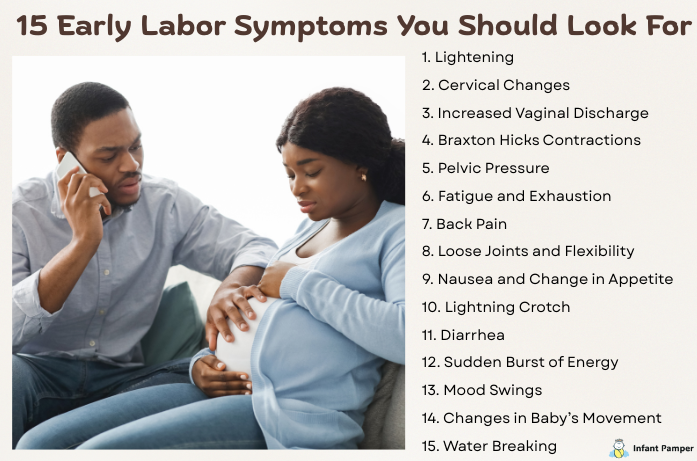
15 Early Labor Symptoms You Should Look For
1. Lightening: Baby Drops Into the Pelvis
One of the first and most noticeable early signs of labor is lightening. This occurs when your baby drops lower into your pelvis in preparation for birth. Lightening can happen anywhere from a few weeks before labor to just days before delivery. As your baby shifts lower, you might feel less pressure on your diaphragm, making it easier to breathe. However, this can also result in increased pelvic pressure, causing you to urinate more frequently.
While lightening may relieve pressure on your diaphragm, it often increases pressure on your pelvic floor, which can be uncomfortable. This is a significant sign labor is near, and a physical indicator that things are progressing. American Pregnancy Association explains that lightening is one of the first signs of labor for many women.
2. Cervical Changes: Effacement and Dilation
As your body prepares for labor, your cervix will begin to undergo effacement (thinning) and dilation (opening). This process, known as cervical ripening, is essential for allowing the baby to pass through the birth canal during delivery.
You might not feel these changes directly, but your healthcare provider will check your cervix during your appointments. As the cervix softens, some women report subtle sensations of pressure or discomfort in the lower abdomen, which might be noticed during a cervical exam. If you experience any unusual symptoms, such as sharp pain or bleeding, contact your provider immediately. The National Institute of Child Health and Human Development (NICHD) provides additional guidance on cervical changes in pregnancy.
3. Increased Vaginal Discharge
During the final stages of pregnancy, it’s normal for the amount of vaginal discharge to increase. As your cervix softens and begins to open, more mucus is produced to help protect the birth canal. This increase in vaginal discharge is typically clear or slightly cloudy but can sometimes be tinged with blood, known as the bloody show.
While the bloody show doesn’t mean labor will start immediately, it’s an indicator that the cervix is beginning to dilate and efface. If you notice a large amount of discharge or the mucus plug coming out, it’s a good sign that labor is approaching.
4. Braxton Hicks Contractions: Practice Contractions
Throughout your pregnancy, you may have experienced Braxton Hicks contractions, also known as practice contractions. These are irregular, often painless contractions that help your body prepare for labor. As labor nears, they become more frequent and intense, signaling your body’s readiness for the real thing.
Braxton Hicks contractions typically feel like a tightening in the abdomen or mild cramps. While they don’t lead to labor, they help your body get accustomed to the sensations of real contractions. If you notice an increase in frequency or intensity, this may indicate your body is gearing up for active labor. Mayo Clinic provides insight on how Braxton Hicks contractions feel as you approach labor.
5. Pelvic Pressure: Feeling Heavier
As the baby moves lower into the pelvis, many women experience pelvic pressure. This sensation can feel like added weight and pressure in your lower abdomen and pelvis. As the baby descends, it presses on your pelvic floor, creating a feeling of heaviness or discomfort.
This is one of the first physical signs labor is near, indicating that the baby is settling into position for delivery. While it may be uncomfortable, it’s a normal part of the process as your body prepares for birth. Pregnancy, Birth and Baby explains how pelvic pressure increases as your baby prepares for labor.
6. Fatigue and Exhaustion: Your Body’s Way of Preparing
As your body readies itself for the physical demands of labor, you may experience extreme fatigue. The final weeks of pregnancy can be exhausting, as your body works overtime to prepare for the arrival of your baby. Many women feel a sudden wave of tiredness, which is nature’s way of ensuring you have the energy needed for labor and delivery.
Though this exhaustion can be challenging, it’s important to listen to your body and rest as much as possible. Conserving energy during this time is crucial so that you are prepared for the physical effort of active labor.
7. Back Pain: Lower Back Discomfort
As the baby moves into position, many women begin to feel lower back pain. This pain is often dull and persistent but can also feel sharp or crampy in some cases. The discomfort is caused by the baby shifting position and the relaxation of ligaments in preparation for delivery.
Back pain is a sign that your body is adjusting for labor and can intensify as the baby descends into the pelvis. Some women find relief through certain positions or by applying heat to the affected area.
8. Loose Joints and Flexibility: The Relaxin Effect
Throughout pregnancy, your body produces relaxin, a hormone that helps loosen the ligaments and joints, especially in the pelvic area. This process helps prepare your body for childbirth by allowing the pelvis to expand and accommodate the baby’s passage.
As labor approaches, you may feel more joint flexibility or experience discomfort due to the loosening of these ligaments. Some women notice a feeling of instability in their hips or pelvis, making it difficult to walk or move comfortably. This is a normal part of your body’s preparation for childbirth.
9. Nausea and Change in Appetite
In the final days before labor, many women experience nausea or a sudden loss of appetite. This could be due to hormonal changes that occur as your body prepares for labor. While nausea isn’t always a sign that labor is imminent, it can be an indicator that your body is gearing up for the physical stresses of delivery.
Additionally, some women report feeling less hungry or experiencing changes in food preferences. This change in appetite is usually temporary and may resolve once labor begins.
10. Lightning Crotch: Sharp Pelvic Pain
Lightning crotch refers to sudden, sharp pain in your pelvis, often caused by the baby shifting position. This sensation can be intense but usually lasts only a few seconds. The baby’s movements press on nerves in your pelvis, causing this brief discomfort.
Though it can be startling, lightning crotch is generally harmless and just another sign that your body is preparing for labor.
11. Diarrhea: Your Body Cleanses Itself
Some women experience diarrhea or loose stools in the days leading up to labor. This is your body’s way of clearing out the digestive system in preparation for childbirth. While this can be uncomfortable, it is a common sign that labor is near.
If diarrhea is accompanied by other signs of labor, such as contractions or water breaking, it’s time to get ready for the hospital. However, if you experience severe diarrhea or other symptoms like vomiting, contact your healthcare provider.
12. Sudden Burst of Energy: Nesting Instinct
Many women experience a sudden burst of energy before labor begins. This is often referred to as the nesting instinct. You may feel a strong urge to clean, organize, and prepare your home for the baby. While this burst of energy is productive, it’s important to balance it with rest. Labor can be long and exhausting, so remember to take breaks.
13. Mood Swings: Hormonal Changes
As your due date approaches, you may notice more mood swings. Hormonal fluctuations in the final weeks of pregnancy can cause feelings of irritability, excitement, and anxiety. These emotional ups and downs are normal and part of your body’s adjustment as you prepare for labor.
14. Changes in Baby’s Movement
You may notice a change in your baby’s movement patterns in the final days before labor. Some women report that their baby becomes less active, while others feel more movement. It’s important to monitor your baby’s movements during this time and contact your healthcare provider if you notice a decrease in activity.
15. Water Breaking: The Big Sign
The most dramatic sign that labor is about to begin is when your water breaks. This occurs when the amniotic sac ruptures, releasing the fluid that surrounds the baby. If your water breaks, it’s time to contact your healthcare provider and head to the hospital.
How to Know When It’s Time to Head to the Hospital
When you experience multiple signs of labor, it’s essential to know when to head to the hospital. Here are some guidelines to follow:
- Track your contractions: If contractions become stronger, more regular, and closer together, it’s time to head to the hospital.
- Call your healthcare provider: Always inform your doctor or midwife of your symptoms. They will guide you on when to come in.
- Stay calm: Labor can be overwhelming, but staying calm will help you manage the experience more effectively.
FAQs
1. What is lightening?
Lightening is when the baby drops lower into your pelvis, often a few days or weeks before labor. It relieves diaphragm pressure but may increase pelvic pressure.
2. How do Braxton Hicks differ from real contractions?
Braxton Hicks are irregular and painless, while real contractions are regular, stronger, and get closer together.
3. When should I go to the hospital?
Go to the hospital if contractions become regular, strong, and closer together or if your water breaks.
4. Is fatigue and back pain normal?
Yes, fatigue and back pain are common as your body prepares for labor.
5. What is the “bloody show”?
The bloody show is a small amount of blood-tinged mucus, indicating cervical changes. It doesn’t mean labor starts immediately but suggests it’s coming soon.
Final Thoughts
Labor is an exciting and unpredictable process, but understanding the signs of labor can help you feel more confident and in control. Every pregnancy is unique, so trust your body, listen to your instincts, and reach out to your healthcare provider if you have any concerns. By staying informed and prepared, you’ll be ready to welcome your little one into the world with confidence.
At Infant Pamper, our goal is to support parents with clarity, reassurance, and respect for the natural variations of pregnancy. Trust your body, stay informed, and remember that meeting your baby is closer than it feels.
Disclaimer: This article is for informational purposes only and is not intended as medical advice. Always consult your healthcare provider with any concerns related to your pregnancy.