By a Caring Mom at Infant Pamper
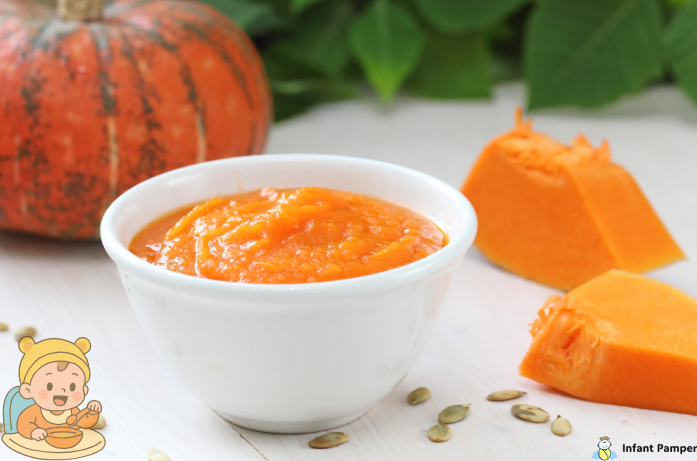
Once you start introducing solid foods to your baby, the first food choices should include nutrients, tenderness, and, as always, deliciousness. This is what brings pumpkin baby food into the spotlight. Its creamy texture, mild sweetness, and high nutritional profile make it one of the best first foods to introduce to babies. Whether you’re trying pumpkin puree for baby food for the first time or discovering new ways to combine it with other healthy ingredients, this guide will help you with everything from its benefits to easy recipes and smart combinations.
homemade pumpkin puree for baby is not only easy, but it also gives you complete control over the ingredients used in your little one’s meal. No chemicals, no sugar, just pure and nutritious goodness. Best of all, your baby will enjoy eating it!
Why Pumpkin Is So Good for Babies
Pumpkin is not only a fall favorite for adults, but also a superfood for babies. Packed with essential nutrients, pumpkin is able to provide all the nutrients needed for a baby’s healthy growth and development. According to the USDA Food Data Central, pumpkin is an excellent source of vitamin A (as beta-carotene), vitamin C, vitamin E, potassium, and dietary fiber. These nutrients are very beneficial in strengthening a baby’s immune system, encouraging eye development, maintaining a healthy digestive system, and supporting normal development.
According to experts at the American Academy of Pediatrics, babies should start introducing vegetables like pumpkin around 6 months of age, when they start showing signs of readiness, such as better head control and interest in food. Whether you make it into a silky pumpkin puree for baby or a thicker mash for older babies, it’s one of the easiest vegetables to introduce.
When and How to Introduce Pumpkin to Your Baby
Before introducing any new food, including baby food pumpkin, it’s important to follow the “one at a time” rule, introduce a single new ingredient every 3–5 days. This helps you identify any possible allergic reactions or sensitivities. Pumpkin is generally well-tolerated and rarely causes allergies, but cautious introduction is still wise.
Start with a simple, smooth pumpkin puree baby food. For babies around 6 months, keep the texture soft and runny by mixing the puree with a bit of breast milk, formula, or water. As your baby grows and gets used to solids (usually around 8–9 months), you can make the texture thicker or even mix pumpkin with other fruits, grains, or yogurt for extra variety.
Homemade pumpkin baby food is a good option for first-time babies, as it is light, easy to digest, nutritious and tasty.
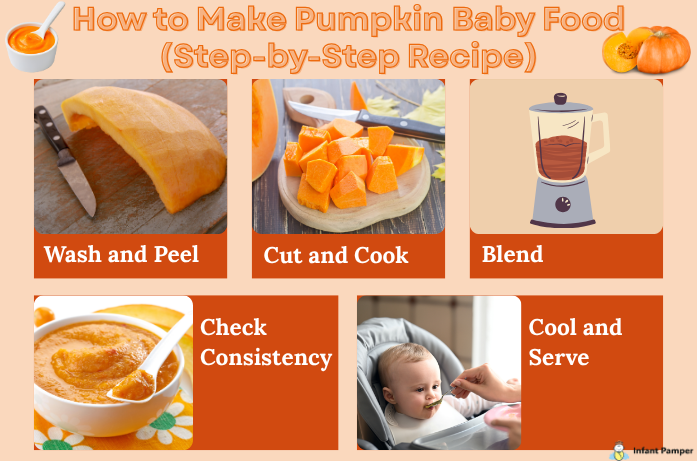
How to Make Pumpkin Baby Food (Step-by-Step Recipe)
Making pumpkin baby food at home is easier than you might think! You just need one essential ingredient: pumpkin! This is the sugar pumpkin (also known as pie pumpkin), which is the sweetest and tender when cooked.
Ingredients:
- 1 small sugar pumpkin (about 2–3 lbs)
- Water, breast milk, or formula (for thinning)
Instructions:
- Wash and Peel: Rinse the pumpkin under running water. Cut it in half and scoop out the seeds and strings. Peel the skin carefully.
- Cut and Cook: Chop the pumpkin into small cubes. Steam, boil, or bake until it becomes soft. Steaming helps retain more nutrients.
- Blend: Place the cooked pumpkin pieces into a blender or food processor. Add a small amount of water, formula, or breast milk to achieve a smooth texture.
- Check Consistency: For younger babies, keep it thin. For older ones, make it thicker or even slightly chunky.
- Cool and Serve: Let it cool before serving. Always test the temperature to make sure it’s not too hot.
Tip: Freeze extra portions of your pumpkin puree baby food in ice cube trays for convenient, single-serving meals. Store cubes in a freezer-safe bag for up to three months.
This easy pumpkin baby food recipe is not only budget-friendly but also customizable. Once your baby enjoys the taste, you can start exploring more flavor combinations.
Delicious Pumpkin Baby Food Mix Ideas
Once your little one has tasted pumpkin on its own, it’s time to make it even more fun and delicious. Pumpkin’s natural sweetness makes it a great base for mixing with other fruits, vegetables, and grains. Here are some great pumpkin combination ideas for baby food:
1. Pumpkin + Apple:
Sweet and rich in vitamin C, this combo is gentle on baby tummies and perfect for fall.
2. Pumpkin + Carrot:
Double the beta-carotene! This vibrant orange blend is loaded with antioxidants.
3. Pumpkin + Pear:
A smooth, naturally sweet mix ideal for younger babies starting solids.
4. Pumpkin + Oatmeal:
Add some cooked oats to pumpkin puree for a fiber-rich, filling breakfast option.
5. Pumpkin + Yogurt (8+ months):
Add creamy plain yogurt to provide protein and healthy fats, great for growing babies.
6. Pumpkin + Banana:
For extra creaminess and sweetness, mash a ripe banana into the pumpkin puree.
Each combination not only adds nutrition but also introduces your baby to new flavors. If you’re confused about what to mix with pumpkin in baby food, these easy combinations are both healthy and baby-friendly.
Storage, Safety, and Feeding Tips
Nutrition isn’t the only consideration for baby food. Food safety is equally important. If you’re making pumpkin baby food yourself, let it cool completely before freezing it. Place the food in sterilized containers or silicone trays that are BPA-free and use them for freezing.
- Refrigerate: Up to 2 days
- Freeze: Up to 3 months
- Thaw: Store overnight in the refrigerator or in a bowl filled with warm water (never microwave directly).
Always check for signs of spoilage, unusual smell, watery texture, or color changes mean it’s time to discard. Never re-freeze thawed baby food. Also, once you’ve offered food from a spoon that’s touched your baby’s mouth, throw away the leftovers to prevent bacteria growth.
And remember, patience is key. It can take multiple attempts before your little one develops a liking for new flavors like baby food pumpkin puree.
Final Thoughts: Tiny Spoonfuls of Love
When you make your own pumpkin baby food, you’re not only feeding your baby, but also boosting their health, happiness, and self-confidence. Making pumpkin baby food at home is so easy that you can control its quality while still allowing your baby to experience its authentic and nutritious taste. Start with traditional pumpkin puree baby food and then add flavors like pear or oats; the options are countless.
Homemade baby food is a source of comfort for parents and a healthy start for babies. So, grab some pumpkin, steam it, and watch the joy on your baby’s face every time they take a spoonful. It’s not just a meal, but a time of love, growth, and bonding.
Common Questions Parents Ask About Pumpkin Baby Food
1. Can I use canned pumpkin for baby food?
Yes, but make sure it’s 100% pure pumpkin, free of sugar, salt, or spices. Don’t use canned “pumpkin pie filling” as it contains additives that are not suitable for children.
2. How long does homemade pumpkin puree last?
Refrigerate in airtight containers for up to 48 hours or freeze for up to 3 months. Always thaw overnight in the fridge before serving.
3. Can I blend pumpkin puree with formula or breast milk?
Yes, for sure! Mixing up pumpkin baby food with milk not only helps attain a creamy texture but also contributes to baby’s comfort level.
4. Is pumpkin beneficial for baby constipation?
Yes, it does help in many cases! A mild fiber content in pumpkin backs up digestion and may sometimes relieve minor constipation.
5. What if my baby doesn’t like the taste of pumpkin?
This is typical. Babies may need to take several attempts before welcoming new tastes. Mixing pumpkin with non-stranger fruits like apple or banana might be a good way to make it more delicious.
Follow Infant Pamper for more baby food recipes, gentle parenting tips, and care advice every day.
Disclaimer: This article is for informational purposes only and does not replace professional medical advice. Always consult your pediatrician before introducing new foods to your baby’s diet.
More Baby Food & Feeding Guides You Will Love
How to Make Prune Puree for Baby (Great for Digestion Support)
How to Make Broccoli Puree for Baby (Iron & Fiber-Rich First Food)