
By a Caring Mom at Infant Pamper
Pregnancy is often described as magical, but if you are constantly battling a blocked nose, it might not feel so magical right now. Many expecting moms experience pregnancy rhinitis, a condition that leads to ongoing nasal congestion without any infection. If you’ve been wondering why your nose feels stuffy even though you’re not sick, you might be dealing with this very common pregnancy issue. Understanding pregnancy rhinitis symptoms, knowing when pregnancy rhinitis starts, and learning what’s safe to use during pregnancy can make a world of difference in your comfort.
This complete guide breaks down everything you need to know, including how to distinguish pregnancy rhinitis vs cold, how both the first trimester and second trimester can affect your breathing, and the most effective pregnancy rhinitis treatment options that are safe for moms and growing babies.
What Is Pregnancy Rhinitis?
Pregnancy rhinitis is a non-infectious nasal congestion caused by hormonal and physical changes during pregnancy. Unlike a cold or allergies, it doesn’t come with fever, cough, or body aches, just a stubborn stuffy nose. Elevated estrogen levels are one of the main factors behind this persistent congestion.
One of the biggest challenges is telling the difference between pregnancy rhinitis vs cold, especially during seasonal changes. The key difference is that pregnancy rhinitis is caused by hormones, not viruses or bacteria.
Most importantly, this condition is temporary and usually disappears within a few weeks after delivery.
How Common Is Pregnancy Rhinitis?
Pregnancy rhinitis affects roughly 20–30% of pregnant women Research from Pregnancy, Birth & Baby Australia confirms that many women experience symptoms during the second trimester, while others may notice changes as early as the first trimester.
Studies from reputable sources like PubMed confirm that pregnancy-related nasal congestion is tied to hormonal increases and blood flow changes. Even though it’s common, many moms don’t know what to call it and assume it’s just a stubborn cold.
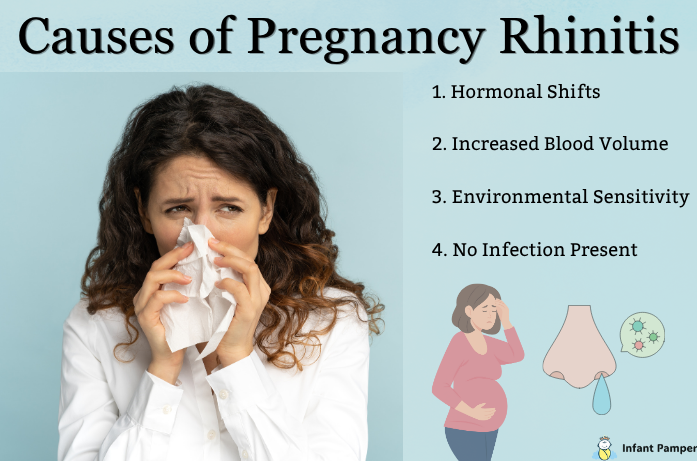
Causes of Pregnancy Rhinitis
To better understand the safest pregnancy rhinitis treatment, it’s important to first understand why it happens in the first place. Pregnancy brings major hormonal and physiological changes that affect every system in the body, including your nasal passages.
1. Hormonal Shifts
Increasing estrogen and progesterone levels are essential for maintaining pregnancy, but they also cause swelling in the mucous membranes inside the nose.
2. Increased Blood Volume
During pregnancy, your body produces extra blood to support the baby. This increased blood flow also affects nasal tissues, which can become swollen and sensitive.
3. Environmental Sensitivity
Pregnant women often react more strongly to dust, dry air, strong fragrances, and pollution. Even mild triggers that never bothered you before can suddenly cause congestion.
4. No Infection Present
A major point in comparing pregnancy rhinitis vs cold is that rhinitis is not caused by bacteria or viruses. There is no fever, no yellow mucus, and no body pain, just consistent congestion.
Pregnancy Rhinitis Symptoms
Recognizing pregnancy rhinitis symptoms can be tricky, especially if you’re pregnant for the first time or if you’re also dealing with allergies. Some of the most common signs include:
- Persistent blocked or stuffy nose
- Sneezing fits
- Clear or watery nasal discharge
- Postnasal drip
- Mild facial pressure
- Snoring, even if you normally don’t snore
- Mouth breathing due to congestion
- Difficulty sleeping
These symptoms can linger anywhere from a few weeks to several months, depending on when pregnancy rhinitis starts for you.
When Does Pregnancy Rhinitis Start?
This varies from woman to woman, but generally speaking:
- Some feel symptoms early, during the pregnancy rhinitis first trimester
- Many experience it during the pregnancy rhinitis second trimester, when blood flow increases
- Others notice congestion in the later months due to increased fluid retention
Regardless of when pregnancy rhinitis starts, it often feels worse at night or in humid environments.
How Pregnancy Rhinitis Can Affect Daily Life
Although pregnancy rhinitis isn’t dangerous, it can influence your day-to-day comfort and quality of sleep.
1. Sleep Disturbances: Sleeping with a blocked nose is uncomfortable. Many moms find themselves waking up frequently or sleeping with their mouth open.
2. Increased Fatigue: Poor sleep leads to daytime tiredness, which can make pregnancy more exhausting.
3. Snoring: Even women who never snore may suddenly develop nighttime snoring due to nasal blockage.
4. Dry Mouth: Mouth breathing can cause a sore throat or dry mouth in the morning.
5. Emotional Frustration: Breathing discomfort can make moms feel irritated or overwhelmed, especially during the later stages of pregnancy.
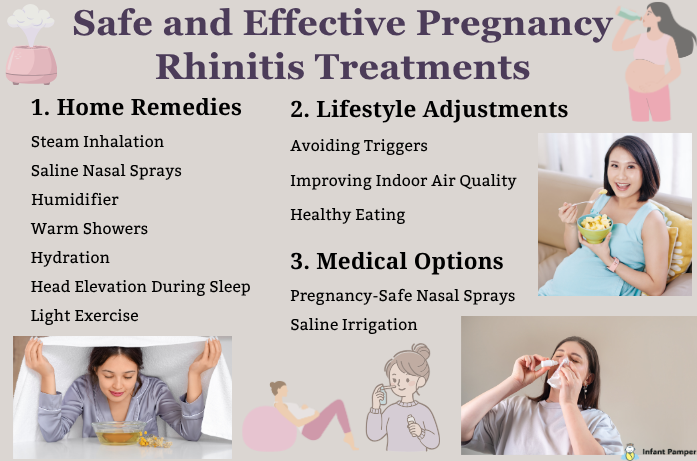
Safe and Effective Pregnancy Rhinitis Treatments
The best part about pregnancy rhinitis treatment is that there are many safe, natural remedies. However, any medicated treatment should always be discussed with a doctor first.
1. Home Remedies
These natural remedies are the safest options during pregnancy.
Steam Inhalation: Inhaling warm steam can temporarily relieve congestion by loosening mucus and opening nasal passages.
Saline Nasal Sprays: Non-medicated saline sprays moisturize the nasal lining and reduce dryness without any risk to the baby.
Humidifier Use: Running a humidifier, especially at night, adds moisture to the air and reduces irritation.
Warm Showers: Warm showers generate steam that helps clear nasal passages naturally.
Hydration: Drinking plenty of water helps reduce congestion by thinning mucus.
Head Elevation During Sleep: Sleep with the head elevated to prevent excessive blood flow to the nose at night.
Light Exercise: Gentle activities like walking improve overall airflow and often give temporary relief.
2. Lifestyle Adjustments
Small changes can significantly ease pregnancy-related nasal congestion.
Avoiding Triggers: Try to stay away from strong perfumes, smoke, harsh cleaning products, and dusty environments.
Improving Indoor Air Quality
- Use air purifiers
- Keep windows open when weather allows
- Vacuum and dust regularly
Healthy Eating: A nutrient-rich diet with fruits and veggies supports respiratory health.
3. Medical Options
If your symptoms interfere with breathing or sleep, some safe treatments may be recommended by your doctor.
Saline Irrigation: Using a neti pot or saline rinse can flush mucus and reduce irritation.
Pregnancy-Safe Nasal Sprays: Certain steroid nasal sprays may be permitted under medical supervision.
Avoid These
- Oral decongestants unless your doctor approves
- Long-term use of medicated nasal sprays (risk of rebound congestion)
- Strong essential oils that may not be safe for pregnancy
Pregnancy Rhinitis vs Cold: Key Differences
Knowing whether you’re dealing with pregnancy rhinitis vs cold can save you from unnecessary worry or medication.
Pregnancy Rhinitis
- Clear nasal discharge
- No fever
- No body aches
- Symptoms last weeks or months
- Caused by hormones
Cold
- Thick yellow or green mucus
- Fever and fatigue
- Sore throat
- Usually goes away within a week
- Caused by a virus
If symptoms worsen or include fever, consult your doctor to rule out infection.
When Should You See a Doctor?
Although pregnancy rhinitis is harmless, seek medical advice if you have:
- Symptoms lasting longer than 6 weeks
- Colored mucus (green or yellow)
- High fever
- Severe sinus pressure
- Difficulty breathing
- Signs of sinus infection
Your doctor can recommend the safest pregnancy rhinitis treatment based on your trimester and overall health.
Does Pregnancy Rhinitis Affect the Baby?
The good news? No. Pregnancy rhinitis does not harm your baby. It doesn’t affect oxygen flow or the placenta. The only concern is how it affects the mother poor sleep and ongoing discomfort can lead to fatigue.
Managing symptoms is mainly about improving mom’s comfort and overall well-being.
Prevention Tips to Reduce Symptom Severity
While you can’t always prevent rhinitis, these habits may help reduce severity:
- Drink plenty of fluids
- Use a humidifier during dry months
- Avoid strong smells and dust
- Keep your environment clean
- Sleep with extra pillows
- Try safe breathing exercises
- Maintain a healthy pregnancy diet
These small efforts can make your pregnancy experience much more comfortable.
Frequently Asked Questions
1. Does pregnancy rhinitis go away after birth?
Yes! Most women experience complete relief shortly after delivery.
2. Can nasal strips help?
Yes, they’re safe and drug-free.
3. Does pregnancy rhinitis get worse at night?
Often, yes. Blood flow increases when lying down, making congestion worse.
4. Does it hurt the baby?
No. It only affects maternal comfort, not fetal health.
5. Is pregnancy rhinitis more common with allergies?
Yes. Women with pre-existing allergies often notice stronger pregnancy rhinitis symptoms.
Final Thoughts
Pregnancy rhinitis can feel overwhelming, especially when you’re already adjusting to major physical changes. But you’re not alone many expecting moms experience this frustrating yet harmless condition. With safe remedies, simple adjustments, and a little patience, you can breathe more comfortably and sleep more peacefully.
Remember, this condition is temporary. Once your baby arrives, your nasal passages usually return to normal within a few weeks.
Take care of yourself, listen to your body, and breathe easy you are doing an incredible job.
Want more expert-backed tips for a healthier, more comfortable pregnancy?
Visit Infant Pamper for reliable, mom-approved advice and practical solutions tailored just for you.
Medical Disclaimer: This article is for educational purposes only and does not replace professional medical advice. Always consult your healthcare provider before starting any pregnancy rhinitis treatment during pregnancy.
For more expert-backed tips on a healthier and more comfortable pregnancy, explore the following helpful articles:
Can Pregnancy Cause Headaches?
Pregnancy Hospital Bag List for Mom & Baby