By a Caring Mom at Infant Pamper
Motherhood is a beautiful journey filled with joys, sleepless nights, and countless emotions. But many new moms are surprised when, in addition to diaper changes and late-night feedings, they also have to contend with a new skincare challenge: postpartum acne.
Those frustrating breakouts can appear at the very time when you’re trying to feel confident and settled in your new role. The good news? You’re not alone in experiencing postpartum acne is both common and temporary.
In this guide, we’ll explore postpartum acne causes and prevention, safe and effective postpartum acne treatments, and gentle natural remedies for postpartum acne that are suitable even for breastfeeding moms.
What Causes Postpartum Acne?
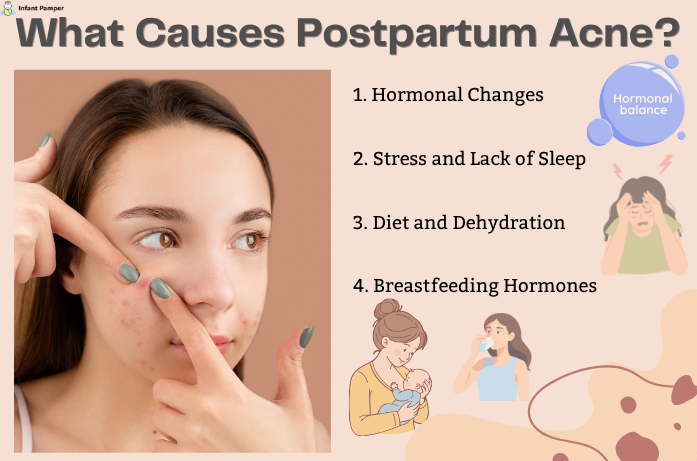
If your skin seems oilier or more prone to acne after delivery, hormones are likely to blame. During the postpartum period, as you gradually recover from pregnancy, your body undergoes rapid hormonal changes. Let’s take a look at what’s happening beneath the skin.
1. Hormonal Changes
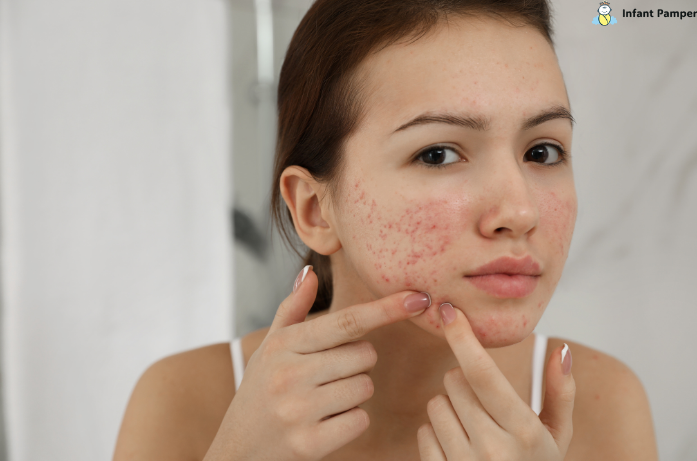
After childbirth, estrogen levels drop while progesterone and androgens fluctuate. This hormonal roller coaster can overstimulate oil glands, clog pores, and cause postpartum hormonal acne, often on the jawline, chin, or neck.
The American Academy of Dermatology (AAD) reports that adults usually experience hormonal acne, especially during hormonal changes such as pregnancy, postpartum recovery, or breastfeeding.
2. Stress and Lack of Sleep
Lack of sleep and constant caregiving can increase cortisol levels, known as the stress hormone. High cortisol levels affect sebum production and inflammation, which can lead to stress-induced acne. Acne is most common in new mothers, especially those experiencing postpartum complications and breastfeeding.
3. Diet and Dehydration
Processed foods, sugar, and dairy can contribute to inflammation and excess oil production. At the same time, dehydration slows down skin repair. A clean, balanced diet supports both hormonal balance and skin clarity, key elements in postpartum acne causes and prevention.
Focusing on whole foods and hydration helps maintain hormonal balance and supports healthier skin during and after pregnancy.
4. Breastfeeding Hormones
Prolactin, the hormone that is responsible for milk secretion, can indirectly influence the oil glands and thus lead to postpartum acne during breastfeeding. However, these acne spots are not permanent, and their appearance usually gets better along with the hormonal levels’ stabilization. The Cleveland Clinic explains that postpartum acne often resolves naturally as hormonal activity returns to pre-pregnancy levels.
Pro Tip: Most moms notice when postpartum acne starts around 4–6 weeks after delivery. For some, it fades within a few weeks, while others may deal with it for several months.
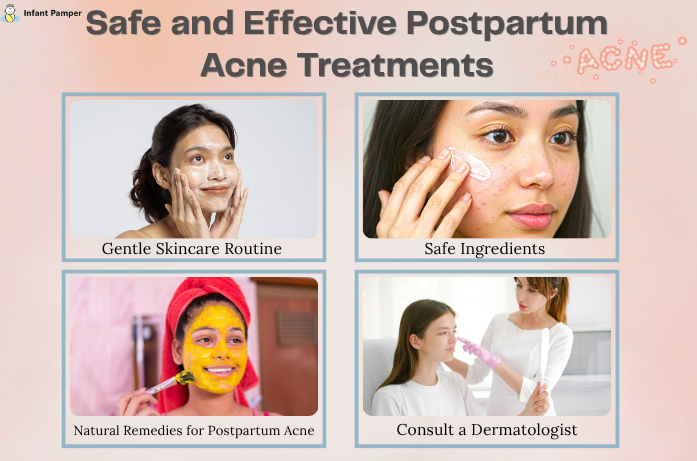
Safe and Effective Postpartum Acne Treatments
Resorting to powerful acne creams can be very tempting, but the skin of postpartum women is very sensitive and if, in addition, you are breastfeeding, the safety of the ingredients becomes even more important. Now let’s see how to apply the acne treatment that is both safe and effective.
1. Gentle Skincare Routine for Healing Skin
Creating the best skincare for postpartum acne doesn’t require a 10-step routine. Focus on three gentle steps:
- Cleanser: Use a mild, fragrance-free, non-comedogenic cleanser to remove dirt and oil.
- Moisturizer: Hydrate your skin with an oil-free, lightweight moisturizer.
- Sunscreen: Apply SPF 30+ daily to prevent acne marks from darkening.
Avoid scrubbing, over-cleansing, or harsh exfoliation, postpartum skin is delicate and needs extra care.
2. Safe Ingredients for Breastfeeding Moms
Certain skincare ingredients are safe during lactation and effective against acne. The Mayo Clinic recommend the following:
- Niacinamide: Soothes inflammation and evens skin tone.
- Azelaic Acid: Fights bacteria, clears pores, and fades dark spots.
- Lactic or Glycolic Acid: Gently exfoliate and boost cell renewal.
- Sulfur: Reduces oil and kills acne-causing bacteria.
Avoid retinoids (vitamin A derivatives) and high concentrations of salicylic acid while breastfeeding, as they may enter breast milk. For personalized advice, consult a dermatologist for safe acne products for breastfeeding moms.
3. Natural Remedies for Postpartum Acne
If you prefer home-based skincare, postpartum acne treatment at home can be both soothing and effective. Try these natural options:
- Aloe Vera Gel: Hydrates, calms redness, and reduces inflammation.
- Raw Honey + Turmeric Mask: Combines antibacterial and healing properties.
- Green Tea Toner: Reduces excess oil and refreshes skin.
- Oatmeal Paste: Gently exfoliates and soothes sensitive areas.
These natural remedies for postpartum acne can be used 2–3 times weekly, but always patch-test before applying to your face.
4. When to Consult a Dermatologist
If acne becomes cystic, painful, or leaves dark scars, it’s best to seek medical care. Dermatologists can prescribe mild topical antibiotics, azelaic acid-based gels, or other safe acne products for breastfeeding moms that are tailored to your skin’s needs.
Preventing Postpartum Acne: Everyday Habits That Help
Treating acne is helpful, but preventing new breakouts can make the biggest difference. These small, consistent habits can keep your skin clearer and calmer.
1. Eat and Hydrate for Healthy Skin
Your skin mirrors your nutrition. Include:
- Omega-3-rich foods like salmon, walnuts, and flaxseeds
- Leafy greens, fruits, and whole grains
- Less dairy and refined sugar
These foods reduce inflammation and help regulate hormones. Drink plenty of water (at least 8 glasses daily) to flush toxins and support balanced oil levels.
2. Manage Stress and Rest When You Can
Stress and exhaustion affect your skin more than you realize. Even short moments of rest matter. Try:
- 10 minutes of meditation or deep breathing
- A short stroll with your baby
- Listening to calming music
These habits reduce cortisol, helping both your mind and skin relax, a gentle way to support your postpartum acne treatment naturally.
3. Keep Your Environment Clean
Simple hygiene steps go a long way:
- Change pillowcases every 3–4 days
- Avoid touching your face frequently
- Wipe your phone screen regularly
- Use clean, baby-safe skincare tools
Consistency keeps bacteria and dirt away, reducing the risk of clogged pores and future postpartum hormonal acne breakouts.
How Long Does Postpartum Acne Last?
Every mother’s journey is unique. Generally, postpartum acne appears within the first month after birth and can last up to six months, depending on your body’s hormone recovery speed.
If you’re breastfeeding, acne may linger slightly longer, as hormonal balance continues to shift. Don’t be discouraged, with consistent care and safe acne products for breastfeeding moms, most new mothers notice gradual improvement by the third or fourth month.
Emotional Impact: Be Kind to Yourself
Skin changes can affect your confidence, especially when you’re already navigating new motherhood. Many moms feel frustrated seeing postpartum acne in the mirror, but remember, your body is healing from a miraculous process.
Be gentle with yourself. Focus on nourishment, rest, and small self-care moments. Healing takes time, but your glow will return, both inside and out.
“Hormonal acne after childbirth is temporary and treatable. With gentle care, most mothers notice improvement within a few months.
Conclusion
Postpartum acne is one of many temporary changes that come with motherhood. It’s not a flaw, it’s your body’s way of finding balance again. With gentle routines, smart prevention, and patience, your skin will recover just as beautifully as you have.
Whether you use dermatologist-approved treatments or natural remedies for postpartum acne, consistency and self-care are key.
At Infant Pamper, we believe every mom deserves to feel cared for, confident, and radiant, because motherhood’s glow shines far deeper than skin.
FAQs About Postpartum Acne
1. When does postpartum acne start?
Usually within 4–6 weeks after childbirth, as hormone levels shift and your body adjusts after pregnancy.
2. How long does postpartum acne last?
It can last from a few weeks to six months, depending on hormonal balance, sleep, stress, and skincare habits.
3. Is postpartum acne common while breastfeeding?
Yes. Many moms experience postpartum acne while breastfeeding due to fluctuating prolactin and cortisol levels.
4. Can I use acne creams while nursing?
Only use dermatologist-approved safe acne products for breastfeeding moms containing gentle actives like azelaic acid or niacinamide.
5. Are there home remedies that really work?
Yes, natural ingredients like honey, aloe vera, green tea, and oatmeal are effective and safe options for postpartum acne treatment at home.
6. Can stress make postpartum acne worse?
Absolutely. Cortisol (the stress hormone) directly triggers oil production and inflammation, worsening breakouts.
7. Does diet influence postpartum acne?
Yes. A balanced diet rich in whole foods and low in sugar or dairy can greatly reduce postpartum hormonal acne flare-ups.
Medical Disclaimer: This article is for informational purposes only and should not replace medical advice. Always consult a qualified dermatologist or healthcare provider before beginning any skincare treatment, especially if you are breastfeeding or recovering from childbirth.
Explore more guides on Infant Pamper for real, practical advice on postpartum wellness, baby care, and motherhood, created by moms, for moms.
For more helpful resources to support your postpartum recovery, check out the following articles: