Authored by: A Caring Mom at Infant Pamper
The first few days with a newborn can be a whirlwind of emotions and new experiences. Every cry, sound, and expression takes on new meaning. Among these early milestones, the newborn first bath often stands out as a moment that fills many new parents with equal parts excitement and anxiety. The idea of bathing such a tiny, delicate baby can be intimidating, especially when you’re still getting used to feeding, holding, and comforting them.
It’s completely normal for parents to feel unsure about the right time to bathe their newborn. Advice on this topic can vary widely, with some suggesting an immediate bath, while others recommend waiting. At Infant Pamper, we believe that clear, reassuring guidance can ease the confusion. This article will walk you through everything you need to know about your baby’s first bath, from the best timing to proper safety precautions and how to create a calm, positive experience. Most importantly, we’ll highlight that baby bath time isn’t just about cleanliness, but about building trust, comfort, and connection from the very beginning.
Why Timing Matters More Than You Think
In the past, it was standard practice to bathe a newborn shortly after birth. Today, most pediatric experts recommend waiting at least 24 hours after birth before giving your baby their first bath. Delaying the first bath is essential for several reasons:
- Temperature regulation: A newborn’s body is still adjusting to life outside the womb. Delaying the bath gives the baby time to regulate their body temperature without the shock of cold or hot water. Guidance from the American Academy of Pediatrics explains the importance of allowing babies to adjust to their new environment before bathing.
- Protection from infection: Newborns are born with a natural protective layer on their skin called vernix, which helps prevent skin irritation and infection. Bathing too early washes away this vital layer before it has a chance to absorb and protect the skin.
- Bonding time: The first few hours and days with your baby are critical for establishing a strong bond. Delaying the first bath allows parents to spend more time with their baby skin-to-skin, which is crucial for both emotional and physical health.
By waiting, you give your baby the best start and avoid overwhelming their sensitive skin and systems with unnecessary stimulation. After this initial period, baby bath time can become a calming and enjoyable routine for both you and your little one.
Newborn First Bath: What Parents Should Know Before Starting
Before jumping into the step-by-step bath routine, it’s important to approach your baby’s first bath with a calm and positive mindset. This isn’t a performance or a test of your parenting abilities. The goal is to ensure your baby feels safe, comfortable, and loved. Bathing a newborn is a learning experience for both parents and baby, and it’s completely okay if things don’t go perfectly. For reassurance, trusted organizations like the American Academy of Dermatology (AAD) recommend using fragrance-free products and gentler techniques when washing your baby’s delicate skin.
Every baby is different, some babies love water immediately, while others may cry or become startled. Both responses are perfectly normal, and they don’t reflect your skills as a parent. What matters most is your calm presence and reassurance. Babies are sensitive to emotions, so when you remain calm, your baby is more likely to feel secure.
As you prepare for the bath, think of it not just as a cleaning routine, but as an extension of nurturing and affection. Holding your baby with gentle hands and speaking in a soothing voice will help them feel safe, even in a new and unfamiliar situation. Over time, as you and your baby become more familiar with bath time, it can evolve into a cherished bonding experience.
When Is the Right Time to Bathe a Newborn?
The question of when to give your newborn their first bath is one that many parents ask. Pediatric guidelines now suggest waiting 24-48 hours after birth, allowing your baby to adjust to life outside the womb and giving you time to bond. This waiting period is important for several reasons:
- Regulating body temperature: A newborn’s body is still learning how to regulate temperature. Giving the baby a few hours to settle before the first bath helps maintain a stable temperature.
- Reducing stress: The first days with your newborn can be overwhelming for both of you. Bathing too soon can add unnecessary stress. Giving your baby time to adjust to their new environment without rushing into a bath allows both you and your baby to feel more comfortable.
- Skin protection: During the early hours, your baby is covered in vernix, a protective layer that shields their skin from the harsh environment. Allowing this layer to remain for the first day or two provides optimal protection.
In these early days, a gentle wipe down of the face, neck, and diaper area is usually all that’s needed. This also allows you to observe your baby’s cues and get more comfortable with handling your newborn before introducing the full bath.
Understanding the Difference Between Hospital and Home Baths
Your baby’s first bath experience may vary depending on where it takes place. A newborn first bath in hospital is typically performed under the supervision of medical staff, such as nurses or midwives, who ensure the process follows safety protocols. In some hospitals, the first bath may be delayed to allow the vernix to absorb fully. Parents can either observe, participate, or choose to wait before bathing their baby, depending on hospital policies.
In contrast, a newborn first bath at home is usually more relaxed and personal. At home, you have more control over the environment, temperature, lighting, and even timing. You can choose a quiet, calm moment to bathe your baby and have all the necessary items within reach. Many parents feel more confident at home after spending the first few days bonding with their baby and learning their cues.
Regardless of where the bath takes place, the most important factor is that your baby feels safe, warm, and supported. Creating a calm, unhurried environment will make the process less stressful for both you and your baby.
Sponge Baths: The Safest Start for Newborns
Before the umbilical cord stump falls off, full immersion baths are not recommended. Instead, sponge baths are the safest and most practical option. Here’s how to approach the newborn first sponge bath:
- Start with a soft washcloth: Use warm water and a soft cloth to gently wipe your baby’s face, neck, and body while keeping the rest of the body wrapped in a towel. This prevents heat loss and protects your baby from feeling overwhelmed.
- Don’t scrub: The goal isn’t to remove all the vernix or to scrub the baby’s skin. Rather, the focus is on cleaning and comforting the baby.
- Stay gentle and slow: A sponge bath is a wonderful opportunity to connect with your baby through soothing touch. Move slowly and calmly to help your baby relax.
Many parents choose to continue sponge bathing for several weeks, even after the umbilical area heals. It’s a comforting and controlled way to care for your baby, especially when you’re still adjusting to handling your newborn.
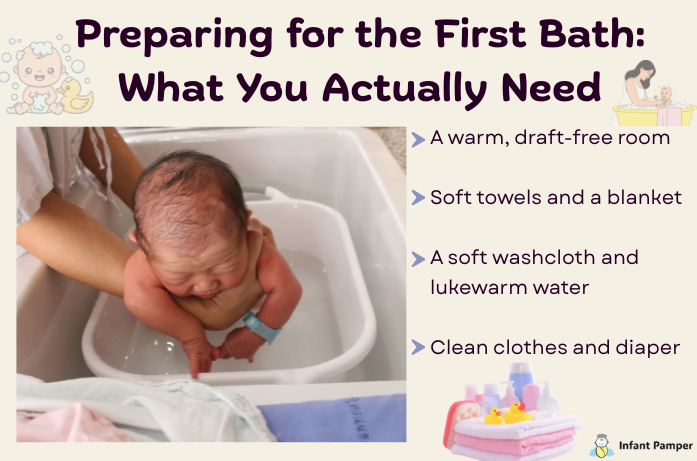
Preparing for the First Bath: What You Actually Need
Preparing for your baby’s first bath doesn’t require fancy equipment or expensive products. Simplicity is key. Here’s a list of essential items you’ll need:
- A warm, draft-free room: Babies are sensitive to temperature changes. Make sure the room is cozy and warm.
- Soft towels and a blanket: You’ll need something to wrap your baby in to help them stay warm during the bath.
- A soft washcloth and lukewarm water: Make sure the water is at a comfortable temperature, about 98-100°F (37-38°C).
- Clean clothes and diaper: After the bath, your baby will be ready to get dressed in something warm and comfortable.
By having everything ready before you start, you’ll ensure that your baby stays safe and comfortable throughout the process.
A Gentle, Step-by-Step Bathing Approach
Here’s a simple guide to giving your newborn their first bath safely and calmly:
- Step 1: Start by gently washing the face with just warm water. Wipe each eye from the inner corner outward, using a clean part of the washcloth for each eye.
- Step 2: Move down to the neck, arms, and chest. Be gentle around the umbilical area to avoid any irritation. Use gentle strokes, and speak softly to reassure your baby.
- Step 3: Save the diaper area for last. It’s the dirtiest part and should be cleaned last to minimize any discomfort.
- Step 4: Dry your baby gently with a soft towel, patting instead of rubbing, especially in skin folds where moisture may collect.
Maintain a slow pace throughout the bath, offering comfort and reassurance with every movement.
How Often Should You Bathe a Newborn?
Newborns do not need daily baths. Over-bathing can lead to dry skin and disrupt natural skin oils. Generally, two to three baths per week are sufficient, along with daily cleaning of the face, neck folds, hands, and diaper area.
If your baby enjoys bath time, you can keep it short and soothing. On days when you don’t give a full bath, simply wipe your baby down gently with a washcloth. The key is comfort and safety rather than frequent bathing.
Signs Your Baby Is Ready for a Bath
Some parents prefer to wait for signs that their baby is ready for the first bath, rather than following a set timeline. Here are a few signs to watch for:
- Stable body temperature
- Dry and healing umbilical cord stump
- Calm, alert periods
If your baby seems unsettled or sleepy, waiting another day or two before bathing is perfectly fine. Trust your instincts, this is a time to connect with your baby and feel confident in your caregiving.
FAQs About Newborn Bathing
1. When should I bathe my newborn?
It’s recommended to wait at least 24-48 hours after birth before giving your baby their first bath.
2. Can I use soap for my newborn’s bath?
For the first few weeks, use plain water. Mild soap can be used occasionally if needed.
3. What should I do if my baby cries during the bath?
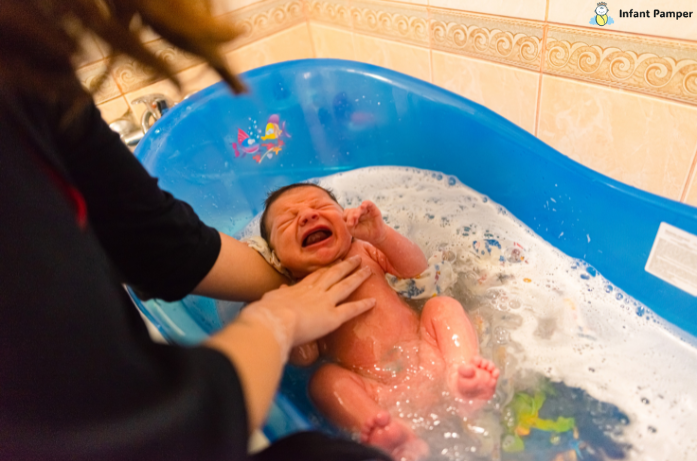
Crying is normal. Keep the bath short and gentle and reassure your baby with a calm voice.
4. How often should I bathe my newborn?
Bath your newborn 2-3 times per week. Daily baths are unnecessary and may dry out their skin.
5. Can I bathe my newborn in a regular tub?
Avoid full immersion until the umbilical cord stump heals. Stick to sponge baths until then.
Final Thoughts from Infant Pamper
Your baby’s first bath is not a milestone to rush or perfect. It’s a special moment to connect, comfort, and build trust with your newborn. Every baby is different, some will enjoy the bath right away, while others may need time to adjust. Both reactions are normal and part of your baby’s transition to the outside world.
Remember, bath time is about building connection. With each bath, your baby will come to recognize it as a moment of care, while you grow more confident in your new role as a parent. Take your time, trust your instincts, and above all, enjoy this quiet, bonding experience.
At Infant Pamper, we are here to support you in every step of your parenting journey. Relax, stay present, and know that you are doing your best for your baby, one gentle bath at a time.
Medical Disclaimer: This article is for educational purposes only and does not replace professional medical advice. Always consult your pediatrician or qualified healthcare provider for guidance specific to your baby’s health and development.