Authored by: A Caring Mom at Infant Pamper
Itching during pregnancy is one of those changes many expecting mothers notice, yet very few feel truly prepared for. It might start as a mild irritation that comes and goes, or it may slowly become a daily discomfort that interferes with sleep, concentration, and emotional well-being. For some women, itching is limited to a growing belly or tender breasts. For others, it spreads to areas they never expected and brings up worrying thoughts like Is this normal? Could this affect my baby?
At Infant Pamper, we believe pregnancy guidance should feel supportive and reassuring. This article is written to help you understand why itching happens during pregnancy, how it can appear in different parts of the body, what your body may be signaling, how to stay comfortable in safe and natural ways, and when itching deserves medical attention.
Why Itching Is So Common During Pregnancy
Pregnancy places extraordinary demands on your body. Hormones shift rapidly to support your baby’s development, blood volume increases, skin stretches, and your immune system adjusts to protect both of you. These internal changes often show up on the skin. Public health resources such as Pregnancy, Birth and Baby explain that hormonal changes and skin stretching are among the most common reasons itching develops during pregnancy.
Rising estrogen levels can make skin more reactive. Increased blood circulation can create a warm, flushed feeling that intensifies itchiness. As your body grows, skin may lose moisture and elasticity, leading to tightness and dryness. In most cases, these changes cause itching that is uncomfortable but harmless.
What matters most is understanding how the itching feels, where it occurs, and whether it changes over time.
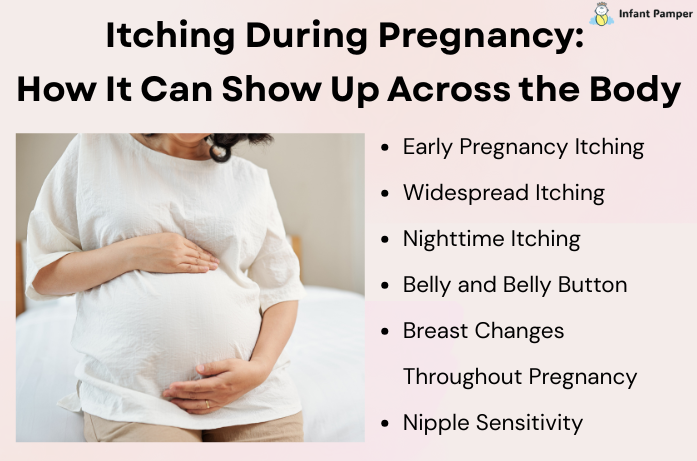
Itching During Pregnancy: How It Can Show Up Across the Body
Early Pregnancy Itching
Some women experience itching in early pregnancy, even before they start showing. At this stage, hormonal changes are often the main reason. Skin may feel sensitive or irritated without any visible rash or dryness. Medical references such as StatPearls (NCBI) describe early pregnancy itching as commonly linked to hormonal shifts rather than serious conditions.
This type of itching is usually mild and temporary, settling as the body adapts to pregnancy hormones. Keeping skincare routines gentle, avoiding heavily scented products, and maintaining regular hydration often helps the skin adjust more comfortably during these early weeks.
Widespread Itching
Itching all over body during pregnancy can feel unsettling, especially when there is no obvious rash. This often happens when the skin becomes drier overall or when body temperature remains slightly elevated. Long hot showers, dehydration, tight clothing, and dry indoor air can make this sensation stronger.
Applying moisturizer consistently, choosing breathable fabrics, and staying well-hydrated throughout the day can make a noticeable difference over time. Natural relief approaches are also supported by guidance from American Pregnancy Association, which emphasizes gentle skincare and hydration.
Nighttime Itching
Pregnancy itching at night is a frequent complaint. Hormonal activity naturally fluctuates in the evening, and increased blood flow can heighten skin sensations. Without daytime distractions, itchiness may feel more intense, sometimes making it difficult to fall or stay asleep.
A calming nighttime routine, cooler room temperature, and moisturizing before bed often help reduce nighttime discomfort.
Belly, Breast, and Chest Itching
Belly and Belly Button
As pregnancy progresses, the abdomen stretches rapidly to accommodate your growing baby. This stretching thins the skin and places tension on nerve endings, making itching more noticeable. A belly button itch during pregnancy is especially common as the navel area stretches outward.
Regular moisturizing helps maintain skin elasticity and reduces the urge to scratch, which can otherwise worsen irritation. Abdominal skin stretching is a very common and usually harmless cause of itching in pregnancy.
Breast Changes Throughout Pregnancy
Breast itching and early pregnancy often occur together due to increased blood flow and hormonal stimulation of breast tissue. As pregnancy continues, many women notice breasts itch during pregnancy as the skin stretches further in preparation for breastfeeding.
Some describe itching on breasts during pregnancy as a tingling or tight sensation rather than dryness. Wearing well-fitted, breathable bras and keeping the skin moisturized can help minimize discomfort.
Nipple Sensitivity
Nipple itching pregnancy is common and often linked to heightened sensitivity, hormonal changes, and early preparation for milk production. This area can feel especially delicate.
Using mild, fragrance-free cleansers and avoiding rough fabrics helps protect sensitive skin. Letting nipples air-dry after bathing can also reduce irritation.
Underarms and Skin Folds
Hormonal shifts during pregnancy can increase sweating and change the balance of skin bacteria. This makes areas like the underarms more prone to irritation. Armpit itching during pregnancy may be related to moisture buildup, friction, shaving sensitivity, or reactions to deodorants that were previously well tolerated.
Many women notice armpits itch pregnancy improves when switching to fragrance-free products, reducing shaving frequency, and wearing loose-fitting clothing that allows airflow.
Hands, Feet, and Soles: An Area That Deserves Attention
Occasional itching on the hands or feet can be normal during pregnancy. However, persistent itching on the soles of the feet deserves careful attention. A bottom of foot itching pregnancy sensation that is intense, worse at night, and not accompanied by a rash should always be discussed with a healthcare provider.
Medical guidance from Mayo Clinic highlights that itching affecting the palms and soles may sometimes be linked to pregnancy-related liver conditions such as cholestasis of pregnancy, which requires monitoring.
After Birth: Why Itching Can Continue
Itching post pregnancy often surprises new mothers. After delivery, hormone levels drop quickly, the skin begins repairing itself, and dryness is common, especially during breastfeeding and postpartum recovery. This type of itching is usually temporary and improves gradually with hydration, rest, and gentle skincare.
Staying Comfortable Safely During Pregnancy
Relief from pregnancy-related itching doesn’t come from aggressive treatments, but from consistent, gentle care.
Moisturizing regularly helps restore the skin’s natural barrier. Many parents ask about anti itch cream pregnancy options. Products formulated for sensitive skin and approved for prenatal use are generally preferred. If symptoms persist or worsen, a healthcare provider may recommend an anti itch cream for pregnancy that matches your trimester and skin needs.
Small daily habits also matter. Lukewarm showers prevent further dryness, breathable cotton clothing reduces friction, staying hydrated supports skin health from within, and mild, soap-free cleansers protect sensitive skin.
When Itching Should Not Be Ignored
While most itching during pregnancy is harmless, certain patterns deserve medical evaluation. You should contact your healthcare provider if:
- Itching becomes severe or steadily worsens
- There is no visible rash
- Sleep is consistently disrupted
- Palms or soles itch intensely
- Yellowing of the skin or eyes appears
Public health guidance from the Centers for Disease Control and Prevention encourages pregnant individuals to report symptoms that feel unusual or persistent rather than waiting them out.
The Emotional Side of Pregnancy Itching
Persistent itching can feel emotionally draining. While it may seem minor compared to other pregnancy symptoms, constant discomfort, especially when it affects sleep, can take a real toll. Feeling frustrated, tired, or overwhelmed doesn’t mean you’re overreacting. It means you’re responding to ongoing physical stress.
Final Thoughts from Infant Pamper
Itching during pregnancy is often a natural response to the incredible physical and hormonal changes your body is making to support new life. While most itching is harmless and temporary, understanding where it comes from and how it presents can help you feel calmer and more in control. Paying attention to your symptoms, caring for your skin gently, and speaking up when something feels unusual ensures both your comfort and your baby’s well-being.
At Infant Pamper, we believe informed parents feel empowered and reassurance is just as important as information during pregnancy.
Frequently Asked Questions
1. Is itching normal in the first trimester of pregnancy?
Yes, itching in the first trimester of pregnancy can be normal. Early hormonal changes may increase skin sensitivity before visible body changes begin. Mild itching without a rash is common and usually improves as the body adjusts.
2. Can itching during pregnancy harm my baby?
Most itching during pregnancy does not affect the baby and is related to skin stretching or hormones. However, severe or persistent itching should be discussed with a healthcare provider to rule out rare conditions that may need monitoring.
3. Is itching all over the body during pregnancy normal?
Itching all over the body during pregnancy can occur due to dry skin, increased body temperature, or hormonal changes. While usually harmless, widespread itching without a rash, especially at night, should be mentioned to your doctor.
4. Why does pregnancy itching feel worse at night?
Pregnancy itching at night often feels stronger because hormone levels fluctuate, blood circulation increases, and there are fewer distractions. Keeping skin moisturized and sleeping in a cool environment may help reduce nighttime itching.
5. Can pregnancy cause new skin sensitivity to products?
Yes, pregnancy can make your skin more sensitive, even to products you’ve used for years. Hormonal changes may trigger itching or irritation, which is why switching to gentle, fragrance-free skincare is often recommended during pregnancy.
Looking for more trusted, parent-friendly guidance through pregnancy and early parenting? Explore expert-backed articles, gentle advice, and reassuring resources at Infant Pamper because you deserve clarity, confidence, and support at every stage of your journey.
Medical Disclaimer: This article is for informational purposes only and does not replace professional medical advice. Always consult your healthcare provider regarding symptoms during pregnancy or before starting any treatment.