By a Caring Mom at Infant Pamper
The earliest days of a baby’s life are filled with quiet discoveries, tiny movements, and a deep need for comfort. One of the most natural ways to meet that need is through touch. Infant Massage Benefits go far beyond relaxation. Gentle daily massage supports physical growth, emotional security, digestion, sleep, and the special bond between a baby and caregiver. Across cultures and generations, parents have instinctively used touch to soothe, calm, and connect with their babies. Today, both experience and research continue to affirm how powerful this simple practice truly is.
At Infant Pamper, our goal is to guide new parents with gentle, realistic, and trustworthy information. This article is written to help you understand why infant massage matters, how it supports your baby’s development, and how you can confidently make it part of your daily routine without pressure or perfection.
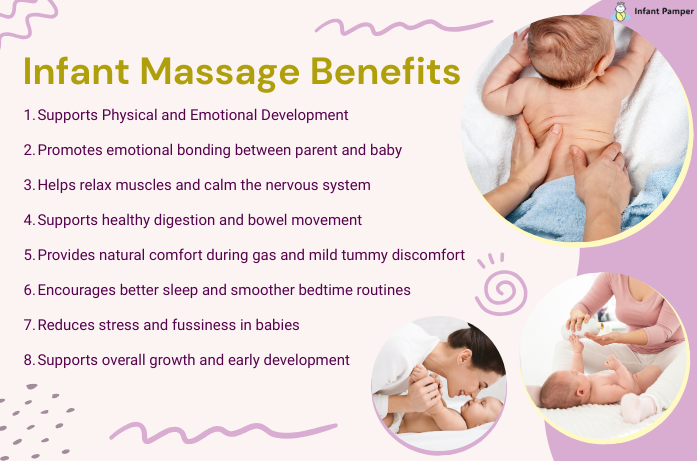
Key Infant Massage Benefits for Healthy Growth & Comfort
- Supports Physical and Emotional Development
- Promotes emotional bonding between parent and baby
- Helps relax muscles and calm the nervous system
- Supports healthy digestion and bowel movement
- Provides natural comfort during gas and mild tummy discomfort
- Encourages better sleep and smoother bedtime routines
- Improves circulation and body awareness
- Reduces stress and fussiness in babies
- Supports overall growth and early development
These benefits work together, creating a foundation of comfort and security that positively affects your baby’s daily experiences and long-term well-being.
1. Infant Massage Benefits for Physical and Emotional Growth
When practiced consistently and gently, infant massage supports a wide range of physical and emotional outcomes. These benefits build gradually over time, often becoming part of a baby’s sense of security and comfort.
Massage encourages relaxation of muscles, supports circulation, and helps babies become more aware of their bodies. Emotionally, it provides a predictable, calming experience that reassures babies during a period of rapid change and adjustment.
Research shared by the National Institutes of Health highlights that positive touch in infancy supports neurological development and emotional regulation, especially during the early months when the brain is rapidly growing:
2. Building a Strong Parent–Baby Bond
One of the most meaningful effects of massage is the bond it creates. During massage, parents make eye contact, speak softly, and remain fully present. Babies respond to this focused attention with calmness and engagement.
This bonding time helps parents better understand their baby’s non-verbal cues, such as body movements, facial expressions, and sounds. Over time, this deepens trust and confidence on both sides. The baby feels seen and understood, while the parent feels more connected and capable.
According to child development guidance shared by the American Academy of Pediatrics, responsive touch strengthens parent, infant attachment and helps babies feel secure in their environment:
3. Benefits of Massaging Newborn for Early Adjustment
The benefits of massaging newborn babies are especially noticeable in the early weeks. Newborns are adapting to life outside the womb, where sensations, temperatures, and sounds are all new. Gentle massage provides familiarity and reassurance.
Newborn massage can help:
- Ease muscle tension from birth
- Support smoother transitions between sleep and wakefulness
- Promote a sense of safety and calm
- Encourage early bonding and emotional regulation
For many parents, this daily ritual becomes a grounding moment in an otherwise unpredictable newborn phase.
4. Supporting Digestion and Comfort
Digestive discomfort is one of the most common challenges during infancy. A baby’s digestive system is still developing, which can lead to gas, bloating, and fussiness. Gentle abdominal massage plays a supportive role in easing this discomfort.
Through slow, rhythmic movements, massage helps stimulate natural digestive processes and relaxation of the abdominal muscles. Many parents notice reduced restlessness and improved comfort when massage is practiced regularly.
This is why infant massage for digestion is often recommended as part of a gentle, holistic approach to infant care.
5. Gas Relief Infant Massage and Tummy Comfort
Trapped gas can make babies uncomfortable, restless, and difficult to settle. Gas relief infant massage focuses on gentle clockwise movements on the tummy that follow the natural direction of digestion.
These movements help release trapped air and encourage smoother bowel activity. While massage is not a medical treatment, it can significantly support comfort when practiced consistently and calmly.
Parents often find that massage also helps them feel more proactive and confident when responding to their baby’s discomfort.
6. Improved Sleep Patterns Through Massage
Sleep is essential for both babies and parents, yet it can be unpredictable in early infancy. Massage supports relaxation by lowering stress hormones and calming the nervous system. Many babies fall asleep more easily and stay asleep longer when massage is included in their bedtime routine.
A calm massage before sleep sends a clear signal that it is time to unwind. Over time, this consistency helps babies associate massage with rest and security, making transitions into sleep smoother.
7. Baby Massage Benefits for Overall Development
The baby massage benefits extend into multiple areas of development. Massage supports circulation, muscle tone, and body awareness. As babies grow, these gentle movements help them become more familiar with their limbs and movements.
Massage also encourages sensory integration. Babies learn how touch feels, how pressure varies, and how their bodies respond. This awareness supports early motor development and coordination in subtle but important ways.
8. Emotional Security and Stress Reduction
Babies are sensitive to changes in their environment. Loud noises, new faces, and routine disruptions can cause stress. Massage provides a predictable and soothing experience that helps regulate emotions.
Through repeated positive touch, babies learn that comfort is available and consistent. This sense of security supports emotional resilience and reduces excessive crying or fussiness.
Parents also benefit emotionally. The act of massaging a baby can reduce parental stress, promote mindfulness, and strengthen confidence in caregiving.

When and How Often Should You Massage Your Baby?
There is no strict schedule for infant massage. What matters most is choosing a time when your baby is calm, alert, and receptive. Common moments include:
- After a warm bath
- Before bedtime
- During a relaxed daytime window
Even 10 to 15 minutes a day can be enough. Consistency matters more than duration. If your baby shows signs of discomfort or disinterest, it is always okay to stop and try again later.
Understanding Your Baby’s Cues
Every baby is unique, and massage should always follow the baby’s lead. Positive cues include relaxed limbs, eye contact, cooing, and calm breathing. Signs that your baby may need a break include turning away, stiffening, crying, or arching the back.
Respecting these cues builds trust and ensures massage remains a positive experience rather than an obligation.
Newborn Massage Benefits Beyond the First Months
The newborn massage benefits do not disappear as babies grow. Massage can continue into later infancy and toddlerhood with age-appropriate adjustments. Older babies often enjoy interactive massage that includes songs, eye contact, and playful movements.
As children grow, massage can still provide comfort during illness, transitions, or emotional stress, reinforcing the sense of safety established early in life.
What Research and Experts Support
Research shared by respected health organizations and child development experts consistently highlights the importance of nurturing touch in early life. Institutions such as the World Health Organization, National Institutes of Health, and pediatric associations recognize touch as essential to healthy growth, emotional bonding, and stress regulation in infants.
While massage is not a replacement for medical care, it is widely recognized as a supportive wellness practice.
Final Thoughts from Infant Pamper
At Infant Pamper, we believe the most meaningful parenting moments are often the quietest ones. Infant massage is a simple yet powerful way to support your baby’s physical comfort, emotional security, and overall development. Over time, these moments of touch become memories of safety and love that shape how your child experiences the world.
Common Questions Parents Ask
1. Is infant massage safe for all babies?
For healthy, full-term babies, gentle massage is generally safe. Parents of premature babies or babies with medical conditions should consult a healthcare provider before starting massage.
2. Do I need special training to massage my baby?
No special training is required. Loving, attentive touch and following your baby’s cues are far more important than learning specific techniques.
3. What if my baby doesn’t enjoy massage every day?
That is completely normal. Babies have different moods, and massage should always be flexible. If your baby seems uncomfortable, you can stop and try again another time.
4. How long should an infant massage session last?
A massage session can last anywhere from 5 to 15 minutes, depending on your baby’s comfort and interest. Even a short, calm session can be beneficial.
5. When is the best time to give my baby a massage?
The best time is when your baby is awake, calm, and not too hungry or too full. Many parents find that massage works well after a bath or as part of a bedtime routine.
Parenting is made up of small, meaningful moments, and infant massage can be one of the most comforting parts of your day. Take a few quiet minutes to gently massage your baby, follow their cues, and enjoy the connection you’re building together.
If you’re looking for more simple, caring guidance to support your parenting journey, keep exploring Infant Pamper for helpful, parent-focused tips you can truly trust.
Disclaimer: This article is intended for informational purposes only and does not replace professional medical advice. If your baby has health concerns, skin conditions, or special medical needs, consult a qualified healthcare provider before starting massage.