Authored by a Caring Mom at Infant Pamper
The early months of parenthood are full of surprises. Just when you feel you’re starting to understand your baby’s routine, new behaviors appear, extra crying, nonstop drooling, sleepless nights, and an urgent need to chew on everything nearby. It’s during these moments that many parents pause and ask themselves, how to know my baby is teething, or whether something else might be wrong.
Teething is one of the most talked-about baby milestones, yet its also one of the most misunderstood. Some babies breeze through it with minimal fuss, while others struggle with discomfort that affects sleep, feeding, and mood. Because babies can’t communicate pain the way adults can, teething often leaves caregivers second-guessing themselves.
This in-depth guide is written to help parents clearly understand teething, what it is, when it starts, how it feels for babies, and how to recognize real signs versus common myths. The goal is to help you feel confident, informed, and reassured as you support your baby through this normal stage of development.
What Is Teething and Why Does It Happen?
Teething is the natural process by which a baby’s teeth emerge through the gums. Babies are born with a full set of teeth hidden beneath their gums. As their jaw grows and develops, these teeth slowly move upward until they break through the surface.
Most babies begin teething between 4 and 7 months, but the range of normal is wide. Some babies show signs as early as 3 months, while others may not cut their first tooth until closer to their first birthday. Both scenarios are usually completely healthy. According to Healthy Children the timing of teething varies greatly and is rarely a cause for concern on its own.
Teething continues gradually until about age three, when most children have all 20 primary (baby) teeth.
How to Know My Baby Is Teething
Recognizing teething isn’t about spotting one single symptom, it’s about noticing a pattern of changes. Parents often realize their baby is teething only after several signs appear together.
Unlike illness, teething symptoms tend to fluctuate. Your baby may seem uncomfortable for a few days, then suddenly calm down, only for symptoms to return again later. This cycle often happens because discomfort increases just before a tooth erupts and eases once it breaks through the gum.
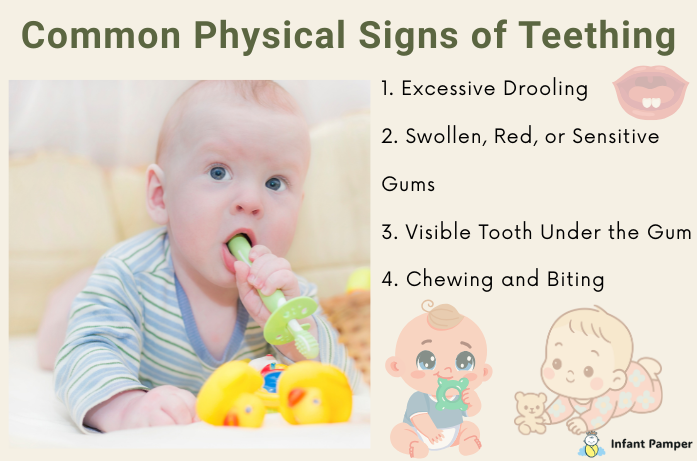
Common Physical Signs of Teething
1. Excessive Drooling
Drooling is one of the earliest and most noticeable signs. You may find yourself changing bibs and outfits multiple times a day. Excess saliva can also cause mild irritation around the mouth, chin, neck, or chest. This drooling response is commonly explained in pediatric guidance from UNICEF.
2. Swollen, Red, or Sensitive Gums
Teething gums often look puffy or slightly inflamed. If you gently touch the gums with a clean finger, your baby may react due to tenderness. This gum sensitivity is considered a classic teething sign by Cleveland Clinic.
3. Visible Tooth Under the Gum
In some cases, you might see a faint white line beneath the gum, signaling that a tooth is close to breaking through.
4. Chewing and Biting
Babies instinctively chew to relieve gum pressure. Hands, toys, blankets, crib rails, everything becomes a potential teething tool.
Behavioral Changes Linked to Teething
Teething doesn’t just affect your baby physically, it can also influence mood and behavior.
1. Increased Fussiness
Your baby may cry more, become clingier, or seem harder to comfort than usual. This is especially common in the late afternoon or evening when fatigue sets in.
2. Changes in Sleep
Teething discomfort often disrupts sleep. Babies may wake more frequently at night or take shorter naps during the day.
3. Feeding Differences
Some babies eat less because sucking can increase gum pressure. Others may want to nurse or bottle-feed more often for comfort rather than hunger.
Understanding Teething Pain
Many parents wonder how intense teething pain really is. While it’s not typically severe or constant, it can feel uncomfortable, similar to pressure or soreness beneath the gums. This discomfort usually peaks right before the tooth emerges.
This leads many caregivers to ask how to know if baby is in pain from teething, especially when crying seems unusual. Teething pain often improves with gentle pressure, chewing, or close comforting, which helps distinguish it from illness-related discomfort.
Teething Timeline: What Parents Can Expect
While every baby develops at their own pace, teeth usually appear in a predictable order:
- 4–7 months: Lower front teeth
- 8–12 months: Upper front teeth
- 9–16 months: Side incisors
- 16–23 months: Canines
- 23–33 months: Second molars
Understanding this timeline helps parents know how to know when baby is teething based on age and developmental stage, while still respecting individual differences.
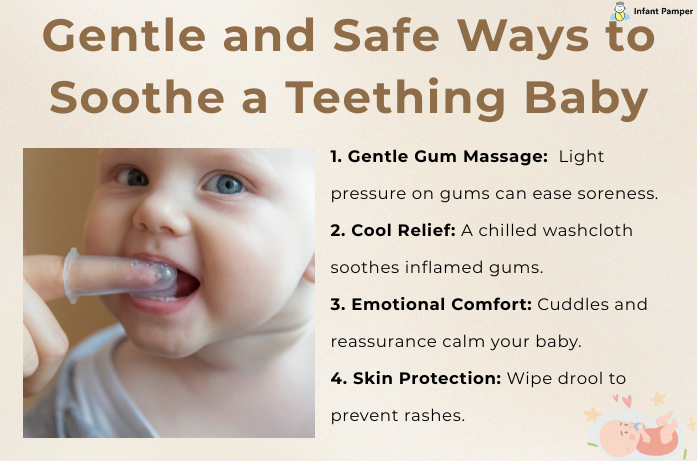
Gentle and Safe Ways to Soothe a Teething Baby
While teething discomfort can’t be completely avoided, gentle and safe comfort measures can significantly help your baby feel more at ease. Small, thoughtful actions often provide the most relief during this stage.
1. Gentle Gum Massage
Using a clean finger, gently massage your baby’s gums with light pressure. This can help counteract the pressure of the emerging tooth and temporarily reduce soreness. Many babies find this calming and reassuring, especially before sleep.
2. Cool Relief
Offering a clean, damp washcloth that has been chilled in the refrigerator can help soothe inflamed gums. The cool temperature helps reduce swelling and provides a numbing effect without harming sensitive gum tissue.
3. Emotional Comfort and Reassurance
Teething can be both physically and emotionally uncomfortable for babies. Extra cuddles, rocking, and a calm response to crying help your baby feel secure. Comfort and closeness often ease distress just as much as physical remedies.
4. Protecting Sensitive Skin
Excess drooling is common during teething and can irritate delicate skin. Gently wiping your baby’s face, chin, and neck throughout the day helps prevent drool-related rashes and keeps your baby more comfortable.
Teething Myths That Often Confuse Parents
Teething has been blamed for nearly everything at some point. Separating fact from fiction helps parents make better decisions.
- Teething does not cause serious infections
- Teething does not weaken the immune system
- Late teething is not usually a developmental issue
When to Contact a Healthcare Provider
Teething does not cause serious illness, and some symptoms should not be considered normal teething signs. Symptoms that go beyond mild discomfort should always be medically evaluated rather than attributed to teething alone.
Contact a healthcare provider if your baby shows any of the following:
- High or persistent fever (above 100.4°F / 38°C)
- Diarrhea or vomiting
- Ongoing cough or congestion
- Widespread or severe rashes
- Refusal to eat or drink for an extended time
- Signs of dehydration (such as fewer wet diapers or a dry mouth)
- Extreme lethargy, unusual sleepiness, limpness, or being inconsolable
These symptoms are not typical of teething and may indicate an illness that requires medical evaluation rather than teething-related discomfort.
Emotional Impact of Teething on Parents
Teething can be emotionally draining. Interrupted sleep, constant soothing, and uncertainty can leave parents feeling exhausted or overwhelmed. It’s important to remember that needing reassurance or support doesn’t mean you’re doing anything wrong.
Responding with patience and empathy helps your baby feel secure, even when they’re uncomfortable. This emotional connection is just as important as physical relief.
FAQs About Baby Teething
1. How to know if baby is teething or sick?
Teething causes drooling, gum tenderness, and mild fussiness but not high fever or severe symptoms. Illness usually includes ongoing fever, vomiting, or diarrhea.
2. How to know if my baby is teething for the first time?
First-time teething often shows up as increased drooling, chewing, and irritability, sometimes weeks before the tooth appears.
3. How to know your baby is teething if there are no visible teeth yet?
Teething symptoms commonly appear before teeth break through the gums, so discomfort can exist even without visible teeth.
4. How to know when a baby is teething versus experiencing sleep regression?
Teething includes gum changes and drooling, while sleep regression is more about developmental shifts without physical gum symptoms.
5. How to know if a baby is teething but still feeding normally?
Some babies continue feeding well despite teething. Other signs like gum swelling and chewing behaviors can still indicate teething.
Final Thoughts
If you’ve been wondering how to know my baby is teething, remember that teething is rarely defined by one single symptom. It’s the combination of physical signs, behavior changes, and timing that usually provides clarity.
Teething can be challenging, especially when it affects sleep and mood, but it is also a sign that your baby is growing exactly as they should. With patience, gentle comfort, and accurate information, you can support your baby through this stage with confidence.
At Infant Pamper, we’re here to guide and reassure parents through every early milestone, because caring for a baby is a journey best taken with understanding, calm, and compassion.
Medical Disclaimer: This article is for informational purposes only and does not replace professional medical advice. Always consult a qualified healthcare provider with concerns about your baby’s health or development.