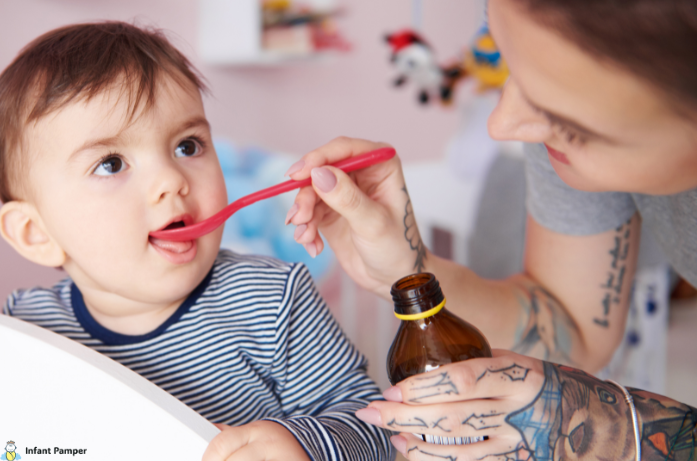
By a Caring Mom at Infant Pamper
Every parent eventually faces this challenge: your toddler is sick, you have the medicine ready, and suddenly tight lips, turned head, a firm NO, or even full-on meltdown. If you’ve been frantically Googling how to get a toddler to take medicine, you’re not alone. Toddlers are naturally resistant to anything that feels unfamiliar, especially when it tastes strange or interrupts their sense of control. And when a toddler refuses medicine, caregivers need safe, gentle, and realistic strategies that actually work.
In this guide, you’ll learn 12 parent-approved tricks, expert-backed tips, and real-life strategies to help even the most stubborn little ones take their medicine without tears. Whether you’re dealing with a strong-willed toddler, figuring out how to stop a toddler from spitting out medicine, or wondering what to do when a toddler won’t take medicine, this article covers everything you need.
Why Toddlers Refuse Medicine (And Why That Is Normal)
Before trying any tricks, it helps to understand why this battle happens in the first place. Toddlers are in the age of independence everything is “my choice!” They’re sensitive to smells, textures, and tastes, and anything that feels forced triggers an instant defense response.
Common reasons toddlers refuse medicine:
- Strong smell or bitter flavor
- Fear of syringes or spoons
- Bad past experience (vomiting, gagging)
- Power struggle or need for control
- Developmental stage where “no” is their favorite word
- Illness makes them more irritable and sensitive
If your toddler refuses medicine, remember it’s not misbehavior. It’s just normal development combined with an unpleasant taste.

Safety First: What To Know Before You Try Any Tricks
Even when you are desperate for your child to take medicine, safety has to come first.
- Always follow the dosage given by your pediatrician.
- Never mix medicine with a full bottle if they don’t finish it, they won’t get the required dose.
- Avoid forcing, pinning, or holding them down it causes fear and long-term resistance.
- Ask your pediatrician if the medicine can be mixed with food.
- If your toddler spits out the medicine, do not double dose until you ask a doctor what to do.
- Stay calm. Your mood affects your child’s mood.
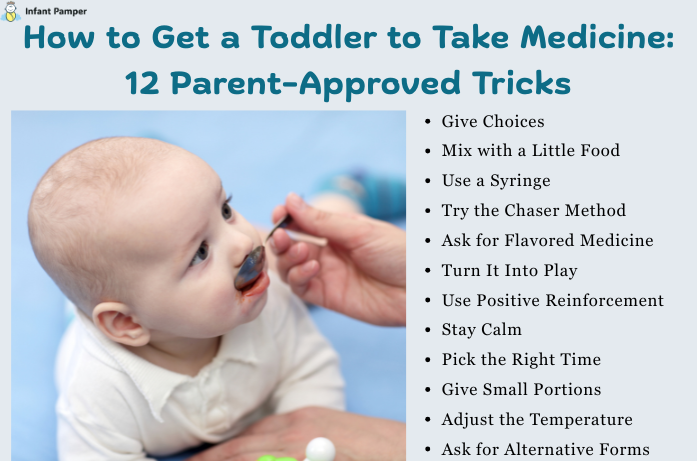
How to Get a Toddler to Take Medicine–12 Parent-Approved Tricks That Work
1. Give Them Choices to Encourage Cooperation
Toddlers love feeling like they have a say. Instead of asking if they want to take medicine, offer simple choices about how it happens. Ask whether they want a syringe or a spoon, to sit on the couch or on your lap, or to drink water before or after the dose.
These small choices help them feel more in control and less like something is being forced on them. When children feel involved in the process, it is much easier to give a stubborn toddler medicine without a big battle.
2. Mix It with a Tiny Amount of Food (If the Doctor Approves)
For many toddlers, the main problem is taste. If your pediatrician agrees, you can mix the medicine into a very small amount of soft food such as applesauce, yogurt, or fruit puree.
Use only a spoon or two so you know your child will finish all of it and get the full dose. This is one of the most helpful ways to make medicine taste better for toddlers without diluting it too much or losing track of how much they took.
3. Use a Medicine Syringe Instead of a Spoon
A spoon often dumps the medicine straight onto the tongue, which can feel strong and cause gagging. A medicine syringe allows you to place the liquid gently along the inside of your toddler’s cheek, where it is less likely to cause a strong reaction.
Slide the syringe into the side of the mouth and press slowly, giving your child time to swallow between small amounts. Afterwards, offer a sip of water or a bit of puree to clear the taste. This is one of the best methods for parents wondering how to stop a toddler from spitting out medicine.
4. Use the Chaser Method
The chaser method is simple and effective. First you give the medicine. Right after that, offer something your toddler likes, such as a tiny sip of juice, a bite of banana, or a spoon of yogurt.
The pleasant flavor arrives right after the bitter one and helps cancel it out in their mouth and memory. This quick follow-up distracts them and makes the whole experience feel less upsetting.
5. Ask About Flavored Medicine
Some pharmacies can add child-friendly flavors like grape or strawberry to certain liquid medicines. For toddlers who are very sensitive to taste and smell, this can make a big difference in how willing they are to take a dose.
Always check with your pediatrician before using flavored versions, because not every medicine can be safely changed. When it is allowed, flavoring can turn an automatic refusal into at least a willing try.
6. Turn Medicine Time into Play
Play is one of the main ways toddlers make sense of the world. Turning medicine time into a playful routine can ease fear and resistance. You might pretend you are at a clinic and your child is the brave patient. Let a favorite doll or toy take a pretend dose first. You can also use a fun countdown such as three, two, one, sip.
By shifting the focus from fear to fun, you help your child relax. When parents ask what to do when a toddler will not take medicine, play is often one of the most powerful tools.
7. Use Positive Reinforcement
Kids want to feel proud. When kids manage to take some or all of their medicine, praise them warmly. Tell them they were brave, that you are proud of them for trying, or that they did a great job. A sticker chart can be a gentle way to celebrate cooperation over several days.
Try not to rely too much on sweets or big prizes, as those can become habits. Honest, loving encouragement helps build your child’s confidence and makes future doses less stressful.
8. Stay Calm Even When You Feel Frustrated
It is normal to feel tired and stressed when your child refuses medicine, especially if you are worried about their health. But toddlers quickly pick up on your emotions. If you sound angry, rushed, or upset, they may feel scared and resist more.
Whenever you can, pause, take a breath, and speak in a calm, steady voice. Move gently instead of suddenly. Your calm presence sends the message that nothing dangerous is happening. During difficult toddler refusing medicine moments, your attitude can quietly shape how your child reacts.
9. Choose the Right Time of Day
Timing matters. Trying to give medicine during a tantrum, when your toddler is very tired, or when they are extremely hungry usually makes things worse.
Look for calmer times instead. After a nap, during quiet play, while reading a book together, or while they are watching something gentle are often good moments. A relaxed child is far more likely to accept medicine without a major meltdown.
10. Give the Dose in Small Portions
Some toddlers feel overwhelmed by a big mouthful of liquid. Instead of giving the entire dose at once, divide it into small portions. Offer a little, wait for them to swallow, then offer a little more.
This slow, gentle approach reduces gagging and fear. It is especially helpful if you are trying to figure out how to give a stubborn toddler medicine in a way that respects their limits but still gets the dose in. If your toddler struggles with large quantities, Cleveland Clinic offers helpful breakdowns for small-dose administration:
11. Adjust the Temperature With Doctor Approval
Some medicines taste slightly better when chilled. If your pediatrician says it is safe for that particular medication, storing it in the refrigerator may soften the flavor or smell enough for your toddler to tolerate it more easily.
Never warm medicine or mix it into very hot food or drinks, as that can change how the drug works. Always ask first, but when chilling is allowed, this small change can make medicine time less dramatic.
12. Ask Your Pediatrician About Alternative Forms
Sometimes, even after trying every trick, nothing works. Your toddler may gag, spit everything out, or become extremely upset each time. This does not mean you have failed as a parent. It simply means you need extra support.
Talk to your pediatrician about other options. Some medications come in different flavors, more concentrated liquids so there is less to swallow, dissolvable tablets or for some conditions, suppositories. These alternatives can be a huge relief when you still cannot reliably get your kids to take medicine.
When To Call the Doctor
Stop experimenting at home and call your pediatrician if:
- Your toddler vomits after nearly every dose
- They refuse all fluids
- You notice signs of dehydration, such as dry mouth, fewer wet diapers, or unusual sleepiness
- A fever is not improving
If you are unsure how much medicine actually stayed in their body because they spat or drooled some out, ask your doctor before giving more. Pediatricians see these situations often and can guide you on what to do when a toddler will not take medicine safely.
Common Mistakes To Avoid
Even caring parents can accidentally make medicine time harder. Try to avoid:
- Holding your toddler down to force medicine
- Hiding medicine in large amounts of food or drink
- Using expired or leftover medication not prescribed for this illness
- Repeating a full dose after spitting or vomiting without clear instructions from a pediatrician
Being careful protects both your child’s physical health and their emotional well-being.
Frequently Asked Questions
Q.1 What should I do if my toddler spits out the medicine
Stay calm, clean them up, and call your pediatrician for clear instructions on whether to repeat any part of the dose.
Q.2 Can I hide antibiotics in food
Sometimes yes, sometimes no. Some antibiotics must be taken directly. Always ask your doctor before hiding antibiotics in food.
Q.3 How do I stop a toddler from spitting out medicine
Use a syringe aimed toward the inside of the cheek, give the medicine in small portions, and follow up with a chaser like a sip of juice or a spoon of yogurt or banana.
Q.4 How long does it take for fever medicine to work
Most common children’s fever medicines start to show an effect in about 30 to 45 minutes, but always follow your pediatrician’s guidance on dosing and timing.
Final Thoughts
Giving medicine to a toddler can test your patience, creativity, and calm. You are not alone, and you are not doing it wrong. This is simply a tricky stage that many families go through. With gentle techniques, playful approaches, and steady reassurance, your child can slowly learn that medicine is something safe and helpful, not something to fear.
Be kind to yourself through the process. You are doing your best for your little one, and like many challenging stages in early childhood, this too will pass.
Want more simple, stress-free parenting tips designed for real families? Visit Infant Pamper and discover guides that make your parenting days easier and your little one’s days happier.
Medical Disclaimer: This article is for educational purposes only and is not a substitute for professional medical advice, diagnosis, or treatment. Always speak with your pediatrician about any questions or concerns regarding your child’s health or medications.
For more tips and resources, check out the following articles:
25 Toddler Lunch Ideas: Healthy, Easy, and Delicious Recipes for Kids (1–3 Years)