
Authored by: A Caring Mom at Infant Pamper
As a parent, you’ve probably experienced those overwhelming toddler tantrums that seem to pop up out of nowhere. Whether you are out at the grocery store, at home, or in the middle of a family gathering, toddler tantrums often happen at the least convenient moments. These emotional outbursts, though frustrating, are a completely normal and healthy part of your child’s growth and development. While they are bound to occur, it doesn’t make it any less challenging when they do. Knowing how to deal with toddler tantrums effectively can help you navigate these moments with more patience and ease.
So, what’s the best way to handle them? In this guide, we’ll dive into the reasons behind toddler tantrums, how to handle them effectively, and how to minimize their frequency. By understanding your toddler’s behavior and using strategies to respond in a way that nurtures emotional regulation, you will find yourself better equipped to navigate the highs and lows of the toddler years.
Understanding Why Toddlers Have Tantrums
Tantrums are an essential part of early childhood development, especially between the ages of 1 and 4. During this period, toddlers are starting to explore their independence, but they haven’t yet mastered emotional regulation or the words to express their feelings effectively. As a result, frustration builds up, and the easiest way for them to express those emotions is through a tantrum. For more insights on managing toddler behavior, explore expert tips from Healthy Children.
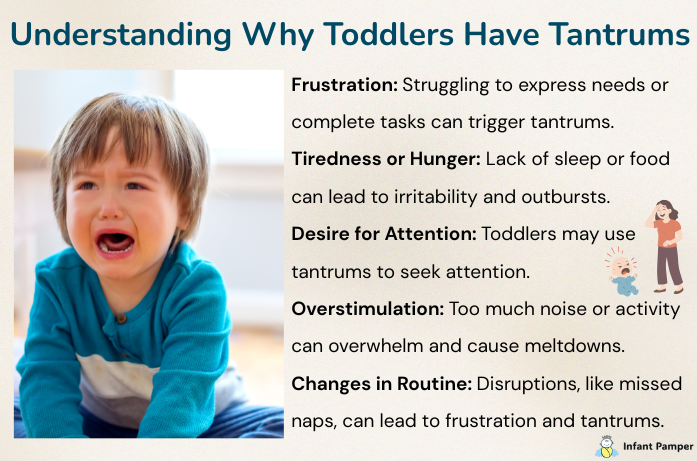
Common triggers for toddler tantrums include:
- Frustration: Toddlers may not be able to express their needs clearly or do things on their own yet, which can lead to frustration. Something as simple as struggling to put on their own shoes can trigger an outburst.
- Tiredness or Hunger: Physical needs like sleep or hunger can make a toddler irritable. A lack of rest or a missed meal often leads to crankiness and tantrums.
- Desire for Attention: Toddlers are learning how to get attention from others, and sometimes a tantrum is their way of saying, “Hey, look at me!”
- Overstimulation: Too much noise, activity, or crowding can overwhelm toddlers. Sensory overload often leads to meltdowns.
- Changes in Routine: Toddlers thrive on routine. Any disruption, like a skipped nap or change in environment, can cause confusion and frustration, sparking a tantrum.
When you understand the underlying reasons for these emotional outbursts, you can approach them with more patience and compassion.
How to Deal with Toddler Tantrums: Expert Tips for Managing Toddler Tantrums
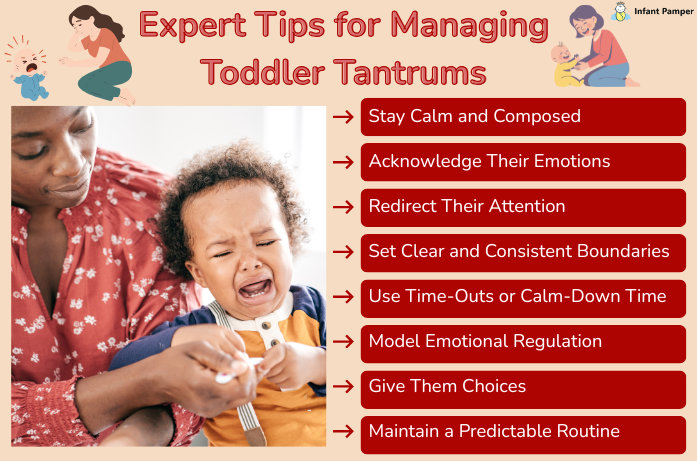
The key to handling tantrums is not necessarily to eliminate them altogether (since they’re a normal part of development), but rather to manage them in a way that promotes emotional growth and teaches appropriate coping mechanisms. Here are some expert tips for managing toddler tantrums:
1. Stay Calm and Composed
When your toddler has a tantrum, it’s natural to feel frustrated, especially in public. However, reacting with anger will only escalate the situation. Stay calm, take deep breaths, and keep a steady voice. This helps defuse the tantrum and shows your child how to handle their emotions calmly. They’ll learn to mimic your behavior, which will help them manage their own emotions over time. If you need guidance on managing your toddler’s outbursts, check out expert advice on Harvard Health.
By staying composed, you teach your toddler emotional regulation. They’ll learn to mimic your behavior, which will help them manage their own emotions over time.
2. Acknowledge Their Emotions
Toddlers are still learning to identify their feelings. Acknowledge their emotions to show you understand. Simple phrases like, “I see you’re upset because you can’t have that toy,” help them feel heard. This validation is key for their emotional growth.
When you name their feelings, it helps them connect words to emotions, fostering emotional intelligence and better communication skills.
3. Redirect Their Attention
Reasoning with a toddler mid-tantrum often doesn’t work. In these moments, redirection is your best tool. Offer a new toy, suggest a different activity, or change the scenery. This helps shift their focus and can end the tantrum quickly.
Redirecting their attention gives them something positive to focus on, breaking the cycle of frustration and helping them move past the tantrum.
4. Set Clear and Consistent Boundaries
Toddlers need clear limits to feel secure. When a tantrum occurs because they can’t have something, calmly explain why it’s not possible. Consistency is key; sticking to your decision teaches your toddler that tantrums won’t change your mind.
By maintaining consistent boundaries, you provide a predictable environment that helps your child understand acceptable behavior, reducing future tantrums.
5. Use Time-Outs or Calm-Down Time
If the tantrum intensifies, a brief time-out or calm-down time can help your toddler reset. This isn’t punishment but a chance to regain control of their emotions. Once calm, reinforce positive behavior.
Time-outs should be brief and used to help your child cool down. Afterward, you can guide them through better ways to handle frustration.
6. Model Emotional Regulation
Toddlers learn by watching their parents. When you manage your emotions calmly, your child will likely imitate that behavior. Take deep breaths, use a calm voice, and explain how you’re feeling.
Modeling emotional regulation teaches your toddler how to control their own emotions and handle frustration in a healthy way.
7. Give Them Choices
Offering choices can reduce tantrums by giving toddlers a sense of control. For example, instead of saying “It’s time for bed,” offer a choice like, “Do you want to go to bed in 5 or 10 minutes?” This empowers them while maintaining boundaries.
Giving choices fosters independence and helps prevent resistance, making it easier to guide your child through their routine without tantrums.
8. Maintain a Predictable Routine
Routine provides toddlers with stability. When they know what to expect throughout the day, they feel secure, which reduces the likelihood of tantrums. Stick to regular times for meals, naps, and bedtime to keep things predictable.
A consistent routine helps your child feel more in control and comfortable, which lowers anxiety and prevents tantrums from happening as often.
When to Seek Professional Help
Most tantrums are perfectly normal, but if they become particularly violent or prolonged, it may be worth seeking professional guidance. If your toddler is having difficulty calming down, or if their tantrums are affecting their daily life, it’s a good idea to consult with a pediatrician or child psychologist.
They can help identify if there is an underlying medical or emotional issue contributing to the tantrums and offer further strategies for managing them.
Preventing Toddler Tantrums
While tantrums are inevitable, there are ways to reduce their frequency by addressing some common causes. Here are a few tips to prevent tantrums before they happen:
- Ensure your toddler is getting enough sleep: Sleep deprivation can lead to irritability and tantrums. Make sure your child’s bedtime routine is consistent and that they’re getting the rest they need.
- Offer nutritious meals and snacks: Hunger can trigger meltdowns, so ensure your toddler is eating balanced meals and snacks throughout the day.
- Use positive reinforcement: Praise your child for good behavior, such as using polite words or expressing themselves without a tantrum. Positive reinforcement helps to reinforce desirable behavior.
- Create a calm environment: Minimize distractions and noise during meals or bedtime. A calm, peaceful environment can help your toddler stay relaxed and avoid overstimulation. For more detailed strategies, refer to insights from UNICEF.
Conclusion
Toddler tantrums are a normal and necessary part of development, signaling that your child is learning to express and manage their emotions. While challenging, these outbursts offer opportunities to teach emotional regulation. With patience, consistency, and empathy, you can guide your toddler through these moments and help them build essential coping skills.
By staying calm, acknowledging their feelings, and setting clear boundaries, you create a safe environment for your child to learn. Over time, your toddler will gain better control over their emotions, and both of you will feel more confident in handling tantrums when they arise.
Parenting is not always easy, but with patience and the right strategies, you’ll help guide your toddler through these early years. For more advice and support as you navigate your parenting journey, follow Infant Pamper for ongoing tips and resources.
FAQs About Toddler Tantrums
1. Why do toddlers have tantrums?
Toddlers have tantrums to express frustration, hunger, tiredness, or a lack of control, as they’re still learning emotional regulation.
2. How can I stop my toddler’s tantrums in public?
Stay calm, acknowledge their feelings, redirect their attention, and ensure they’re well-rested and fed.
3. Are tantrums normal for toddlers?
Yes, tantrums are a normal part of toddler development as they assert independence and learn to manage emotions.
4. How do I handle a toddler’s tantrum calmly?
Stay calm, acknowledge their feelings, set boundaries, offer choices, and redirect their attention.
5. When should I seek professional help for tantrums?
If tantrums are excessively violent, prolonged, or hard to calm down, seek help from a pediatrician or child psychologist.
Disclaimer: This article is for informational purposes only and not medical advice. For concerns about your child’s behavior, consult a pediatrician or child psychologist for personalized guidance.