By a Caring Mom at Infant Pamper
Every new parent is asking, “How Often to Change Baby Diaper?” It’s one of those seemingly trivial questions that suddenly seems huge when you’re dealing with sleepless nights and countless diaper changes.
Knowing how often to change a baby’s diaper isn’t just about hygiene, but also about your baby’s comfort, skin health, and happiness.
Diaper changes are an essential daily routine in baby care. The frequency depends on factors like your baby’s age, feeding method, and the type of diaper you’re using. From newborns, who need a diaper change every hour, to toddlers, who may need a little more time, knowing the general diaper changing process will help you feel prepared and confident.
Why Diaper Changing Frequency Matters
Your baby’s skin is very sensitive and moisture from urine or stool can if not treated fast enough, become a cause of irritation. According to American Academy of Pediatrics, Changing diapers at the right time will keep your baby’s skin dry thus preventing discomfort and reducing the risk of diaper rash significantly.
Additionally, regular diaper changes help you become familiar with your baby’s natural rhythms, the frequency of their urination and bowel movements, and even the changes in their growing digestive system. It also builds a stronger bond, as these small moments of care are filled with conversation, eye contact, and smiles.
How Many Diapers Per Day for Newborns?
For new parents, the early weeks are a blur of constant feedings and diaper changes, often leaving them wondering how many diapers a newborn really needs each day.
Typically, newborns (0-1 month) need 8 to 12 diaper changes in 24 hours. That’s approximately every 2-3 hours, even at night. As UCSF Benioff Children’s Hospital explains, newborns feed frequently and produce loose stools, especially if breastfed, so their diapers need extra attention.
Here are a few signs your newborn needs a diaper change:
- A bulge or heaviness is felt in the diaper.
- There is either a smell or a visible mess.
- The baby appears to be fussy or uncomfortable.
- The wetness indicator line (on some diapers) displays a different color.
Pro Tip: Even if the diaper looks and feels light, it is advisable to check it every 2-3 hours. Preventing diaper rash during diaper changes is all about keeping your newborn’s skin dry.
How Often to Change Baby Diaper for (1–6 Months)
As your baby grows and feeding times become more regular, the frequency of diaper changes will increase. At this point, most babies need 6-10 diaper changes daily.
If your baby is breastfed, be prepared for soft and frequent bowel movements. Formula-fed babies, on the other hand, may have one or two bowel movements a day, but they will still urinate frequently.
Follow these diaper changing tips based on your baby’s age:
- Check after every feeding or nap. Babies often pee during or after feeding.
- Clean their delicate skin with soft wipes or cotton pads soaked in warm water.
- Allow skin to get dried by air before a new diaper is put on.
In case your baby shows a little redness, put on a very thin layer of protective cream which will work as an irritant barrier. A snug but not too tight diaper is recommended for good airflow which helps in keeping the skin healthy.
The CDC’s diaper-changing hygiene guide recommends proper handwashing and sanitation during each change to keep babies healthy and prevent infections.
How Often to Change Baby Diaper for (6–12 Months)
Once solids are introduced, bowel habits change. Most babies at this stage need 6–8 diaper changes per day, depending on diet and activity level.
You might notice longer nighttime stretches without a change. Use extra-absorbent diapers or change right before bedtime. If your baby wakes for a feed, it’s a good time to check again.
As KidsHealth notes, clean promptly after bowel movements, even at night, to prevent irritation and infection.
How Often to Change Baby Diaper for (12 Months and Above)
Typically, by the time a child turns one, the number of diaper changes has decreased to an average of 4 to 6 times a day. This decrease in diaper changes occurs because the child has more control over their bladder and bowel movements and you may be transitioning toward potty training.
Still, don’t ignore routine checks. Even if your toddler’s diaper doesn’t look full, leaving it on too long can lead to irritation and infection. A good rule: change a diaper every 3–4 hours or immediately after a bowel movement.
Encourage your little one to start recognizing when they’re wet or uncomfortable, it’s a great way to prepare them for potty training.
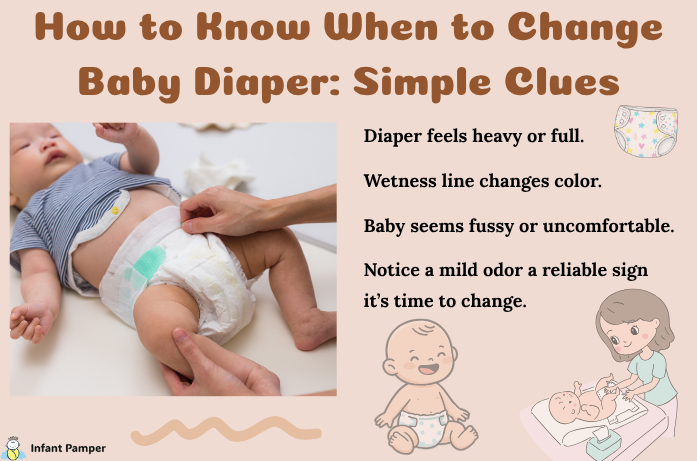
How to Know When to Change Baby Diaper: Simple Clues
At times, it might not be clear when the baby needs a change, especially when using the newest super-absorbent diapers. But still, the following general signs can be helpful:
- The diaper feels heavy or puffy to the touch.
- Wetness indicators (if your brand has them) have changed color.
- The baby is irritable or restless without any clear reason.
- A slight smell is a common and in most cases very dependable cue.
Regular checkups are essential for newborns and young infants, as prolonged wet diapers can lead to skin problems or infections. As Stanford Children’s Health emphasizes, frequent checks protect your baby’s sensitive skin and prevent infections from prolonged wetness.
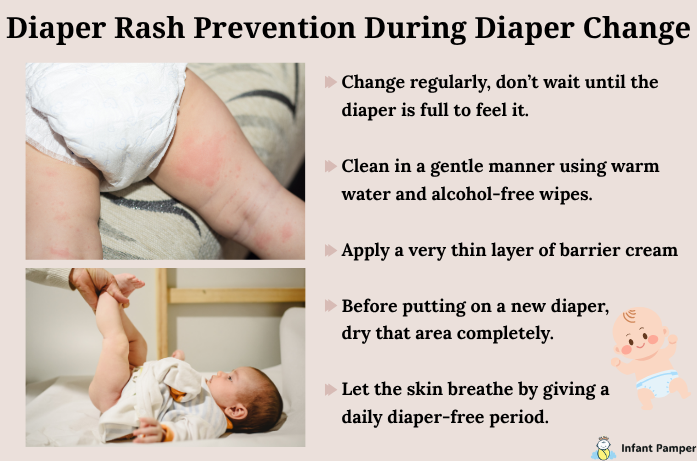
Diaper Rash Prevention During Diaper Change
Healthy diaper habits can save your baby from discomfort and sleepless nights. Try these expert-approved practices:
- Change regularly, don’t wait until thediaper is full to feel it.
- Clean in a gentle manner using warm water and alcohol-free wipes.
- Before putting on a new diaper, dry that area completely.
- Apply a very thin layer of barrier cream (zinc oxide or petroleum jelly).
- Let the skin breathe by giving a daily diaper-free period.
For a detailed, step-by-step diaper changing routine, see our complete guide on how to change a baby’s diaper safely it covers hygiene, techniques, and time-saving tips for new parents.
The Mayo Clinic advises that consistency is key prevention is always easier than treatment.
Nighttime Diaper Changing: Do You Wake the Baby?
If your baby’s diaper is only wet, you can safely let them sleep. Modern diapers are designed to handle a few hours of wetness. But if they poop, change immediately to avoid skin irritation.
Nighttime Tips:
- Use absorbent overnight diapers.
- Change right before bedtime.
- Keep the room dim to avoid fully waking your baby.
This simple routine ensures a comfortable night’s sleep for both baby and parents.
When to Call Your Pediatrician
Sometimes, a rash or irritation needs professional care. Call your doctor if:
- The rash lasts more than 3 days.
- There are blisters, bleeding, or open sores.
- Your baby has a fever or seems unusually uncomfortable.
Both the American Academy of Pediatrics and Stanford Children’s Health provide reliable advice on managing rashes and ensuring safe diaper care.
Quick Recap:
- Newborns: every 2–3 hours (8–12 times/day)
- 1–6 months: 6–10 times/day
- 6–12 months: 6–8 times/day
- 12+ months: 4–6 times/day
Final Thoughts: Every Change Is a Moment of Care
Sure, changing diapers can be boring, but it’s also a daily routine that you and your baby bond over the most. Every diaper change is a reminder of the love that can be shared, and it’s a moment that provides care, security, and comfort.
So, whenever you’re wondering how often to change your baby’s diaper, just remember: there’s no single, perfect plan. Be like your baby, pay attention to their cues, and hygiene and comfort should always be your top priorities.
Frequently Asked Questions (FAQs)
1. During the night how frequently am I supposed to diaper my baby?
If your baby has not pooped, then you can let him/her sleep. Do a change just before sleep, and if the baby wakes up for feeding, change again.
2. Newborns how many diapers daily?
Most of the newborns require about 8-12 diapers daily which depends on their feeding and urination.
3. What helps prevent diaper rash?
Changing diapers often, cleaning with the gentlest methods, applying barrier creams, and giving the baby time without a diaper are the ways to keep rashes away.
4. How do I know when to change baby diaper?
Changing diapers often, cleaning with the gentlest methods, applying barrier creams, and giving the baby time without a diaper are the ways to keep rashes away.
5. Do babies above one year old need changing at night?
Generally, no, except when the diaper is dirty. For longer sleep intervals use overnight diapers.
Parenting is a journey made of tiny moments, like every diaper change.
Stay informed, gentle, and confident with every stage of your baby’s growth.
For more baby care tips, expert parenting guides, and diapering advice, follow Infant Pamper your caring companion through every giggle, cuddle, and change.