Authored by: A Caring Mom at Infant Pamper
As a mother, I’m always confused about what my child eats or drinks, even that bright, colorful cup of juice they always ask for. Juice is a simple decision, sweet, refreshing, fruity, but is it really healthy for them? And if so, how much, how often, and in what flavor? If you will ever searched for healthy juice for kids, know that you’re not alone. Almost every parent has these doubts about whether they’re doing the right thing with juice.
If given carefully, juice can be a beneficial part of a child’s diet. But too much of the wrong juice can cause problems with teeth, digestion, appetite, and general sugar absorption. So, this guide is meant to help you understand what’s healthy, what’s not, and how to choose the best drinks for your little one. Consider it the comforting, practical explanation I needed when my little one kept asking for “more juice” every day.
Healthy Juice for Kids: What Parents Need to Know First
The healthy juice for kids is not simply squeezing out the fruit and pouring it into a glass. It is about striking a balance between taste, nutrition, digestion requirements, sugar levels, and portions that sincerely aid your child’s growth.
A lot of parents are under the impression that if anything is labeled as “100% fruit juice”, it is a healthy product by default. However, the natural juice still has concentrated fruit sugars without the fiber that the whole fruits contain.
Most of the pediatric nutrition sources advise that juice can be part of the diet but never to the extent of surpassing whole fruit consumption. It is the whole fruit that gives you fiber, slower sugar absorption, better vitamins, and longer-lasting energy. On the contrary, juice provides a quicker sugar hit, even if it is natural.
Is Juice Good for Kids? The Real Answer
The answer is positive only when it is offered in moderation and the right way.
Juice is an option that can help to hydrate and, moreover, it has a good content of vitamins, especially vitamin C, antioxidants, potassium, and natural hydration through the hot summer period. The newly made juices are more beneficial than the packaged ones as they are richer in nutrients and are free from preservatives, artificial sugars, and acids.
However, too much juice can:
- Loss of appetite
- Diarrhea
- Cavities
- Sugar intake
- Replacement of healthy diets
Thus, the solution is not to ban juice altogether but to select good ones and serve in small, regular portions.
What Is the Healthiest Juice for Toddlers?
This question is often asked by parents and the answer is based on a combination of nutrient content, benefits for digestion, and sugar levels.
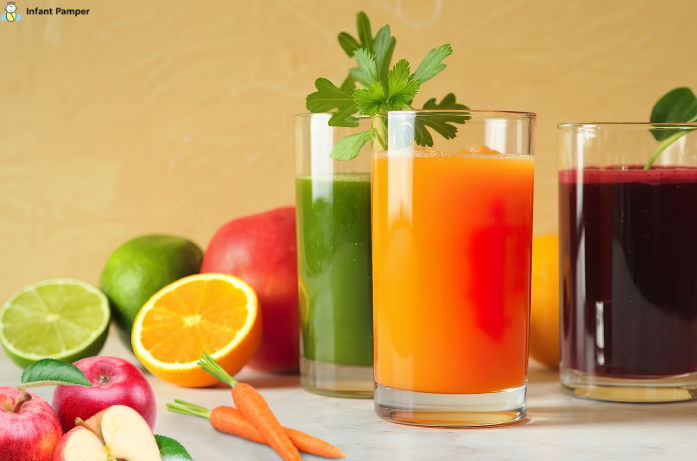
Following are some of the healthiest and safest juices for toddlers:
Apple Juice (Diluted)
Apple juice is very soft on the stomachs of babies and it also helps in treating minor constipation. The dilution makes the juice even more digestible.
Orange Juice (Fresh Only)
It boosts the immune system and supplies vitamin C. Usually, small children extremely like the sweet-tangy flavor, but it is better to give it during meals and not on an empty stomach.
Pear Juice
This juice is a favorite among the toddlers suffering from constipation. It is sweet because it has a high content of sorbitol.
Watermelon Juice
Very good when it is hot, hydrating and soothing. It has the natural electrolytes and the kids are hydrated without giving them lots of sugar.
Carrot Juice
Beta-carotene is very good for eyesight and immunity. Mixing carrot with apple or orange makes it sweeter and more suitable for kids.
Pomegranate Juice
Full of antioxidants and excellent for the brain. Toddlers love it when it is not very strained and mixed with water.
Cucumber + Mint Juice
A refreshing and hydrating drink that’s perfect for the summertime.
When choosing what is the healthiest juice for toddlers, always look for juices that are fresh, light, easy to digest, and low in acidity.
Can a Toddler Drink Juice Every Day?
The straight answer is: yes, but in limited quantities. Daily juice giving is acceptable to toddlers as long as:
- It does not substitute meals.
- It is not the main supply of fluids.
- It is within the limit specified.
- It is diluted with water.
- It is in a cup, not a bottle.
Juice becomes unhealthy when the child begins to skip fruits entirely, decline portions of meals, or suck juice throughout the day.
Toddlers are not supposed to consume only sugar water but they need fresh fruits, vegetables and fiber.
Is 100% Juice Okay for Toddlers?
100% fruit juice, the most natural juice form, is still loaded with sugar and thus rapid sugar absorption can still occur. Nonetheless, this juice is certainly better than other non-nutritive drinks, flavored milk, concentrates, or anything less.
100% juice is okay for toddlers, but:
- It should be offered in small, controlled amounts.
- It should always be given in a cup, not a bottle.
- It works best when taken with a meal.
- It should be watered down to aid digestion and decrease acidity.
A lot of pediatricians will suggest a 50:50 juice and water mixture for toddlers to make it healthier and gentler on their tummies.
How Much Juice Should Kids Drink? Safe Daily Limits
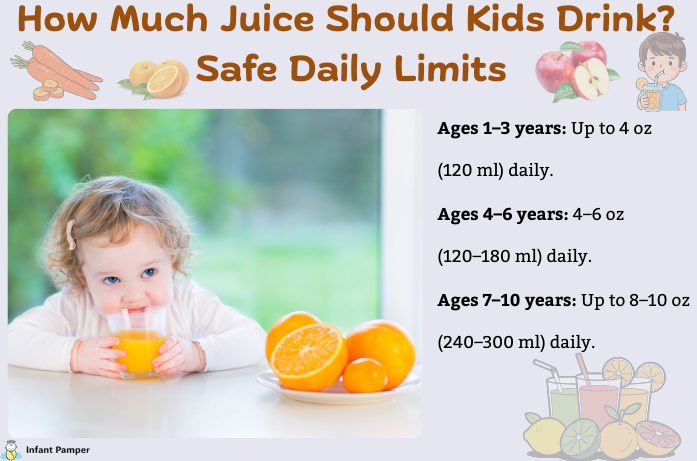
These limits are generally recognized by child nutrition professionals:
Ages 1–3 years: Up to 4 oz (120 ml) daily.
Ages 4–6 years: 4–6 oz (120–180 ml) daily.
Ages 7–10 years: Up to 8–10 oz (240–300 ml) daily.
Best Fruits and Vegetables for Making Healthy Juice for Kids
Home juicing can be done with these fruits and vegetables as they provide the best nutrition, safety, and digestion support for kids.
Fruits for Toddlers that they Love: Apple, pear, orange, sweet lime, papaya, watermelon, pineapple, mango, pomegranate, strawberries, and grapes (in moderation).
Healthy Vegetables for Mixing: Carrot, beetroot, cucumber, celery, pumpkin, spinach (very little), sweet potato (blended).
Vegetable juices taste best when combined with one sweet fruit like apple or orange.
Healthy Juice for Kids: Simple Daily Recipe Ideas
Here are a few simple, combinations that kids can easily enjoy. Only the bullet points for quick reference are included below.
Apple + Carrot Immunity Mix
Rich in antioxidants and gentle for toddlers.
Watermelon + Mint Hydration Drink
Ideal for scorching days and kids’ outdoor activities.
Orange + Sweet Lime Vitamin C Drink
It not only fortifies the body’s defenses but also contributes to the delightful taste.
Make the procedure uncomplicated: puree, filter lightly if required, and mix with water to the desired strength.
Why Homemade Juice Is Better for Kids
The parents have total authority over the fresh juice they prepare for their babies. You know very well what is getting in the glass, it’s just fruit, vegetables, and pure water. Juices from the store more often than not come with added sugars, preservatives, flavoring agents, or acidic ingredients that can be detrimental to tiny teeth.
Home-made juice is loaded with vitamins and hydration by nature. On the contrary, baby juice may be a bit “heavy” and thus unnecessary sugar intake may occur. In case you opt for store-bought juice, always go for “100% juice” and mix it with water.
Are Smoothies Healthier Than Juice for Kids?
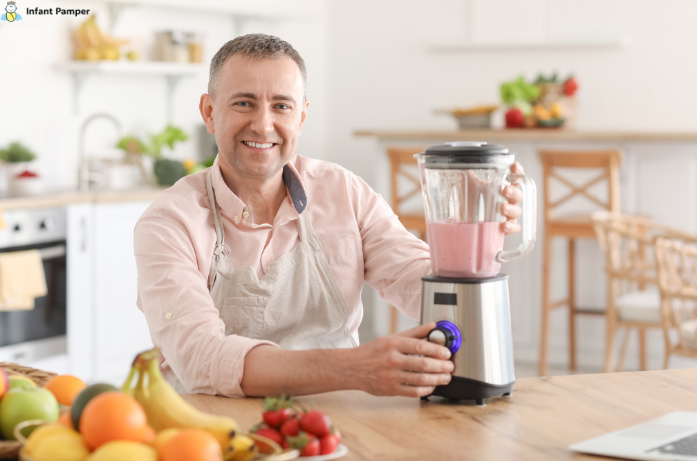
Most nutritionists, if not all, affirm that smoothies are frequently healthier since the fiber is retained. The presence of fiber in the intestine aids in digestion, controls sugar levels, and prevents the child from feeling hungry quickly.
But many small children do not like the lumpy consistency of the smoothie, thus; the latter and juice can either be effective or not depending on the child’s preference. Juice is for drinking, illness recovery, and fussy eaters. Smoothies are for nutrition, fibre, and hunger management. It is perfectly okay to have a combination of both throughout the week.

Juices That Should Be Limited Or Avoided for Children
There are some juiced that simply do not match toddlers’ tender stomachs or nutritional requirements.
Stay away from soda, canned soft drinks, artificially flavored juices, energy drinks, and juice concentrates with added sugar and soft drinks in general provide little nutrition and excessive sugar something strongly highlighted by child-health authorities such as Better Health:
Lemon juice, on its own, should be avoided as it is too acidic.
Grapefruit juice should be avoided if your child takes medication (common interaction).
Do not offer sugarcane juice from unhygienic places.
This helps protect your child’s digestion and overall health.
Healthy Juice for Kids in Different Seasons
During summer, hydrating fruits like watermelon, muskmelon, cucumber, and sweet lime work well.
Winter is great for oranges, carrots, beets, and pomegranates.
Rainy season is ideal for apple, pear, and light orange juice to support immunity.
Season-based rotation adds not just flavor but natural variety.
Can Juice Help with Common Toddler Issues?
Mild digestive issues like constipation sometimes respond positively to taking apple, pear, or prune juice. Dehydration in hot weather can be minimized by consuming watermelon or cucumber juice, nutrition guidelines by the American Academy of Pediatrics:
During a cold, orange juice is a source of vitamin C, but it is best taken with food. Beetroot + carrot mixes support the gentle rise of iron levels. Juice is not a cure, but it can, however, provide helpful nutrition.
A Caring Mom’s Final Thoughts
Having experienced the challenge of meeting my child’s taste, nutrition, and constant cravings, I can honestly say that juice isn’t a villain. It’s just a matter of knowing how to give it: fresh, diluted, in small amounts, and alongside whole foods.
Giving healthy juice to children isn’t about strict rules. It’s about soft, easy ingredients, and knowing that you’re giving your child something nutritious through their cup.
Children will always remember the feelings we give them through food more than the food itself. If healthy habits are instilled slowly and patiently, children will become healthy eaters without any pressure or stress.
FAQs
1. What is the healthiest juice for toddlers?
Apple, pear, orange, and carrot juice are in the group of the healthiest ones as they are gentle, nutritious, and also easily digestible.
2. Can a toddler drink juice every day?
Yes, but only in very small amounts, around 2-4 ounces per day, preferably mixed with water.
3. Is 100% juice okay for toddlers?
Yes, 100% juice is good only when it is a rare treat, but it should not be a substitute for water or fruits.
4. What juice helps with constipation?
Apple, pear, and prune juice are effective in making stools softer and easing mild constipation in toddlers.
5. When should kids drink juice?
Juice should be served with meals because it helps to protect teeth from sugar and also slows down absorption.
Join us on Infant Pamper for more nurturing ideas, practical advice, and real-mom guides that make everyday parenting beautifully easier.
Juice isn’t the villain it’s all about moderation and balance with whole foods. For more helpful tips, check out these articles: