By a Caring Mom at Infant Pamper
Choosing a Goat Milk Formula for Babies can be very difficult and stressful, especially because every baby is different. All of us parents want the best for our babies, so we want to give them something that’s safe, mild, and comforting, and it’s normal to feel confused with so many options.
Goat milk for babies is one of those formulas that many families are already considering or have recently become curious about. They find it easier to digest, gentler on the skin, and a more natural option than regular cow’s milk formula. So if you’ve been searching for goat milk for a 0–6 month old baby, whether goat milk is safe for babies, or what the benefits of goat milk are for babies, you’re certainly not alone.
What Exactly Is Goat Milk Formula? Understanding the Basics Clearly
Now, let’s be clear: goat milk formula cannot be considered the same as pure goat milk for babies. Many parents think that goat milk is identical to mother’s milk and therefore harmless, especially in the early months. Unfortunately, this is not the case.
Regular goat milk, whether “extra fresh” or “organic,” is unsafe for babies under 1 year of age. It lacks essential nutrients like iron, vitamin B12, and folate, and its mineral composition can put a strain on a baby’s kidneys. Major health organizations like the American Academy of Pediatrics advise against giving raw or unaltered goat milk to babies.
Goat milk formula, on the other hand, is a specially prepared formula where:
- The proteins are made gentler for the infants.
- vitamins, minerals, and essential fatty acids are given.
- the fats are modified to be less difficult to absorb.
- the lactose levels are adjusted to accord with infant needs.
This makes goat milk formula a potentially safe option, even for goat milk for baby 0–6 months, as long as it’s properly fortified and approved for infant use.
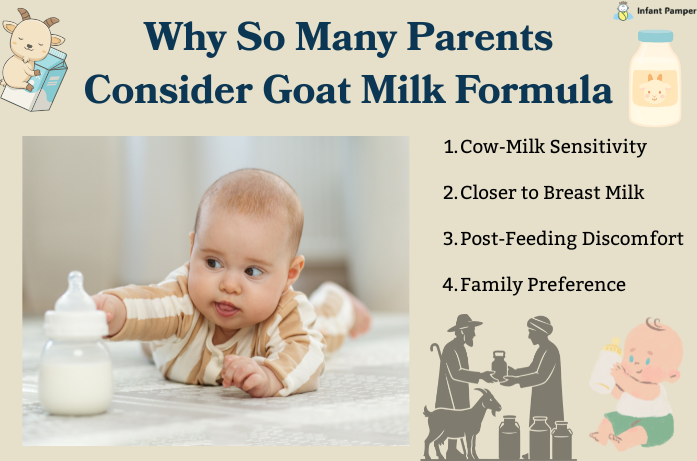
Why So Many Parents Consider Goat Milk Formula
Before talking about the benefits or risks, it’s good to understand why parents are looking for goat milk formula in the first place. Usually, it starts when a baby becomes uncomfortable, crying, arching their back, spitting up excessively, or having difficulty pooping. Seeing their baby’s discomfort naturally leads them to look for more delicate options.
Some parents may notice dry patches, redness, or sensitive skin and think their baby’s digestion might be the cause. This ultimately leads them to consider whether goat milk might be easier on both the stomach and skin.
Below are some of the main reasons parents consider switching:
1. Their baby seems sensitive to cow-milk formula.
It does not necessarily mean it is an allergy, in fact, some babies just have a harder time digesting standard formulas than others.
2. They want something closer to breast milk.
Goat’s milk naturally presents prebiotics that help the intestines’ health, just like breast milk.
3. Their baby often seems upset after feeding.
The soft proteins and small fat particles in goat milk can provide relief from gas, hard stools, or bloating.
4. Family preference for alternatives.
Some families choose to avoid cow’s milk for cultural, personal, or digestive reasons.
Ultimately, the motive is largely the same: parents want their babies to be comfortable and happy after every feeding.
The Nutritional Profile: What Makes Goat Milk Formula Different?
Goat milk formula is unique because it is less harsh and specifically tailored to a baby’s nutritional needs. Once the formula is properly fortified, it guarantees safety and completeness for babies. These factors set it apart:
1. Proteins that are softer than others and easier to digest
The biggest benefits of goat milk baby formula are the softer proteins that reach the baby’s stomach. They form into small, smooth curds that babies with sensitive stomachs can easily handle.
2. Naturally A2-Dominant Protein
Goat milk protein is mostly of the A2 type. This type of protein is easier for some babies to digest than the A1 protein commonly found in cow’s milk.
3. Gentle Medium-Chain Fatty Acids
These healthy fats are absorbed quickly and can provide your baby with sustained energy without over-stressing their digestive system.
4. Slightly Less Lactose
Goat milk contains slightly less lactose than cow’s milk, which may be a comforting factor for babies with mild lactose-sensitive stomachs (but won’t help with cases of complete intolerance).
5. Supports Gut Health with Natural Prebiotics
Goat milk contains natural prebiotic compounds that support healthy gut bacteria, which is especially important when using goat milk for babies aged 0-6 months.
Because of these qualities, most parents believe that using goat milk formula will make their baby’s breastfeeding experience easier and more comfortable.
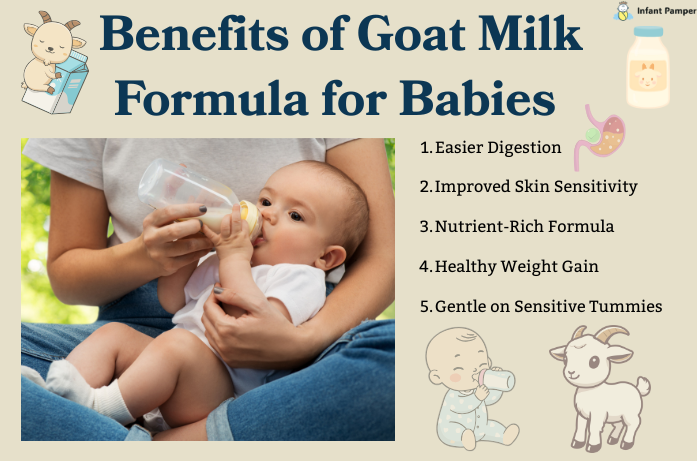
Benefits of Goat Milk Formula for Babies (What Parents Notice First)
Many parents say they notice a difference shortly after switching to goat milk formula. While every baby is unique, these are the most common improvements parents report:
1. Easier Digestion and Less Fussiness
This is the main reason why most families experiment with goat milk. The softer proteins together with smaller fat molecules can lead to less of: Gas, Spit-up, Constipation, Colic-like discomfort
If your baby is often crying during feeds or otherwise seems to be in discomfort, then goat milk formula might be gentler on their stomach.
2. Potential Improvements in Mild Skin Sensitivities
A happier tummy sometimes results in calmer skin. It is not uncommon for parents to report that when digestion gets better, mild dryness or redness vanishes as well. This is not an eczema cure, but it can at least minimize some goat milk for baby skin triggers.
3. Rich In Useful Nutrients
Goat milk by nature has lot of important nutrients like potassium, calcium and fatty acids which are very important during the period of growth and development.
4. May Contribute To More Regular Weight Gain
As the fats in goat milk are easily absorbed, some infants gain weight more pleasantly but not feeling too full or bloated.
5. A Soothing Choice for Mild Digestive Sensitivities
A lot of parents whose babies have been through the wringer with the formulas feel relieved when their baby finally eats without any discomfort.
Potential Side Effects & When Goat Milk Formula Isn’t the Best Option
Even though goat milk formula has many positives, it’s not suitable for every baby. Knowing the possible goat milk for baby side effects can help you make a safe and informed decision.
1. Not Safe for Babies With Cow-Milk Protein Allergy (CMPA)
This is extremely important.
If your baby has a confirmed cow-milk protein allergy, goat milk is not a safer alternative. The proteins are similar enough to cause the same allergic reaction.
For CMPA babies, pediatricians usually recommend hypoallergenic formulas instead.
2. Never Use Raw or Homemade Goat Milk for Babies
Plain goat milk or homemade formulas are unsafe for infants and can lead to:
- anemia
- kidney stress
- high sodium levels
- folate deficiency
Only proper infant formula made from goat milk is safe, especially when talking about goat milk for baby 0–6 months side effects.
3. Some Babies May Still Have Digestive Issues
Every baby is different. A few babies may still have gas or firm stools even after switching.
4. Not Ideal for Premature Babies Unless Approved
Premature babies have very specific nutritional needs, so only a pediatrician should guide formula changes for them.
Is Goat Milk Safe for Babies?
Here’s the simple
- Yes, goat milk formula is safe for babies including newborns if it’s fortified and meets infant nutrition standards.
- No, raw goat milk or homemade mixtures should never be given to babies under 1 year.
After your child turns one, goats milk for babies after 1 year can be added to their diet in small amounts as long as it is pasteurized and part of a balanced diet.
How to Switch to Goat Milk Formula Safely
Changing formulas too quickly can upset a baby’s tummy. Switching slowly gives your baby time to adjust.
Suggested Transition Plan
- Days 1–2: 75% old formula + 25% goat milk formula
- Days 3–4: 50% old formula + 50% goat milk formula
- Days 5–6: 25% old formula + 75% goat milk formula
- Day 7: 100% goat milk formula
Keep an Eye Out for These Signs
- new or worsening rashes
- vomiting
- unusual crying or discomfort
- diarrhea or constipation
If anything feels wrong, follow your instincts and speak with your pediatrician.
Final Thoughts Every Parent Should Hear
You are not alone in the search for your baby’s needs. Feeding problems can be frustrating and even emotional, especially when your baby appears to be in discomfort. If you are looking for goat milk formula for babies, it means that you are very much concerned about your baby’s comfort and health, and that is already a sign of a great parent.
Here’s the reassuring truth:
Goat milk formula can be a gentle, safe option for many babies, especially those with mild digestion issues.
But it’s not suitable for babies with dairy allergies or complex medical needs.
Always trust your instincts, observe how your baby reacts, and work with your pediatrician. The right formula is the one that helps your baby grow, feel good, and enjoy feeding time.
Frequently Asked Questions
1. Is goat milk formula better than cow milk formula?
Not better, just a gentler option for some babies. Both meet nutritional standards.
2. Can newborns have goat milk formula?
Yes, but only if it is called infant formula; not raw goat milk.
3. Can goat milk help with colic?
Some infants seem to be a little less fussy on the goat milk formula, but it is different from child to child.
4. Can goat milk help baby skin issues?
Sometimes a baby’s mild skin irritation can be improved if his/her digestion is improved, but the opposite is not always true.
5. Is goat milk good for toddlers?
Yes, goat milk for babies older than one year can be given if it is pasteurized.
If you found this guide helpful and want more clear, supportive advice for your little one’s growth and comfort, explore more expert-backed parenting tips on Infant Pamper. Your baby’s wellbeing matters and we are here to guide you every step of the way.
Disclaimer This information is for educational purposes only and is not medical advice. Always consult your pediatrician before changing your baby’s formula or introducing goat milk products.