
Authored by: A Caring Mom at Infant Pamper
If you are reading this because your formula fed baby suddenly refusing bottle, let me say this gently and clearly: you are not alone, and you are not doing anything wrong. One day your baby drinks their bottle calmly and happily, and the next day they turn their head away, cry, push the bottle out, or refuse to latch altogether. That sudden change can feel shocking, emotional, and deeply stressful, especially when feeding had always felt predictable and easy before.
Many parents immediately worry about whether their baby is getting enough nutrition, whether weight gain will be affected, or whether something serious is wrong. These worries are completely natural. Feeding is one of the most important ways we care for our babies, so when it becomes difficult, it can shake our confidence.
The reassuring truth is this: most bottle refusal episodes are temporary. They are usually connected to normal growth, developmental changes, or short-term discomfort rather than anything dangerous. With patience, understanding, and a calm approach, feeding often settles again.
This guide is written for Infant Pamper to help parents understand bottle refusal in a supportive, informative, and realistic way, without pressure, guilt, or panic.
Understanding Why Babies Suddenly Change Their Feeding Behavior
Babies change rapidly during their first year of life. Their brains, bodies, muscles, and senses develop at a tremendous pace, and these changes often affect their eating habits. Research on infant feeding behavior shows that sudden bottle refusal is commonly linked to neurological development, sensory processing, and emotional regulation rather than hunger or caregiver error.
Eating is not just about hunger. Comfort, familiarity, muscle coordination, emotional security, and even curiosity all influence how a baby eats. A slight change in any of these factors can temporarily disrupt feeding, even if everything seemed perfectly fine just a few days earlier.
Babies don’t have the words to explain what feels different to them. Instead, they communicate through their behavior. Refusing the bottle is often their way of saying, “Something doesn’t feel right right now.”
What It Means When a Formula Fed Baby Suddenly Refusing Bottle
When a formula-fed baby suddenly stops accepting the bottle, many parents assume it means their baby dislikes formula or wants a different feeding method. In reality, bottle refusal rarely has anything to do with the formula itself.
In many situations, babies are still hungry but struggling with something that makes feeding uncomfortable, overwhelming, or frustrating. Some babies take a few sips and stop, while others cry as soon as the bottle touches their lips. This can be especially confusing and upsetting when the baby had been feeding well for weeks or even months.
Understanding that refusal is usually about how feeding feels, not what is being fed, can help parents respond with more patience and less anxiety. Feeding challenges are often sensory, physical, or emotional rather than nutritional. Feeding guidance from La Leche League explains that bottle refusal can occur even in bottle-fed babies due to differences in sucking mechanics, nipple flow, and emotional comfort during feeds.
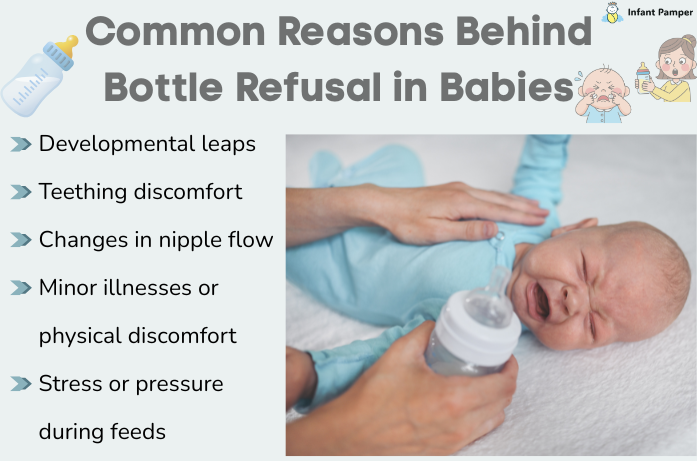
Common Reasons Behind Bottle Refusal in Babies
There are many reasons a baby may resist feeding, and most of them are temporary. Some of the most common causes parents don’t immediately recognize include: Clinical studies on infant feeding patterns note that developmental changes, stress, and physical discomfort frequently overlap, making feeding behavior shift abruptly even when growth is normal.
1. Developmental leaps: As babies grow, they become more alert and aware of their surroundings. Feeding may suddenly feel less interesting than lights, sounds, or movement around them. This distraction can cause babies to pull away, fuss, or stop feeding sooner than usual.
2. Teething discomfort: Even before teeth appear, sore or inflamed gums can make sucking uncomfortable. Babies may chew on the nipple, cry during feeds, or refuse the bottle altogether during teething periods.
3. Changes in nipple flow: A nipple that once worked perfectly may now feel too slow or too fast. If the flow is too slow, babies may become frustrated and give up. If it’s too fast, they may gag, cough, or pull away.
4. Minor illnesses or physical discomfort: Colds, congestion, ear discomfort, reflux, or gas can all make feeding uncomfortable. Even mild discomfort can significantly affect a baby’s willingness to feed.
5. Stress or pressure during feeds: If feeding has recently involved pressure to finish bottles, frequent interruptions, or feeding during illness, babies may begin to associate the bottle with discomfort or stress.
Often, more than one factor is present at the same time, which is why bottle refusal can feel sudden and confusing.
Age-Related Feeding Changes Parents Often Notice
Around 2 Months
At around two months of age, babies become more alert and curious about the world. Feeding may suddenly compete with new sights and sounds. Babies at this stage may pull away to look around, cry during feeds, or feed better when sleepy. Smaller, more frequent feeds in a calm, quiet environment often help during this phase.
Around 4 Months
Around four months, babies experience a major developmental leap. Increased awareness, early teething symptoms, and digestive changes can all affect feeding. Babies may become impatient if feeding doesn’t meet their expectations quickly, even though they are still hungry. This phase can be frustrating but is usually temporary.
These age-related changes are normal and tend to pass with time and gentle adjustments.
Emotional and Sensory Factors That Affect Bottle Feeding
Babies are incredibly tuned in to emotions and experiences, even from a very young age. If feeding has recently felt stressful, maybe during an illness, after being pressured to finish a bottle, or during repeated attempts when your baby was already upset they can start to connect the bottle with that uncomfortable feeling.
You might notice your baby crying as soon as they see the bottle, arching their back, or turning their head away even though they are clearly hungry. This isn’t stubbornness or bad behavior. It’s your baby’s way of saying they don’t feel calm or comfortable in that moment.
Helping your baby feel safe again is key. A quiet space, gentle handling, and a slow, unhurried approach can go a long way. When feeding feels relaxed and predictable, many babies gradually rebuild trust with the bottle and begin feeding more comfortably again. This pattern is discussed in infant feeding education resources from IABLE (Institute for the Advancement of Breastfeeding & Lactation Education).
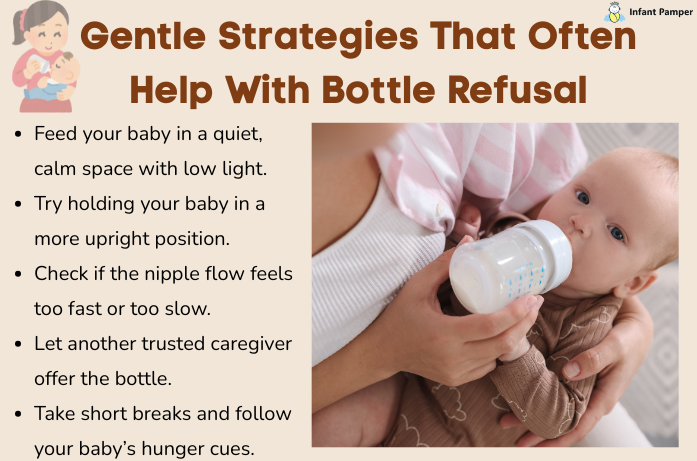
Gentle Strategies That Often Help With Bottle Refusal
When a baby is resisting the bottle, small, thoughtful changes can make a big difference. Many parents find success with the following approaches:
- Feed in a quiet, low-light room to reduce stimulation
- Try a slightly different feeding position, such as holding your baby more upright
- Check nipple flow and adjust if needed
- Allow another trusted caregiver to offer the bottle
- Take breaks during feeds and follow your baby’s cues
Avoid forcing your baby to eat. Pressure can increase resistance and turn feeding into a negative experience for both baby and parent. Gentle persistence and flexibility are usually more effective.
How Long Sudden Bottle Refusal Usually Lasts
A sudden phase of bottle refusal typically lasts from a few days to a couple of weeks. The duration depends on the underlying cause and how feeding is handled during that time. Babies who feel supported and unpressured often return to feeding more quickly.
As long as your baby is producing wet diapers, appears alert, and continues to grow, short-term feeding changes are usually not harmful. Organizations such as the American Academy of Pediatrics emphasize monitoring overall hydration and growth rather than focusing on individual feeds.
A Note on Babies Who Are Used to Breastfeeding
Babies who are familiar with breastfeeding may sometimes resist bottles due to differences in flow, texture, and sucking technique. Bottle feeding requires a different type of oral movement, which some babies take time to accept.
These babies often do better with slow-flow nipples that allow them to control the pace and pause naturally. Repeated, calm exposure without pressure is key. Many babies eventually accept the bottle once they feel comfortable and in control.
FAQs About Bottle Refusal in Babies
1. Why is my baby suddenly refusing the bottle even though nothing changed?
Babies can experience internal changes such as development, teething, or sensory awareness that aren’t immediately visible but still affect feeding.
2. Is bottle refusal dangerous?
Short-term refusal is usually not dangerous if your baby continues to have wet diapers and appropriate weight gain.
3. Can minor illness cause feeding refusal?
Yes. Even mild discomfort can make sucking feel unpleasant and lead to temporary refusal.
4. Should I force my baby to finish a bottle?
No. Forcing feeds can increase stress and create negative feeding associations.
5. When should I contact a pediatrician?
If refusal lasts more than 24–48 hours in young infants, or if there are signs of dehydration, poor weight gain, lethargy, or illness.
Final Thoughts for Parents
Bottle refusal can feel overwhelming, especially when feeding had always been easy before. But in most cases, it is a normal and temporary phase connected to growth, development, or comfort. With patience, observation, and gentle support, feeding usually becomes comfortable again.
If your baby is safe, growing, and producing wet diapers, you are doing your job well, even on the hardest days.
visit Infant Pamper for more trusted baby care tips, gentle parenting guidance, and real-life support for every stage of your baby’s journey.
Medical Disclaimer: This article is for informational purposes only and does not replace professional medical advice. Always consult your pediatrician or qualified healthcare provider with concerns about your baby’s feeding, growth, or health.