
Authored by: The Infant Pamper Team
Becoming a parent for the first time is an exciting and life-changing experience, but it can also feel overwhelming at times. The moment you hold your baby in your arms for the first time, the feelings of joy and love are immeasurable, but the challenges are also significant. You’ll face sleepless nights, a new routine, and plenty of unexpected situations. As a first time parent, you might worry about doing everything right. But don’t worry! Every parent goes through this learning process, and with the right strategies, advice, and support, you’ll navigate this beautiful yet challenging time with confidence.
In this guide, we’ve compiled 10 tips for first-time parents to help you through the initial stages of parenthood. Whether you’re looking for tips on establishing routines, managing your fears, or finding time for yourself, we’ve got you covered. These tips are designed to help you adjust to life as a parent and empower you throughout this exciting journey.
1. Trust Your Instincts
As a first-time parent, it’s easy to feel overwhelmed by the advice you’ll receive from family, friends, and even strangers. Everyone has an opinion on what you should do, from how to feed your baby to when they should be sleeping. While advice is often well-meaning, it’s important to trust your own instincts. You know your baby better than anyone else.
If something doesn’t feel right, don’t be afraid to listen to that gut feeling. First-time parenting advice often emphasizes the importance of intuition, if your baby is crying, you’ll learn quickly what that cry means. Over time, you’ll understand their cues and become more confident in responding to their needs. Don’t be afraid to try different things and see what works best for both you and your baby.
2. Create a Flexible Routine
One of the biggest adjustments for first time parents is establishing a daily routine for both yourself and your baby. It can feel like every day is completely different, especially in the beginning, but creating a routine, even a flexible one, can help both of you find some rhythm.
Start with the basics: feedings, naps, and bedtime. Babies thrive on routine, and a predictable schedule can provide comfort and security. However, keep in mind that flexibility is key. Newborns, in particular, have irregular sleep patterns and feeding needs, so don’t get discouraged if things don’t go exactly as planned. It’s important to adjust as needed and remember that no two days will be the same.
Having a first time parent checklist can be a great way to stay organized. Make sure you have all the necessary items for your baby, like diapers, wipes, clothes, and bottles. As you settle into a rhythm, you’ll also start to recognize your baby’s natural patterns, making it easier to anticipate their needs.
For more guidance on creating routines and support, check out this helpful Parenting Guide from the Victorian Government.
3. Accept Help and Build a Support System
Parenthood is a team effort. As a first-time mom or first-time dad, you may feel like you have to do everything on your own, but that’s not the case. It’s important to accept help from others and build a support system around you. Whether it’s your partner, a trusted friend, or a family member, don’t hesitate to ask for support when you need it.
The first few weeks can be physically and emotionally exhausting, and having someone to lean on can make all the difference. Whether it’s helping with diaper changes, bringing you a meal, or just offering a listening ear, you’ll feel more confident when you have support. Even if it’s just having someone watch the baby for a few minutes while you take a breather, every bit of help counts.
4. Understand Your Baby’s Needs
As a first time parent, one of the biggest challenges is figuring out how to respond to your baby’s needs. While babies can’t use words, they communicate through cries, body language, and facial expressions. Whether it’s hunger, discomfort, or the need for a cuddle, they’ll signal their needs in different ways.
In the beginning, it’s normal to wonder if your baby is crying because they’re hungry, tired, or something else. But over time, you’ll start to recognize their unique cues, which will make it easier to meet their needs.
Remember, first time parenting challenges often come from not fully understanding these signals. If you ever feel uncertain or worried, don’t hesitate to reach out to your pediatrician. It’s always better to be cautious and have your baby checked if you think something might be wrong.

5. Take Care of Yourself
One of the most important first-time parenting tips is to remember to take care of yourself. It’s easy to focus solely on your baby’s needs and forget about your own. However, as a parent, you can’t pour from an empty cup. If you’re not getting enough rest, eating properly, or taking care of your mental health, it will be harder to care for your baby.
Make time to rest whenever you can, and don’t feel guilty about it. If your baby is napping, take a nap too. This will help you recharge. Eating healthy meals and staying hydrated is also essential. It’s easy to skip meals or forget to drink water when you’re busy, but nourishing your body will give you the energy you need to keep up with the demands of parenthood.
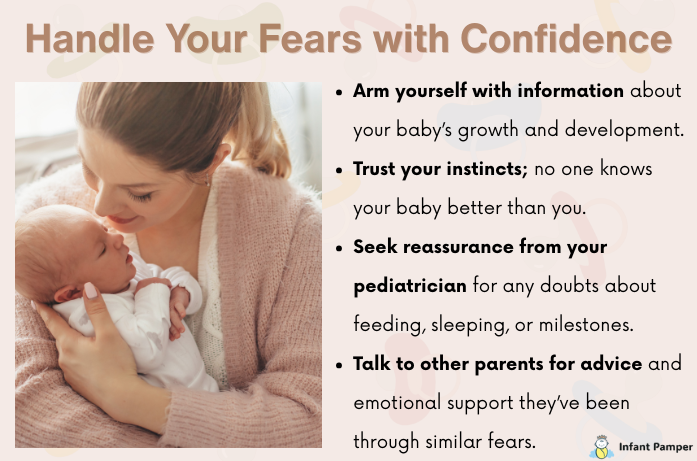
6. Handle Your Fears with Confidence
It’s normal for first-time parents to feel fearful about their baby’s health and development. Parenting comes with a lot of unknowns, and it’s easy to feel anxious or worried. But excessive fear can lead to unnecessary stress and prevent you from enjoying your new role. To manage first-time parenting fears, it’s important to equip yourself with knowledge and stay confident in your abilities.
- Arm yourself with information about your baby’s growth and development.
- Trust your instincts and remember that no one knows your baby better than you.
- Seek reassurance from your pediatrician when you have doubts, whether it’s about feeding, sleeping, or your baby’s milestones.
- Talk to other parents to get advice and emotional support they’ve been through the same fears and can offer guidance.
7. Celebrate the Small Wins
Parenting is a marathon, not a sprint. It’s easy to focus on the challenges and feel like you’re not doing enough. But first-time parenting advice often emphasizes the importance of celebrating the small victories along the way. Whether your child is sleeping through the night for the first time, reaching a developmental milestone, or simply making it through the day, take a moment to appreciate what you’ve accomplished.
Acknowledge your child’s progress and how far you’ve come. It’s important to give yourself credit for all your hard work, even when things don’t always go according to plan.
8. Bond with Your Baby
Bonding with your baby is an essential part of the early stages of parenthood. First-time dads and first-time moms alike often feel overwhelmed by the demands of raising a newborn, but it’s important to take time to connect emotionally with your little one. Simple actions, such as holding your baby, talking to them, or making eye contact, help foster a strong bond.
These early bonding moments are essential for your baby’s emotional and psychological development. Your baby feels comforted by your voice and presence, and these interactions promote a sense of security and trust.
9. Learn to Cope with Sleep Deprivation
One of the biggest challenges of becoming a parent for the first time is managing sleep deprivation. Babies wake up frequently at night to feed, and as a result, parents often feel exhausted. While this phase is temporary, it can be incredibly tiring. To cope with this, try sharing nighttime responsibilities with your partner, or ask a family member for help if possible.
It’s also important to establish a calming bedtime routine for your baby. A regular routine can help signal to your child that it’s time to wind down, making it easier for them (and you) to get some rest.
10. Ask for Professional Advice When Needed
No one knows everything about parenting, and sometimes you’ll need expert advice. Whether it’s about your baby’s health, feeding habits, or sleep patterns, don’t hesitate to ask for help. A pediatrician or baby care expert can offer advice and guidance tailored to your child’s needs. For more insights on parenting and building a support system, consider reading this research on parental knowledge from Child Trends.
FAQs
1. When will I feel like a “real” parent?
Becoming a first-time parent is different for everyone. For some, it happens the moment they first hold their baby, while for others, it takes time as they adjust to their new routines and responsibilities.
2. How can I manage sleep deprivation as a first-time parent?
First-time parents can manage sleep deprivation by taking naps when the baby sleeps, alternating nighttime duties with a partner, and asking family or friends for support when possible.
3. What should I do if I feel overwhelmed by the responsibilities?
Feeling overwhelmed is normal. Take breaks, ask for help, and lean on your support system, whether it’s your partner, friends, or family. Self-care is important for your well-being.
4. How do I know if I’m doing things right?
Trust your instincts and be patient with yourself. No one is perfect, you’ll learn along the way, and it’s okay to make mistakes. If you’re concerned, consult your pediatrician for reassurance.
5. How can I bond with my baby as a first-time parent?
Bonding happens through simple activities like holding your baby, talking to them, or making eye contact. These small moments create emotional security and build trust.
Join the community of first-time parents and start your journey with the confidence and knowledge you need. Visit Infant Pamper today for more tips, guides, and support!
Disclaimer: This article provides general parenting advice. Always consult with your pediatrician or healthcare provider for personalized guidance regarding your baby’s health and well-being.