Authored by: A Caring Mom at Infant Pamper
Pregnancy is a beautiful mix of excitement, hope, and constant change. As your body adjusts to growing a new life, some changes feel expected, while others can catch you completely off guard. One of those surprising changes is face swell during pregnancy. You might notice puffier cheeks, swollen eyes when you wake up, or your face feeling tight and heavy by the evening. For many expecting parents, this can feel uncomfortable, confusing, and even a little worrying.
If this sounds familiar, know that you’re not alone and most of the time, there’s no need to panic. Swelling is one of the most common and natural changes that happen during pregnancy. This article from Infant Pamper is here to help you understand why it happens, what’s considered normal, when to pay closer attention, and how to care for your body gently through it all. Our goal is to offer guidance that feels warm, reassuring, and real just like a conversation with someone who understands what you’re going through.
Face Swell During Pregnancy: What’s Really Going On in Your Body
At its core, facial swelling during pregnancy is usually caused by fluid retention, also known as edema. During pregnancy, your body increases blood and fluid volume significantly to support your baby’s growth and prepare for childbirth. This extra fluid doesn’t always stay properly contained within the blood vessels. Some of it leaks into the surrounding tissues, causing swelling. Public pregnancy health resources such as American Pregnancy Association explain this process as a normal response to increased circulation and hormonal changes.
The face is particularly prone to this because it has soft tissues and many small blood vessels. That’s why face swelling in pregnancy often feels more noticeable than swelling elsewhere, especially when you wake up in the morning or after a long day on your feet. Clinical explanations from Cleveland Clinic note that facial tissues can retain fluid more visibly than other parts of the body.
Hormonal changes also play a major role. Pregnancy hormones relax the walls of blood vessels so nutrients and oxygen can reach your baby more efficiently. While this is essential, it also makes it easier for fluid to leak into tissues, contributing to puffiness.
Pregnancy Face Swelling and Daily Life
Pregnancy face swelling doesn’t look the same for everyone. Some women notice mild puffiness that comes and goes, while others experience more pronounced swelling, particularly in the later months. It can affect:
- Cheeks and jawline
- Eyelids and under-eye area
- Lips and nose
In the summer, after eating salty foods, or when you don’t drink enough water, swelling can become even more pronounced. That heat, diet, and hydration levels can influence swelling severity.
Swelling in Other Parts of the Body During Pregnancy
Facial swelling rarely happens in isolation. Many women experience swelling in different areas as pregnancy progresses.
Swelling in Feet and Legs
Swelling in feet during pregnancy is extremely common, especially as your baby grows and puts pressure on blood vessels in the pelvis. This pressure slows circulation, causing fluid to collect in the lower limbs.
In the final months, feet swelling during pregnancy third trimester can become a daily experience. Shoes may feel tight, ankles may disappear by evening, and walking can feel uncomfortable. Rest, elevation, and gentle movement often help reduce this swelling.
Swelling in Fingers and Hands
During pregnancy, when fingers swell, rings suddenly feel tight or become difficult to remove. This happens for the same reasons that cause swelling in the face and feet, such as fluid retention and reduced blood circulation. Research published in medical literature explains that hormonal and vascular changes affect multiple body areas simultaneously.
Gum Swelling During Pregnancy: An Often Overlooked Symptom
Pregnancy doesn’t just affect visible areas like the face and feet, it also impacts oral health. Increased blood flow and hormonal changes can make gums more sensitive.
- Gum inflammation during pregnancy can cause redness, pain, or bleeding when brushing your teeth.
- Gum inflammation during pregnancy is common even in women who have never had dental problems before.
- Gum inflammation during pregnancy is often related to hormonal sensitivity rather than poor hygiene.
Maintaining gentle oral care and regular dental checkups during pregnancy can help manage these symptoms and keep your mouth healthy.
Vaginal Swelling During Pregnancy: Normal but Rarely Discussed
Another physical change that many women experience but few talk about is vaginal swelling during pregnancy. Increased blood flow and pressure in the pelvic area can cause a heavy or swollen feeling, particularly later in pregnancy.
This type of swelling is usually normal and related to circulation changes. Wearing loose clothing, avoiding prolonged standing, and resting on your side can help reduce discomfort. However, sudden or painful swelling should always be discussed with a healthcare provider.
When Swelling during pregnancy May Signal a Problem
While most swelling during pregnancy is harmless, there are times when it needs medical attention. Sudden, severe swelling, especially in the face and hands, can sometimes be associated with pregnancy-related complications such as high blood pressure.
Contact your healthcare provider promptly if swelling is accompanied by:
- Severe or persistent headaches
- Vision changes such as blurriness or flashing lights
- Sudden weight gain
- Upper abdominal pain
Authoritative health organizations such as government health agencies and medical universities emphasize that rapid facial swelling should never be ignored. It’s always better to check and feel reassured than to worry in silence.
After Birth: Why Swelling Can Continue
Many parents expect swelling to disappear immediately after delivery, but that’s not always the case. Your body needs time to rebalance fluids and hormones.
Understanding After Pregnancy Swelling
After pregnancy swelling is very common, especially in the first week after birth. Your body is releasing excess fluid, and hormonal shifts are still happening.
Some common experiences include:
- Feet swelling after pregnancy, particularly in the first few days
- Leg swelling after pregnancy, which may feel tight or heavy
- Post pregnancy leg swelling that gradually improves over time
This swelling can be more noticeable if you received IV fluids during labor or had limited mobility after delivery. In most cases, it resolves on its own within a few weeks.
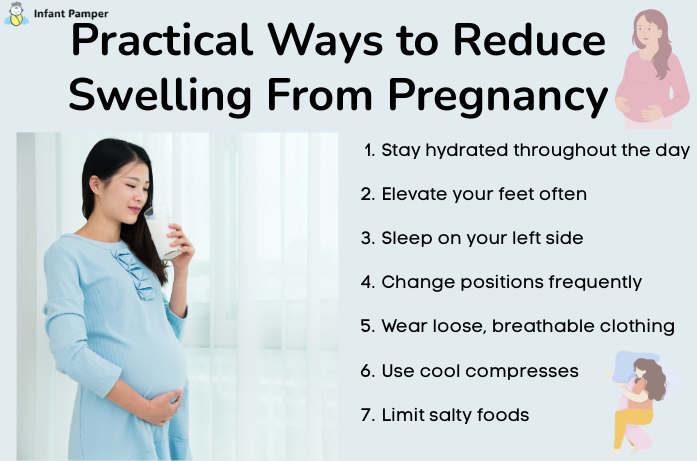
Practical Ways to Reduce Swelling From Pregnancy
Although swelling can’t always be prevented, there are gentle and effective ways to ease discomfort.
How to Reduce Swelling From Pregnancy Safely
- Drink enough water to help flush out excess fluids
- Raise your feet whenever possible, especially in the evening
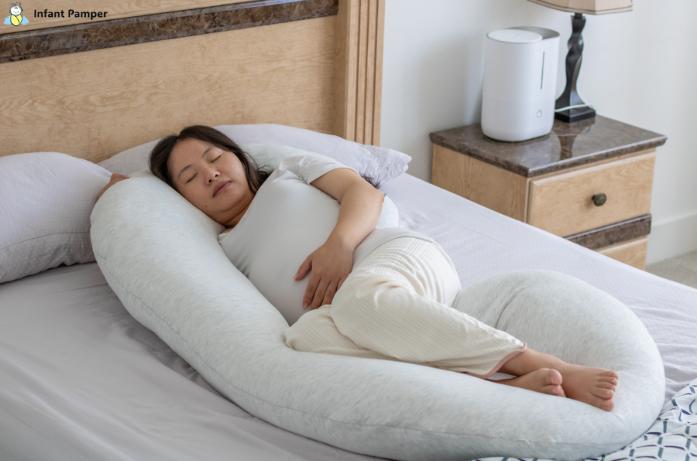
- Sleep on your left side to support better blood flow
- Avoid sitting or standing for long periods at one time
- Choose loose, breathable clothes for comfort
- Apply cool compresses to reduce swelling
- Eat a balanced diet and limit excess salt
These habits won’t eliminate swelling completely, but they can make a meaningful difference in how you feel day to day.
Emotional Wellbeing and Body Changes
Swelling can affect more than just your physical comfort, it can impact how you feel about your body. Seeing changes you didn’t expect can bring frustration, sadness, or insecurity. These feelings are valid and deserve compassion.
Pregnancy is not about perfection. It’s about resilience, growth, and care, for your baby and for yourself.
Final Thoughts from Infant Pamper
Swelling during pregnancy whether it shows up in your face, hands, legs, or other parts of your body is often a natural sign that your body is working hard to support your growing baby.
While the physical discomfort and emotional ups and downs that come with swelling can feel overwhelming at times, it’s important to remember that, in most cases, this is temporary and improves as your body adjusts or after delivery. Understanding what’s normal and knowing when to seek guidance can make this phase feel far less stressful.
Frequently Asked Questions
1. Is face swelling during pregnancy normal?
Yes, mild to moderate facial swelling is very common during pregnancy. It usually happens due to fluid retention and hormonal changes and is often harmless.
2. What causes face swelling during pregnancy?
Face swelling is mainly caused by increased blood volume, hormonal shifts, and the body holding extra fluids to support the baby’s growth.
3. Can swelling get worse in the third trimester?
Yes, swelling often becomes more noticeable in the third trimester as circulation slows and the body retains more fluid.
4. Can swelling continue after delivery?
Yes, after pregnancy swelling is normal. Your body needs time to release extra fluids, and swelling usually improves within a few weeks after childbirth.
5. When should swelling be checked by a doctor?
If swelling is sudden, severe, painful, or comes with symptoms like headaches, vision changes, or dizziness, you should contact a healthcare provider right away.
For more expert-backed guidance, comforting insights, and practical tips on pregnancy, newborn care, and parenting, explore more articles on Infant Pamper. You deserve support, clarity, and reassurance every step of the way.
Medical Disclaimer: This article is intended for informational purposes only and does not replace professional medical advice. Always consult your healthcare provider with questions or concerns about pregnancy-related swelling or symptoms.