Written with care by a caring mom at Infant Pamper
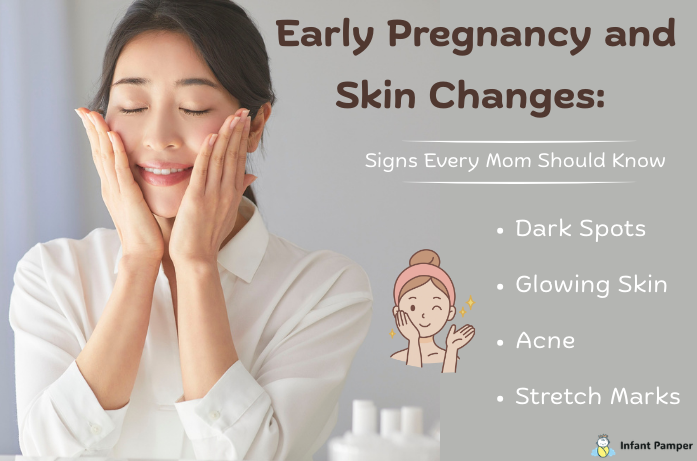
Pregnancy is a beautiful journey, but it often brings small surprises along the way. One of the earliest things many women notice is early pregnancy and skin changes. Your skin may suddenly glow, feel more sensitive, develop small breakouts, or show darker patches you’ve never noticed before.
During my first pregnancy, I remember looking in the mirror and wondering why my skin seemed so different. Some days it looked bright and healthy, while other days I noticed dryness or a few unexpected pimples. If you are noticing similar changes, please know that this is completely normal.
These changes happen because your body is adjusting to the incredible work of growing a baby. Hormones, increased blood flow, and natural body changes all influence your skin. The good news is that most pregnancy skin changes are temporary and improve with gentle care.
What Are Early Pregnancy Skin Changes?
Early pregnancy skin changes are physical changes that appear on the skin during the first weeks of pregnancy. These changes happen because pregnancy hormones increase blood circulation, oil production, and melanin levels in the skin.
Many women notice pregnancy glow, acne breakouts, dark patches, sensitive skin, or stretch marks during this time. These hormonal skin changes in pregnancy are very common and usually appear during the first trimester.
Understanding Skin Changes in Early Pregnancy
These hormonal changes affect many parts of your body, including your skin. That is why skin changes in early pregnancy can sometimes be one of the first subtle signs of pregnancy.
Medical research has shown that hormonal fluctuations during pregnancy can influence pigmentation, oil production, and blood circulation in the skin.
According to medical research published on the National Library of Medicine, pregnancy commonly leads to several dermatological changes as the body adapts to hormonal shifts.
Common Skin Changes During Early Pregnancy
Many expecting mothers experience several pregnancy skin problems during the early weeks of pregnancy. These changes are usually normal and happen because of hormonal shifts and increased blood circulation.
Overview of Common Pregnancy Skin Changes
| Skin Change | Why It Happens | What You May Notice |
| Pregnancy Glow | Increased blood flow and hormone changes | Skin looks brighter and more radiant |
| Pregnancy Acne | Hormones increase oil production | Pimples or breakouts on face, chest, or back |
| Dark Patches (Melasma) | Higher melanin production during pregnancy | Brown or dark patches on cheeks, forehead, or upper lip |
| Sensitive Skin | Hormonal changes and stretching skin | Redness, dryness, itching, or irritation |
| Stretch Marks | Skin stretching as baby grows | Pink, red, or purple lines on belly, thighs, or breasts |
Pregnancy Glow: A Common First Trimester Skin Change
One of the most talked-about first trimester skin changes is the famous pregnancy glow.
During pregnancy, your body produces more blood to support your growing baby. This increased circulation makes your skin appear brighter and fuller. At the same time, hormones stimulate oil glands, which can give the skin a naturally dewy appearance.
Many women notice their complexion looking healthier and more radiant than usual. Friends and family might even comment that you are glowing.
Pregnancy Acne: A Common Hormonal Skin Change
Not every pregnancy skin change feels exciting. Many women experience pregnancy acne, especially during the first trimester.
Hormonal changes increase oil production in the skin. This extra oil can clog pores and lead to breakouts.
Even women who rarely had acne before pregnancy may suddenly notice pimples on their face, chest, or back.
Dark Patches and Melasma During Pregnancy
Another common pregnancy skin change is melasma, often called the “mask of pregnancy.”
Melasma appears as darker patches on the skin and usually develops on the:
- Cheeks
- Forehead
- Nose
- Upper lip
These patches appear because pregnancy hormones increase melanin production in the skin.
For many moms, this is one of the most noticeable pregnancy skin problems.
Sensitive or Itchy Skin During Pregnancy
Some women notice that their skin becomes more sensitive during pregnancy.
Products that once felt gentle may suddenly cause irritation. You may notice dryness, redness, or mild itching.
These symptoms are usually caused by hormonal changes and the stretching of the skin as your body grows.
Stretch Marks During Pregnancy
Stretch marks are one of the most common skin changes during pregnancy.
They appear as thin lines on the skin when it stretches to accommodate your growing baby.
Stretch marks often develop on the:
- Belly
- Breasts
- Thighs
- Hips
At first, they may appear red, pink, or purple. Over time they usually fade and become lighter.
Stretch marks are very common and completely natural.
Skin Changes After Pregnancy
Many mothers wonder what happens to their skin after the baby arrives.
The good news is that most skin changes after pregnancy gradually improve as hormone levels return to normal.
You may notice:
- Acne gradually clearing
- Pigmentation fading slowly
- Oil production balancing out
- Skin texture returning to normal
Some changes like stretch marks may remain, but they usually become lighter over time.
Simple Ways to Care for Your Skin During Pregnancy
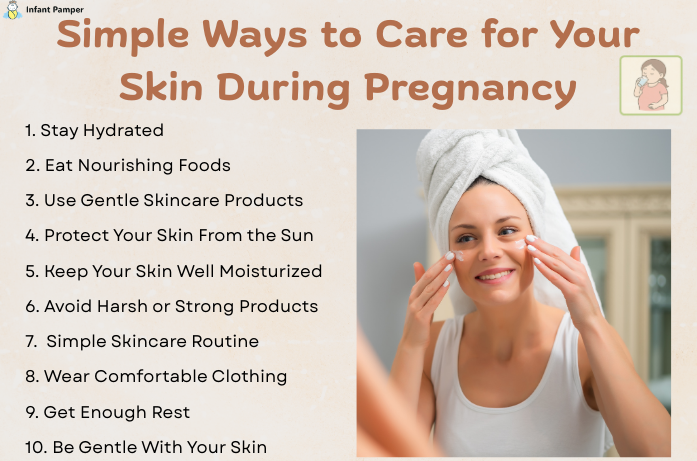
Although pregnancy skin changes are a normal part of this journey, gentle care can help keep your skin comfortable, healthy, and balanced. During pregnancy, your skin may become more sensitive than usual, so small daily habits can make a big difference.
Taking care of your skin does not require complicated routines. Simple, consistent steps can help reduce irritation, dryness, breakouts, and other common pregnancy skin problems.
1. Stay Hydrated
Drinking enough water throughout the day is one of the easiest ways to support healthy skin. Proper hydration helps maintain skin elasticity, reduces dryness, and supports your body as it works hard to nourish your growing baby.
2. Eat Nourishing Foods
Healthy skin begins from within. Eating a balanced diet with fruits, vegetables, whole grains, healthy fats, and protein provides essential vitamins and nutrients. Foods rich in vitamin C, vitamin E, and omega-3 fatty acids can support skin health during pregnancy.
3. Use Gentle Skincare Products
Pregnancy can make your skin more sensitive, so it is best to choose mild and fragrance-free skincare products. Gentle cleansers and moisturizers help maintain the skin’s natural barrier without causing irritation.
4. Protect Your Skin From the Sun
Sun exposure can worsen pigmentation and dark patches such as melasma. Wearing a broad-spectrum sunscreen, using a wide-brim hat, and limiting direct sun exposure can help protect your skin and prevent dark spots from becoming more noticeable.
5. Keep Your Skin Well Moisturized
Regular moisturizing helps reduce dryness and keeps your skin soft and flexible. Applying moisturizer after bathing can help lock in hydration and support your skin as it stretches during pregnancy.
6. Avoid Harsh or Strong Products
Some skincare ingredients can be too strong for pregnancy-sensitive skin. Avoid harsh scrubs, strong acne treatments, and products that cause irritation. If you are unsure about a product, it is always a good idea to check with your doctor.
7. Keep Your Skincare Routine Simple
Pregnancy is not the time to experiment with many new products. A simple routine with a gentle cleanser, moisturizer, and sunscreen is usually enough to maintain healthy skin.
8. Wear Comfortable and Breathable Clothing
Loose, soft fabrics such as cotton allow your skin to breathe and can help prevent irritation or itching, especially as your body changes.
9. Get Enough Rest
Sleep and rest are important not only for your overall health but also for your skin. Proper rest supports natural skin repair and helps maintain a healthy glow.
10. Be Gentle With Your Skin
Avoid excessive rubbing, harsh exfoliation, or picking at acne. Treat your skin with care and patience as your body goes through many changes during pregnancy.
You can read more skin care guidance for pregnancy from trusted medical resources like MedlinePlus.
The Emotional Side of Pregnancy Skin Changes
Pregnancy brings many emotions, and changes in your appearance can sometimes affect how you feel about yourself.
Some days you might love your glowing skin. Other days you might feel frustrated by breakouts or dark patches.
That is completely normal.
Your body is doing something incredible. It is growing and protecting a new life.
Every change is part of the powerful journey of becoming a mother.
A Gentle Reminder for Every Mom
If you are experiencing early pregnancy and skin changes, remember that you are not alone. Almost every expecting mother experiences some type of skin change during pregnancy.
Some changes bring the beautiful pregnancy glow. Others, like acne or stretch marks, may feel less exciting. But most of these changes are temporary.
Your body is doing something amazing it is growing your baby.
A Warm Note From a Mom at Infant Pamper
Here at Infant Pamper, we believe motherhood should be filled with patience, kindness, and understanding.
As a mom myself, I remember worrying about every small skin change during pregnancy, every breakout, every dry patch, every new mark.
But over time I realized these changes were simply my body adjusting to the beautiful process of bringing a baby into the world.
If you are experiencing pregnancy skin changes, be gentle with yourself. Take care of your skin, nourish your body, and give yourself grace during this incredible journey.
Your body is doing something extraordinary.
FAQs
1. What are the most common early pregnancy skin changes?
Common skin changes include pregnancy glow, acne breakouts, dark patches (melasma), sensitive skin, and stretch marks.
2. When do pregnancy skin changes begin?
Many women notice skin changes during the first few weeks of pregnancy, especially in the first trimester.
3. What causes pregnancy glow?
Pregnancy glow happens because of increased blood flow and hormonal changes that make the skin appear brighter and more radiant.
4. Do pregnancy skin changes go away after birth?
Most pregnancy skin changes gradually improve after delivery as hormone levels return to normal.
5. How can I take care of my skin during pregnancy?
Use gentle skincare products, moisturize regularly, drink plenty of water, eat healthy foods, and protect your skin from sun exposure.
Disclaimer: This article is for informational purposes only and is not a substitute for professional medical advice. Every pregnancy is different, so if you have concerns about skin changes or your health during pregnancy, please consult your doctor or a qualified healthcare professional.