Written by a caring mom at Infant Pamper
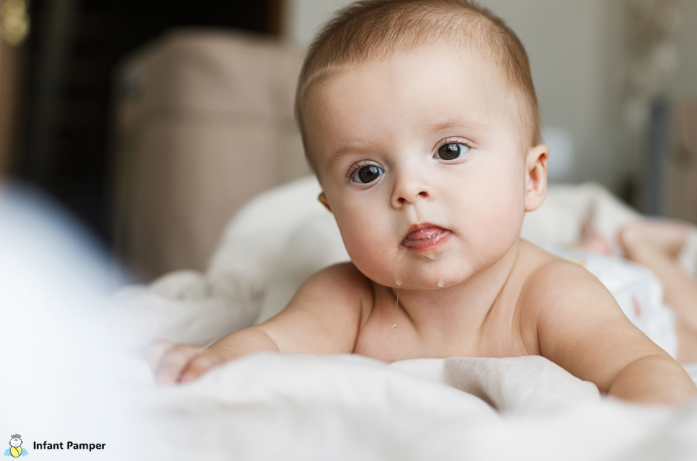
Drool rash in babies is a common skin concern that many parents notice during the early months. Those first weeks with a baby are filled with sweet moments, tiny yawns, warm cuddles, and adorable smiles. But sometimes parents also notice small skin changes. One of the most common is redness around the mouth, chin, or neck caused by constant saliva touching a baby’s delicate skin.
I remember noticing a small red patch under my baby’s chin when she started drooling a lot. At first, I felt worried and wondered if it was an allergy. But after learning more about baby drool rash, I realized it’s very common and usually easy to treat. Drooling is a normal part of a baby’s development, and with gentle care the rash often clears up quickly.
Understanding Drool Rash Baby
A drool rash baby rash happens when saliva stays on your baby’s skin for long periods of time. Baby skin becomes highly sensitive because continuous moisture presents an easy way to create skin irritation. The saliva in your mouth contains digestive enzymes which have the ability to destroy your skin’s natural defense system through their action.
Saliva accumulation in specific areas of the body leads to irritation, which results in redness and dryness and the formation of small bumps.
The most common places drool rash appears include:
- Around the mouth
- On the chin
- On the cheeks
- In the neck folds
- On the upper chest
Because babies from the beginning of their lives through their teething period experience regular drooling, drool rash becomes a common condition which affects most infants at some stage.
The mild nature of drool rash enables parents to treat the condition successfully through basic skin care practices which they can perform every day.
Why Do Babies Drool?
Parents frequently ask, why do babies drool? The answer is actually connected to several normal experimental processes.
Babies naturally produce slaver, but in the early months they have not yet learned how to swallow it efficiently. As a result, the slaver flows out of their mouths rather.
Here are some common reasons why babies drool:
1. Developing Oral Muscles
During the first months of life, babies are learning how to coordinate stinking, swallowing, and breathing. Until these muscles completely develop, saliva may simply drip out.
2. Teething Preparation
Indeed before teeth appear, the body begins preparing for teething. Increased saliva helps soothe gums and protect the mouth.
3. Exploring the World with Their Mouth
Babies discover their world by putting objects in their mouths. Toys, hands, and robes stimulate saliva production.
4. Digestive Development
Saliva contains enzymes that begin the digestion process. As babies grow, their bodies naturally increase saliva production.
Because of these reasons, baby drooling a lot is generally a healthy sign of development.
When Do Babies Start Drooling?
numerous parents wonder when do babies start drooling, especially if their baby seems to drool earlier than expected.
Utmost babies begin conspicuous drooling between 2 and 3 months of age. still, some babies may start before or latterly.
Baby Drooling at 1 Month
In the newborn stage, baby drooling at 1 month can be sometimes. At this age, the cause is generally immature swallowing chops rather than teething.
Babe are still learning how to coordinate their mouth movements, which can allow slaver to escape.
Baby Drooling at 2 Months
Baby drooling at 2 months becomes further conspicuous for numerous parents. Around this time, babies start producing further saliva as their digestive system develops.
You may notice:
- Small bubbles of saliva around the lips
- Wet clothing or bibs
- Constant moisture on the chin
This stage is fully normal and happens to numerous babies.
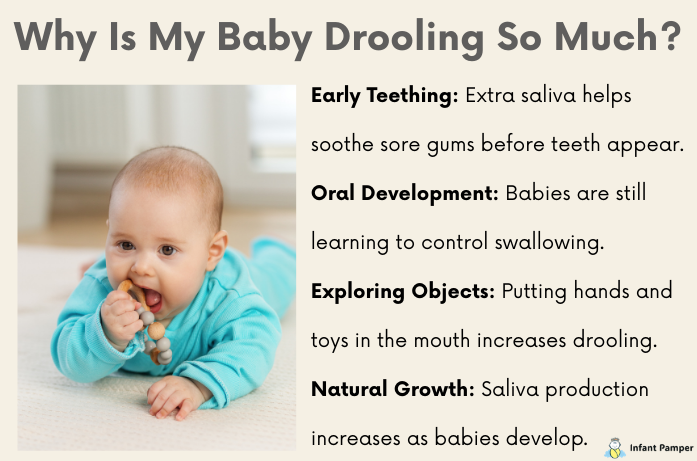
Why Is My Baby Drooling So Much?
Some babies drool far further than others, and it can occasionally feel like you’re changing bibs all day.
There are several reasons your baby may be drooling a lot.
1. Early Teething: Teething can begin months before the first tooth appears. Increased saliva helps soothe gum discomfort and keeps the mouth clean.
2. Oral Development: Babies are learning how to control their lips, tongue, and swallowing muscles. Until those muscles strengthen, saliva escapes fluently.
3. Curiosity and Exploration: When babies discover their hands or toys, they constantly bring them to their mouths. This stimulation increases drooling.
4. Growth and Development: product naturally increases as babies grow, especially during the first year.
So while it may feel messy, drooling is actually a sign that your baby is developing exactly as they should.
Symptoms of Baby Drool Rash
Recognizing baby drool rash early helps parents treat it snappily and help it from worsening.
Some common symptoms include:
- Red or pink irritated skin around the mouth or chin
- Slight dryness or rough patches
- Small red bumps or mild rash
- Shiny skin caused by constant moisture
- Irritation in neck folds
Sometimes the rash may look worse after naps or feeding times because saliva sits on the skin for longer periods.
Most babies do not seem bothered by the rash unless it becomes severely irritated.
Areas Most Affected by Drool Rash
Drool rash typically appears where saliva stays on the skin.
Around the Mouth: Saliva constantly touches this area, making it the most common spot for irritation.
Chin: Drool naturally drips downward and collects on the chin.
Neck Folds: Moisture easily becomes trapped in the soft folds of the neck.
Upper Chest: Drool that soaks through clothing can irritate the skin below the neck.
Regular cleaning and drying of these areas can significantly reduce irritation.
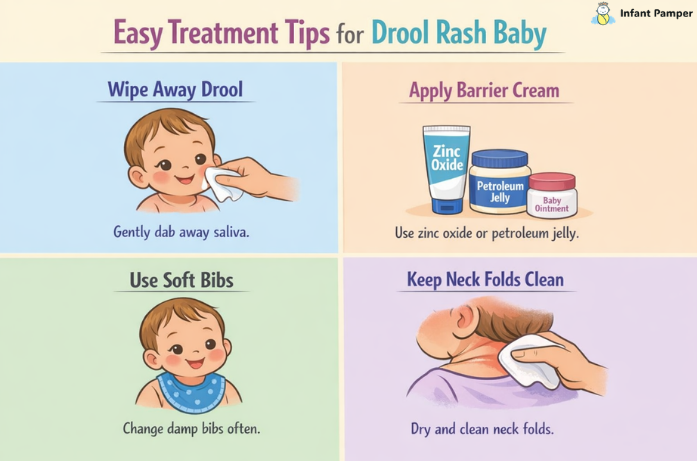
Easy Treatment Tips for Drool Rash Baby
When minding for a drool rash baby, the main thing is to keep the skin clean, dry, and defended.
Then are some simple treatment tips numerous parents find helpful.
1. Gently Wipe Away Drool
Use a soft cloth or gentle baby wipe to dab away saliva throughout the day. Try to pat rather than rub the skin.
Frequent gentle cleaning prevents saliva from sitting on the skin for long periods.
2. Apply a Protective Barrier Cream
Barrier creams protect the skin from moisture.
Safe options include:
- Zinc oxide cream
- Petroleum jelly
- Fragrance-free baby ointments
A thin protective layer can help shield your baby’s skin from constant drooling.
3. Use Soft Bibs
Babies who are drooling a lot often soak their clothes quickly.
Using absorbent bibs helps keep the neck and chest dry. Change bibs whenever they become damp.
4. Keep Neck Folds Clean
Neck folds can trap drool without parents noticing.
During bath time or diaper changes, gently clean and dry these areas to prevent irritation.
Choose Gentle Skin Products
Avoid products that contain strong fragrances or harsh ingredients. Sensitive baby skin heals best with mild, simple products.
Look for:
- Hypoallergenic baby washes
- Fragrance-free lotions
- Soft cotton cloths
Allow Some Air Time
Let your baby spend a little time without bibs or tight clothing around the neck.
Fresh air helps the skin dry naturally and supports healing.
When Do Babies Stop Drooling?
Drooling generally peaks between 4 and 7 months, especially during teething.
As babies grow, they gradationally gain better control over their swallowing muscles.
For numerous babies, heavy drooling slows down between 12 and 18 months.
By toddlerhood, utmost children drool much lower unless they’re laboriously teething.
When Should Parents See a Doctor?
Although drool rash is usually harmless, parents should contact a pediatrician if:
- The rash becomes very swollen
- Skin begins cracking or bleeding
- Yellow crusting appears
- The rash spreads beyond drool areas
- Your baby seems uncomfortable or in pain
Sometimes yeast or bacterial infections can develop in moist areas and may need medical treatment.
Fortunately, this is relatively rare.
Gentle Prevention Tips for Parents
While drooling can not be fully averted, small diurnal habits can help cover your baby’s skin.
Helpful prevention tips include:
- Keeping soft bibs near throughout the day
- Gently wiping drool frequently
- Applying barrier cream before naps or bedtime
- Keeping neck folds dry
- Dressing babies in breathable fabrics
These simple habits can reduce irritation and keep your baby’s skin healthy.
A Gentle Reminder for Parents
still, it’s fully accessible to feel concerned, If your baby is drooling constantly and developing a rash. Parenthood frequently comes with moments of query, especially when you’re minding for similar delicate little skin.
But drool rash is one of the most common skin conditions in immaturity. It happens because babies are growing, developing, and learning how their bodies work.
Seeing baby drooling a lot can feel messy and overwhelming at times, but it’s also a sign that your little one is moving through important developmental milestones.
Final Thoughts
Parenthood with a baby means learning something new almost every day. A drool rash baby situation may look worrying at first, but in most cases it’s simply the result of normal baby drooling during early development. With gentle cleaning, protective creams, and a little patience, drool rash usually clears up quickly. Keeping your baby’s skin clean and dry can make a big difference.
And remember, every drooly smile, messy bib, and tiny milestone is part of the beautiful journey of watching your baby grow. If you’re going through this drooling stage right now, know that you’re doing an amazing job. These little challenges pass quickly, but the love and care you give your baby will always matter most.
FAQs
1. How long does drool rash last in babies?
In utmost cases, drool rash improves within 3 – 5 days when the skin is kept clean and defended. still, since babies continue drooling for months, the rash may come and go during this stage.
2. Why is my baby drooling so much?
Babies drool more as their slaver product increases and they develop oral muscles. It can also be during early teething or when babies explore toys with their mouths.
3. When do babies start drooling?
utmost babies begin drooling around 2 – 3 months old, though some may start before or latterly.
4. When do babies stop drooling?
Heavy drooling generally slows down between 12 and 18 months as babies gain better control of swallowing.
5. How can I prevent baby drool rash?
Keep your baby’s skin dry, wipe drool gently throughout the day, change wet bibs often, and use a protective barrier cream to protect the skin.
If you found this guide helpful, explore more baby care tips and parenting advice on Infant Pamper. Our goal is to support parents with simple, trusted guidance for every stage of your baby’s journey.
Disclaimer: This article is for informational purposes only and is not a substitute for professional medical advice. Always consult your pediatrician or healthcare provider if you have concerns about your baby’s health or skin condition.