By a Caring Mom at Infant Pamper
Parenthood is often described as one of life’s most fulfilling journeys. It’s full of laughter, sleepless nights, cuddles, and first milestones. However, for every happy moment, many parents quietly face something far less talked about, parent anxiety.
Anxiety can have many causes, such as fear of making mistakes, worry about a child’s illness, or simply being unable to handle endless tasks. Anxiety can easily become a part of parenting that no one wants. In fact, it’s a universal problem that almost every parent experiences at some point. Therefore, it’s important to master the art of managing it in a healthy and compassionate way.
Understanding Parent Anxiety
Parent anxiety is distinct from normal worry. It’s a persistent feeling of unease or fear of something untoward happening. New parents, in particular, are at the highest risk of experiencing anxiety due to the extreme emotional upheaval and physical changes that occur during the process of caring for a baby.
According to the American Psychological Association , anxiety becomes a concern when it interferes with daily life or affects your ability to enjoy parenting moments. This type of parental stress often begins in the early stages of parenthood, fueled by sleepless nights, hormonal changes, and the overwhelming responsibility of caring for a tiny human being.
Parental anxiety isn’t a sign of weakness; it’s often an indicator of the depth of your love. The sooner you overcome it, the better your emotional balance will be and the calmer your parenting will be.
Common Signs of Parental Anxiety
Every parent has worries, but too much worry can lead to parental stress. If these signs are a part of your daily life, it may be a sign that it’s time to pause and take some time to focus on your emotional well-being:
- Emotional symptoms: Constant worry, irritability, or feelings of guilt about not doing enough.
- Physical symptoms: headaches, tiredness, a feeling of being tense, or difficulty sleeping.
- Behavioral symptoms: Overprotectiveness, Avoidance of social activities, or Excessive checking on your child.
For example, if you find yourself waking up several times at night just to make sure your baby is breathing, even when you know they’re fine, that’s often anxiety talking. It’s common, but it’s also important to find balance so you can rest and recharge.
Why Parents Experience Anxiety
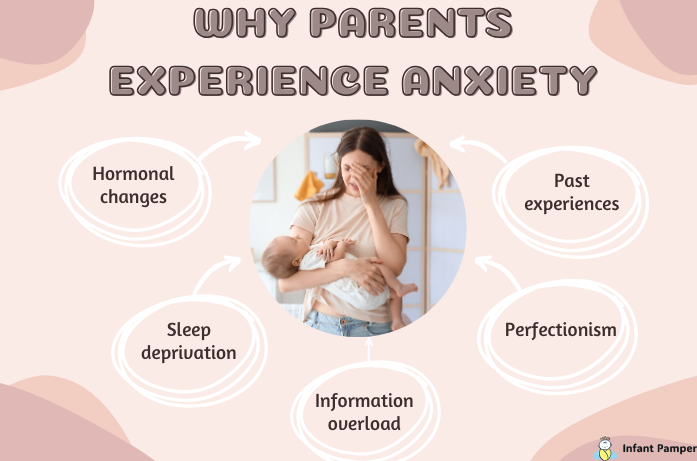
The reasons for parental anxiety might be very different, nevertheless most commonly they are a mix of the biological, emotional, and social factors.
- Hormonal changes: After childbirth, hormonal shifts can intensify anxious thoughts or feelings, especially for new mothers.
- Sleep deprivation: Lack of rest can make everyday challenges feel overwhelming.
- Information overload: Social media and parenting advice online can create unrealistic expectations and self-doubt.
- Perfectionism: Many parents fear judgment or believe they must do everything right, which adds pressure.
- Past experiences: Sometimes, past injuries, miscarriages, or medical complications can also make a person more anxious during future pregnancies or the early stages of parenting.
The National Institute of Mental Health explains that prolonged stress without recovery can impact overall mental health. Understanding what’s fueling your anxiety helps you take steps to manage it effectively.
The Impact of Parent Anxiety on Family Life
Unresolved anxiety not only burdens parents but also impacts the entire family. Babies are highly aware and sometimes even control adults by making them happy or sad. Parental stress can affect the emotional closeness that develops during bonding, breastfeeding, and play.
It may also create tension between partners. When one parent is anxious, communication often suffers, and small issues can turn into big arguments. Over time, this can impact the home’s emotional environment.
However, acknowledging parent anxiety is not a weakness, it’s a strength. Understanding it allows you to take positive steps to protect your family’s emotional health.
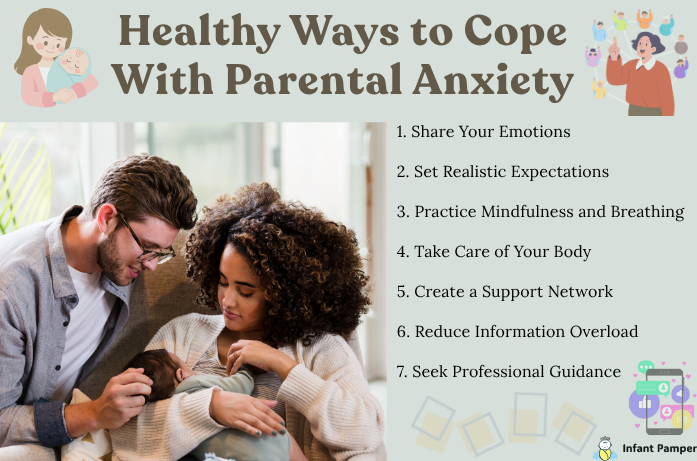
Healthy Ways to Cope With Parental Anxiety
But recognizing a parent’s anxiety is not an admission of defeat, but a victory. This understanding helps to better share the emotional health of the family.
1. Share Your Emotions
Talk about your concerns with your spouse, a confidante, or a psychologist. Often, you’ll be surprised by the relief just talking can bring, and it will also remind you that you’re not alone.
2. Set Realistic Expectations
No one can be a perfect parent all the time. Sometimes you’ll feel like you’re handling everything, and sometimes you’ll feel the opposite. Break out of your perfectionist mindset, your little one doesn’t need a perfect parent, but a loving parent.
3. Practice Mindfulness and Breathing
Mindfulness is a great tool for parents to reduce stress levels and create a calm environment. Simple breathing techniques, brief meditations, or staying focused during play can help you stay in the present instead of worrying about future problems.
4. Take Care of Your Body
Rest and diet are very important to mental health. Tiredness can make anxiety worse, so take naps if possible, eat healthy foods, and drink plenty of water. A body that is calm will help in creating a calm mind.
5. Create a Support Network
Raising children is never meant to be done alone. Seek help from family, friends, or local parenting groups. Even small breaks like a bath, a walk, or a nap can do wonders for your emotional health.
6. Reduce Information Overload
In today’s digital world, parents are surrounded by conflicting advice. One source says one thing, another the opposite, so it’s natural for anxiety levels to rise! Limit your time on social media and trust your intuition. After all, you know your child better than anyone else.
7. Seek Professional Guidance
If your anxiety persists or begins to interfere with your daily life, it’s a good idea to talk to a mental health professional. Therapy or counseling can provide very effective ways for parents to manage anxiety and regain confidence.
When to Seek Professional Help
It’s important to recognize when anxiety moves beyond everyday stress. You may benefit from professional support if you notice:
- Trouble bonding with your baby.
- Persistent sadness, guilt, or panic attacks.
- Thoughts of harm or extreme fear.
- unable to either rest or concentrate.
If you notice any of these symptoms, don’t hesitate to seek help. Early treatment can help you regain control over your emotions and experience the joys of parenthood once again.
How Partners and Family Can Support
Parenting is teamwork, and support from loved ones can make a world of difference. Partners and family members can help by:
- Listen without judgment. In some cases, parents just want to express their feelings.
- Share responsibilities. Offer to handle feedings, chores, or errands.
- Encourage breaks. Even just 15 minutes of “me-time” would help a parent to recharge.
Remember, parenting is teamwork. The more the parent feels the support, the less anxiety has space to grow.
Self-Care and Mindful Parenting
Self-care for parents isn’t an act of selfishness, but a matter of survival. Taking proper care of yourself means you’ll be in a better position to care for your baby. It’s important to find small moments of fun and relaxation each day, such as taking a warm bath, writing in your journal, taking a short walk, or listening to your favorite music.
Mindful parenting means slowing down and being present. Instead of worrying about tomorrow, focus on today, your baby’s smile, their giggle, the small milestones. These moments matter more than perfection.
Final Thoughts
If you’re reading this, then you are already a caring and devoted parent. Parent anxiety doesn’t indicate that you are weak; it indicates that you love and care for your child deeply.
There is no perfect parent handbook, and there is nothing wrong with needing help. Each day, take it day by day, give yourself grace, and understand your child needs you to be present, calm, and loving.
Parenting is not about having everything figured out. It is about showing up in love, showing up with patience, and coming with an open heart, even on the hard days.
FAQs
1. What is parent anxiety?
Parent anxiety is persistent worry or distress about your child’s safety, health, or development.
2. Can both parents experience anxiety?
Yes, parent anxiety can be experienced by both moms and dads at different points during their parenting journey.
3. How do I manage parental anxiety?
You can talk about your worries, get sufficient sleep, practice mindfulness, and reach out for support when needed.
4. When should I see a doctor?
If parent anxiety is affecting your sleep, mood, or daily functioning, it may be time to see your healthcare provider.
5. Is it normal to feel overwhelmed as a parent?
Absolutely! All parents feel overwhelmed at different points; that in itself demonstrates how much you care about your child
Disclaimer: This article is intended for informational purposes only and is not a substitute for professional advice. If you are having moderate to severe or persistent anxiety, speak to your healthcare provider or mental health professional.
For trusted advice on parenting and baby care, visit Infant Pamper, your safe space for calm and confident parenting.