By Infant Pamper
Welcoming a baby into your life is a moment that changes everything. One filled with sleepless nights, parenting challenges in the first year, countless questions, and heart-melting smiles. The first year of a baby’s life is an extraordinary journey, not only for your little one but for you as well. This period is packed with baby’s first year milestones month by month, common mistakes that every new parent makes (and learns from), and unforgettable magical moments that make everything worth it.
In this complete guide to Baby’s First Year, you’ll discover what to expect month by month, from developmental milestones to common parenting challenges. We share practical parenting tips for the first year, expert-backed insights, and real-life advice from experienced parents to help you feel confident, prepared, and supported throughout your baby’s first 12 months.
Why the First Year Matters So Much
Baby’s First Year is a time of incredible growth, both physically and emotionally. During these first twelve months, your baby’s brain develops at an extraordinary rate. According to the American Academy of Pediatrics, a baby’s brain nearly doubles in size in the first year, forming millions of neural connections through everyday experiences. Simple acts like talking, cuddling, making eye contact, and responding to your baby’s cries help build the foundation for language, learning, and emotional security.
Research from the Harvard Center on the Developing Child shows that early interactions shape how a child thinks, feels, and connects with others later in life. Beyond brain growth, babies also make rapid physical progress, gaining weight, strengthening muscles, and reaching exciting milestones like rolling, sitting, and possibly taking their first steps. Every loving moment during Baby’s First Year truly helps shape your child’s future.
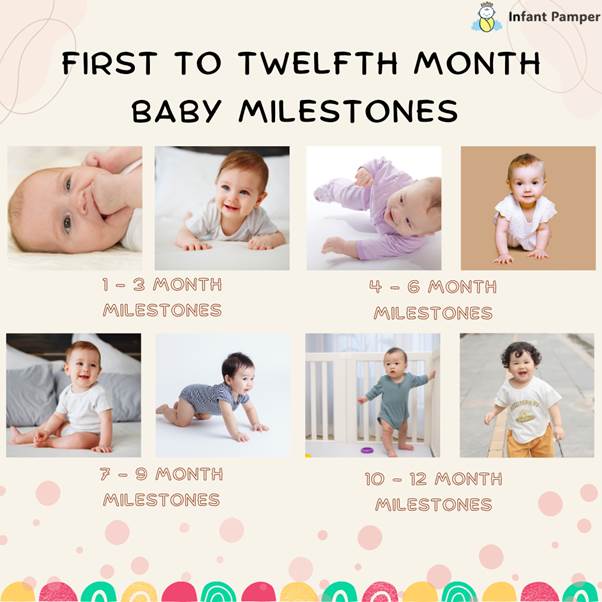
Baby First-Year Milestones Month by Month
Month 1–3: The Newborn Phase
- First social smile around 6–8 weeks
- Begins tracking objects with eyes
- Pushes up during tummy time
Parent Tip: Skin-to-skin contact is magic. It helps regulate your baby’s temperature and promotes bonding.
Month 4–6: The Emerging Personality
- Rolling over and giggling
- Babbling begins, signaling early language development
- Some babies start sitting with support
Pro Tip: Encourage tummy time daily, it’s crucial for muscle development and recommended by HealthyChildren.org (AAP resource).
Month 7–9: The Explorer Stage
- Crawling or scooting begins
- Fine motor skills improve as your baby picks up objects
- They might even try standing up using furniture for support
Safety Tip: Baby-proof your home following advice from Safe Kids Worldwide for all this new movement!
Month 10–12: Standing Tall
- Most babies pull to stand and may take first steps
- First words like “mama” or “dada” often appear
- Interactive play becomes a favorite
Parent Tip: Encourage walking by offering safe furniture for cruising and celebrate those magical first steps.
For detailed checklists, visit HealthyChildren.org and the CDC developmental tracker.
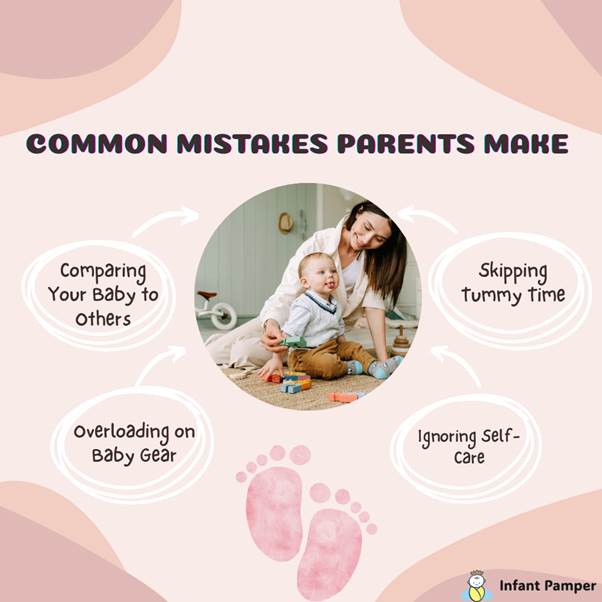
Common Mistakes New Parents Make in the First Year (And How to Avoid Them)
1. Comparing Your Baby to Others
Every baby develops at their own pace. If you’re concerned, consult your pediatrician or trusted resources like AAP or KidsHealth, not random forums.
2. Overloading on Baby Gear
Babies need love, attention, and the basics. Refer to safety certifications by Juvenile Products Manufacturers Association (JPMA) for essential items.
3. Ignoring Self-Care
How to survive your baby’s first year? Parent burnout is real. Caring for a newborn is exhausting. Sleep is essential for your physical and mental health. While “sleep when the baby sleeps” sounds simple, it’s not always practical. So, prioritize short naps whenever possible, share night duties with your partner, and don’t be afraid to ask for support. Taking care of yourself isn’t selfish; it ensures you have the energy and emotional balance to care for your baby.
4. Skipping Tummy Time
One of the most common parenting mistakes in the first year. Tummy time prevents flat head syndrome and is recommended by both AAP and Zero to Three for motor development.

Magical Moments in Baby’s First Year to Treasure
Baby’s First Year is filled with unforgettable milestones that stay in your heart forever. That first real smile, usually around six to eight weeks, feels like the sweetest reward after long nights of feeding and soothing. Soon after comes the first giggle, a tiny burst of laughter that can instantly melt away exhaustion and remind you why this journey is so special. These small but powerful moments show that your baby is beginning to connect, communicate, and respond to the love surrounding them.
As Baby’s First Year unfolds, more beautiful milestones appear, each one marking your baby’s growth and independence:
- First real smile: A heart-melting sign of recognition and bonding.
- First laugh: A joyful sound that makes every sleepless night worth it.
- Saying “Mama” or “Dada”: The sweetest milestone in early language development.
- First steps: Wobbly, brave movements that fill the whole family with pride.
- First wave or clap: Early social gestures that show growing awareness and interaction.
Capture these memories in photos if you’d like, but more importantly, be fully present. The magical moments in Baby’s First Year pass quickly, and they become the stories you’ll cherish for a lifetime.
Tips to Make the First Year Easier
- Trust Your Instincts: You know your baby best.
- Build a Support Network: Friends, family, or parenting communities.
- Read Authoritative Resources:
American Academy of Pediatrics (AAP) – HealthyChildren.org
Centers for Disease Control and Prevention (CDC) - Stay Flexible: Babies are unpredictable. Flexibility is your superpower.
FAQs for New Parents
Q1: How much should my baby sleep?
Newborns need 14–17 hours a day in short stretches (National Sleep Foundation).
Q2: When will my baby say their first word?
Usually between 10–14 months; variations are normal (AAP).
Q3: What if my baby skips crawling?
Some go straight to walking, which is normal (HealthyChildren.org).
Q4: Is it okay to co-sleep?
Experts like the AAP recommend a separate sleep space to reduce SIDS risk.
Q5: When should I start solids?
Around 6 months, when readiness signs appear (WHO guidelines).
Final Thoughts
The first year with your baby is a beautiful, challenging, and magical experience. You’ll make mistakes (every parent does), but these magical moments in baby’s first year will outweigh every challenge. Remember, perfection isn’t the goal, connection is.
Want more practical parenting tips for the first year? Visit Infant pamper for expert guides and real-world advice.
Disclaimer: This article is for informational purposes only and not a substitute for professional medical advice. Always consult your pediatrician for concerns.