By a caring mom at Infant Pamper
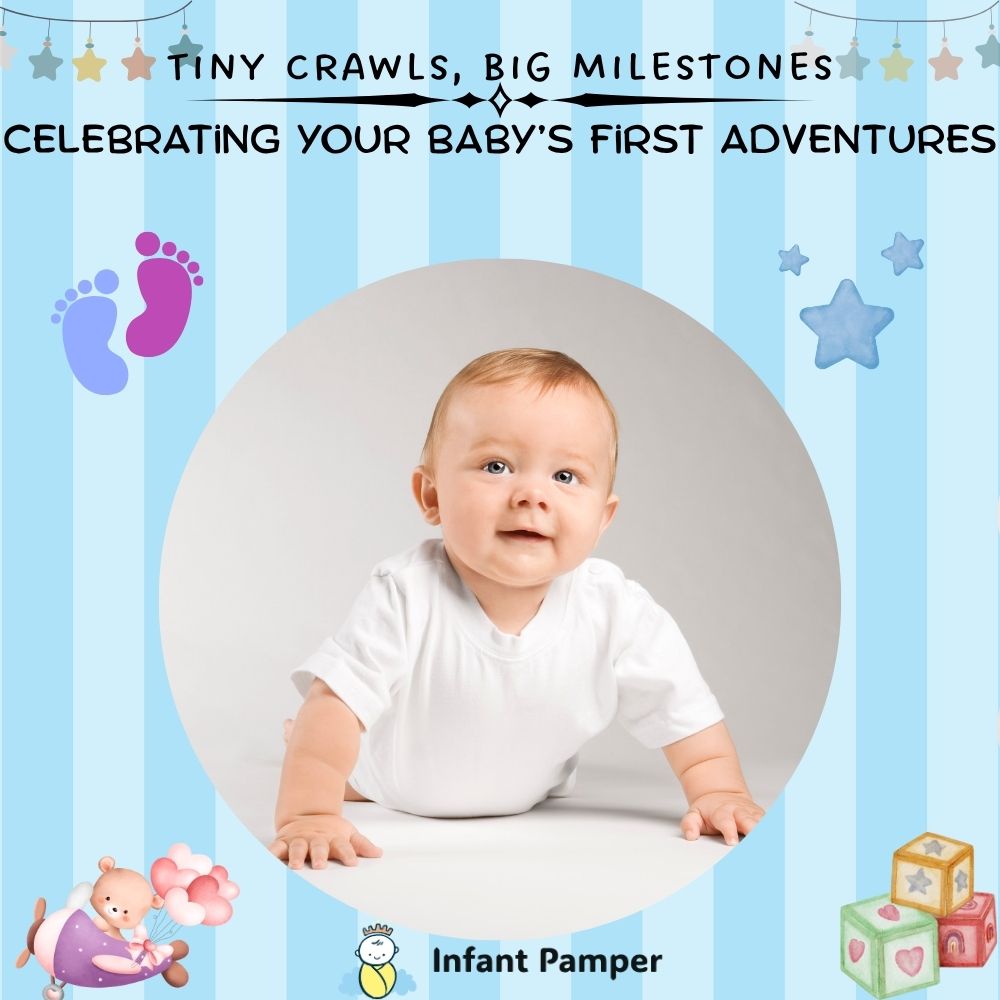
Watching your baby start crawling is like witnessing a tiny explorer take their first big step into a whole new world. Those early scoots and floor‑pushes are more than just movement they’re signs of growing strength, brainpower, and independence.
Why Crawling Matters More Than You Might Think
Muscle & Motor Development
Crawling builds strong arms, legs, back, and core muscles foundation work for sitting, standing, and eventually walking.
Brain & Neural Growth
That classic opposite‑arm, opposite‑leg pattern engages both brain hemispheres, boosting coordination, sensory integration, and neural connections like those in the corpus callosum.
Sensory Exploration
Every surface your baby crawls across whether tile, carpet, grass, or even soft rug provides a range of tactile feedback that enhances sensory integration. This kind of exploration strengthens balance (vestibular system), body awareness (proprioception), and visual tracking as they learn to adjust to new textures and surfaces
Fine Motor & Executive Skills
When babies support their weight on hands and knees, they build wrist, hand, and finger strength all using those fine motor skills that support handwriting and self-feeding later on. This dynamic weight-bearing also develops the arches in their hands, improves coordination, and lays groundwork for executive planning skillfully transferring weight, timing movements, and thinking two steps ahead.
Confidence & Independence
Crawling gives babies their first taste of autonomy solving little challenges and exploring on their own, which really boosts their self-esteem and independenc.
When Do Babies Start Crawling?
Most babies begin crawling between 7 and 10 months, but anywhere from 6 to 12 months is considered healthy and normal. Some babies may scoot, do a bear crawl, or even skip crawling altogether—and that’s perfectly fine as long as they’re gaining strength and showing curiosity.
Common Crawl Styles
Classic hands‑and‑knees crawl: One arm and opposite leg advance together
- Commando creep: Belly‑down scoot
- Bottom shuffler: Scooting while seated
- Bear or crab crawl: On hands and feet, chest high
All styles offer those essential developmental benefits.
Enjoy Every Adventure
Every tiny push, pivot, and pause is a mini celebration. Crawling isn’t just a step it’s a big leap in development, curiosity, and connection. From your friends at Infant Pamper, here’s to the joy of watching your little one discover the world one magical crawl at a time.
Eco-Friendly Bonus Tips
- Natural play surfaces: Choose organic cotton blankets, bamboo mats, or wool rugs for tummy and crawl time.
- Low‑tox baby‑proofing: Go plastic‑free with wooden corner guards, natural rubber outlet covers, and recycled fabric cord wraps.
- Upcycle crawling toys: Repurpose soft cloth books, repainted wood blocks, or simple fabric balls to inspire exploration.
FAQs
1. When do babies usually start crawling?
Most babies start crawling between 7 and 10 months, but some may begin earlier or later. Every baby develops at their own pace.
2. Is it normal if my baby crawls differently?
Yes. Some babies do a classic crawl, belly crawl, bear crawl, crab crawl, or bottom shuffle. These are all common ways babies learn to move.
3. What are the benefits of crawling for babies?
Crawling helps build muscle strength, balance, coordination, sensory awareness, brain development, and early independence.
4. What if my baby skips crawling?
Some babies skip crawling and move straight to standing or walking. This can be normal, but talk to your pediatrician if you notice weakness, stiffness, or delayed movement.
5. How can I encourage my baby to crawl?
Give your baby safe tummy time, place toys slightly out of reach, use soft play surfaces, and let them explore under supervision.
6. How can I make crawling time safe?
Keep floors clean, remove small objects, cover sharp corners, secure cords, and always watch your baby during playtime.