
Written by a caring mom at infant pamper
Feeding your baby isn’t always as simple as it seems. While breastfeeding provides important nutrition and comfort, some moms struggle with milk supply concerns, frequent feeds, or balancing motherhood with daily responsibilities. That’s when mix feeding a baby, also known as combination feeding, can be a practical option.
Mixed feeding means giving your baby both breast milk and infant formula. But is it safe? Will introducing formula affect your milk supply, your baby’s digestion, or their willingness to breastfeed? These are common questions, especially when you’re trying to find a feeding routine that works for your little one.
At Infant Pamper, we understand that every mom’s feeding journey is different. Whether you’re considering formula for extra support or more flexibility, this guide covers the benefits, possible challenges, safe feeding practices, and practical tips to help you make informed feeding decisions with confidence.
What Is Mixed Feeding a Baby?
Mixed feeding, also called combination feeding, means giving your baby both breast milk and infant formula.
For example, you might breastfeed in the morning, offer formula while you are working, and nurse again before bedtime. Some parents also use expressed breast milk in bottles.
There isn’t one fixed schedule that works for everyone.
According to Pregnancy, Birth and Baby, mixed feeding allows parents to combine breastfeeding with formula feeding according to their circumstances.
While exclusive breastfeeding is recommended for approximately the first six months when possible, combination feeding can be an appropriate option when formula is needed or chosen.
Why Do Moms Choose Mixed Feeding?
Every mother has her own reasons for combining breast milk and formula. Sometimes it’s a planned decision, while other times it happens because feeding isn’t going as expected.
Common reasons include:
- Returning to work or managing a busy schedule.
- Concerns about low breast milk supply.
- Breastfeeding or pumping difficulties.
- Wanting a partner to help with feeding.
- Supplementing because of a baby’s medical or growth needs.
- Needing more flexibility and rest.
However, frequent nursing doesn’t always mean your milk supply is low. Babies may breastfeed more often during growth spurts or cluster feeding.
If you’re concerned your baby isn’t getting enough milk, speak with a pediatrician or lactation consultant before making major feeding changes.

Benefits of Mixed Feeding for Babies and Moms
Mixed feeding can make everyday life easier for some families. It allows moms to continue breastfeeding while using formula when needed. Here are some benefits parents may find helpful.
1. More Flexibility With Feeding
With mixed feeding, you don’t have to breastfeed at every feeding session. Your partner or another caregiver can offer formula when you’re working, attending appointments, or taking a break.
This can be especially helpful for working moms or parents managing other children. You can plan feeds around your routine while making sure your baby gets enough milk.
2. Your Baby Still Gets Breast Milk
Giving formula doesn’t mean you have to stop breastfeeding. You can continue nursing in the morning, evening, or whenever it works best for you.
Even when your baby receives formula, breast milk continues to provide valuable nutrients and antibodies that support their growth and immune system.
3. Your Partner Can Share Feeding Duties
Mixed feeding gives your partner an opportunity to help with bottle feeds. They can hold your baby close, offer milk, burp them, and enjoy bonding time.
Sharing some feeding responsibilities can also give you time to rest or manage other tasks. It helps both parents become more involved in their baby’s daily care.
4. Less Stress About Every Feeding
Some moms feel worried about producing enough breast milk, pumping regularly, or being available whenever their baby gets hungry.
Having formula as an additional feeding option may reduce some of that pressure. However, remember that replacing breastfeeds regularly can affect milk supply, so maintaining breastfeeding or pumping sessions is important if you want to continue producing breast milk.
Possible Challenges of Mixed Feeding a Baby
Mixed feeding can be a helpful option, but your baby and your body may need some time to adjust. Understanding these common challenges can help you manage the transition more comfortably.
1. Your Breast Milk Supply May Decrease
Your body produces breast milk based on how often your baby nurses or you pump. When you replace regular breastfeeding sessions with formula, your milk supply may gradually decrease.
This is especially important during the first few weeks when breastfeeding is still becoming established. If you want to maintain your supply, continue nursing regularly or pump when you miss a breastfeed.
2. Your Baby May Prefer Bottle Feeding
Some babies get used to drinking from a bottle because milk may flow faster and require less effort than breastfeeding. As a result, they might become fussy or impatient when nursing.
To help your baby switch comfortably between breast and bottle, try using a slow-flow nipple and paced bottle feeding. These methods allow your baby to drink more slowly and take natural breaks.
3. Your Baby’s Digestion May Change
When you introduce formula, you may notice changes in your baby’s bowel movements. Their poop might become firmer, darker, or stronger-smelling than before. Some babies may also experience temporary gas or mild digestive discomfort.
These changes can be normal during the transition. However, if your baby has persistent vomiting, blood in their stool, painful constipation, or poor weight gain, contact your pediatrician.
4. You May Experience Breast Fullness or Discomfort
If you suddenly skip breastfeeding sessions, your breasts may become overly full, swollen, or painful because milk is still being produced.
To avoid discomfort, replace breastfeeding sessions gradually rather than stopping several at once. According to the NHS mixed-feeding guidance, gradually reducing breastfeeds can help lower the risk of breast engorgement and mastitis.
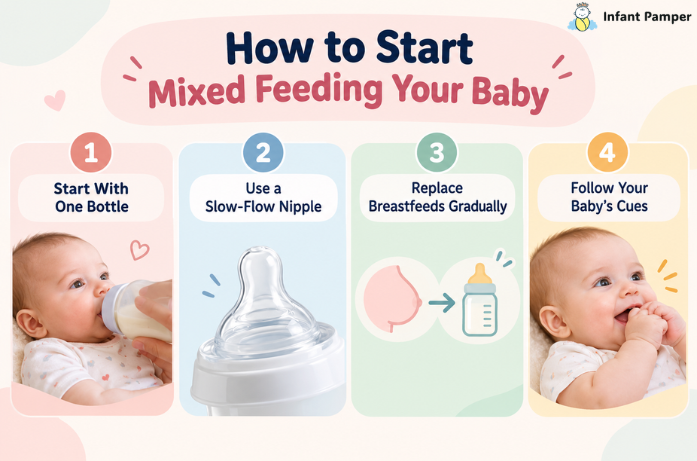
How to Start Mixed Feeding Your Baby
Starting mixed feeding can take a little time. If formula isn’t urgently needed for medical reasons, introducing it gradually can help your baby adjust comfortably.
1. Start With One Bottle a Day
Offer one bottle when your baby is calm and slightly hungry. You can ask your partner to try feeding, as some babies accept bottles more easily from another caregiver. If your baby refuses, try again later.
2. Choose a Slow-Flow Nipple
Use a slow-flow bottle nipple to prevent milk from flowing too quickly. Hold your baby slightly upright and allow short breaks during feeding. This helps your baby drink comfortably and recognize when they’re full.
3. Replace Breastfeeds Gradually
Replace one breastfeeding session at a time to help your breasts adjust and reduce discomfort. If you want to maintain your milk supply, consider pumping when you miss a breastfeed.
4. Watch Your Baby’s Hunger Cues
Look for signs like rooting, sucking on hands, or opening their mouth. Feed your baby when they show hunger cues, and stop when they turn away or seem full. Avoid forcing them to finish the bottle.
A Simple Mixed Feeding Schedule
Many parents wonder how to balance breastfeeding and formula throughout the day.
Here’s an example of how feeding methods might be arranged.
| Time of day | Feeding option |
| Morning | Breastfeeding |
| Late morning | Breastfeeding or expressed milk |
| Afternoon | Formula bottle |
| Evening | Breastfeeding |
| Night | Breastfeeding or formula |
Remember: This is only an example of how feeding methods can be shared, not a complete feeding schedule.
Newborns usually need frequent feeds throughout the day and night. Your baby’s age, growth, hunger cues, and individual needs should determine how often they eat.
Should You Breastfeed or Give Formula First?
If you’re using formula to supplement breastfeeding and want to maintain your milk supply, offering the breast first is often helpful.
Your baby gets an opportunity to nurse, which stimulates continued milk production.
You can then offer additional formula if needed, based on your baby’s hunger cues or your healthcare professional’s advice.
However, if you’re replacing a feed while away from home, your caregiver can simply offer a bottle.
There’s no need to follow the same approach for every feeding session.
Mixed Feeding at Night: Is It a Good Idea?
Nighttime feeding can be exhausting, especially when your baby wakes frequently.
Some parents introduce a formula bottle hoping their baby will sleep longer. However, formula doesn’t guarantee longer sleep, particularly for newborns.
Babies naturally wake for hunger, comfort, and other developmental reasons.
Regularly skipping nighttime breastfeeding or pumping may also reduce milk production for some mothers.
If your partner offers a night bottle, plan how that fits with your breastfeeding goals.
Most importantly, never prop a bottle, leave your baby feeding unattended, or put your baby to sleep with a bottle in their mouth.
How to Know Your Baby Is Getting Enough Milk
When you’re combining breast milk and formula, it’s natural to wonder whether your baby is getting enough.
Rather than focusing only on ounces, look at your baby’s overall feeding and growth.
Reassuring signs include:
- Regular wet diapers appropriate for their age.
- Steady weight gain.
- Effective sucking and swallowing.
- Alert periods when awake.
- Signs of satisfaction after feeding.
After the first several days, many well-fed babies have at least six wet diapers daily.
However, diaper counts alone cannot confirm adequate growth.
If your baby has fewer wet diapers than usual, struggles to feed, seems unusually sleepy, or isn’t gaining weight appropriately, contact your pediatrician.
Common Mixed Feeding Problems and Solutions
Small adjustments can sometimes make combination feeding easier.
| Problem | What may help |
| Baby refuses the bottle | Try offering it when calm or ask another caregiver to feed |
| Baby prefers bottle feeding | Use paced feeding and a slow-flow nipple |
| Breast milk supply decreases | Breastfeed or express milk more frequently |
| Breasts feel uncomfortable | Reduce breastfeeding sessions gradually |
| Baby seems gassy | Check bottle technique and discuss persistent symptoms with a pediatrician |
Avoid switching formulas repeatedly without understanding the reason for your baby’s discomfort.
Important Formula Safety Tips
Safe formula preparation is especially important when you’re combining breast milk and formula.
Always follow the instructions on the formula container and measure water and powder correctly.
Never add extra water or powder.
Remember these basic storage rules:
- Use prepared formula within two hours if kept at room temperature.
- Once feeding begins, use the formula within one hour.
- Refrigerate unused prepared formula immediately and use within 24 hours.
- Throw away leftover formula after feeding.
Powdered formula isn’t sterile. Babies younger than two months, premature babies, and babies with weakened immune systems may need additional precautions, including ready-to-feed formula when available.
For detailed guidance, visit the CDC’s formula preparation and storage recommendations.
Can You Return to Exclusive Breastfeeding?
Yes, some mothers can increase their milk supply and return to more breastfeeding after using formula.
This may involve nursing more frequently, expressing milk, and getting support with latch or feeding difficulties.
However, the process can take time, and results vary.
If formula was introduced because of poor weight gain or another medical concern, don’t reduce supplements without professional guidance.
And if mixed feeding continues to work best for your family, there’s no requirement to stop.
Frequently Asked Questions About Mixed Feeding
1. Is mixed feeding safe for newborn babies?
Yes, mixed feeding is safe when your baby gets enough milk and formula is prepared correctly.
2. What are the dangers of mix feeding a baby at night?
Possible concerns include unsafe bottle feeding, incorrect formula preparation, and reduced breast milk supply from missed nursing sessions.
3. Can I breastfeed and give formula on the same day?
Yes, you can breastfeed during some feeds and offer formula during others, depending on your baby’s needs.
4. Will mixed feeding reduce my breast milk supply?
It may reduce supply if formula replaces regular breastfeeds. Nursing or pumping frequently can help maintain it.
5. Does mixed feeding cause constipation?
Formula may change your baby’s stools. Hard, painful stools can indicate constipation.
6. Do I need to pump every time my baby gets formula?
Not always. Pumping during missed breastfeeds may help if you want to maintain your milk supply.
Final Thoughts
Every baby’s feeding journey is different, and finding the right routine may take time. For many families, mix feeding a baby offers a practical way to continue breastfeeding while enjoying the flexibility of formula.
Focus on your baby’s hunger cues, prepare formula safely, and seek medical guidance whenever needed. Most importantly, don’t feel guilty if your feeding plans change.
At Infant Pamper, we believe what matters most is keeping your little one well-fed, healthy, and loved. Whether you choose breast milk, formula, or both, you’re doing your best to care for your baby.
Disclaimer: This article is for informational purposes only and is not a substitute for professional medical advice. Always consult your pediatrician or a qualified healthcare professional before making significant changes to your baby’s feeding routine, especially if you have concerns about milk intake, growth, or digestion.