
Written by a caring mom at infant Pamper
Six weeks after giving birth, you may be wondering if your body is healing properly and what to expect at your first postpartum appointment.
So, what happens at 6 week postpartum checkup? Your doctor usually checks your recovery after delivery, discusses bleeding, stitches or C-section healing, and asks about your emotional health, breastfeeding, and birth control.
But this visit is about more than a physical examination. It’s your chance to talk about lingering pain, bladder problems, mood changes, or anything that has been worrying you since childbirth. You don’t need to feel completely recovered by six weeks, and every mom’s healing journey is different.
What Is a 6-Week Postpartum Checkup?
A six-week postpartum checkup is a medical appointment that focuses on your physical and emotional recovery after childbirth.
Your doctor or midwife will ask how you’ve been feeling, review any symptoms, and check whether additional care is needed.
The appointment usually covers healing after delivery, vaginal bleeding, pelvic floor health, mental wellbeing, feeding, birth control, and returning to normal activities.
However, six weeks isn’t a strict recovery deadline.
According to the American College of Obstetricians and Gynecologists (ACOG), postpartum care should be ongoing, with contact within the first three weeks after birth and a comprehensive visit no later than 12 weeks.
If you’re experiencing concerning symptoms, you shouldn’t wait until your scheduled appointment.
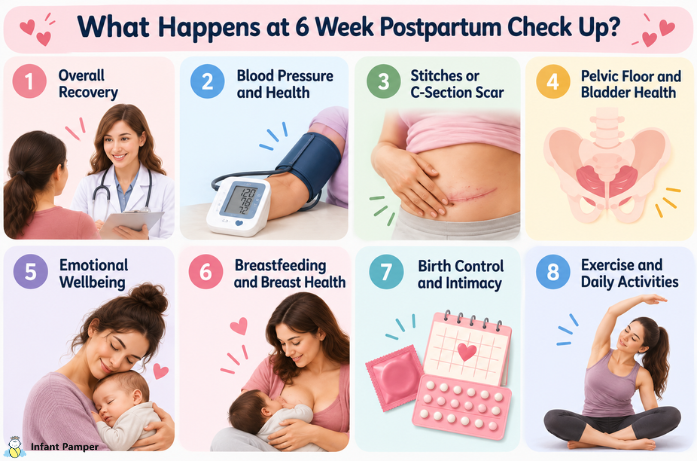
What Happens at 6 Week Postpartum Check Up?
Your postpartum appointment helps your doctor understand how well you’re recovering after childbirth. The checks may vary depending on your delivery, health history, and symptoms.
Here’s what you can expect during your visit.
1. Your Doctor Reviews Your Overall Recovery
Your doctor will ask about vaginal bleeding, pain, stitches, sleep, and bowel or bladder problems. They may also discuss how you’re managing everyday activities.
If you’re experiencing constipation, discomfort, or unusual bleeding, mention it. Even small concerns are worth discussing.
2. Your Blood Pressure and General Health May Be Checked
Your doctor may check your blood pressure, especially if you had high blood pressure during pregnancy. Blood tests may also be recommended if you have symptoms of anemia.
Moms who had gestational diabetes may need blood sugar testing. According to ACOG, some pregnancy complications require earlier follow-up.
3. Your Stitches or C-Section Scar May Be Examined
If you had stitches after vaginal delivery, your doctor may check whether they’re healing properly and ask about any remaining pain.
For C-section moms, the incision may be examined for redness, swelling, or drainage. Mention worsening pain or unusual discomfort.
4. Your Pelvic Floor and Bladder Health Are Discussed
Leaking urine when you cough or sneeze can happen after childbirth because pregnancy and delivery affect your pelvic floor muscles.
Your doctor may ask about bladder leakage, constipation, or pelvic pressure. The NHS recommends discussing these symptoms, as pelvic floor exercises or therapy may help.
5. Your Emotional Wellbeing Is Checked
Your provider may ask whether you’ve been feeling sad, anxious, overwhelmed, or unusually emotional since childbirth.
They may also screen for postpartum depression or anxiety. Be open about your feelings, as emotional recovery is an important part of postpartum care.
6. Breastfeeding and Breast Health May Be Reviewed
Your doctor may ask about breastfeeding difficulties, nipple pain, breast engorgement, or concerns about milk supply.
If feeding is painful or difficult, they may recommend a lactation consultant. Formula-feeding moms can also discuss breast discomfort or weaning concerns.
7. Birth Control and Intimacy Are Discussed
Your doctor may discuss when you can comfortably resume sex, vaginal dryness, and any pain during intimacy.
They may also explain birth control options, as pregnancy can occur before your first postpartum period, even if you’re breastfeeding.
8. Your Doctor Discusses Exercise and Daily Activities
Your doctor can guide you on safely returning to walking, yoga, workouts, and other daily activities.
If you had a C-section or significant tearing, you may need more recovery time. Ask about lifting, abdominal exercises, and any symptoms that mean you should slow down.
What Tests Are Done at a 6-Week Postpartum Checkup?
Not every mother needs the same tests or physical examinations.
Your healthcare provider will consider your delivery, symptoms, medical history, and recovery before recommending them.
| Test or examination | Why it may be needed |
| Blood pressure check | To monitor blood pressure concerns |
| Stitches or incision examination | To assess healing |
| Pelvic examination | For pain, bleeding, or healing concerns |
| Blood tests | To investigate anemia or other conditions |
| Blood sugar test | After gestational diabetes |
| Cervical screening | If due and appropriate after birth |
A pelvic examination or Pap test isn’t automatically necessary for every mom.
If you had gestational diabetes, a 75-gram oral glucose tolerance test is generally recommended between 4 and 12 weeks postpartum.
Ask your doctor which tests you need and why.
Is the Checkup Different After a C-Section?
Yes, your appointment can involve further questions related to your surgical recovery.
Your health care provider may inspect your abdominal cut, ask about scar sensitivity and pain when doing everyday activities.
Furthermore, he or she may evaluate whether you need extra assistance in getting back to exercising and lifting heavy things.
Some women need a cut evaluation sooner than later, particularly if something went wrong.
Keep in mind that having a C-section means undergoing abdominal surgery. Even if you feel better, healing goes on inside your body.
How to Prepare for Your Postpartum Appointment
Between feeding schedules and interrupted sleep, it’s easy to forget questions once you’re sitting in the doctor’s office.
A little preparation can make your visit more useful.
Write down your symptoms. Include any concerns about bleeding, pain, stitches, urination, bowel movements, or mood changes.
Bring your medications list. Note any medicines, vitamins, or supplements you’re taking.
Prepare your questions. Ask about exercise, intimacy, birth control, breastfeeding, or anything else that’s worrying you.
Discuss your emotional health. Mention if you’re struggling with anxiety, sadness, exhaustion, or feeling overwhelmed.
Before leaving, ask whether you need follow-up appointments or additional testing.
Questions to Ask at Your 6-Week Postpartum Visit
Sometimes the questions you forget are the ones you most wanted answered.
Consider saving these in your phone before your appointment:
- Is my bleeding and physical healing normal?
- Should I worry about urine leakage or pelvic pressure?
- When can I safely return to exercise?
- Is my C-section scar healing properly?
- Do I need any blood tests or follow-up appointments?
- What can I do if sex is painful?
- Are my mood changes normal, or should I seek support?
You don’t need to ask every question. Focus on what matters most to your recovery.
When Should You Contact Your Doctor Before Six Weeks?
Although your postpartum appointment is important, some symptoms need immediate medical attention.
According to the Centers for Disease Control and Prevention (CDC), serious pregnancy-related complications can happen after childbirth, including during the first year.
Seek urgent medical care if you experience:
- Heavy bleeding that soaks through one or more pads in an hour
- Severe headache or sudden vision changes
- Chest pain or difficulty breathing
- Fever of 100.4°F (38°C) or higher
- Severe abdominal pain
- Fainting or severe dizziness
- Pain or swelling in one leg
- Thoughts of harming yourself or your baby
Don’t wait for your routine appointment if something feels seriously wrong.
Always tell the medical team that you’ve recently given birth.
What Happens After Your Postpartum Checkup?
This does not mean that the postpartum visit will be the end of the care for your recovery.
If all is going smoothly, the provider might give advice about regular healthcare visits and tell you when to come back again.
But some women require more visits.
Some conditions such as pelvic floor issues may require physiotherapy treatment, and some others like postpartum depression or anxiety may require psychiatric care.
Moreover, if you have been diagnosed with gestational diabetes or high blood pressure, you will also require ongoing health care monitoring.

Is Your Postpartum Checkup the Same as Your Baby’s Six-Week Check?
No. Although both appointments may happen around the same time, they focus on different health needs.
Your baby’s appointment usually covers growth, feeding, development, and general health.
Your postpartum checkup focuses on your physical recovery, emotional wellbeing, and future healthcare needs.
Depending on your healthcare system, these appointments may be scheduled together or separately.
Make sure your own checkup doesn’t get overlooked while you’re managing your baby’s appointments.
FAQs About the 6-Week Postpartum Checkup
1. What happens at a 6 week post pregnancy check up?
Your provider reviews your physical recovery, emotional health, bleeding, pelvic floor symptoms, feeding concerns, and birth control options. Examinations or tests may be recommended depending on your needs.
2. What should I expect at my 6 week postnatal check up?
Expect questions about healing, mood, sleep, feeding, and any problems you’ve experienced since delivery. Your provider may also discuss exercise, intimacy, and follow-up care.
3. What do they do at 6 week postpartum check up after vaginal delivery?
Your provider may discuss bleeding, vaginal soreness, stitches, bladder control, and pelvic floor recovery. A physical examination may be recommended if you have symptoms or healing concerns.
4. Do I need a pelvic exam at my 6 weeks postpartum check up?
Not always. Whether you need a pelvic examination depends on your symptoms, delivery, medical history, and healthcare provider’s recommendations.
5. Can I bring my baby to my postpartum appointment?
Many healthcare clinics allow babies to attend, but policies vary. Call your clinic beforehand to confirm.
Final Thoughts
Your six-week postpartum checkup provides a good chance to find out how your body is recovering following childbirth. From having stitches checked or determining how the C-section is healing, to pelvic floor health, emotional wellbeing, breastfeeding, and birth control, this visit is important to identify potential problems that require extra attention.
Remember, six weeks doesn’t mean that your recovery is fully completed. Some mothers recover quickly, while others need more time and help. Be upfront about pain, any unusual symptoms, or even changes in your mood, and don’t wait for the appointment if something goes wrong.
At Infant Pamper, we believe every mom deserves a healthy and supported recovery. Take your questions to your appointment, follow your doctor’s guidance, and give yourself time to heal. Your health matters just as much as your baby’s.
Disclaimer
This article is for educational purposes only and does not replace personalized medical advice. Always consult your healthcare provider about postpartum symptoms, recovery, or treatment.