Written with love and real-life understanding by a caring mom at Infant Pamper
The experience of motherhood reaches its peak of difficulty during specific times when mothers must deal with a baby who constantly needs to be held. My memory holds days when my child cried as if I had vanished from existence whenever I entered the kitchen. Your situation mirrors mine, so I want to tell you that your actions are completely correct.
The clingy baby behaviour of infants does not represent a problem, an undesirable behavior, or anything you introduced into their life. The behavior exists because your baby develops love and attachment together with rising knowledge about their surroundings. Your baby stays close to you because this behavior shows they trust you as their most secure person, which can feel especially meaningful when you adopt a newborn baby and begin building that bond from the start.
The process will proceed through our shared experience of gentle and truthful methods which provide every mother with necessary support.
Understanding Your Clingy Baby: What It Really Means
Your baby shows confusion through their constant desire for you to keep them in your arms and their crying when you try to leave the room and their refusal to accept any other person. The situation becomes easier to manage after you learn about its cause.
Your baby needs to develop their relationship with you through secure attachment development. Your baby sees you as their safe place according to simple terms. Your baby returns to you whenever something becomes new or too much or even mildly distressing.
Why babies become clingy:
- They are learning that you can go away
- They feel safest in your presence
- Their brain is developing emotional awareness
- They are going through changes or discomfort
This isn’t weakness, it’s emotional growth.
The Science Behind Clinginess (Made Simple for Moms)
Around 6 to 9 months, babies begin to understand something called object permanence. This means they realize that you still exist even when they can’t see you. According to developmental milestones shared by the Centers for Disease Control and Prevention, this is a normal part of your baby’s growing brain.
And while that sounds like progress (because it is), it also brings a new fear:
“If Mama exists… then where did she go?”
This is why even stepping away for a minute can cause tears.
Their brain isn’t mature enough yet to understand that you’ll come back soon. So in their world, your absence feels big and scary.
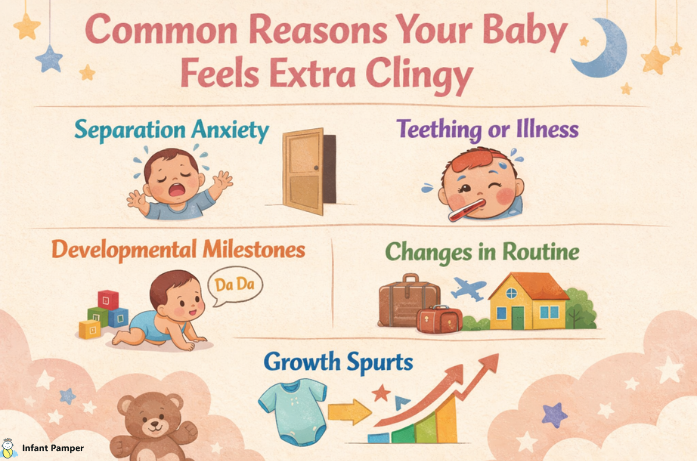
Common Reasons Your Baby Feels Extra Clingy
Sometimes clinginess increases suddenly, and you may wonder what changed.
Here are some very normal reasons:
1. Separation Anxiety
This is the most common cause. Your baby simply doesn’t want to be away from you. You can read more about how babies experience this phase and how to soothe them through trusted guidance from American Academy of Pediatrics on separation anxiety.
2. Teething or Illness
When your baby is uncomfortable, they naturally seek more comfort and closeness.
3. Developmental Milestones
Learning to crawl, walk, or talk can feel overwhelming. Babies often become clingier during these phases.
4. Changes in Routine
Travel, visitors, new environments, or even small changes can make your baby seek more reassurance.
5. Growth Spurts
During rapid physical and mental growth, babies may need more emotional support.
Signs You Have a Clingy Baby
Every baby is different, but you may notice:
- Crying when you leave the room
- Wanting to be held constantly
- Refusing to go to others
- Increased night waking
- Fussiness when put down
If this feels familiar, take a deep breath. This phase is more common than you think.
Why Clinginess Is Actually a Positive Sign
I know it doesn’t always feel this way, especially when you’re tired, but clinginess often means your baby has formed a strong emotional bond with you.
And that bond is the foundation of:
- Confidence later in life
- Emotional security
- Healthy relationships
When babies feel secure, they eventually become more independent, not less.
So even though it feels intense now, you are actually helping your baby grow in the best way possible.
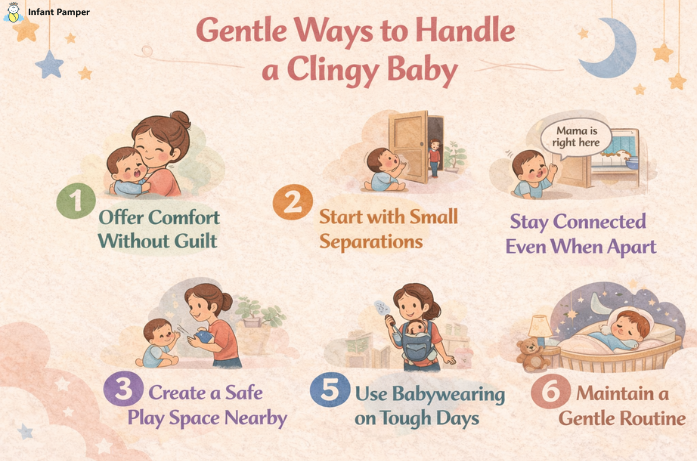
Gentle Ways to Handle a Clingy Baby
Now let’s gently focus on what truly helps. These are not quick fixes or strict rules, but small, loving newborn soothing techniques that slowly build your baby’s sense of safety and confidence, while also making things a little easier for you.
1. Offer Comfort Without Guilt
Many moms quietly worry, “Am I spoiling my baby by picking them up so often?” This feeling is very common, especially when your baby wants you all the time.
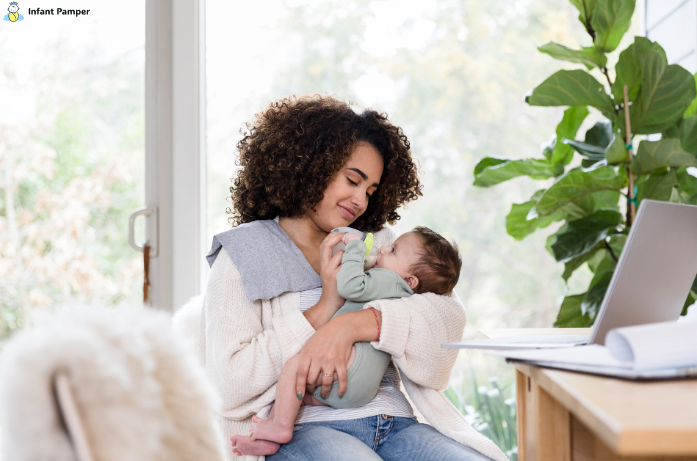
The truth is, you are not spoiling your baby. At this stage, responding to their needs builds trust and emotional security. When you hold them close, you are teaching them that they are safe and loved.
A Velcro baby is a baby who prefers to stay very close to their parent or caregiver most of the time.
2. Start with Small Separations
You don’t need to suddenly create distance from your baby, as that can feel overwhelming for both of you. Instead, begin with very small and gentle steps.
Step away for a few seconds, talk to them from nearby, and come back with a calm smile. These small moments help your baby understand that even if you go, you will always return.
3. Stay Connected Even When Apart
Your voice is one of the most comforting things for your baby, even when you are not right next to them. It helps them feel your presence and stay calm.
Try speaking softly when you step away, saying things like “Mama is right here” or “I’ll be back soon.” Even if they don’t understand the words, they feel reassured by your tone.
4. Create a Safe Play Space Nearby
Instead of leaving your baby alone in another room, try keeping them close while encouraging them to play. This helps them feel secure while slowly learning independence.
Sit near them as they explore their toys, and gradually reduce interaction while staying within sight. This gentle approach builds confidence without making them feel alone.
5. Use Babywearing on Tough Days
Some days are more challenging, and your baby may need extra closeness. During these times, it’s completely okay to keep them close to you.
Using a baby carrier allows you to comfort your baby while still moving around and getting things done. It creates a balance between meeting their needs and caring for yourself.
6. Maintain a Gentle Routine
Babies feel calmer when their day follows a simple and predictable pattern. A routine helps them know what to expect and reduces feelings of anxiety.
Try to keep feeding times, naps, and bedtime consistent. Even small daily rituals can make your baby feel more settled and secure.
7. Introduce Others Slowly
If your baby feels uncomfortable around others, there is no need to rush the process. They simply need time to feel safe.
Let them observe others while staying in your arms, and slowly allow interaction when they are ready. With patience and gentle exposure, your baby will begin to feel comfortable with others too.
What Can Make Clinginess Worse
Sometimes, without realizing it, we might do things that increase anxiety.
Try to avoid:
- Sneaking away without telling your baby
- Ignoring their cries completely
- Forcing them to go to unfamiliar people
- Reacting with frustration or anger
Your baby is not being difficult, they’re asking for reassurance.
Taking Care of Yourself as a Mom
Let’s pause for a moment and talk about you.
Because having a clingy baby can feel overwhelming, tiring, and emotionally draining.
And it’s okay to admit that.
You might feel:
- Touched out
- Frustrated
- Guilty for needing space
All of these feelings are valid.
So please remember:
- Take small breaks when possible
- Ask for help from family
- Rest when your baby sleeps
- Be kind to yourself
You are doing a beautiful job, even on the hard days.
When Should You Seek Advice?
Most clinginess is completely normal.
But you can talk to a pediatrician if:
- Your baby is extremely distressed all the time
- They don’t calm down even with comfort
- You notice delays in development
In most cases, you’ll simply be reassured that everything is okay.
How Long Does This Phase Last?
This phase doesn’t last forever, even though it may feel endless right now.
Slowly, your baby will:
- Feel more secure
- Explore more independently
- Spend short periods away from you comfortably
And one day, you might notice they don’t need you as much, and your heart may feel that little ache.
Final Thoughts
If your baby feels extra clingy right now, try to see it with a softer heart. This phase isn’t a problem to fix, it’s a moment in your baby’s journey where they need a little more love, comfort, and reassurance from you. It may feel overwhelming at times, but it’s also a sign that your baby feels completely safe in your arms.
These days won’t last forever. Slowly, your little one will grow more confident, explore more on their own, and need you a little less. Until then, take it one day at a time, be gentle with yourself, and trust that the love you’re giving right now is shaping a strong, secure, and happy child.
If this helped you feel a little more at ease, share it with another mom who might need it, And for more gentle parenting tips and baby care guides, stay connected with Infant Pamper.
FAQs
1. Why is my baby suddenly so clingy?
It’s often due to separation anxiety, growth stages, or needing extra comfort during changes.
2. Is clingy behavior normal in babies?
Yes, it’s a natural part of emotional development and shows strong attachment.
3. Will my baby outgrow this phase?
Yes, most babies become more independent as they grow and feel secure.
4. Should I ignore my baby when they cry for me?
No, responding gently helps build trust and makes your baby feel safe.
5. How can I calm a clingy baby?
Offer comfort, stay close, and slowly encourage independence with small steps.
Disclaimer: This article is for general parenting guidance and is based on personal experience and research. Every baby is different, so always trust your instincts and consult your pediatrician if you have concerns about your child’s behavior or development.