Written by a caring mom at Infant Pamper
If you’ve been asking yourself, “do babies eat less when teething?”, you are truly not alone. As moms, we notice even the smallest changes in our baby’s habits, especially when it comes to feeding. One day they seem to enjoy every bite, and suddenly, they start refusing food, turning their face away, or getting fussy during meals.
It’s completely natural to feel a little confused or concerned when this happens. But gently remind yourself, this is a very common phase. Teething can temporarily affect your baby’s appetite, and in most cases, it’s nothing to worry about.
With a little understanding and patience, you can support your baby through this stage with calmness and confidence. Let’s walk through what’s really going on and how you can help your little one feel better
Do Babies Eat Less When Teething?
Yes, many babies do eat less when teething, and it’s usually a short-term change.
When those tiny teeth begin pushing through the gums, it can cause soreness, swelling, and discomfort. For your baby, even the simple act of sucking, chewing, or swallowing can feel irritating.
Because of this, you might notice:
- Reduced interest in milk or solids
- Fussiness during feeding
- Shorter feeding sessions
- More frequent but smaller feeds
This doesn’t mean your baby has lost their appetite completely, it just means feeding feels uncomfortable right now.
And as moms, it’s important to remember:
This is a phase, not a problem.
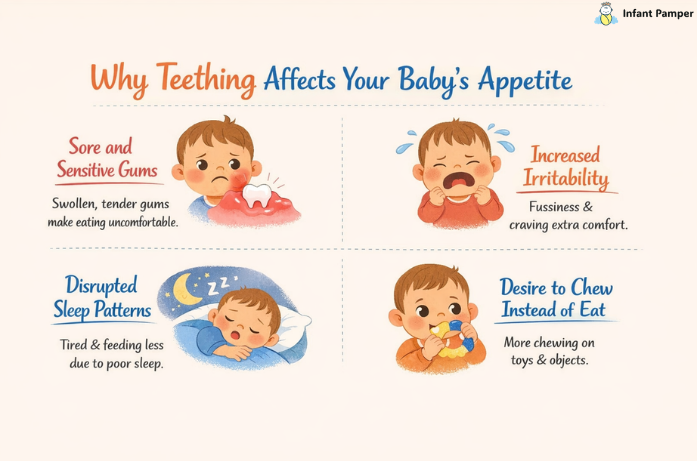
Why Teething Affects Your Baby’s Appetite
Teething can bring small but noticeable changes in your baby’s behavior, especially when it comes to eating. If your baby is eating less, it’s usually not about hunger, it’s about comfort. Here are some gentle reasons why this happens:
1. Sore and Sensitive Gums
When teeth start pushing through, your baby’s gums can become swollen and tender. This makes chewing or even swallowing feel uncomfortable, especially with solid foods.
Because of this discomfort, your baby may avoid eating, not because they aren’t hungry, but because it simply doesn’t feel good.
2. Increased Irritability
Teething can make babies more cranky than usual. You might notice more fussiness, clinginess, or sudden crying spells.
A fussy baby often doesn’t have the patience to sit and eat properly. In these moments, they may seek comfort, like cuddling or nursing, instead of focusing on food.
3. Disrupted Sleep Patterns
Teething can disturb your baby’s sleep, making them more tired during the day. And a tired baby often eats less than usual.
You may notice:
- Shorter or skipped daytime feeds
- Sleepiness during meals
- More frequent night waking for comfort feeding
This change in routine can make it seem like your baby’s appetite has suddenly dropped.
4. Desire to Chew Instead of Eat
During teething, babies have a strong urge to chew because it helps relieve gum pressure.
You might see your baby:
- Biting spoons instead of eating
- Chewing on fingers or toys
- Gnawing on objects rather than swallowing food
This natural need to chew can temporarily take over their interest in actual feeding.
Signs Your Baby Is Teething (Not Just Eating Less)
Sometimes, baby feeding issues can be confusing. But if teething is the cause, you’ll likely notice other signs too:
- Drooling more than usual
- Swollen or red gums
- Chewing on everything
- Mild irritability or clinginess
- Slight increase in temperature (not high fever)
When these signs appear along with a reduced appetite, it’s usually teething at play.
How Long Does Teething Appetite Loss Last?
One of the most comforting things to know is that this phase doesn’t last forever.
Most babies experience a drop in appetite:
- A few days before the tooth erupts
- During the eruption
- A day or two after
So overall, it’s usually temporary, just a few days at a time.
After the tooth comes through, your baby’s appetite typically returns to normal.
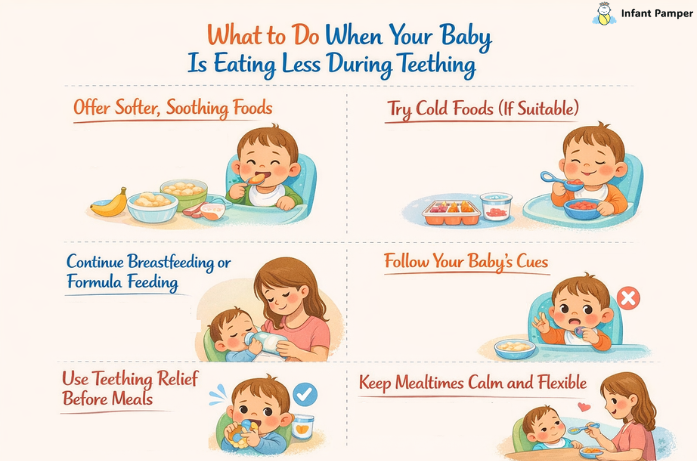
What to Do When Your Baby Is Eating Less During Teething
As a mom, this is the time when your gentle care truly matters. When your baby is going through teething and feeding issues, it’s not about pushing them to eat more, it’s about making them feel comfortable and supported. Small, thoughtful changes can make feeding easier and less stressful for both of you.
1. Offer Softer, Soothing Foods
When your baby’s gums are sore, hard or textured foods can feel uncomfortable. That’s why soft, easy-to-swallow foods work best during this phase.
You can try simple options like mashed banana, yogurt (if your baby has already started it), soft khichdi or दलिया, applesauce, or well-mashed vegetables. These foods are gentle on the gums and still provide good nutrition.
The goal is to make eating feel safe and comfortable again, not painful.
2. Try Cold Foods (If Suitable)
Cool foods can naturally soothe swollen and irritated gums. A slightly chilled texture often feels calming and may even encourage your baby to eat a little more.
You can offer chilled fruit purees, refrigerated yogurt, or other cool (not frozen) teething-friendly foods. Always make sure the temperature is safe and not too cold for your baby.
Sometimes, that cooling effect is exactly what your baby needs to feel better during feeding.
3. Continue Breastfeeding or Formula Feeding
If your baby is eating less solids, don’t worry too much, milk is still their main source of nutrition, especially in the first year.
During teething, your baby may prefer milk over solids because it’s easier and more comforting. You can offer smaller, more frequent feeds and try feeding when your baby is calm or slightly sleepy.
Be patient if feeding takes longer than usual. This phase will pass.
4. Follow Your Baby’s Cues
One of the most important things during this time is to avoid forcing food. Teething can make babies more sensitive, and pressure can make feeding even harder.
Watch for your baby’s hunger cues, offer food gently, and stop if they refuse. It’s okay if they eat less for a few days.
Trust your baby, they know their needs better than we think.
5. Use Teething Relief Before Meals
If your baby is in pain, feeding can feel uncomfortable. Giving a little relief before meals can make a big difference.
You can offer a clean, chilled teether, gently massage their gums with a clean finger, or let them chew on safe teething toys.
When the discomfort reduces, your baby may be more willing to eat.
6. Keep Mealtimes Calm and Flexible
Teething can make babies irritable, so a calm environment is very important during feeding. Try to keep mealtimes relaxed and pressure-free.
Sit together quietly, talk softly, and don’t rush the process. Even if your baby takes just a few bites, that’s perfectly okay for now.
Sometimes, comfort matters more than quantity, and that’s completely normal during teething
When to Be Concerned About Baby Eating Less
While teething baby appetite changes are normal, there are times when you should take a closer look.
Contact your pediatrician if:
- Your baby refuses all feeds (milk and solids)
- Signs of dehydration appear (fewer wet diapers, dry lips)
- There is a high fever (above 101°F / 38.5°C)
- Your baby seems unusually lethargic
- Appetite doesn’t return after several days
These may indicate something beyond teething.
Emotional Side: It’s Hard for Moms Too
Let’s be honest, when your baby doesn’t eat, it can feel stressful.
You might think:
- “Is my baby getting enough?”
- “Am I doing something wrong?”
- “Why is my baby eating less suddenly?”
But here’s something every mom needs to hear:
You are doing an amazing job. Teething is a temporary phase, and your love, patience, and care are exactly what your baby needs right now.
Gentle Feeding Ideas During Teething
Sometimes, small changes can make feeding easier:
- Offer food in smaller portions
- Try finger foods if your baby prefers independence
- Let your baby explore food at their own pace
- Feed when your baby is slightly sleepy (they may accept more)
Remember, flexibility is your best friend during this stage.
Final Thought
Motherhood is full of little phases like this, moments that feel worrying in the present but gently pass with time. When your baby is eating less during teething, it’s not a sign that something is wrong. It’s simply your little one asking for a bit more comfort, patience, and understanding.
There will be days when meals are skipped, routines feel off, and you may question yourself. But in those moments, remember this: your presence, your calm voice, and your loving care matter far more than a perfectly finished bowl of food.
Keep offering, keep comforting, and keep trusting the process. Your baby will return to their usual appetite soon, and this phase will become just another small memory in your parenting journey.
And until then, be gentle with your baby and just as gentle with yourself. For more gentle parenting tips and baby care guides, keep visiting Infant Pamper, we are here to support you every step of the way.
If you’d like to understand more about teething and how to comfort your baby during this phase, these guides may help you feel more supported:
• Learn the early signs and symptoms in this guide
• Explore gentle ways to soothe your baby here:
FAQs About Teething and Feeding Issues
1. Do babies stop eating completely when teething?
Not usually. Most babies eat less, but they don’t stop completely. They may prefer milk or softer foods.
2. Is it normal for a baby to refuse solids during teething?
Yes, it’s very common. Solids can irritate sore gums, so babies may temporarily avoid them.
3. Should I worry if my baby is eating less?
If it lasts only a few days and your baby is otherwise active and hydrated, it’s usually normal.
4. Can teething cause feeding pain?
Yes, sore gums can make chewing and sucking uncomfortable, leading to feeding resistance.
5. How can I increase my baby’s appetite during teething?
Focus on comfort:
- Offer soft foods
- Use teething relief methods
- Be patient and follow your baby’s cues
Disclaimer: This article is for informational purposes only and is based on personal experience and general parenting knowledge. Every baby is different, so if you have concerns about your baby’s feeding, health, or development, please consult your pediatrician for proper guidance.