Written with love by a caring mom at Infant Pamper
When my baby turned 8 months old, feeding suddenly became more exciting, and honestly, a little overwhelming too. I kept asking myself, Am I offering the right foods? Is my baby getting enough nutrition? If you’re feeling the same, you’re not alone.
This detailed guide on baby food recipes 8 months is here to gently guide you with nutritious meal ideas, a practical feeding chart, and real, mom-to-mom advice to make this stage feel easier and more joyful.
What to Expect at 8 Months (Feeding Milestones)
At 8 months, your baby is no longer a beginner eater. This is a stage of exploration and learning.
You may notice:
- Your baby can sit well and eat more actively
- They start chewing (even without many teeth)
- They show interest in finger foods
- They may want to self-feed
This is the perfect time to introduce more textures while continuing homemade food for 8 month old baby for better nutrition and freshness.
Baby Food Recipes 8 Months: Nutritional Needs
Your baby’s food now needs a balanced diet that supports rapid growth and brain development.
Key Nutrients to Focus On:
- Iron: lentils, spinach, fortified cereals
- Protein: dal, paneer, egg yolk
- Healthy fats: ghee, butter
- Vitamins & fiber: fruits and vegetables
Try to combine foods instead of serving single ingredients. You can also try this simple vegetable puree recipe for added nutrition. Balanced meals keep your baby fuller and happier.
Trusted resources like the Centers for Disease Control and Prevention also share helpful insights on what foods and drinks are suitable for babies as they grow, which can give you extra confidence in your choices
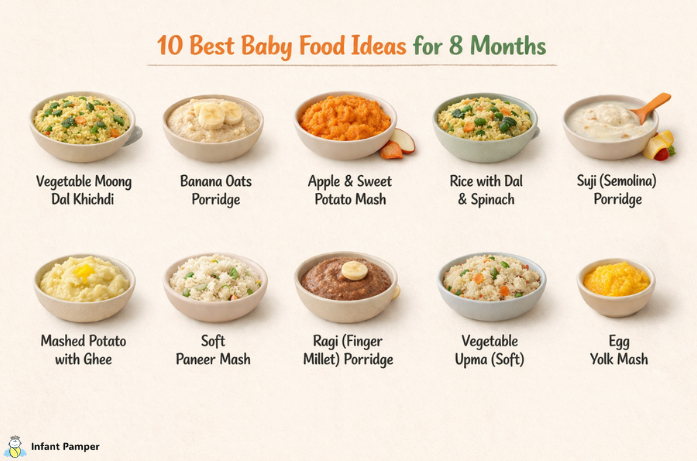
10 Best Baby Food Ideas for 8 Months
Here are 10 easy and nutritious 8 month old baby food ideas that I personally found helpful during this stage:
1. Vegetable Moong Dal Khichdi
A complete meal packed with protein and carbs.
Wash 2 tbsp rice and 1 tbsp moong dal. Add finely chopped carrot, beans, or pumpkin with a pinch of turmeric. Cook everything with water until very soft (pressure cook for 3–4 whistles). Mash lightly and add a few drops of ghee before serving.
Add seasonal vegetables for extra nutrition.
2. Banana Oats Porridge
A soft and naturally sweet breakfast option.
Cook 2 tbsp oats in water or milk until soft. Mash half a ripe banana and mix it into the oats. Stir well to get a smooth, soft consistency.
Easy to digest and very filling.
3. Apple & Sweet Potato Mash
A perfect blend of sweet and nutritious.
Peel and chop apple and sweet potato. Steam or boil until soft. Mash them together into a smooth or slightly textured puree.
You can adjust texture based on your baby’s comfort.
4. Rice with Dal and Spinach
Simple yet iron-rich.
Cook rice and moong dal together with a small handful of chopped spinach. Once soft, mash gently and add a little ghee for taste.
Perfect for boosting iron intake.
5. Suji (Semolina) Porridge
Quick, warm, and comforting.
Dry roast 1–2 tbsp suji. Add water or milk and cook on low flame, stirring continuously to avoid lumps. You can add mashed fruit for sweetness or keep it plain.
Tip: Make it slightly thin for easy swallowing.
6. Mashed Potato with Ghee
Soft, creamy, and energy-rich.
Boil a potato until soft. Peel and mash well, adding a small amount of warm water or milk to make it smooth. Mix in a few drops of ghee.
Perfect for: Days when your baby needs extra energy.
7. Soft Paneer Mash
A great vegetarian protein source.
Take fresh homemade paneer, crumble it well, and lightly steam or cook it with a little water. Mash until soft and mix with vegetables like carrot or peas if desired.
Ensure there are no lumps.
8. Ragi (Finger Millet) Porridge
Highly nutritious and rich in calcium.
Mix ragi flour with water to avoid lumps, then cook on low flame until it thickens. Stir continuously. You can add mashed banana for natural sweetness.
It Supports strong bones and growth.
9. Vegetable Upma (Soft Version)
A slightly textured meal for chewing practice.
Roast suji lightly. Cook finely chopped vegetables (carrot, beans) in water until very soft. Add suji and cook until soft and mushy. Mash lightly before serving.
Keep texture soft and easy to swallow.
10. Egg Yolk Mash
Protein-rich and very beneficial.
Boil an egg well. Remove the yolk and mash it with a little breast milk, formula, or warm water to make it smooth.
Always serve fully cooked and introduce slowly.
Introducing Finger Foods at 8 Months
This is the stage where your baby loves to grab food and explore.
Safe Baby Finger Foods 8 Months:
- Soft banana sticks
- Steamed carrot or beetroot sticks
- Boiled potato cubes
- Soft pear slices
- Well-cooked pasta
Mom Tip: Always ensure the food is soft enough to mash between fingers and supervise closely.
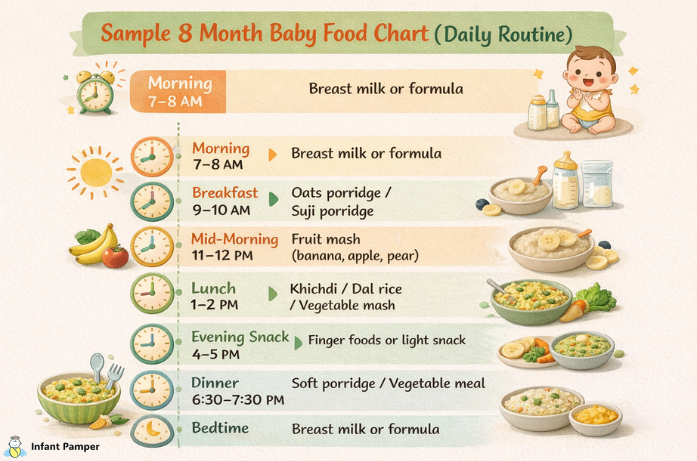
Sample 8 Month Baby Food Chart (Daily Routine)
Having a simple routine can make feeding less stressful. If you ever feel unsure about portions or meal combinations, you can also look at a sample daily menu shared by experts at American Academy of Pediatrics.
Morning (7–8 AM)
Breast milk or formula
Breakfast (9–10 AM)
Oats porridge / Suji porridge
Mid-Morning (11–12 PM)
Fruit mash (banana, apple, pear)
Lunch (1–2 PM)
Khichdi / Dal rice / Vegetable mash
Evening Snack (4–5 PM)
Finger foods or light snack
Dinner (6:30–7:30 PM)
Soft porridge / Vegetable meal
Bedtime
Breast milk or formula
Foods for 8 Months Old Baby (What to Include)
At this stage, variety is important.
Include These Foods:
- Grains: rice, oats, ragi
- Fruits: apple, banana, papaya, pear
- Vegetables: carrot, pumpkin, potato, spinach
- Protein: lentils, paneer, egg yolk
- Dairy: curd (if suitable)
Introducing a wide range of foods for 8 months old baby helps build healthy eating habits early.
Foods to Avoid at 8 Months
As much as we focus on what to feed our babies, it’s equally important to understand what should be avoided at this stage to keep them safe and healthy. At 8 months, your baby’s digestive system is still developing, and certain foods can pose risks.
1. Honey: Avoid giving honey before your baby turns one year old, as it can cause infant botulism, a rare but serious illness.
2. Added Salt and Sugar: Your baby’s kidneys are not mature enough to handle excess salt, and added sugar can create unhealthy taste habits early on. Natural flavors are best.
3. Whole Nuts: These are a choking hazard. If you want to introduce nuts, offer them in powdered or paste form (like smooth peanut butter, if no allergy risk).
4. Processed Foods: Packaged snacks, biscuits, and ready-made foods often contain high salt, sugar, and preservatives, which are not suitable for babies.
5. Cow’s Milk (as a main drink): While small amounts can be used in cooking, cow’s milk should not replace breast milk or formula before one year of age, as it doesn’t provide the right balance of nutrients for infants.
Being mindful of these foods helps protect your baby while building a strong, healthy foundation for their eating habits.
Practical Feeding Tips
1. Follow Your Baby’s Appetite: Some days they eat more, some days less, it’s completely normal.
2. Introduce New Foods Slowly: Wait 2–3 days before introducing another new food. If your baby experiences digestion issues, prune puree can help support gentle digestion.
3. Focus on Texture: Move from smooth purees to slightly chunky food gradually.
4. Keep Mealtime Calm: Avoid distractions like TV or mobile.
5. Let Them Explore: Messy eating is part of learning!
Common Challenges (And Gentle Solutions)
Baby Refuses Food
Try changing texture, timing, or even the spoon.
Baby Prefers Only Sweet Foods
Mix sweet foods with mild savory options gradually.
Baby Plays Instead of Eating
Completely normal, stay patient and consistent.
Why Homemade Food Is Best
Preparing homemade food for 8 month old baby gives you full control over:
- Ingredients
- Freshness
- Nutrition
And honestly, there’s something very special about cooking for your baby with love.
Conclusion
Feeding your baby at this stage is not just about nutrition, it’s about connection, learning, and love. With these baby food recipes 8 months, you can create simple, healthy, and comforting meals without putting pressure on yourself. Every spoon you offer, every new taste your baby explores, is a small but meaningful step in their growth journey.
Take it one meal at a time and trust your instincts you truly know your baby best. Some days will go smoothly, and some may feel a little challenging, and that’s completely okay. What matters most is your love, patience, and care. You’re doing an amazing job, even on the days it doesn’t feel like it
You can also explore more gentle, mom-approved tips and recipes on Infant Pamper to make your parenting journey easier and more joyful.
FAQs
1. What foods can I give my 8 month old baby?
You can offer soft foods like khichdi, dal rice, mashed fruits, vegetables, oats, and soft finger foods like banana or boiled potato.
2. How many meals should an 8 month old have?
An 8-month-old usually has 2–3 solid meals along with breast milk or formula feeds throughout the day.
3. Can I give finger foods at 8 months?
Yes, you can start baby finger foods 8 months like soft fruits, steamed veggies, and small soft pieces that are easy to hold and chew.
4. Is homemade food better for an 8 month old baby?
Yes, homemade food for 8 month old baby is fresh, nutritious, and free from preservatives, making it a great choice.
5. What foods should I avoid at 8 months?
Avoid honey, added salt or sugar, whole nuts, and processed foods as they may not be safe for your baby.
Disclaimer: This article is based on personal experience and general parenting knowledge. Every baby is unique, and their nutritional needs may vary. Always consult your pediatrician before introducing new foods, especially if your baby has allergies, medical conditions, or specific dietary concerns.