
Written with love and care by a caring mom at Infant Pamper
This is where understanding baby wake windows can make a huge difference. A wake window simply means the amount of time your baby can comfortably stay awake between sleep periods. When parents learn to recognize and follow these natural rhythms, babies often fall asleep more easily and stay calmer throughout the day.
Many new parents discover that once they understand baby wake windows by age, their baby’s naps become more predictable and bedtime becomes smoother. In this guide, we’ll gently walk through everything you need to know about baby wake windows by month, how to recognize sleep cues, and how to build a comfortable routine that works for both you and your little one.
Remember, every baby is unique. These suggestions are meant to guide you, not pressure you. Families welcoming a baby through newborn adoption may also find helpful guidance for establishing healthy sleep routines.
Understanding Baby Wake Windows
A baby wake window refers to the amount of time your baby can stay awake before they start feeling tired and need sleep again. Babies have very small energy reserves, so their bodies become tired much faster than adults.
For example, if your baby wakes up at 7:00 in the morning and their wake window is about one hour, they may be ready for their next nap around 8:00 AM.
When babies stay awake longer than their natural wake window, they can become overtired. This often leads to fussiness, difficulty falling asleep, shorter naps, and sometimes more frequent night waking.
Parents often notice that when they start paying attention to wake windows, their baby begins to settle more easily for naps. Many sleep approaches, including guidance similar to taking cara babies wake windows, focus on understanding these natural sleep patterns.
Learning your baby’s rhythm takes a little time, but once you understand it, daily life can feel much calmer. Sleep experts and pediatric sleep resources, such as guidance shared by the Sleep Foundation, explain that wake windows help prevent babies from becoming overtired and support healthier sleep habits.
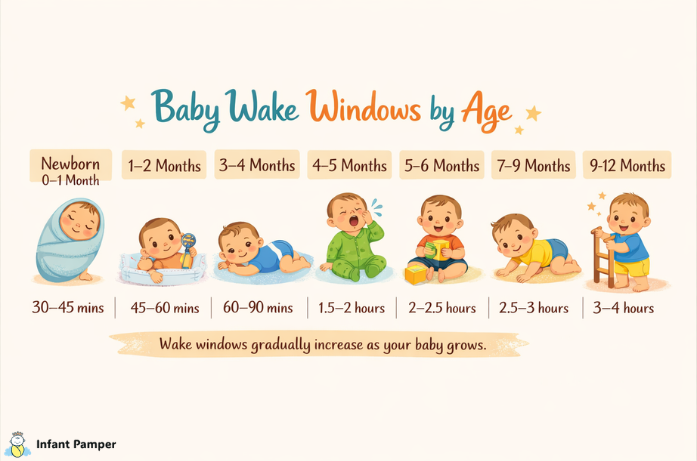
Baby Wake Windows by Age
As babies grow, their wake windows gradually become longer. Their brains develop, their bodies gain strength, and they are able to stay awake for longer stretches without becoming overwhelmed.
Below is a simple overview of baby wake windows by age that many parents find helpful.
Newborns (0–1 Month)
During the newborn stage, babies have very short wake windows. Most newborns can only stay awake for 30 to 45 minutes before needing to sleep again.
This short time usually includes feeding, diaper changes, and a little bit of quiet interaction. After that, your baby may already be ready for another nap.
Newborns often sleep between 16 to 18 hours a day, which is completely normal. Their tiny bodies are growing rapidly, and sleep plays a huge role in healthy development.
At this stage, parents usually follow their baby’s cues rather than a strict schedule. According to pediatric sleep specialists and medical guidance shared by Cleveland Clinic, wake windows gradually lengthen as babies grow and develop stronger sleep cycles.
1 to 2 Months
Around the second month, babies begin to stay awake slightly longer. Their wake windows usually stretch to 45 to 60 minutes.
You may start noticing small changes during this time. Your baby might begin smiling, making eye contact, or showing curiosity about their surroundings.
However, they still become tired very quickly. If they stay awake too long, they may become fussy or difficult to settle.
Keeping the routine simple can help. Many parents follow a gentle rhythm of:
Feed → Play → Sleep
This natural flow often supports better naps.
3 to 4 Months
By three or four months old, babies can usually stay awake for about 60 to 90 minutes.
During this stage, many babies begin showing more consistent nap patterns. You may notice that your baby starts taking 4 to 5 naps per day.
This is also the age when babies become more alert and curious. They enjoy tummy time, listening to your voice, and exploring the world around them.
Because they are more stimulated, respecting the right wake window becomes even more important. If they stay awake too long, they may struggle with naps or bedtime.
4 to 5 Months
Most babies in this stage can stay awake for about 1.5 to 2 hours.
This period sometimes includes the well-known four-month sleep regression, when babies’ sleep cycles begin to mature. Many parents notice changes like shorter naps or more night wakings.
Although this stage can feel challenging, it is actually a healthy part of development.
Maintaining consistent wake windows can help babies adjust to these changes more comfortably.
5 to 6 Months
By five or six months, wake windows usually extend to about 2 to 2.5 hours.
At this age, many babies transition to three naps per day. They are becoming more active and social, often laughing, rolling, and exploring their environment.
A gentle nap routine may look like this:
Morning wake → 2 hours → Nap
Wake → 2 to 2.5 hours → Nap
Wake → 2 to 2.5 hours → Nap
Wake → Bedtime
Following a consistent baby wake window pattern helps babies avoid becoming overtired.
7 to 9 Months
During this stage, babies can usually stay awake for 2.5 to 3 hours at a time.
Many babies also transition from three naps down to two naps per day. Their wake windows stretch longer because they are gaining more physical strength and mental stimulation.
You may notice your baby:
- Crawling or trying to move
- Babbling more often
- Showing strong curiosity
- Becoming more social and playful
These exciting developments can sometimes make sleep a little harder, which is why wake windows remain helpful.
9 to 12 Months
Most babies continue taking two naps each day, with about 2–3 hours of daytime sleep total. As your little one grows, you may also be introducing solids like broccoli puree alongside a consistent daily routine.
Most babies continue taking two naps each day, with about 2–3 hours of daytime sleep total.
At this stage, babies are very active. They may be crawling quickly, pulling themselves up, or even taking first steps.
Longer wake windows help build enough sleep pressure so that babies can fall asleep more easily at bedtime.
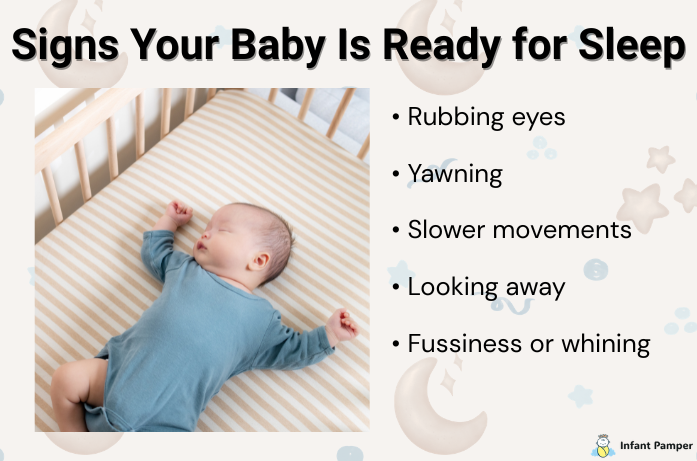
Signs Your Baby Is Ready for Sleep
While wake windows are helpful guidelines, your baby’s sleepy signals are just as important.
Every baby communicates tiredness in slightly different ways. Some common signs include:
- Rubbing eyes
- Yawning
- Slower movements
- Looking away or staring into space
- Fussiness or whining
Catching these signs early makes naps much easier.
If a baby becomes very upset, hyperactive, or difficult to settle, they may already be overtired.
Simple Tips for Managing Wake Windows
Learning about wake windows is helpful, but applying them in everyday life can sometimes feel challenging. Here are a few gentle tips that many parents find useful.
First, try tracking when your baby wakes up in the morning. From that moment, count forward based on their typical wake window. This helps you prepare for the next nap before your baby becomes too tired.
Second, create a small and calming pre-nap routine. Even something simple like dimming the lights, changing the diaper, and softly rocking your baby can signal that sleep is coming.
Another helpful tip is focusing on the first wake window of the day. Many sleep specialists note that when the first nap happens at the right time, the rest of the day often flows more smoothly.
Most importantly, stay flexible. Babies go through growth spurts, teething, developmental leaps, and changes that may temporarily affect sleep.
Some days will feel perfectly organized. Other days will feel messy and unpredictable. As your baby begins eating solids, prune puree can be a gentle option that supports healthy digestion.
Both are completely normal.
Common Wake Window Challenges
Many parents struggle with baby sleep simply because the timing is slightly off.
One common issue is keeping the baby awake too long. When babies become overtired, they may actually sleep worse rather than better.
Another challenge is trying to put the baby down too early. If the wake window is too short, your baby may not be tired enough to fall asleep.
Finally, some parents rely only on the clock and forget to watch their baby’s cues. The best approach is usually a balance between both.
Wake windows provide helpful guidance, but your baby’s signals always matter most.
A Gentle Reminder for Parents
If you are currently struggling with naps or bedtime, please know that you are not alone. Nearly every parent goes through a stage of wondering if they are doing something wrong.
The truth is that baby sleep is constantly changing during the first year.
Wake windows are simply a helpful tool that can make things a little easier, but they are not a strict rulebook.
Some babies naturally need slightly shorter wake windows, while others stay awake a bit longer. Learning your baby’s rhythm takes time, patience, and plenty of love.
Trust yourself and trust your baby.
Final Thoughts
Understanding baby wake windows can bring a lot of clarity to your daily routine. When babies sleep at the right times, they often feel happier, calmer, and more comfortable throughout the day.
By gently following baby wake windows by age and adjusting as your baby grows, you can support healthy sleep habits without pressure or stress.
But remember, the most important thing your baby needs is not a perfect schedule, it is a loving parent who responds with care and patience.
And here at Infant Pamper, we believe every caring mom deserves reassurance, support, and the reminder that she is doing an incredible job.
Take a deep breath, trust your instincts, and enjoy these precious moments with your little one.
FAQs
1. What are baby wake windows?
Baby wake windows are the amount of time a baby can comfortably stay awake between sleep periods. Following the right baby wake window helps prevent overtiredness and makes naps and bedtime easier for babies.
2. How do baby wake windows change by age?
Baby wake windows by age gradually increase as babies grow. Newborns may stay awake only 30–45 minutes, while older babies around 9–12 months can stay awake for about 3–4 hours between naps.
3. What happens if a baby stays awake longer than their wake window?
If a baby stays awake too long, they may become overtired, which can make it harder for them to fall asleep. Watching sleepy cues and following baby wake windows by month can help babies sleep more peacefully.
Disclaimer: This article is for informational purposes only. Every baby is different, so sleep patterns may vary. For medical or sleep concerns, please consult your pediatrician.