By a Mom at Infant Pamper
Summer nights often bring a sense of tranquility to a home. The house settles, the frantic pace of the day slows down, and parents finally get a moment to breathe. But for those with an infant, that rising mercury on the thermometer brings a specific, quiet anxiety: Is my baby too hot? Many parents find themselves performing the “nursery creep” quietly checking the crib, gently touching a baby’s neck or chest to ensure they aren’t overheating. This concern is not just natural; it is essential. Babies cannot communicate their discomfort, and their physiological response to heat is vastly different from that of an adult.
This comprehensive guide explores the science of infant thermoregulation, the best fabrics for 2026, and the precise steps you can take to ensure your baby sleeps safely and soundly through the warmest months of the year.
1. The Science of Infant Thermoregulation (Dress Baby for Sleep in Summer)
To understand how to dress a baby for summer, we must first understand why they are at higher risk. Unlike adults, infants have a much higher surface-area-to-body-mass ratio. This means they absorb heat from their environment much faster than we do.
Furthermore, a baby’s ability to sweat is limited. While they do possess sweat glands, these glands, particularly on the torso and limbs are not fully functional at birth. This makes it difficult for their bodies to cool down through evaporation. You can learn more about safe infant sleep practices from the CDC here:
The Risk of Overheating
Overheating is more than just an issue of comfort; it is a significant safety concern. Clinical research has consistently linked overheating to an increased risk of Sudden Infant Death Syndrome (SIDS). When a baby becomes too warm, they may enter a deeper sleep from which it is harder to arouse, potentially suppressing their natural respiratory drive.
By dressing your baby appropriately, you aren’t just helping them sleep longer; you are actively maintaining a safer sleep environment.
2. The “One-Layer” Rule: A Practical Framework
When parents ask how to dress their baby for sleep in summer, the most reliable advice remains the “One-Layer” Rule.
The Rule: Dress your baby in one thin layer more than what you would comfortably wear in the same room.
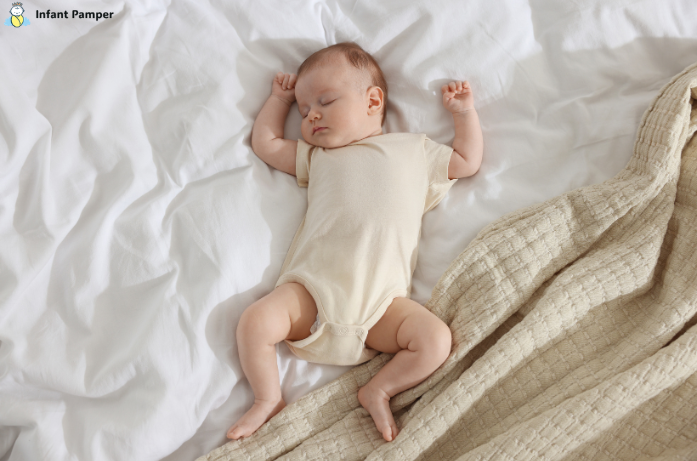
For instance, if you are comfortable in a light cotton T-shirt, your baby will likely be comfortable in a cotton onesie plus a very thin muslin sleep sack. This rule prevents the common mistake of “over-bundling,” a practice often rooted in the outdated belief that babies always need to be toasted warm.
Seasonal Wardrobe Essentials
During warm summer nights, your baby’s “sleep wardrobe” should consist of:
- Sleeveless Bodysuits: Ideal for temperatures above 25oC (77oF)
- Short-Sleeve Onesies: The versatile “base layer” for most summer nights.
- Lightweight Footies: Only necessary if the air conditioning is set particularly high.
- Muslin Swaddles/Sleep Sacks: These provide the security of a blanket without the weight.
3. Fabric Selection: The Breathability Hierarchy
In the world of infant sleepwear, the fabric is just as important as the garment type. The goal is to facilitate airflow and moisture-wicking.
Organic Cotton
Cotton remains the gold standard for a reason. It is a natural fiber that allows air to circulate and move freely through the fabric, ensuring that heat isn’t trapped against the skin. It is also highly absorbent, which helps if the baby does begin to perspire.
Bamboo Viscose
Bamboo has become a favorite for 2026. It is naturally cooler to the touch than cotton and has superior moisture-wicking properties. If you live in a humid climate, bamboo can help keep your baby’s skin dry and prevent heat rash (miliaria).
Muslin
Muslin is a loosely woven cotton fabric. Its “open-weave” structure makes it the most breathable option available. It is the preferred choice for swaddling in summer because it allows the baby’s body heat to escape rather than reflecting it back.
Fabrics to Avoid
Avoid synthetic materials like polyester, fleece, or heavy knits. While these are cozy in December, they act as insulators in July. Synthetic fibers often repel water rather than absorbing it, leading to a “clammy” environment that can cause skin irritation and waking.
4. Understanding TOG Ratings
If you use sleep sacks, you’ll see a TOG (Thermal Overall Grade) rating on the label. This tells you how much heat the fabric traps. Think of it as a “warmth score”:
- 0.2 – 0.5 TOG (Ultra-Light): Paper-thin and breathable. Use these for hot rooms between 24°C and 27°C (75°F – 81°F).
- 1.0 TOG (Standard Summer): The best choice for air-conditioned rooms between 21°C and 23°C (69°F – 74°F).
- 2.5 TOG+ (Winter Weight): Store these away! Using a 2.5 TOG in summer is like you sleeping under a heavy down duvet in a heatwave—it’s far too hot for a baby.
The Rule of Thumb: In summer, always aim for the lowest TOG rating possible to keep air flowing.
5. Optimizing the Sleep Environment
Dressing the baby is only half of the equation. The room itself must be managed to ensure a steady, safe temperature.
1. The Ideal Temperature
Most pediatric experts recommend keeping the nursery between 20oC and 22oC (68oF to 72oF). While this may feel slightly cool to an adult, it is the optimal range for infant safety.
2. Airflow and Circulation
A ceiling fan or a well-placed floor fan can be a parent’s best tool. Fans do not significantly lower the room temperature, but they do move the air. This movement helps moisture evaporate from the skin and prevents pockets of “stagnant” hot air from forming around the crib.
3. Sun Management
During the day, keep the nursery curtains or blinds closed to block out direct sunlight. This “passive cooling” can prevent the room from becoming a “hot box” by the time bedtime rolls around.
6. Detecting Overheating: The Physical Signs
Since you cannot rely on a baby’s hands or feet (which naturally stay cooler due to developing circulation), you must look for specific physical indicators of heat stress.
The Neck and Chest Check
The most accurate way to gauge your baby’s temperature is to place your hand on the back of their neck or their chest/tummy.
- If the skin feels hot or sweaty: They are definitely too warm. Remove a layer immediately.
- If the skin feels neutral/warm: They are perfectly dressed.
- If the skin feels cool: They may need a light sleep sack.
Other Red Flags
- Damp Hair: A clear sign of perspiration and overheating.
- Flushed Cheeks: Indicates the body is trying to dump heat by dilating blood vessels near the skin.
- Rapid Breathing: If the baby is panting or breathing faster than usual while asleep, they may be struggling with the heat.
- Heat Rash: Small red bumps, usually in the skin folds or around the neck.
7. Addressing Common Summer Sleep Myths
Myth: Babies should always wear socks.
Truth: In the summer, bare feet are actually a biological advantage. Heat is released through the extremities. Unless your AC is set to a very low temperature, letting your baby sleep with bare feet helps them naturally regulate their core temperature.
Myth: A diaper-only sleep is unsafe.
Truth: If the room is very warm (above 26oC/ 79oF), sleeping in just a diaper is perfectly acceptable and often recommended. Some parents prefer adding a 0.2 TOG sleeveless bodysuit simply to prevent skin-on-skin sweating, but a diaper alone is a safe summer choice.
Myth: Hats help regulate temperature.
Truth: Hats should never be worn for sleep once you leave the hospital. Babies lose a massive percentage of their body heat through their heads. A hat traps that heat, which can lead to rapid and dangerous overheating.
8. Creating a Summer Bedtime Routine
The heat can make babies more irritable, which can disrupt the bedtime routine. To help your baby transition to sleep in the summer:
- A Lukewarm Bath: A gentle bath before bed can help lower the baby’s core temperature slightly, signaling to the brain that it is time for sleep.
- Hydration: Ensure your baby is getting enough fluids (breast milk or formula) during the day, as dehydration can happen faster in summer. When your little one is ready for solids, our guide to broccoli puree is a great place to start.
- Lightweight Swaddling: If your baby still needs to be swaddled, use a single layer of muslin and ensure it isn’t wrapped too tightly around the chest.
According to guidance from Pregnancy, Birth and Baby, a trusted government health resource, keeping babies cool, well hydrated, and dressed in lightweight clothing can help prevent overheating during warm weather. You can read their detailed advice on caring for babies in hot weather here:
9. Summary Table: Summer Dressing Guide
| Room Temperature | Recommended Layers | Why? |
| 27oC + (81oF +) | Diaper only or sleeveless bodysuit | High risk of overheating; maximum airflow needed. |
| 24-26oC (75-79oF) | Short-sleeve bodysuit + 0.5 TOG Sack | Light protection without heavy insulation. |
| 21-23oC (70-74oF) | Long-sleeve onesie + 1.0 TOG Sack | Optimal range; provides comfort for AC environments. |
| Below 20oC (68oF) | Cotton PJ’s + 1.0/2.0 TOG Sack | Standard sleepwear for cooler/conditioned rooms. |
Final Thoughts from Infant Pamper
Summer nights with a baby are special. Watching them sleep peacefully under the soft glow of a nightlight is one of the true joys of parenthood. By taking these small, deliberate steps, choosing the right fabrics, monitoring the room temperature, and trusting the “one-layer” rule, you can replace your worry with confidence. As your baby continues to grow, you may also find our guide to prune puree helpful when introducing nutritious first foods.
Most babies sleep best when they are slightly cool rather than overly warm. As long as you are attentive to the signs of their comfort, you are doing a wonderful job.
FAQs
1. Can my baby sleep in just a diaper?
Yes. If the room temperature exceeds 26°C (79°F), a diaper is perfectly safe. A single layer of cotton is often better for absorbing sweat, but in extreme heat, a diaper alone is best.
2. How can I tell if my baby is overheating?
Don’t check hands or feet. Instead, touch the back of their neck or their chest. If the skin feels hot, sweaty, or clammy, they are too warm. Flushed cheeks and rapid breathing are also key warning signs.
3. Should babies wear socks at night in summer?
Generally, no. Babies release excess heat through their extremities to regulate their core temperature. Unless your AC is set very low, keep their feet bare to help them stay cool naturally.
4. Is it safe to use a fan in the nursery?
Yes. Fans are excellent for circulating air and reducing the risk of SIDS. Just ensure the fan is not pointing directly at the baby; aim it toward a wall or the center of the room to create a gentle breeze.
5. What is the best TOG rating for summer?
Look for a 0.2 to 0.5 TOG sleep sack for true summer heat. If you keep your nursery air-conditioned at a steady 20-22°C (68-72°F), a 1.0 TOG sack is the standard choice.
Disclaimer: This article is for informational purposes only and does not replace professional medical advice. Always consult your pediatrician for concerns about your baby’s health or sleep.
For more helpful baby care tips, visit Infant Pamper and share this guide with other parents.